Home Blog Page 11

PTI links talks with govt to Imran’s release

ISLAMABAD: PTI on Wednesday finally agreed to sit with the government to resolve their differences, provided incarcerated PTI founder and former prime minister Imran Khan is released from jail.

Previously, the party and its founder repeatedly refused to engage in dialogue, referring to the incumbent government as “thieves and dacoits” in public statements.

“Let us sit together to jointly resolve our problems in an atmosphere in which Imran Khan is released from jail and Mian Sahib (PML-N President Nawaz Sharif) also comes forward for dialogue,” PTI MNA Ali Muhammad Khan said on the floor of the National Assembly on Wednesday.

He said the NA opposition leader, Mehmood Achakzai, confirmed he had received an invitation from Prime Minister Shehbaz Sharif.

“I asked Achakzai to go for dialogue. The entire PTI will support him so that the talk process will pave the way for political stability and resolution of our problems,” he said, adding that this may also lead to the release of Imran and his wife, Bushra Bibi, from jail.

He added the opposition had always displayed unity with the government on international matters in the past, recalling the May 2025 conflict with India.

“We expressed solidarity with the government during last year’s conflict with India, and now during the visit of a Chinese delegation to the National Assembly to mark the 75th anniversary of diplomatic relations between Pakistan and China,” he added.

The treasury and the opposition on Wednesday warmly welcomed a high-level Chinese delegation, which visited the NA in connection with the 75th anniversary of diplomatic relations between Pakistan and China.

Although the opposition had already announced that it was not going to join the proceedings of the NA to protest against the continued imprisonment of Imran, later its members — led by the leader of the opposition — witnessed the NA proceedings till the presence of the Chinese delegation.

The Chinese delegation was led by Vice Chairman of the Standing Committee of the National People’s Congress of the People’s Republic of China Cai Dafeng, as well as the ambassador of China to Pakistan, Jiang Zaidong.

On the occasion, NA Speaker Sardar Ayaz Sadiq said: “Today is a special occasion as we are celebrating the 75th anniversary of the establishment of the diplomatic relations between Pakistan and China.”

Later, Achakzai also welcomed the Chinese delegation. Following the departure of the delegation, the opposition members also left the house.

In December 2025, PM Shehbaz had reiterated his offer for talks with the opposition but also emphasised that dialogue between the two sides could only proceed on “legitimate matters”.

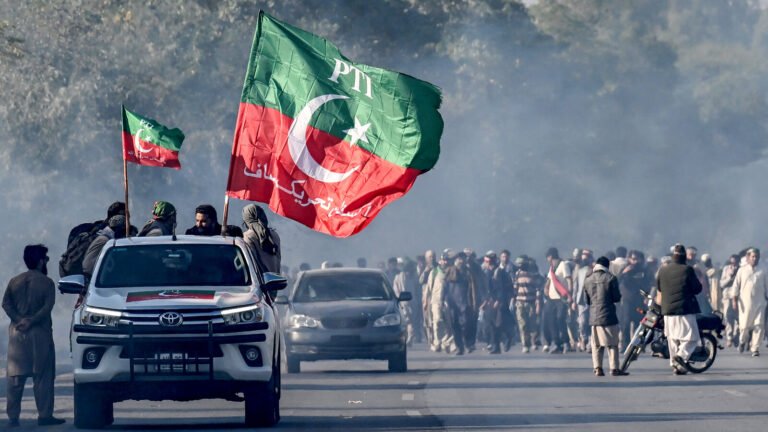
However, the PTI had denied dialogue with the government until “ensuring a level-playing field” was provided to the party through its “street movement” — an agitation campaign against the government.

PPP leaders term comments on 28th Amendment premature

ISLAMABAD: Amid reports about a possible new constitutional amen­dment that could roll back certain functions de­­vol­v­­ed to the provinces, a PPP senator on Tuesday said the party had not received any draft of the purported 28th Amendment.

Addressing a press conference to share details of President Asif Ali Zard­­ari’s China visit, Senator Saleem Mandviwalla said it was “premature” to comment on the matter as they had yet to see a proposal for the amendment. His statement echoed similar remarks by the PPP chairman, who said his party was not aware of any such development, nor did the prime minister approach President Zardari in this regard.

Law Minister Azam Nazeer Tarar had also recently ruled out any amendment being tabled without consultation with the ruling partners.

Besides Mr Mandvi­walla, the president’s spokesperson Murtaza Solangi and Presidency Press Secretary Daniyal Gillani were also present.

Speaking about the president’s visit to China, they said the president signed five memorandums of understanding (MoUs) and one agreement, spanning the defence, agriculture, healthcare, industrial cooperation and technology sectors.

Describing the commissioning ceremony of the Pakistan Navy’s first Ha­­ngor-class submarine in Sanya, Mr Solangi said its strategic significance was comparable to the Pakist­an-China JF-17 Thu­­­nder fighter aircraft project. He also highlighted the president’s visit to Shao­shan, the hometown of Chairman Mao Zedong in Hunan.

Senator Mandviwalla, meanwhile, rev­ealed a new cultural initiative aimed at promoting Pak­istani films and television productions in China. He said the Legend of Maula Jatt’s commercial release in China was scheduled for May 21 and 22.

Discussing MoUs signed during the visit, he said an MoU on seawater desalination was signed to establish a five million gallons per day (mgd) desalination plant aimed at helping address Karachi’s water shortage.

Another MoU focused on agricultural technology cooperation was reached with one of China’s largest tea companies, he added.

Fudan University documentary screened in Pakistan

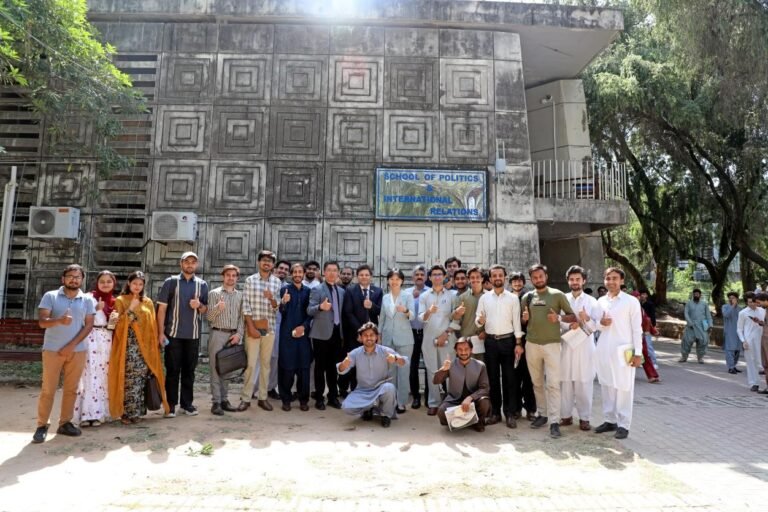
ISLAMABAD: The Moon is Yours, a 102-minute documentary directed by veteran filmmaker Vincent Zhou and filmed over three years by a team from Fudan University’s School of Journalism, was screened at Quaid-i-Azam University (QAU) in Pakistan on Monday.

Fudan film screening and admissions briefing held at the QAU on Monday.

The documentary focuses on the real-life experiences of international students building their lives in Shanghai and marked its first showing in Pakistan and its fourth overseas showcase, highlighting Fudan University’s international student recruitment efforts.

The screening, hosted by Fudan’s School of Journalism, drew enthusiastic participation from more than one hundred Pakistani students and faculty members at QAU. The documentary will also be shown at two more universities in Pakistan over the next two days to reach more prospective Pakistani students.

Xia Tianyi, vice dean of the School of Journalism at Fudan University, delivered an introductory speech before the screening, sharing insights into the film’s creation and themes. The documentary offers an authentic portrayal of the educational journeys and cross-cultural experiences of international students in China. Following the film, Fudan University held a comprehensive admissions briefing outlining academic programs and scholarship opportunities for Pakistani students.

Salman Ali Bhittani, a lecturer at the School of Politics and International Relations at QAU, said the screening represented a significant milestone for the “Study in China” initiative and demonstrated the power of visual storytelling to foster educational and cultural ties between China and Pakistan.

Tayyabah, a 22-year-old Pakistani student at QAU, told that the film had further strengthened Pakistani youth interest in pursuing higher education in China.

Fudan University is one of the most renowned and international institutions in China, she said.

“For Pakistani students, studying in China and contributing to Pakistan-China cooperation may be the ideal choice.”

China, Russia seek deeper ties ahead of Putin’s Beijing visit

0

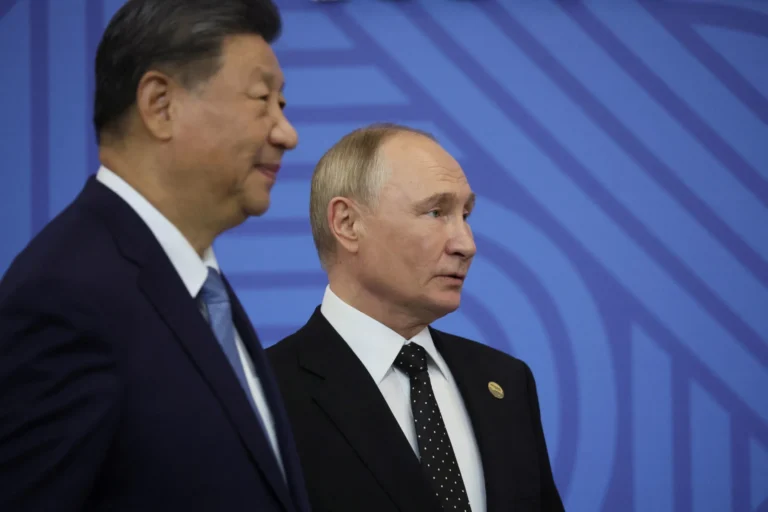
BEIJING: China and Russia are preparing for another high-level diplomatic moment, with Russian President Vladimir Putin set to pay a state visit to China from Tuesday to Wednesday. Ahead of the visit, both sides signaled strong expectations – on Monday in Beijing, a Chinese Foreign Ministry spokesperson said that China and Russia will continue deepening and elevating relations between China and Russia to inject more stability and positive energy to the world, while in Moscow, Kremlin spokesman Dmitry Peskov said Russia has “very serious expectations” for the trip.

Over recent years, under the strategic guidance of President Xi Jinping and President Putin, the China-Russia comprehensive strategic partnership of coordination for a new era has enjoyed sound, steady and in-depth development, with expanding cooperation in various fields, tangible benefits for the two countries and two peoples, and important contribution to maintaining global strategic stability and upholding international fairness and justice, said Foreign Ministry spokesperson Guo Jiakun.

Also on Monday, Russian Presidential Spokesman Peskov stressed that expectations from the Russian leader’s upcoming visit to China are very serious. He said that any contacts between the Russian president and President Xi help to give a new impetus for the further development and expansion of relations between the two countries, according to Russian News Agency Tass.

Chinese observers noted that the two-day visit from Tuesday to Wednesday by Putin and high-level exchanges demonstrate the high stability and steady high-level development of China-Russia ties under the regular heads-of-state meeting mechanism, and underscore the vital role of heads-of-state diplomacy in steering bilateral ties as well as the strong continuity of the strategic coordination and practical cooperation between the two countries amid profound shifts in the international landscape.

Consolidating bilateral foundations

“It will be President Putin’s 25th visit to China, during which the two presidents will exchange views on bilateral relations, cooperation in various fields and international and regional issues of mutual interest,” said Guo while briefing on Putin’s upcoming visit.

The spokesperson added that the two sides will take this opportunity to continue deepening and elevating relations between China and Russia, so as to inject more stability and positive energy to the world.

According to Tass, Peskov told the Monday briefing that Russia’s delegation “will include all relevant deputy prime ministers, many ministers, and heads of state and private companies operating in China.”

Relations between Russia and China are diverse. In addition to trade and economic cooperation, we are actively developing our dialogue in the field of education. Incidentally, a Year of Russian-Chinese Cooperation in Education will be launched, according to Peskov, per Tass.

Timed to coincide with major bilateral anniversaries, Putin’s visit falls in the year which marks the 30th anniversary of the establishment of the China-Russia strategic partnership of coordination and the 25th anniversary of the signing of the China-Russia Treaty of Good-Neighborliness and Friendly Cooperation, while also marking the launch of the China-Russia Years of Education.

The visit embodies the mutually acknowledged principle of the right way for major countries to get along with each other, with both sides set to further chart bilateral ties along this path during President Putin’s visit, Li Yongquan, director of the Eurasian Social Development Research at the Development Research Center of the State Council, told the Global Times on Monday.

With this year marking the 25th anniversary of the China-Russia Treaty of Good-Neighborliness and Friendly Cooperation, the expert emphasized that the bilateral relationship is based on the principles of non-alliance, non-confrontation, and not targeting any third party.

Against three pivotal junctures, Wang Xiaoquan, an expert with the Institute of Russian, Eastern European and Central Asian Studies of the Chinese Academy of Social Sciences, said that China-Russia relations rest on a solid foundation forged over years of steady development, adding that the two countries have built robust bilateral ties underpinned by sound communication and consultation mechanisms, as well as a comprehensive legal and treaty framework.

Multiple Russian media outlets reported that a joint statement along with a number of bilateral intergovernmental, interdepartmental, and other agreements, will be signed following the talks. The statement released by the Kremlin also mentioned “trade and economic cooperation.”

Developing bilateral ties stems fundamentally from the genuine needs of both countries rather than expedient moves subject to external influences, Wang said.

Against this backdrop, the two sides will likely conduct new communications and consultations on further consolidating the foundation of bilateral relations and expanding areas of strategic coordination, Wang continued.

Dar reaffirms commitment to stronger ties with Saudi Arabia, UAE and Iran

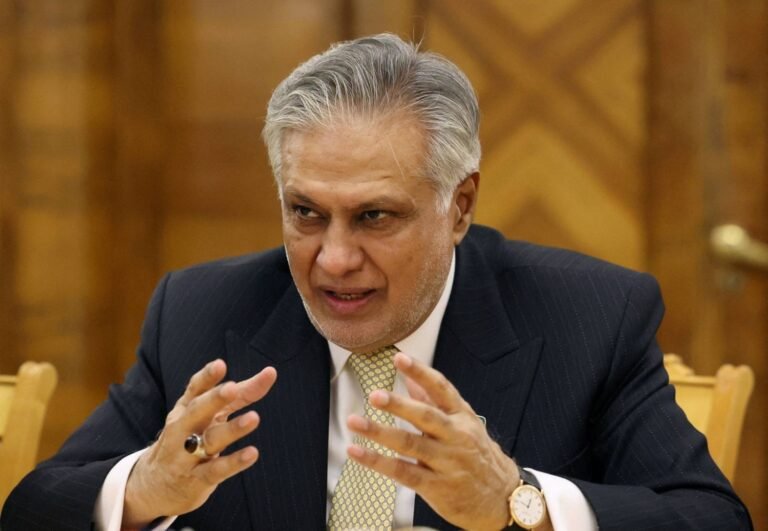
ISLAMABAD: Deputy Prime Minister and Foreign Minister Ishaq Dar on Tuesday said Pakistan attaches high importance to its fraternal relations with Saudi Arabia and is committed to further strengthening cooperation across multiple sectors.

In a post on X, the deputy prime minister said he met Pakistan’s Ambassador to Saudi Arabia, Ahmed Farooq, on the sidelines of the Regional Envoys conference in Islamabad.

He appreciated the strong fraternal Pakistan–Saudi Arabia relations and emphasised the importance of further strengthening the ongoing positive momentum and expanding cooperation across all sectors, including trade, investment, energy, and human resource development.

Dar also underscored the need for continued engagement with the Pakistani community in the Kingdom, recognising their constructive and positive contribution in further deepening the close bilateral ties between Pakistan and Saudi Arabia.

Dar meets Pakistani ambassador to UAE

DPM and FM Dar also met with Pakistan’s Ambassador to the UAE, Shafqat Ali Khan, on the sidelines of the Regional Envoys’ Conference in Islamabad on Tuesday.

According to a statement issued by MoFA, Dar stressed the need to “further expand cooperation” between Pakistan and the UAE across multiple sectors and to strengthen bilateral relations.

The deputy prime minister also highlighted what the Foreign Office described as the “positive role” played by the Pakistani community in the UAE and directed that further steps be taken to facilitate their welfare.

He also called for promoting stronger people-to-people ties between the two countries, according to the statement.

Inflation, Imran’s treatment spur Friday protests by TTAP, PTI

ISLAMABAD: The opposition alliance Tehreek Tahaffuz-e-Ayin-e-Pakistan (TTAP) and Pakistan Tehreek-e-Insaf (PTI) on Tuesday announced nationwide protests on Friday against rising inflation, higher fuel prices, alleged lawlessness, and the continued detention of Pakistan Tehreek-e-Insaf (PTI) founder Imran Khan.

PTI leader Asad Qaiser, while speaking to the media outside Parliament House along with other party leaders, said the parliamentary party had been taken into confidence regarding the party’s future course of action and had fully endorsed the alliance’s four-point agenda.

“We have decided to hold protests across the country this Friday over inflation, the massive increase in petroleum prices, severe loadshedding, particularly the law and order situation, and the inhumane treatment being meted out to Imran Khan, including the denial of his civil rights and the government’s negligence regarding his health,” he said.

Qaiser termed the lack of quorum in parliament as a sign of the government’s non-serious attitude and warned that if the situation persisted, “we will not allow this parliament to function”.

He claimed that the government was planning to impose Rs17 trillion in new taxes in the upcoming budget, which would trigger a new wave of inflation.

“At present, all tax collection is being carried out on salaried employees, and you can see that farmers, labourers and the salaried class have been affected by the economic policies, while the middle class has virtually been eliminated,” he said, blaming the government’s failed policies for the situation.

Expressing concern over the state of justice in the country, the former National Assembly speaker said severe human rights violations were taking place and alleged that the treatment being meted out to PTI leaders in jail, including Imran Khan and Shah Mahmood Qureshi, amounted to serious human rights abuses.

“We believe Imran Khan should get justice, and if all the cases against him are heard on merit, Imran Khan will not remain in jail for even a single day, nor will his wife or the party leadership,” he said.

The PTI leader termed the government’s policies a complete failure and expressed concern about the country’s security situation, particularly in Khyber-Pakhtunkhwa.

“In my province, we are facing a serious challenge of terrorism, and that terrorism is the result of an irresponsible foreign policy, due to which terrorism is increasing and unemployment is rising because our businesses are heavily linked with trade with Afghanistan,” he said.

He demanded an end to what he termed the unfair treatment of Imran Khan, saying he should be provided justice, his cases should be heard on merit, and, according to jail rules, he should be shifted to a hospital.

Qaiser also demanded that the government withdraw the petroleum levy and end severe loadshedding across the country, particularly in K-P.

Earlier, in a post shared on X by TTAP Chief and Leader of the Opposition in the National Assembly, Mahmood Khan Achakzai, the decision was taken at an alliance leadership summit. TTAP said the demonstrations would also demand the immediate transfer of Imran to the hospital and the release of political prisoners.

Speaking separately outside NA on Tuesday, senior PTI leader Asad Qaiser said the party and the wider public were deeply concerned about the health of former prime minister Imran Khan and his wife Bushra Bibi. He said the parliamentary party had unanimously endorsed decisions taken at the previous day’s TTAP leadership summit.

Qaiser also said nationwide protests would be held on Friday against inflation, rising petroleum prices, and concerns over the health of Imran and Bushra Bibi. The demonstrations would also demand their transfer to hospital, the release of political prisoners, and the restoration of fundamental rights, he reiterated.

“If Imran Khan’s cases are heard on merit, he would not remain in jail for even a moment,” he said, adding that terrorism had increased due to government policies and that ties with Afghanistan had been affected.

He also demanded the immediate transfer of Imran Khan and Bushra Bibi to hospital in line with jail rules, permission for meetings, withdrawal of the petroleum levy, an end to electricity and gas load-shedding, and the lifting of restrictions on wheat and flour transportation.

Qaiser further warned that if opposition members were not allowed to function freely in Parliament, they would not allow the assembly proceedings to continue smoothly. Criticising the government’s economic policies, he added that the upcoming budget would be “anti-poor” due to expected new taxes.

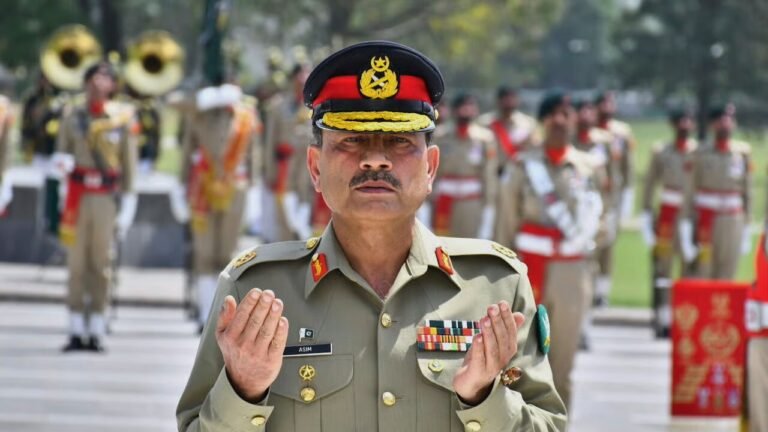
Propaganda, foreign-backed terrorism cannot derail Pakistan’s progress: CDF Munir

RAWALPINDI: Chief of Defence Forces and Chief of Army Staff Field Marshal Asim Munir emphasised that “Pakistan’s destined rise cannot be obstructed through propaganda, fake news or externally sponsored terrorism,” during his visit to Quetta Garrison on Tuesday, where he addressed “student officers and faculty members at Command and Staff College Quetta,” the military’s media wing said.

According to the Inter-Services Public Relations (ISPR), “He reiterated that hostile forces attempting to derail Pakistan’s progress through proxies and propaganda will ultimately fail due to the resilience of the state and the unity of its people”.

“During his address, the field marshal appreciated high standards of training, intellectual rigour and professionalism that remain the hallmark of Command and Staff College, Quetta,” ISPR said.

“He noted with satisfaction that the graduates of the college have continued to distinguish themselves through their exceptional performance and dedication to the profession,” the statement said.

It said that CDF Munir highlighted the rapidly transforming character of modern warfare and stressed the importance of remaining abreast with emerging technologies, multi-domain operations, tri-services synergy and future battlefield challenges.

The statement added that, “CDF advised the officers to continuously train themselves and their troops to effectively respond to the changing character of war while maintaining the highest standards of professionalism, preparedness and operational excellence”.

According to ISPR, later, the field marshal interacted with officers and troops of formations deployed in Balochistan. Highlighting the contours of the prevailing security environment, he reaffirmed that the Pakistan Armed Forces, with the steadfast support of the people, remain fully committed to the eradication of terrorism in all its forms and manifestations.

The field marshal also underscored the importance of sustainable peace and stability in Balochistan, saying long-term progress depended on a people-centric approach, inclusive development and improved governance alongside security measures.

It added that CDF appreciated the ongoing efforts of the Balochistan government focused on public welfare, socio-economic uplift and strengthening the bond between the state and the people of the province.

CDF Munir also appreciated the high morale, operational readiness and professional commitment of officers and troops in maintaining peace, stability and the writ of the state in Balochistan.

Earlier, upon his arrival in Quetta, the field marshal was received by the Commander of Quetta Corps.

22 terrorists killed in North Waziristan sanitisation operation: ISPR

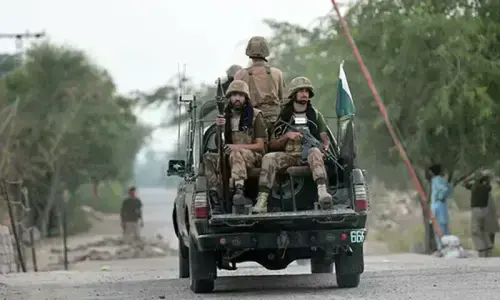
RAWALPINDI: Security forces killed 22 terrorists during a sanitisation operation conducted in Khyber-Pakhtunkhwa’s North Waziristan district, the military’s media wing said on Tuesday.

A statement from the Inter-Services Public Relations (ISPR) said that based on credible intelligence regarding the presence of terrorists, security forces were conducting an operation in the general area of Shewa since Sunday during which, “after intense exchange of fire, 22 khwarij, belonging to Indian-sponsored Fitna al-Khawarij, have been sent to hell in the last 24 hours”.

The ISPR added that weapons and ammunition were recovered from, further saying that they were actively involved in numerous terrorist activities in the area.

“The sanitisation operation is currently in progress, and the area has been effectively cordoned off by security forces,” the statement added.

“Evidence further confirms that khwarij coerced and intimidated the local population, forcing their compliance to obtain safe passage using them as human shield. Such deplorable acts are highly condemnable and no justification can rationalise the endangerment of public lives,” the ISPR said.

It further said that the sanitisation operation continued to eliminate remaining terrorists in the area, as part of the relentless counter-terrorism campaign under the vision ‘Azm-e-Istehkam’, approved by the Federal Apex Committee on the National Action Plan.

“Security forces and law enforcement agencies of Pakistan will continue at full pace to wipe out the menace of foreign-sponsored and supported terrorism from the country,” the statement concluded.

Prime Minister Shehbaz Sharif praised security forces for their successful operation, saying, “security forces are achieving significant successes in the war against terrorism.”

He further added, “Our security forces stand like an iron wall against terrorism. We are committed to completely eradicating all forms of terrorism from the country.”

President Asif Ali Zardari also commended the professionalism of the security forces for their effective operation against terrorists.

He said the use of local civilians as human shields was evidence of the group’s brutality and disregard for human life.

The president also lauded the courage, bravery, and sacrifices of the personnel participating in counter-terrorism operations.

K-P has been battling terrorism since the United States’ ouster from Afghanistan, with terrorists often crossing the border to target police convoys and vehicles, resulting in the deaths of several officials and personnel.

The Pakistan Institute for Conflict and Security Studies, in a report, said that 85 verified terrorist attacks were recorded in April, down from 146 in March, marking a 42% decline, while fatalities from such attacks fell from 106 to 60, extending a downward trajectory that had begun in the previous month.

The report attributed the improvement to Pakistan’s cross-border military campaign against terrorist groups and Taliban positions between February 26 and March 18, which later gave way to a suspension of hostilities and talks in Urumqi, China.

The operation, named Operation Ghazab lil-Haq, had been launched following unprovoked firing by the Afghan Taliban from across the border.

Despite the decline in attacks, overall combat-related deaths, including those from militant violence and security operations, stood at 291 in April.

Militants accounted for 224 of these deaths, representing 77% of the total.

The remaining casualties included 28 security personnel, 37 civilians and two members of pro-government peace committees.

Forgotten Abroad: The Growing Struggles of Overseas Pakistanis in the UAE

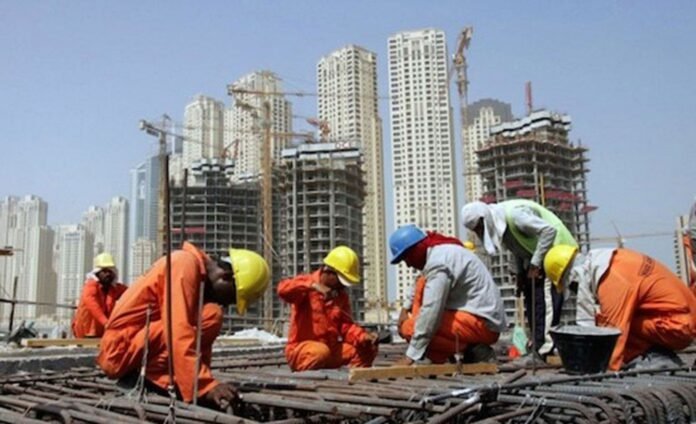
For decades, overseas Pakistanis working in the United Arab Emirates have been celebrated as the backbone of Pakistan’s economy. From Dubai’s towering skyscrapers to Abu Dhabi’s industrial zones and Sharjah’s crowded labor camps, millions of Pakistani workers contribute tirelessly to the Gulf economy while sending billions of dollars back home each year in remittances.

Yet behind this economic lifeline lies a growing humanitarian and administrative crisis. Thousands of overseas Pakistanis in the UAE increasingly complain that while the state proudly counts their remittances, it often abandons them in moments of legal, financial, and personal hardship. From sudden deportations and visa crackdowns to rising living costs and lack of consular support, many workers say they feel trapped between two indifferent systems: one that exploits their labor abroad and another that only remembers them when foreign exchange reserves begin to fall.

The UAE remains one of the largest destinations for Pakistani labor migrants. Construction workers, drivers, cleaners, security guards, mechanics, electricians, and small business employees form the backbone of this workforce. Most arrive with dreams of supporting their families, paying debts, building homes, or funding their children’s education.

But in recent years, many workers report increasing instability.

Strict visa regulations, changing labor policies, and aggressive crackdowns on undocumented workers have left thousands vulnerable to detention, fines, or forced repatriation. Workers whose companies shut down or fail to renew residency permits often become illegal through no fault of their own. Once trapped in this legal limbo, they face mounting penalties and the constant fear of arrest.

Many Pakistanis allege that recruitment agents in Pakistan continue to send workers abroad on false promises of high salaries and secure employment, only for them to discover exploitative conditions upon arrival. Some workers report passport confiscation, unpaid wages, overcrowded accommodations, and employers withholding exit permits or labor rights information.

For low-income laborers already struggling to survive in expensive Gulf cities, even a single missed salary can become catastrophic.

For many stranded workers, returning to Pakistan is no longer simple.

A growing number of overseas Pakistanis complain about the lack of effective institutional support from Pakistani diplomatic missions in the UAE. Workers facing deportation, expired documents, unpaid wages, or labor disputes often describe lengthy delays, bureaucratic indifference, and limited legal assistance.

Many laborers say they cannot even afford airfare back home after months of unemployment or withheld salaries. Others remain stuck because of unpaid fines attached to expired visas or residency violations.

Ironically, the same workers who spend years supporting Pakistan’s economy through remittances often return home with nothing but debt and disappointment. Families who once depended on Gulf income suddenly face financial collapse when a worker is deported or loses employment unexpectedly.

For some, returning home is itself a social burden. Communities that once viewed Gulf migration as a symbol of success often fail to understand the harsh realities workers endure abroad. Many returnees face unemployment, psychological stress, and renewed pressure to migrate again.

Pakistan’s overseas labor policy continues to focus heavily on exporting manpower rather than protecting workers after departure.

While official speeches regularly praise overseas Pakistanis as “national heroes,” labor rights activists argue that the state lacks a comprehensive crisis response system for workers facing emergencies abroad. Legal aid, shelter support, financial counseling, and emergency repatriation mechanisms remain limited and inconsistent.

The role of recruitment agencies also remains weakly regulated. Workers frequently complain about excessive fees, fake contracts, misleading job offers, and poor accountability once problems emerge overseas.

At the same time, overseas Pakistanis argue that their economic importance is not matched by political representation or institutional respect. Despite contributing billions annually through remittances, many feel excluded from national policymaking and ignored during periods of hardship.

Pakistan cannot continue relying on overseas labor while neglecting the welfare of the very workers sustaining the economy.

First, the government must strengthen labor agreements with Gulf states to ensure minimum protections for Pakistani workers, including transparent contracts, wage guarantees, and faster dispute resolution mechanisms.

Second, Pakistani embassies and consulates in the UAE must be transformed into active support centers rather than passive administrative offices. Dedicated legal aid units, emergency shelters, multilingual helplines, and rapid-response complaint systems are urgently needed for distressed workers.

Third, recruitment agencies operating inside Pakistan must face stricter regulation and real accountability. Agencies found guilty of fraud, overcharging, or false promises should face license cancellation and criminal penalties.

Finally, returning overseas workers need reintegration support at home, including employment assistance, skill certification, and financial rehabilitation programs. A worker who spends years serving the national economy abroad should not return home abandoned and invisible.

The story of overseas Pakistanis in the UAE is not only about migration or remittances. It is a story of sacrifice, survival, and systemic neglect.

Every month, workers send money home that keeps households functioning and stabilizes Pakistan’s fragile economy. Yet too many of these same individuals face exploitation abroad and indifference at home.

A nation that proudly depends on overseas remittances cannot afford to treat its migrant workers as disposable economic tools. If Pakistan truly values its overseas citizens, it must move beyond symbolic praise and build real systems of protection, dignity, and accountability.

Until then, thousands of Pakistanis in the Gulf will continue living with the painful belief that while their money is welcomed back home, their struggles are not.

Iran shares revised peace proposal with US

ISLAMABAD: Pakistan has shared with the US a revised proposal from Iran to end the conflict in ​the Middle East, a Pakistani source told Reuters on ‌Monday, as peace talks appeared to remain stalled. “We don’t have much time,” the source said, when asked if it would take time to close gaps, adding ​that both countries “keep changing their goalposts”.

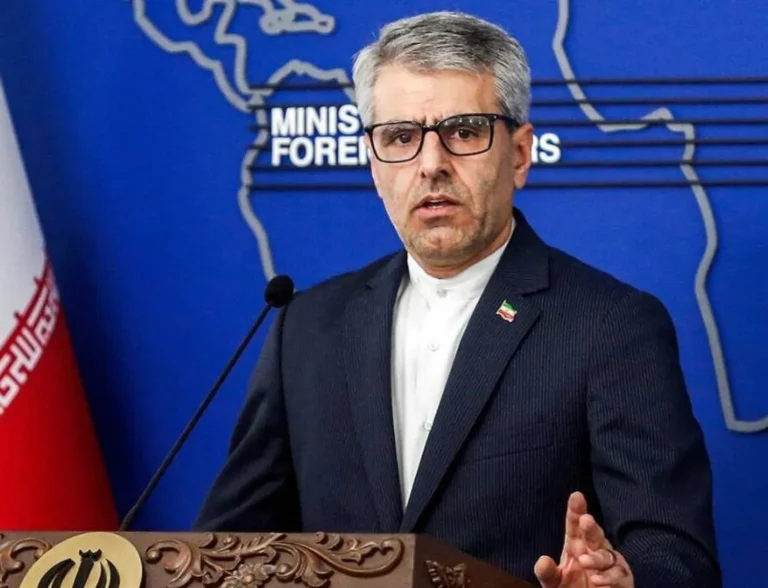
Iranian Foreign Ministry spokesperson ​Esmaeil Baghaei confirmed that Tehran’s views had been “conveyed to the ⁠American side through mediator Pakistan”.

US President Donald Trump said last ​week that a ceasefire with Iran, which was reached in early April, ​was “on life support” after Tehran’s response to a US proposal to end the war made clear the two sides were still far apart on a number ​of issues.

The issues holding up negotiations between the two sides include ​Iran’s nuclear ambitions and its control of the Strait of Hormuz, where it has ‌shut ⁠down shipping traffic that normally carries one-fifth of the world’s oil and liquefied natural gas.

Iran has called for an end to the war on all fronts, including Lebanon, where US ally Israel is fighting ​Iran-backed Hezbollah militants. ​Tehran has ruled ⁠out discussing its nuclear programme before the “permanent end of hostilities”.

Tehran also wants compensation for war damage, an ​end to the US naval blockade, a guarantee ​of no ⁠further attacks, and resumption of Iranian oil sales.

Baghaei said Tehran was prepared for all scenarios. “As for their threats, rest assured that we are fully ⁠aware ​of how to respond appropriately to even ​the smallest mistake from the opposing side,” he told a televised weekly press conference.