Home Blog Page 10

Bilawal inaugurates 39km Shahrah-i-Bhutto linking Qayyumabad to M9 Motorway

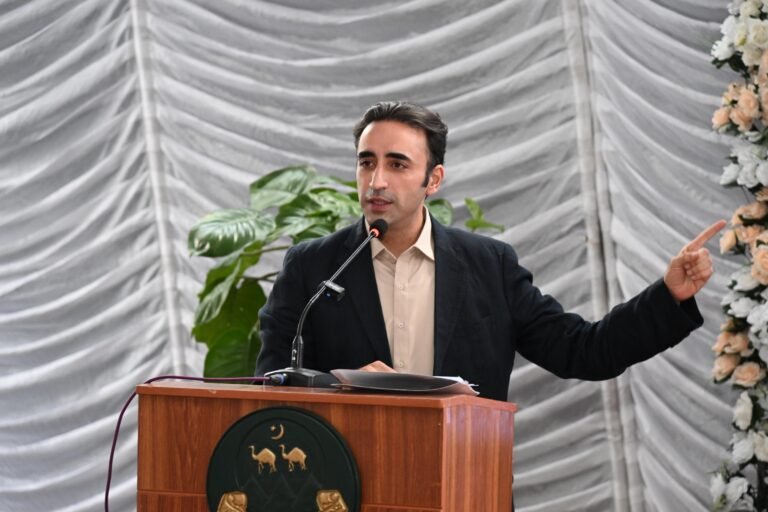
KARACHI: PPP Chairman Bilawal Bhutto Zardari on Friday inaugurated the 39-kilometre-long Shahrah-i-Bhutto Expressway, linking Karachi’s Qayyumabad to the M-9 Motorway.

He also laid the foundation stone for the construction of an expressway project linking Karachi Port to Qayyumabad.

Speaking on the occasion, Sindh Chief Minister Murad Ali Shah said that the expressway has six interchanges, six lanes and a 5-kilometre elevated section.

He said the PPP chairman had inaugurated the first 9-kilometre segment of the project in January 2025. The second 4-kilometre segment was inaugurated in June last year, and the remaining portion is now being inaugurated in May 2026.

CM Murad emphasised that the project took 4 to 4.5 years to complete, and that it could have been finished earlier had the government not prioritised avoiding the displacement of any population along the route.

“If you need to travel outside Karachi, whether to Sindh, Punjab or Balochistan, this project will reduce travel time by around an hour.”

He added that projects worth Rs1,700 billion were underway in Karachi, adding that he had approved over Rs70 billion worth of projects in the past three months alone.

‘Healthcare capital of the country’

Addressing the ceremony, PPP Chairman said, “If one compares the projects completed between 1947 and 2008, one will realise that the PPP is the only government that has undertaken meaningful development projects.”

“Due to the PPP, people from across the country want to visit, work and live in Karachi. We invite them to come here and contribute to this province and its economy,” he said.

He maintained that Karachi is not just the commercial capital of Pakistan, but also the healthcare capital of the country.

He said the Sindh government assumed administrative control of the National Institute of Cardiovascular Diseases (NICVD) in Karachi after the 18th Constitutional Amendment.

“I invite our political rivals to assess the hospital’s situation before and after the 18th Amendment. It has become one of the largest free healthcare institutions in the world,” Bilawal said.

Bilawal said that the Shahrah-i-Bhutto project was completed under a public-private partnership model.

During his speech, Bilawal said that the Pakistani nation was currently facing financial difficulties. “In particular, the Israel–US war with Iran is causing a global financial burden. Poor and hardworking people around the world are bearing that burden.”

“I believe that whoever is working for peace at this time is doing God’s work,” he said.

He thanked Field Marshal Syed Asim Munir and Prime Minister Shehbaz Sharif for their efforts to prevent war.

“We thank them because the PPP has always been against war, especially in view of the country’s financial difficulties,” he said.

He added that his party was also working to ease the financial burden. “We will create opportunities that provide financial relief.”

“We need to launch initiatives that create economic opportunities,” he emphasised.

He also said the Sindh government was leading the country in public-private partnerships.

“We have received global recognition for these partnerships. We have proven that the PPP can deliver on its promises. Through these partnerships, we will create opportunities for the entire nation.”

The PPP chairman also announced the establishment of the Sindh International Financial Centre in Karachi, adding, “It will help improve Karachi’s business growth.”

“Once this project is built, Sindh will compete with the rest of the world.”

He said Pakistan needed to improve its port infrastructure so that the economy could grow.

“The port authority is the government’s responsibility, but I will also try to develop a public-private partnership port,” he said.

Bilawal also said he wanted to ensure that Karachi plays a role in defence production.

“When I was foreign minister, I noted that we were not meeting demand in those years. Now, since the war with India in May, the demand for ‘Made in Pakistan’ defence production has increased.”

“Everyone wants to buy ‘Made in Pakistan’ defence equipment. So I want to establish a defence and security production zone in Karachi. The goal would be to manufacture defence equipment such as drones, ammunition and fighter jets,” he said.

The PPP chairman further added that these projects would also be implemented through public-private partnerships.

Bilawal said some critics in the country often criticise the PPP.

“I encourage my workers to ignore what they say. I am here, and I will not let any of their plans succeed.”

“It is the right of our rivals to criticise us. Right now, Sindh has the most democracy in the country. Karachi has the highest level of democratic freedom of all cities in the country,” he said.

He said the PPP considers criticism part of democracy. “In any other province, political rivals cannot criticise the ruling party.”

“I say that the problems in my city are mine. Anyone sitting elsewhere cannot solve these problems,” he stressed.

On May 14, Sindh Senior Minister Sharjeel Memon announced that the government would fully open the Shahrah-i-Bhutto Expressway in Karachi to the public by the end of May.

Earlier this week, Karachi Mayor Barrister Murtaza Wahab launched the Urban Forest project along the Shahrah-i-Bhutto, aiming to plant 100,000 saplings along the route.

He said it would play a significant role in environmental improvement, reducing air pollution and providing citizens with a healthier environment.
CM Maryam warns against pressure in Momina Iqbal harassment case

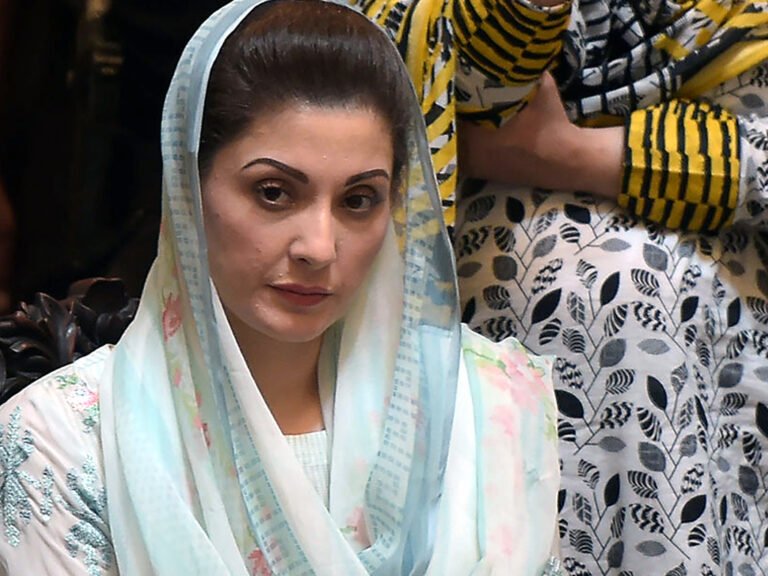
LAHORE: Punjab Chief Minister Maryam Nawaz has warned that any attempts to exert political pressure, abuse influence or exploit a woman by threatening to release “personal content” in the case involving actor Momina Iqbal and PML-N MPA Saqib Chadhar will be met with “firm and uncompromising action”.

In a tweet posted on Friday evening, the CM said the matter is a “personal issue” that will be “addressed strictly on merit and in accordance with the law”.

In a post on social media in which she tagged the PML-N leadership, Momina alleged that she had been subjected to “online harassment, cyberbullying, and death threats for a long time.”

She claimed that both she and her family had suffered severe mental stress and trauma because of the alleged conduct of the MPA, whose identity she did not disclose publicly. His identity was made public after the NCCIA summoned both of them to record their statements.

“A member of the provincial assembly belonging to the PML-N has been threatening me for an extended period. I repeatedly reported the matter to the NCCIA and the Federal Investigation Agency, but no action was taken,” she stated.

“Instead of ensuring justice, attempts were allegedly made to suppress my complaints. Even individuals associated with the office of the chief minister tried to discourage me and silence the issue rather than allowing a fair investigation,” she claimed.

In her tweet, CM Maryam said she would not spare anyone found involved in attempting to harass, threaten, or exploit a woman. “No individual, regardless of status, position, or political connections, is above the law. State institutions will perform their duties independently, impartially, and in accordance with the Constitution and the law,” she said.

“Any attempt to exert political pressure, abuse influence, or exploit a woman through threats of releasing personal content publicly will be met with firm and uncompromising action. Consider this a clear and serious warning to anyone involved.”

On Thursday, Momina and Chadhar appeared before the NCCIA to record their statements.

The same day, Momina’s sister Advocate Rimsha Iqbal, who is fighting her case, told reporters that hurdles were being created in Momina’s marriage that was going to take place next month and threats were even hurled at her fiancé.

“We have evidence to the claim Momina made against the MPA and presented it to the NCCIA,” she said and expressed the hope her sister would get justice.

Chadhar’s lawyer, Mian Ashfaq told reporters that his client and Momina had been friends since 2020-21. “Both came close to marrying but couldn’t. Mr Chadhar provided massive social, administrative and financial benefits to Ms Momina during the last five years. We will provide the details of these benefits to the NCCIA,” he said and added that harassment allegations levelled against his client by the person who remained in relationship with him for such a long period of time did not make any sense.

Chadhar is an electable. He defeated both PML-N and PTI-backed candidates in PP-97, Chiniot, in the last polls held in 2024. After winning the seat, he joined the PML-N.

Pakistan, Turkiye air forces reaffirm growing defence alignment: ISPR

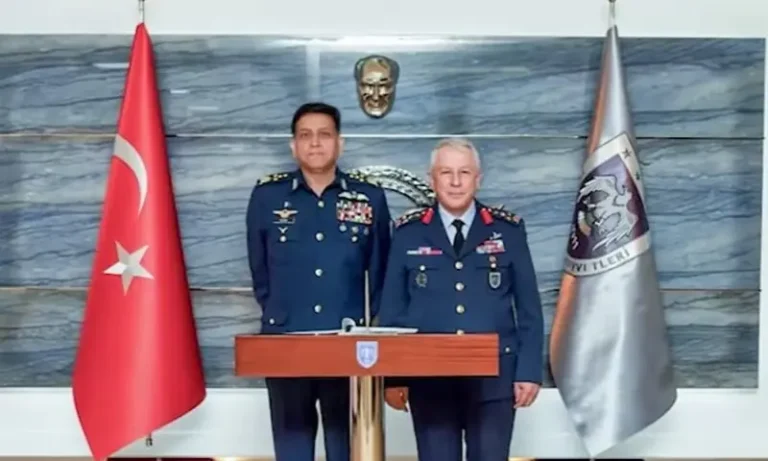
RAWALPINDI: The Pakistan Air Force and the Turkiye Air Force reaffirmed their “growing strategic convergence” in defence, aerospace innovation and emerging technologies, the military’s media wing said on Friday.

Air Chief Marshal (ACM) Zaheer Ahmed Baber Sidhu, during an official visit to Turkiye, held high-level meetings with Turkish Air Force Commander General Ziya Cemal Kadıoğlu, Defence Minister Yaşar Güler, and Baykar Technologies Chief Technology Officer (CTO) Selçuk Bayraktar, the Inter-Services Public Relations (ISPR) said in a statement.

During these engagements, ACM Sidhu reaffirmed “the growing strategic convergence and shared commitment of both nations towards enhanced collaboration in defence, aerospace innovation and emerging technologies”.

At the headquarters of the Turkish Air Force, the air chief was accorded a guard of honour. During the engagement, ACM Sidhu “discussed enhancing interoperability through joint exercises, training programmes, and professional exchanges”.

“The Turkish air chief appreciated Pakistan Air Force’s support in training Turkish pilots,” ISPR said.

ACM Sidhu, in his meeting with Güler, “reaffirmed the strong historical and strategic ties between Pakistan and Turkiye,” the ISPR stated, adding that the two sides also explored “deeper cooperation in training, capacity building and aerospace collaboration”.

The air chief also met Baykar Technologies CTO Selçuk Bayraktar, where discussions focused on “advancements in aerospace innovation, unmanned aerial systems and emerging technologies,” the military’s media wing said.

ISPR added that the discussion reflected the “shared vision of both sides to pursue greater collaboration in next-generation defence technologies”.

Pakistan and Turkiye share robust bilateral relations spanning across various sectors.

Earlier this year, Chief of Defence Forces (CDF) and Chief of the Army Staff (COAS) Field Marshal Asim Munir, in a meeting with Turkiye’s Chief of General Staff General Selcuk Bayraktaroglu, discussed the regional security landscape and bilateral defence cooperation.

It was also reported earlier this year that the country was seeking to join a defence alliance between Saudi Arabia and Pakis­tan, which was signed in September 2025.

World now sees face behind the mask, Pakistan rebukes India at UNSC

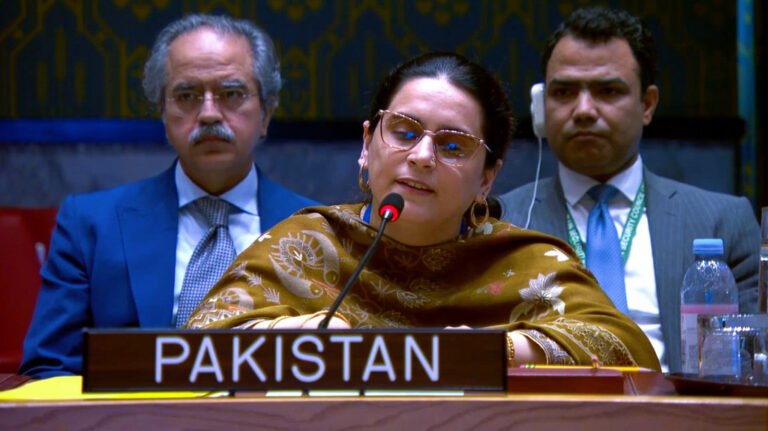
ISLAMABAD: Pakistan on Wednesday hit back at India’s allegations at the United Nations Security Council (UNSC), with Pakistani diplomat Saima Saleem slamming New Delhi as being “a state that exports terrorism abroad, occupies people by force, persecutes minorities at home, weaponises water, commits aggression in the region.”

Her remarks came during a right of reply at the UNSC’s Annual Debate on the Protection of Civilians after India accused Pakistan of ignoring international humanitarian obligations and targeting civilians.

Pakistan had raised concerns over the situation in Indian Illegally Occupied Jammu and Kashmir (IIOJK) during the session. Saima criticised India’s remarks and said New Delhi had appeared before the council “wearing the mask of a victim.” “But the world can see the face behind that mask,” she said.

Earlier in the debate, India’s Permanent Representative to the UN Harish Parvathaneni accused Pakistan of failing to uphold international humanitarian obligations and alleged that it had targeted civilians. He also referred to what he described as Pakistan’s “long-tainted record of genocidal acts,” according to Indian media reports.

The Indian envoy further repeated allegations made by the Afghan Taliban regarding an alleged strike on a hospital in Kabul earlier this year.

Responding to the accusations, Saima said India’s “state-sponsorship of terrorism against Pakistan” had caused significant civilian casualties through militant groups operating from Afghan territory.

“Its terrorist proxies — including the TTP, BLA and Majeed Brigade — have killed thousands of civilians, including women and children in our mosques, markets, schools and streets,” she added.

Saima further said Pakistan’s counterterrorism operations were carried out on the basis of credible intelligence and targeted militant hideouts, training camps, and logistical networks involved in attacks against Pakistani civilians, security personnel, and infrastructure.

“These operations were directed solely against terrorists and their infrastructure, not against the brotherly people of Afghanistan or civilian facilities,” she said.

Saima also dismissed allegations raised by the Taliban administration and echoed by India, calling them part of a “disinformation campaign” intended to conceal attacks against Pakistani civilians.

On IIOJK, the Pakistani diplomat said India could “neither conceal nor deny its occupation of Jammu and Kashmir,” describing the issue as “an internationally recognised dispute that remains on the agenda of this Council.”

“In the occupied territory, civilians are killed, detained, dispossessed, and silenced; homes are demolished, freedoms are crushed, and an entire people are denied their right to self-determination,” she added.

She also criticised India’s treatment of minorities, particularly Muslims, saying the situation should “alarm the conscience of the world.”

“Under state-sponsored Hindutva extremism, Islamophobia has been normalised as policy, hate speech rewarded in politics, mob violence met with impunity,” she said, adding that Muslims, Sikhs, Dalits, and Christians faced discrimination.

Referring to the Indus Waters Treaty, Saima said India’s decision to keep the agreement “in abeyance” reflected disregard for international law. “A State that threatens the water, food security and livelihoods of millions of Pakistanis cannot certainly speak of civilian protection,” she said.

Concluding her remarks, she said Pakistan remained committed to “peace, dialogue, peaceful settlement of disputes and adherence to international law,” while accusing India of “terrorism, occupation, aggression, repression and disregard for international law.”

PM Shehbaz praises steadfast Pak-China friendship, lauds Beijing’s unwavering support

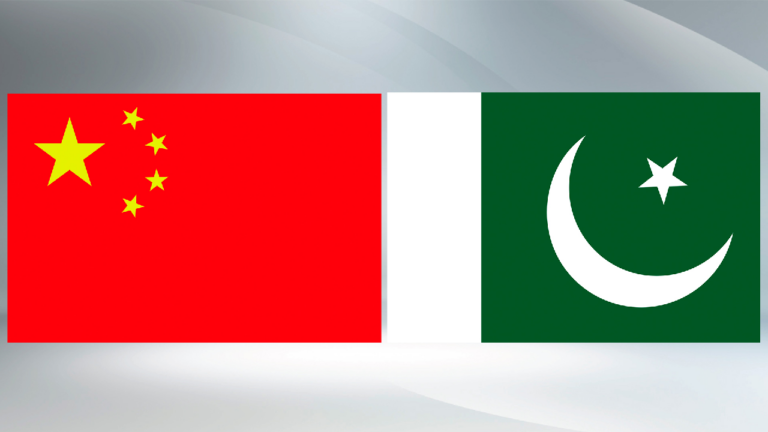
ISLAMABAD: Prime Minister Shehbaz Sharif on Thursday lauded the “steadfast” Pakistan–China friendship, maintaining that Beijing has supported Islamabad in an “unwavering fashion unmatched in the annals of history”.

The premier was addressing a ceremony in Islamabad to mark the 75th anniversary of Pakistan–China diplomatic relations.

The prime minister began his speech by extending felicitations to the Chinese leadership and people on behalf of the government and people of Pakistan.

“Seventy-five years ago, our founding fathers laid the foundation of our bilateral diplomatic relations,” he said, adding: “Pakistan was the first Muslim country to recognise China and one of the first countries in the world to do so.”

“Through our mutual efforts and endeavours, and above all, sincerity of purpose, we have built a relationship that is second to none and very unique in the world,” he said.

He said that throughout these 75 years, the Chinese leadership and people have stood with Pakistan like a “solid rock”.

“Earthquakes, floods, peace and difficult times — China has always supported Pakistan in an unwavering fashion.”

The premier also reaffirmed that Pakistan has always supported the “One China” policy.

“Till today and forever, we support the One China policy, without fear or favour.”

Shehbaz said that the China–Pakistan Economic Corridor (CPEC), under China’s Belt and Road Initiative of President Xi Jinping, was a “great manifestation” of China’s commitment to support Pakistan, promote its economy, provide jobs, and bring prosperity and development.

Referring to recent efforts to hold peace talks between the United States and Iran, the prime minister said that China had “fully supported” Pakistan’s peace initiative.

“There has been a history of supporting each other without political strings or conditions. China has been a steadfast and trusted friend of Pakistan,” he said, adding that the journey would continue.

He said that in the industrial and technological sectors, China was second to none, emphasising that the “world cannot move forward without China.”

The prime minister also reiterated that the security of Chinese nationals in Pakistan was a matter of “paramount importance” for the government.

“We will spare no effort to provide the highest level of security to Chinese nationals.”

‘Cornerstone of Pakistan’s foreign policy’

In his remarks, President Asif Ali Zardari said, “Seventy-five years ago, our two nations began a journey rooted in mutual respect and shared aspirations. Today, this journey has evolved into an all-weather, unique strategic cooperation.”

“Pakistan and China have stood by each other through various challenges, safeguarding each other’s core interests,” President Zardari said.

He emphasised that friendship with China is a cornerstone of Pakistan’s foreign policy, which enjoys “total public, political and institutional support; thus, the relationship enjoys continuity across generations.”

Zardari remarked that President Xi’s initiatives and support for deeper bilateral cooperation had opened new avenues for shared prosperity and regional stability.

President Zardari also thanked the Chinese government for its support in development projects, particularly the Gwadar Port, and termed the CPEC a historic initiative that continues to play a transformative role in Pakistan’s socio-economic progress.

President Asif Ali Zardari, Senate Chairman Yousuf Raza Gillani, National Assembly Speaker Ayaz Sadiq, Deputy Prime Minister and Foreign Minister Ishq Dar and other leaders were present on the occasion. —

‘Historic task of national rejuvenation’

Meanwhile, Vice Chairman of the Standing Committee of the 14th National People’s Congress of China Cai Dafeng, represented the Chinese leadership on the occasion.

“Looking back in history, on May 21, 1951, Pakistan and China formally established diplomatic relations, making Pakistan the first Islamic country to establish diplomatic ties with China,” Dafeng said while addressing the ceremony.

He said that Islamabad and Beijing had together opened a new chapter of mutual “understanding, affinity and integration”.

“For 75 years, we have stayed true to our original aspiration, and that has forged a unique ironclad friendship amid a changing international landscape.”

“Our cooperation carries the amity of our people and demonstrates the true essence of being good neighbours, good friends, good partners, and good brothers,” he said.

He also recalled the Chinese president’s visit to Pakistan in 2015, adding that it had elevated bilateral relations between Pakistan and China to an all-weather strategic cooperative partnership and drawn a blueprint for cooperation between the two countries.

In 2018, he added that the two countries had agreed to build an even closer community with a shared future for a new era.

“At present, both China and Pakistan shoulder the historic task of national rejuvenation. We are both committed to the dream of building prosperous countries.”

Dafeng said that as changes were unfolding like never before, there was a greater need than ever to work closely together.

“China-Pakistan relations are characterised by a high degree of political mutual trust.

“China also firmly supports Pakistan in safeguarding its national independence, sovereignty, territorial integrity, and national dignity,” he said.

He reaffirmed that China is ready to work with Pakistan to strengthen strategic communication and maintain high-level exchanges, providing timely guidance for the development of bilateral relations.

Dafeng added that China stood ready to work with Pakistan to build CPEC 2.0.

“China stands ready to strengthen cooperation in agriculture, mining and industry, and to expand collaboration further into areas such as IT, digital technology, science and technology, the oceans, green development, and climate change.”

He also supported Pakistan’s efforts to combat terrorism, expressing hope that Pakistan would continue to take strong and effective measures.

War on terror to continue with full national resolve: CDF Munir

RAWALPINDI: Chief of Defence Forces (CDF) and Chief of the Army Staff Field Marshal Asim Munir reaffirmed on Thursday that Pakistan’s fight against terrorism “will continue with full national resolve” until “enduring peace and stability” were achieved across the country, the military’s media wing said.

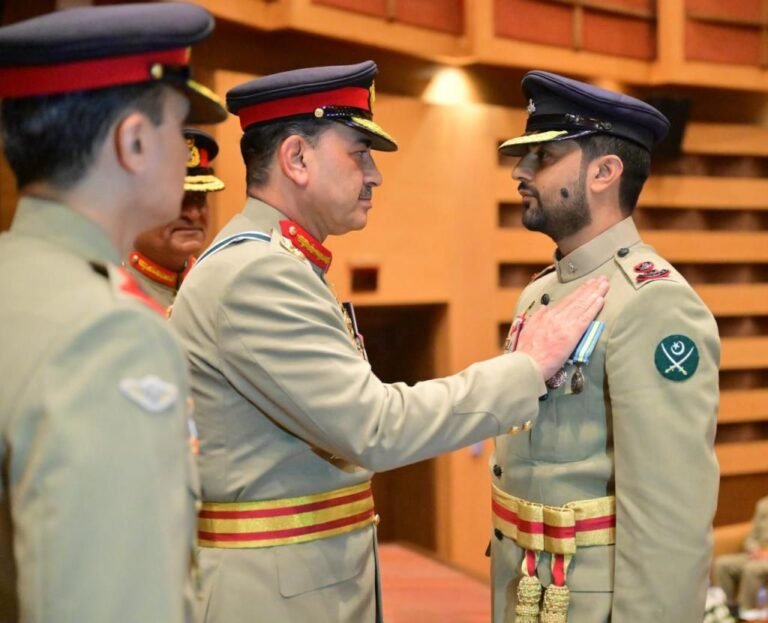
CDF Munir made the declaration at an investiture ceremony held at the General Headquarters (GHQ) in Rawalpindi to confer military awards on officers and soldiers of the Pakistan Army,” Inter-Services Public Relations (ISPR) said in a statement.

The CDF was the chief guest at the ceremony, where he “conferred awards on the families of shuhada (martyrs), officers and soldiers in recognition of exceptional gallantry in operations and distinguished services rendered to the nation”, the statement said.

It added that awards conferred on the occasion included 50 Sitara-i-Imtiaz (Military) and 12 Tamgha-i-Basalat. “Medals awarded posthumously were received with honour by families of shuhada,” it said.

“Shuhada and Ghazis remain the enduring pride of the nation. Their honour and sacrifice are a sacred trust for every Pakistani. Peace and security of our motherland are owed to their supreme sacrifices and unwavering devotion to duty,” ISPR quoted the army chief as saying at the ceremony.

It added that CDF Munir also “expressed profound admiration for the resilience, dignity and steadfastness demonstrated by the families of shuhada, acknowledging their unparalleled sacrifices and unwavering commitment to the homeland”.

He further appreciated the “operational preparedness and unwavering resolve” of Pakistan’s armed forces and law enforcement agencies (LEAs).

According to the statement, he also “lauded their sustained efforts against terrorists and reaffirmed that the fight against terrorism will continue with full national resolve until enduring peace and stability are achieved across the country”.

Aga Khan vows continued cooperation with Pakistan at PM-hosted breakfast

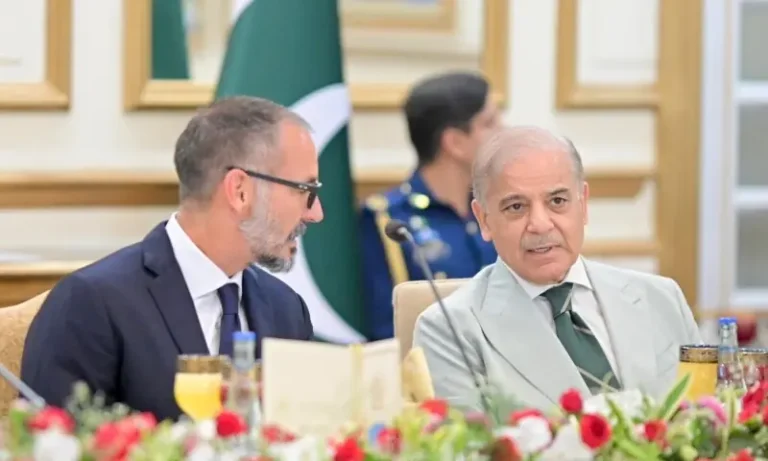
ISLAMABAD: Prince Rahim al-Hussaini Aga Khan V on Thursday expressed the desire to continue cooperation with Pakistan in various human development initiatives during a breakfast meeting hosted by Prime Minister Shehbaz Sharif, the Prime Minister’s Office (PMO) said.

Prince Rahim is undertaking his first visit to Pakistan since being named the spiritual leader of the Ismaili community last year.

According to a statement by the PMO, the premier warmly welcomed Prince Rahim and appreciated his commitment to fostering peace, stability, and constructive engagement with governments and international partners. The prime minister also assured him of Pakistan’s shared commitment to these ideals.

PM Shehbaz also highlighted the longstanding partnership between Pakistan and the Aga Khan Development Network (AKDN), and commended the organisation’s contributions in rural development, healthcare, education, disaster resilience, climate adaptation, renewable energy, digital skills training, and youth entrepreneurship, it said.

He particularly appreciated AKDN’s impactful work in Gilgit-Baltistan (GB) and Chitral, especially in remote and vulnerable communities.

“The prime minister encouraged AKDN to deepen and expand its partnership with Pakistan, particularly in GB and Chitral, where the network’s institutional presence and community outreach are highly valued. He also welcomed enhanced engagement with Aga Khan University, noting its major contributions in healthcare and higher education,” the PMO statement added.

Recognising Prince Rahim’s advocacy for environmental stewardship, the prime minister emphasised that AKDN remained a “natural and trusted partner in Pakistan’s efforts to strengthen climate resilience, particularly in glacially vulnerable northern areas”.

The statement added that PM Shehbaz thanked Prince Rahim for visiting Pakistan and assured him that the country would always remain his second home. The premier expressed the hope that his “regular visits would further strengthen the longstanding bonds between Pakistan and the Ismaili community”.

The prime minister also expressed his gratitude to Prince Rahim for his generosity in making the Serena Hotel available on a gratis basis for the Islamabad Talks, it added.

Further, the prime minister extended heartfelt condolences on the passing of Prince Rahim’s father, Prince Karim Aga Khan IV. He paid tribute to the late Aga Khan’s enduring humanitarian legacy and his longstanding association with Pakistan spanning nearly seven decades.

According to the PMO, PM Shehbaz also presented a commemorative stamp issued by Pakistan Post to honour the late Aga Khan’s services to the country.

Meanwhile, Prince Rahim thanked the prime minister for a warm welcome extended to him and “expressed his desire to continue cooperation with Pakistan in various human development initiatives”.

Prince Rahim al-Hussaini Aga Khan V was named the 50th spiritual leader of the Ismaili community last February, following the death of his father, Prince Karim Al-Husseini Aga Khan IV, in Lisbon at the age of 88.

Mohsin Naqvi meets IRGC chief in Tehran

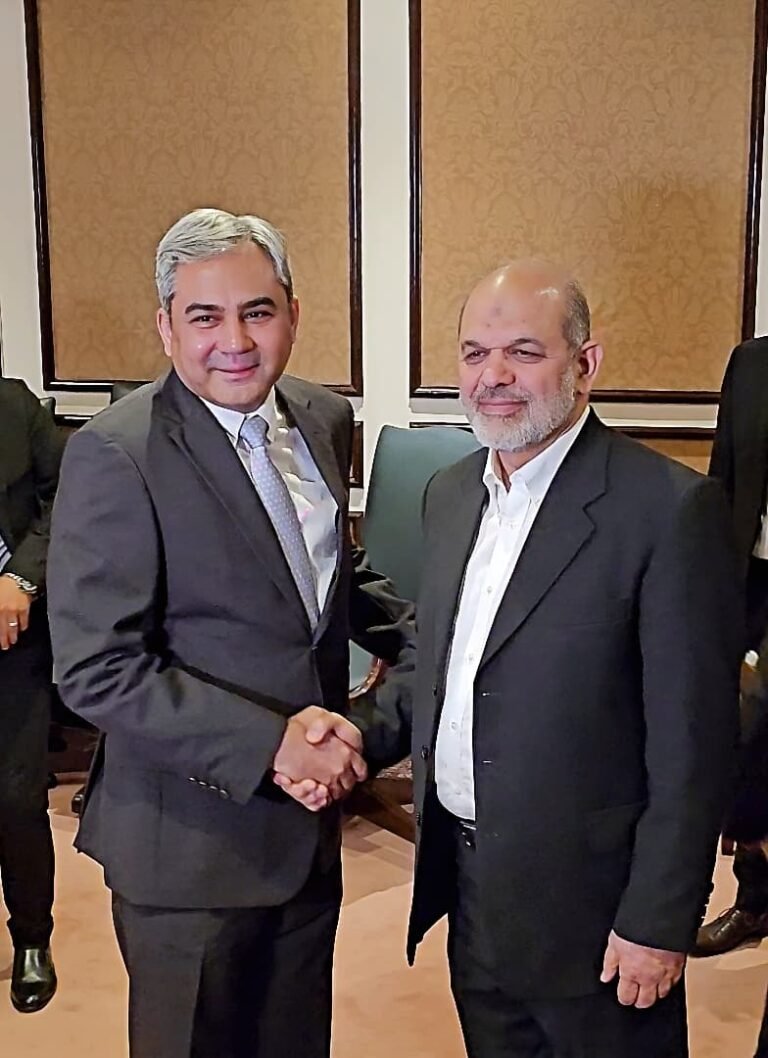
ISLAMABAD: Interior Minister Mohsin Naqvi met Islamic Revolutionary Guard Corps (IRGC) chief Gen Ahmad Vahidi in Tehran during his visit to Iran for meetings with senior Iranian officials, PTV News reported on Wednesday.

Earlier, Iran’s state-run IRNA news agency reported on Wednesday, citing informed diplomatic sources in Islamabad, that Naqvi had travelled to Tehran to hold talks with Iranian officials.

According to the report, the interior minister departed for Tehran for discussions with Iranian authorities.

During the visit, Naqvi held a meeting with Gen Vahidi in Tehran, PTV News added.

The visit marks Naqvi’s second trip to Iran in less than a week.

Multiple Pakistani government sources familiar with the matter told Anadolu that Naqvi arrived to discuss a “fresh” US proposal with Iranian leaders aimed at ending the lingering Middle East conflict.

The sources said Pakistan-led mediation efforts between Washington and Tehran had entered a “critical phase”.

Naqvi met Gen Vahidi to discuss attempts to revive stalled talks between the two sides, according to the interior ministry.

He also met his Iranian counterpart, Eskandar Momeni.

According to Pakistani government sources, the minister is also expected to meet Iranian President Masoud Pezeshkian, Foreign Minister Abbas Araghchi and other senior officials to discuss the latest US proposal.

The fragile talks between Washington and Tehran have entered a sensitive stage after the two sides exchanged fresh proposals this week, the sources said.

“Currently, Pakistan’s top priority is to further strengthen the ceasefire and persuade the two sides to hold another round of direct talks,” the sources said.

They added that prospects for a second round of direct negotiations in Islamabad had improved following recent developments, including US President Donald Trump’s decision to postpone planned strikes on Iran.

Trump said on Monday that he delayed renewed attacks after several regional countries informed him that a deal to fully end the conflict was close.

He said leaders from Saudi Arabia, Qatar, the United Arab Emirates and other countries asked him to delay strikes “because they think that they are getting very close to making a deal”.

The latest US proposal offers “slightly better incentives” to Iran compared to previous offers, the sources said, without disclosing further details.

According to the sources, the proposal includes issues related to Iran’s frozen assets and international sanctions imposed on Tehran.

However, they said Washington offered “no new concession” regarding Iran’s nuclear programme, which remains the central obstacle to reaching an agreement.

Under a 14-point Iranian proposal previously reported by Anadolu, Tehran seeks separate negotiations on its nuclear programme, including enriched uranium issues, within 30 days after a permanent ceasefire is reached.

Washington, however, wants the nuclear issue to be “discussed and resolved” before any permanent ceasefire agreement.

The proposal for “third-party monitoring” also remains under discussion, mainly on the Iranian side, the sources added.

Regional tensions have escalated since the US and Israel launched strikes against Iran in February.

Tehran retaliated with attacks targeting Israel as well as US allies in the Gulf, alongside the closure of the Strait of Hormuz.

A ceasefire took effect on April 8 through Pakistani mediation, but subsequent talks in Islamabad failed to produce a lasting agreement. Trump later extended the truce indefinitely.

Pakistan, China share aligned vision on regional, global issues: Dar

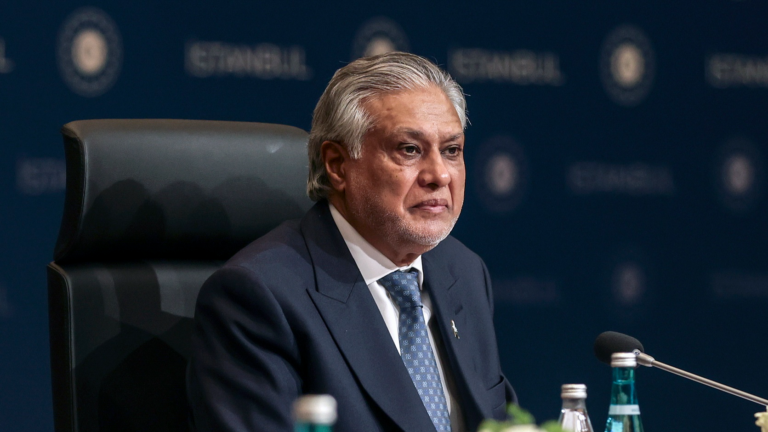
ISLAMABAD: Deputy Prime Minister and Foreign Minister Ishaq Dar on Wednesday said Islamabad and Beijing shared a “converging vision” on regional and global matters.

“Pakistan and China share a converging vision on regional and global issues,” said Dar while addressing the Senate.

A Chinese delegation was present in the visitors’ gallery to mark the 75th anniversary of the establishment of diplomatic relations between Pakistan and China.

“We are committed to upholding the purposes and principles of the UN Charter in a world facing complex challenges,” the foreign minister said.

Dar stressed that cooperation between Pakistan and China at the United Nations, the Shanghai Cooperation Organisation (SCO), and other international forums had been “vital in defending the interests of developing countries and promoting global peace”.

During his address, Dar said that he will be accompanying PM Shehbaz Sharif on his state visit to China from May 23 to 26, during which they will also attend celebrations marking the 75th anniversary of Pak-China ties.

During the visit, they would engage with the Chinese leadership, including President Xi Jinping and Premier Li Qiang, besides business-to-business (B2B) meetings.

“We would also have meetings of two very important mechanisms: Pakistan-China Political Forum and CPEC Joint Consultative Mechanism,” Dar said, adding that a large multi-party parliamentary delegation from Pakistan would be attending many of these meetings.

Dar highlighted the joint initiative by the two neighbours to “promote peace and stability in the Gulf and the Middle East, noting that it reflected a “shared sense of responsibility as peace-loving nations to contribute to global security and stability”.

Recalling his visit to China in late March, Dar said, “We came up with a five-point initiative for a peace plan in the conflict, and this has been accepted and endorsed by dozens of countries on the globe.”

Dar noted he had been in “constant touch” with China’s FM Wang Yi and other colleagues from the region throughout the Middle East conflict that began with US-Israeli strikes on Iran on February 28.

The deputy PM observed that over the past 75 years, the relationship between Islamabad and Beijing has “grown from strength to strength into a robust economic and strategic partnership”.

“From the Karakoram Highway to Gwadar Port, the symbols of Pak-China friendship are spread all across Pakistan’s geography,” Dar remarked.

He added that the China-Pakistan Economic Corridor (CPEC) stood “as a flagship project of the Belt and Road Initiative and a shining example of shared vision for regional connectivity and prosperity”.

Stressing that CPEC has played a key role in transforming Pakistan’s economic landscape, Dar said Islamabad looked forward to its next phase, CPEC 2.0, “focusing on industrialisation, agriculture, IT and socio-economic development”.

“We are confident that the benefits of the Pak-China partnership will reach every citizen of Pakistan,” the deputy premier said, recalling the two countries’ efforts in 2013 to “overcome” loadshedding in Pakistan.

“China gave massive support in eliminating the outages and loadshedding in Pakistan. We will always remain grateful to China.”

In a press release, the Foreign Office said Dar “reaffirmed Pakistan’s unwavering commitment to further deepening bilateral cooperation across all domains, including political, economic, strategic, and people-to-people exchanges”.

He highlighted the “shared resolve to carry this iron-clad friendship forward for future generations”.

A delegation from China led by Cai Dafeng, vice chairman of the Standing Committee of the 14th National People’s Congress (NPC) arrived in Islamabad earlier today to attend the commemorative activities marking the 75th anniversary of Pak-China diplomatic ties, APP reported.

The delegation was received by National Assembly Deputy Speaker Syed Ghulam Mustafa Shah, along with MNA Romina Khurshid Alam, convener of the Pakistan-China Parliamentary Friendship Group.

Citing a statement issued by the FO spokesperson, APP said the Chinese delegation will remain in Islamabad from May 20-21.

In his remarks on the floor of the Senate, Law Minister Azam Nazeer Tarar noted, “Few friendships between nations carry the confidence and consistency seen between Pakistan and China.”

He said Pak-China relationship was “built on mutual trust, steadfast support, and full respect for each other’s sovereignty and core interests”.

“It has been tested by time and circumstances, and it has never wavered,” Tarar highlighted.

Prince Rahim Aga Khan V lands in Islamabad

ISLAMABAD: Prince Rahim Aga Khan V, the spiritual leader of the Ismaili community, arrived in Islamabad on Wednesday, the Presidency confirmed.

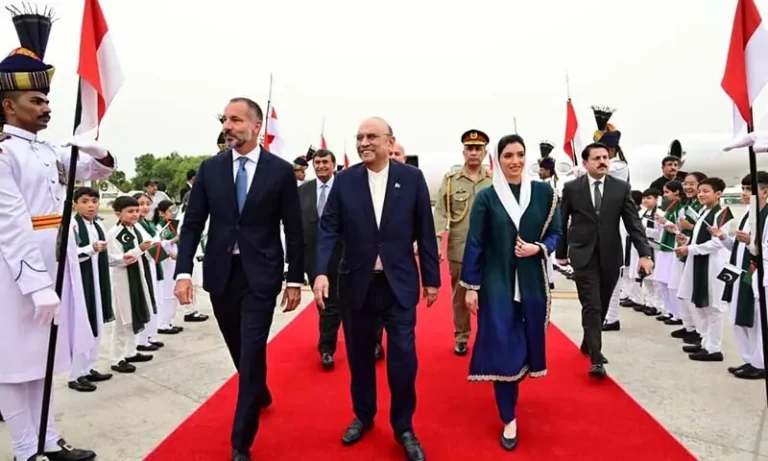
On arrival at Nur Khan airbase, Prince Rahim was received by President Asif Ali Zardari. He received an honour guard at President House, where he was flanked by the president as the national anthem was played.

According to a statement, Prince Rahim is visiting Pakistan from May 20-26. Among his many engagements, he is expected to meet officials from the government and Gilgit-Baltistan (GB) in the federal capital.

Preparations in GB reached a fever pitch, prompting a large-scale mobilisation of federal and regional resources, officials said earlier on Friday.

The plans were reviewed at a meeting where Minister for Kashmir Affairs and Gilgit-Baltistan, Amir Muqam, was briefed on the details.

Officials anticipate large gatherings in the Passu Cones area of Hunza; Gilgit City, Gahkuch Bala, and Taus Yasin. The administration is considering holding multiple sessions at certain venues to manage the expected crowds, officials told the minister.

For security and travel, the federal government has been requested to provide a bulletproof vehicle. Recommendations were also made to immediately open Babusar Road as an alternative route and to keep the National Highway Authority on alert at sensitive points.

Prince Rahim al-Hussaini Aga Khan V was named the 50th spiritual leader of the Ismaili community last February, following the death of his father, Prince Karim Al-Husseini, Aga Khan IV, in Lisbon at the age of 88.

The US-educated, Swiss-based Rahim has served on the boards of many agencies of the Aga Khan Development Network and chairs its Environment and Climate Committee, according to the website.

The late Prince Karim is renowned in GB for his unwavering commitment to the region’s socio-economic development and efforts to lift the population out of poverty and deprivation.