Home Blog Page 9

Pakistan tightens airport screening after WHO declares Ebola emergency

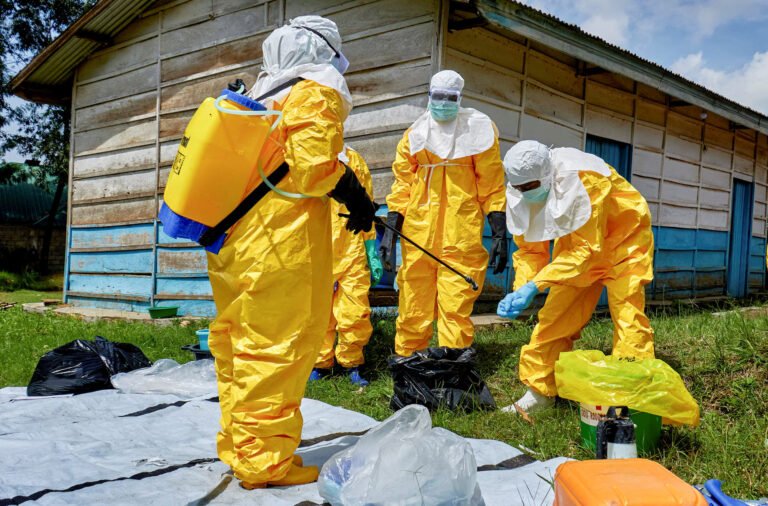
ISLAMABAD: In light of the World Health Organisation’s (WHO’s) declaration of the Ebola outbreak in Congo and Uganda as a global emergency, Pakistan has intensified screening measures at airports across the country, along with other precautionary steps.

According to the Ministry of National Health Services, Regulations and Coordination on Saturday, Federal Health Minister Mustafa Kamal directed authorities to implement strict precautionary screening protocols at all airports to prevent the possible spread of the virus.

The ministry said the current Ebola outbreak remains confined to the African countries of Congo and Uganda, citing WHO reports that no cases had been detected outside Africa so far.

Travellers intending to visit African countries have been advised to review relevant travel and health guidelines before departure.

The ministry further stated that no Ebola case had ever been reported in Pakistan or neighbouring countries, adding that Pakistan faced a very low risk due to limited travel links with the affected African states.

However, following WHO directives to strengthen precautionary surveillance, health authorities have stepped up monitoring and preparedness measures nationwide, although no travel restrictions have been recommended.

The health minister said preventive steps were being taken proactively in view of the recent spread of the virus, emphasising that “effective measures are being ensured to protect the public from epidemics.”

The health ministry and the National Institute of Health are continuously monitoring the situation in coordination with the WHO.

Authorities have directed all provinces and border health services to remain vigilant, while the Ministry of Health and its affiliated institutions have been placed on high alert to respond to any emergency situation.

The ministry noted that Pakistan possessed the capacity to diagnose Ebola and said directives had been issued to ensure all necessary arrangements and preparedness measures are in place.

Health authorities are also closely coordinating with the WHO to monitor developments related to the outbreak.

PM Shehbaz arrives in Hangzhou on four-day China visit

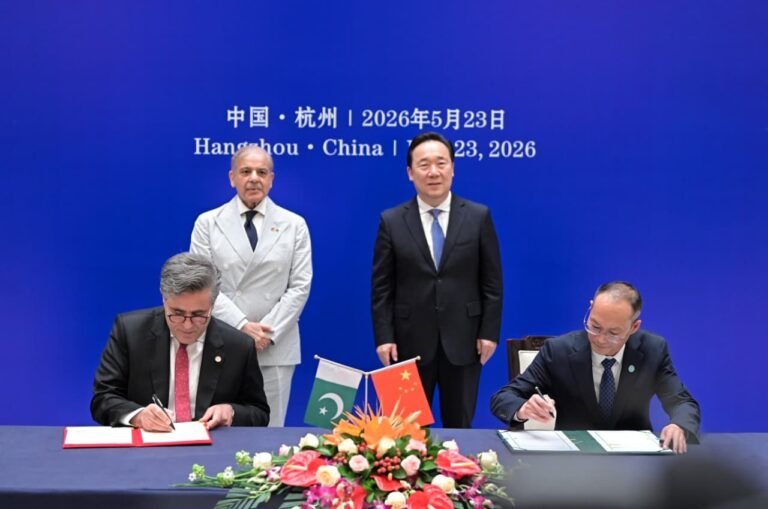
ISLAMABAD: Prime Minister Shehbaz Sharif landed in Hangzhou on Saturday in the first phase of his four-day visit to China, the Government of Pakistan’s official X account stated.

Upon his arrival at Hangzhou Xiaoshan International Airport, PM Shehbaz was welcomed by Deputy Governor of Zhejiang Xu Wenguang, Chinese Ambassador to Pakistan Jiang Zaidong, and Pakistan’s Ambassador to China Khalil Hashmi.

Deputy Prime Minister and Foreign Minister Ishaq Dar, Planning Minister Ahsan Iqbal, Information Minister Attaullah Tarar, IT Minister Shaza Fatima Khawaja, and Special Assistant Tariq Fatemi are accompanying the premier on his visit.

In a statement issued shortly after his arrival, the premier expressed gratitude to the provincial leadership for the reception accorded to the Pakistani delegation.

“I have arrived in the beautiful and dynamic city of Hangzhou, as part of my official visit to China,” PM Shehbaz said in a statement on X.

“I am deeply grateful to the leadership of Zhejiang Province for the warm welcome extended to me and my delegation,” he added.

The prime minister said Pakistan was keen to expand cooperation with Zhejiang Province in a range of sectors, particularly those linked to technology and economic development.

“We look forward to strengthening practical cooperation with Zhejiang Province across diverse fields, including the digital economy, e-commerce, information technology, telecommunications, agriculture, renewable energy, advanced manufacturing, and skills development,” he said.

Referring to the longstanding ties between Islamabad and Beijing, the premier said the visit coincided with a significant milestone in bilateral relations.

“As Pakistan and China commemorate 75 years of diplomatic relations, I look forward to engaging with President Xi Jinping and the Chinese leadership, while reaffirming our shared commitment to further strengthening the enduring bond of friendship between our two brotherly nations,” he said.

Similarly, DPM Dar said he was “delighted” to be in Hangzhou alongside the prime minister and members of the Pakistani delegation during the visit.

“Delighted to be in beautiful Hangzhou, China with Prime Minister Shehbaz Sharif and members of Pakistan delegation,” Dar said in a statement shared on X.

He said the delegation was looking forward to a series of engagements during the visit, including high-level meetings and participation in the Pakistan-China Business-to-Business Investment Conference scheduled to take place in Hangzhou on May 24.

The foreign minister said the visit carried added importance as Islamabad and Beijing marked a major milestone in bilateral relations.

“The Prime Minister’s visit and our engagements carry special significance as Pakistan and China celebrate 75 years of their ironclad friendship,” he said.

According to the government’s post, while in Hangzhou, PM Shehbaz will meet Party Secretary of Zhejiang Province Wang Hao, participate in a business forum held to promote cooperation between Pakistani and Chinese companies under CPEC Phase-II, and attend the ceremony for the exchange of agreements and memorandums of understanding (MoUs).

Further, the premier will hold meetings with the CEOs of prominent Chinese companies and will visit the headquarters of Alibaba, participating in the signing ceremony of MoUs on cooperation.

Eight terrorists killed in joint CTD-police operation in Bannu

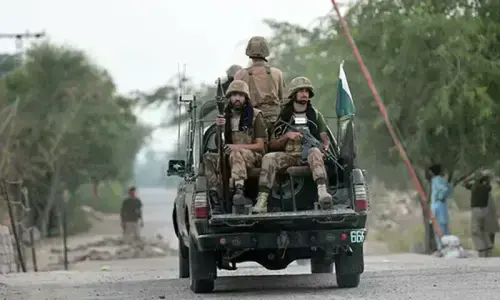
BANNU: Eight terrorists were killed in a joint operation conducted by the Counter Terrorism Department (CTD) and police in Khyber-Pakhtunkhwa’s Bannu district on Saturday, Inspector General of Police (IGP) Zulfiqar Hameed confirmed.

According to Hameed, the joint operation was launched early in the morning based on credible intelligence about the presence of terrorists belonging to the Indian proxy Fitna al-Khawarij. It was directly supervised by the Superintendent of Police (SP) Rural Bannu, with two Sub-Divisional Police Officers (SDPOs) and the CTD SP also present at the site.

Read: Five suspected terrorists killed in Bannu operations after Fateh Khel attack

“Modern drone surveillance and advanced technology were deployed to monitor the movement and possible hideouts of terrorist elements, while the area was completely cordoned off,” he said.

IGP said that one police official was martyred during the exchange of fire, while another sustained injuries and was shifted to the hospital for immediate medical treatment.

During the operation in Bannu, Abdullah — described by authorities as a key commander of the banned Fitna al-Khawarij — was killed, officials said. He was wanted in multiple cases, including attacks on police personnel and other serious offences.

Days before the operation, a video allegedly showing Abdullah had circulated on social media, in which he could be seen issuing threats and challenging security institutions.

Fitna al Khawarij is a term the state uses for terrorists belonging to the banned Tehreek-e-Taliban Pakistan.

Separately, an Improvised Explosive Device (IED) was also recovered near Azad Mandi on Miranshah Road and defused through timely action.

IGP praised the courage, bravery, and professional expertise of the Bannu Police and CTD teams, saying “K-P police possessed full capability to crush the evil intentions of terrorists on every front.”

“The brave personnel have once again proved their readiness to make every sacrifice for the protection of the nation,” he added.

The IGP also announced special rewards for the police team that participated in the operation.

He reaffirmed that operations against the Fitna al-Khawarij and anti-peace elements would continue with greater intensity, warning that every attack by the enemy would be responded to forcefully.

“K-P Police is standing on the frontline for the protection of the lives and property of the public,” he said, reiterating the resolve to continue operations without interruption until the complete elimination of terrorism.

Interior Minister Mohsin Naqvi paid tribute to the police and CTD over the successful operation, praising their bravery and professionalism for “sending eight terrorists of Fitna al-Khawarij to hell.”

“K-P police and CTD foiled the evil designs of the Khawarij through timely action,” said Naqvi. “Salute to the entire team of police and CTD for bringing the terrorists to a dreadful end,” he added.

The minister also paid tribute to the police official who was martyred while confronting the terrorists, expressing heartfelt sympathy and condolences to the family of the slain officer.

K-P has been battling terrorism since the United States’ ouster from Afghanistan, with terrorists often crossing the border to target police convoys and vehicles, resulting in the deaths of several officials and personnel.

The Pakistan Institute for Conflict and Security Studies, in a report, said that 85 verified terrorist attacks were recorded in April, down from 146 in March, marking a 42% decline, while fatalities from such attacks fell from 106 to 60, extending a downward trajectory that had begun in the previous month.

The report attributed the improvement to Pakistan’s cross-border military campaign against terrorist groups and Taliban positions between February 26 and March 18, which later gave way to a suspension of hostilities and talks in Urumqi, China.

The operation, named Operation Ghazab lil-Haq, had been launched following unprovoked firing by the Afghan Taliban from across the border.

Despite the decline in attacks, overall combat-related deaths, including those from militant violence and security operations, stood at 291 in April.

Militants accounted for 224 of these deaths, representing 77% of the total.

The remaining casualties included 28 security personnel, 37 civilians and two members of pro-government peace committees.

CDF Munir, Pezeshkian hold high-level talks to advance diplomacy

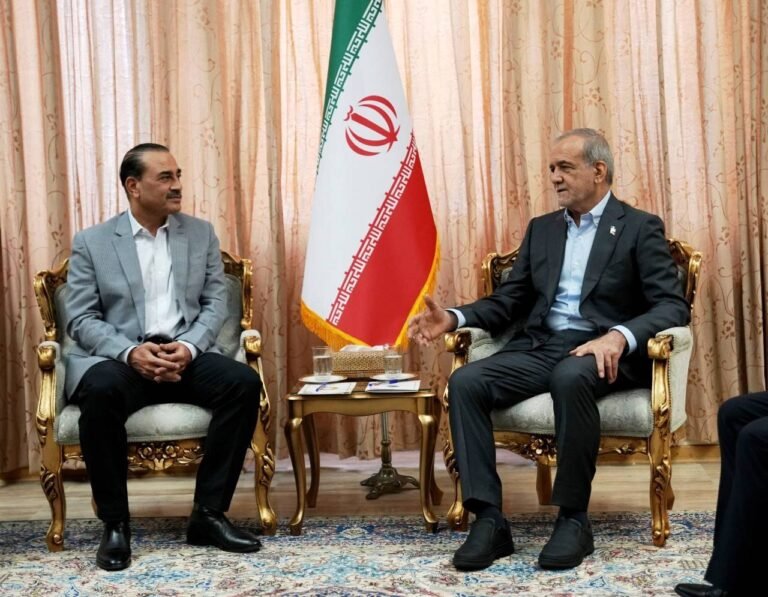
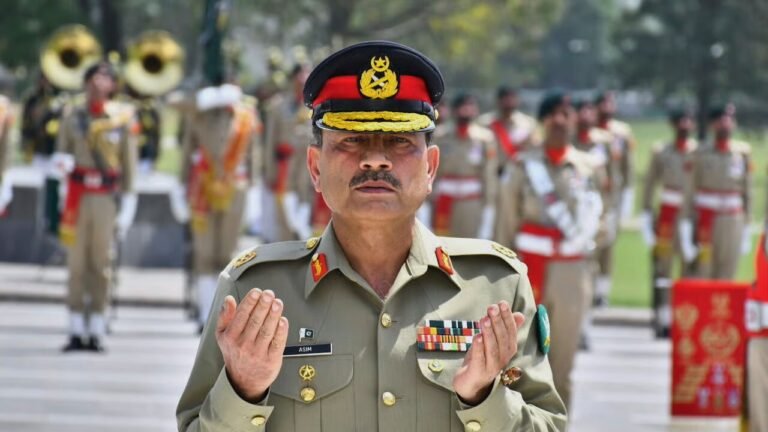
ISLAMABAD: Chief of Defence Forces and Chief of the Army Staff Field Marshal Asim Munir met Iranian President Masoud Pezeshkian in Tehran on Saturday for high-level talks to advance diplomatic initiatives, according to Press TV.

Reuters reported Iran’s top negotiator and Parliament Speaker Mohammad Bagher Ghalibaf told CDF Munir during a meeting that Iran would not compromise on the rights of its nation and country, state TV reported.

He said that Iran’s armed forces had rebuilt their capabilities during the ceasefire and that if the US “foolishly restarts the war”, the consequences would be “more crushing and bitter”.

Earlier, he held talks with Iranian Foreign Minister Abbas Araghchi in Tehran as Islamabad stepped up diplomatic efforts to help mediate between Iran and the US, Iran’s state media reported on Saturday.

Both sides exchanged views on the latest diplomatic initiatives aimed at preventing further escalation and ending the Iran war in talks that lasted late into the night, the report said.

He held a second meeting with Araghchi later in the day again.

The field marshal had reached Tehran on Friday as part of ongoing mediation efforts. He was received and warmly welcomed by Iranian Interior Minister Eskandar Momeni. Interior Minister Mohsin Naqvi was also present at the reception.

China opposes US mid-range missile deployments in Asia, urges policy reversal: FM

0

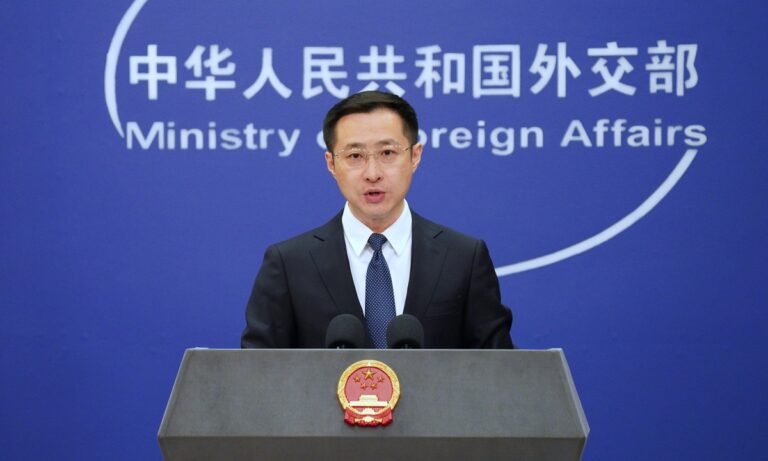
BEIJING: When asked to comment on reports that the US is planning to deploy the Typhon mid-range missile system at Kanoya Air Base in Kagoshima Prefecture, Japan, from June to September for joint military drills, and relocate the system to US military bases in Japan after the exercises, Chinese Foreign Ministry spokesperson Guo Jiakun said on Friday that China has noted the relevant reports and firmly opposes the deployment of mid-range missile systems by the US in Asian countries and had repeatedly voiced concerns over the issue.

Guo said the Typhon missile system is a strategically offensive weapon. It undermines the legitimate security interests of other nations, endangers regional strategic security, and heightens the risks of military confrontation and arms races, bringing nothing but harm to regional peace and stability. People across many Asian countries, including Japan, have long voiced persistent opposition. 

China urges the US and Japan to heed calls from regional countries, rectify erroneous moves, and take concrete actions to safeguard regional peace and stability, Guo told a regular press conference.

The spokesperson added that this move serves as further evidence of Japan’s accelerating remilitarization. Multiple signs indicate that right-wing forces in Japan are seeking an overall overhaul of military capabilities to prepare for “protracted warfare.” Such acts essentially hollow out constraints set by Japan’s constitution, international law and domestic legislation, and challenge the post-war international order, running counter to Japan’s self-proclaimed identity as a peace-loving nation. 

The rising “neo-militarism” in Japan poses grave hazards and risks triggering regional turmoil once again. The international community must draw lessons from history, stay highly vigilant and jointly curb such tendencies, Guo said.

CDF Asim Munir departs for official Iran visit: security sources

ISLAMABAD: Chief of Defence Forces (CDF) and Chief of the Army Staff (COAS) Field Marshal Syed Asim Munir departed on an official visit to Iran on Friday, security sources said.

The CDF will discuss US-Iran talks, peace in the region and other important issues during the visit, the sources said. He will also meet with senior Iranian officials.

US Secretary of State Marco Rubio commented about CDF Munir’s visit to Tehran, saying that the US was in “constant communication with him [and] the highest levels of our government are constantly talking to him”.

He also praised Pakistan for doing an “admirable job” trying to mediate a peace deal between Washington and Tehran.

“The primary interlocutor on this has been Pakistan and continues to be and they’ve done a, you know, I think an admirable job. And that’s what we continue to work through,” Fox News quoted Rubio as saying.

“Obviously, other countries … may have their own situation going on. We talk to all of them. But I would just say that the primary country we’ve been working with on all of this is Pakistan, and that remains the case,” he told reporters in Sweden.

Meanwhile, earlier today, Tasnim News Agency reported that Interior Minister Mohsin Naqvi held a meeting with Iran’s Foreign Minister Abbas Araghchi to review proposals for resolving disputes, while on an official visit to Tehran.

The visit comes amid ongoing Pakistani efforts to mediate between the US and Iran, after plans for a second round of negotiations in Islamabad fell through.

The first round of historic direct US-Iran talks was held in Islamabad on April 11 and 12, following a Pakistan-brokered ceasefire on April 8. It had ended without an agreement, but also without a breakdown.

US President Donald Trump later called off a planned visit of US Special Envoy Steve Witkoff and adviser Jared Kushner to travel to Islamabad for a second round of talks with Iran. However, he extended the ceasefire indefinitely “upon the request of Field Marshal Asim Munir, and Prime Minister Shehbaz Sharif”.

Pakistan has stepped up its diplomatic efforts to break the deadlock, sending the interior minister to Tehran on Wednesday for the second time in less than a week to resuscitate negotiations. He had previously met Iran’s president, parliament speaker and foreign minister over the weekend.

Bilawal inaugurates 39km Shahrah-i-Bhutto linking Qayyumabad to M9 Motorway

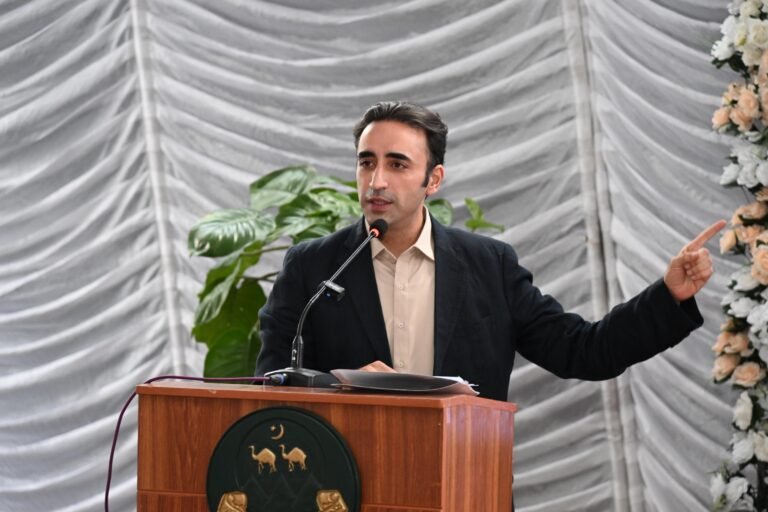
KARACHI: PPP Chairman Bilawal Bhutto Zardari on Friday inaugurated the 39-kilometre-long Shahrah-i-Bhutto Expressway, linking Karachi’s Qayyumabad to the M-9 Motorway.

He also laid the foundation stone for the construction of an expressway project linking Karachi Port to Qayyumabad.

Speaking on the occasion, Sindh Chief Minister Murad Ali Shah said that the expressway has six interchanges, six lanes and a 5-kilometre elevated section.

He said the PPP chairman had inaugurated the first 9-kilometre segment of the project in January 2025. The second 4-kilometre segment was inaugurated in June last year, and the remaining portion is now being inaugurated in May 2026.

CM Murad emphasised that the project took 4 to 4.5 years to complete, and that it could have been finished earlier had the government not prioritised avoiding the displacement of any population along the route.

“If you need to travel outside Karachi, whether to Sindh, Punjab or Balochistan, this project will reduce travel time by around an hour.”

He added that projects worth Rs1,700 billion were underway in Karachi, adding that he had approved over Rs70 billion worth of projects in the past three months alone.

‘Healthcare capital of the country’

Addressing the ceremony, PPP Chairman said, “If one compares the projects completed between 1947 and 2008, one will realise that the PPP is the only government that has undertaken meaningful development projects.”

“Due to the PPP, people from across the country want to visit, work and live in Karachi. We invite them to come here and contribute to this province and its economy,” he said.

He maintained that Karachi is not just the commercial capital of Pakistan, but also the healthcare capital of the country.

He said the Sindh government assumed administrative control of the National Institute of Cardiovascular Diseases (NICVD) in Karachi after the 18th Constitutional Amendment.

“I invite our political rivals to assess the hospital’s situation before and after the 18th Amendment. It has become one of the largest free healthcare institutions in the world,” Bilawal said.

Bilawal said that the Shahrah-i-Bhutto project was completed under a public-private partnership model.

During his speech, Bilawal said that the Pakistani nation was currently facing financial difficulties. “In particular, the Israel–US war with Iran is causing a global financial burden. Poor and hardworking people around the world are bearing that burden.”

“I believe that whoever is working for peace at this time is doing God’s work,” he said.

He thanked Field Marshal Syed Asim Munir and Prime Minister Shehbaz Sharif for their efforts to prevent war.

“We thank them because the PPP has always been against war, especially in view of the country’s financial difficulties,” he said.

He added that his party was also working to ease the financial burden. “We will create opportunities that provide financial relief.”

“We need to launch initiatives that create economic opportunities,” he emphasised.

He also said the Sindh government was leading the country in public-private partnerships.

“We have received global recognition for these partnerships. We have proven that the PPP can deliver on its promises. Through these partnerships, we will create opportunities for the entire nation.”

The PPP chairman also announced the establishment of the Sindh International Financial Centre in Karachi, adding, “It will help improve Karachi’s business growth.”

“Once this project is built, Sindh will compete with the rest of the world.”

He said Pakistan needed to improve its port infrastructure so that the economy could grow.

“The port authority is the government’s responsibility, but I will also try to develop a public-private partnership port,” he said.

Bilawal also said he wanted to ensure that Karachi plays a role in defence production.

“When I was foreign minister, I noted that we were not meeting demand in those years. Now, since the war with India in May, the demand for ‘Made in Pakistan’ defence production has increased.”

“Everyone wants to buy ‘Made in Pakistan’ defence equipment. So I want to establish a defence and security production zone in Karachi. The goal would be to manufacture defence equipment such as drones, ammunition and fighter jets,” he said.

The PPP chairman further added that these projects would also be implemented through public-private partnerships.

Bilawal said some critics in the country often criticise the PPP.

“I encourage my workers to ignore what they say. I am here, and I will not let any of their plans succeed.”

“It is the right of our rivals to criticise us. Right now, Sindh has the most democracy in the country. Karachi has the highest level of democratic freedom of all cities in the country,” he said.

He said the PPP considers criticism part of democracy. “In any other province, political rivals cannot criticise the ruling party.”

“I say that the problems in my city are mine. Anyone sitting elsewhere cannot solve these problems,” he stressed.

On May 14, Sindh Senior Minister Sharjeel Memon announced that the government would fully open the Shahrah-i-Bhutto Expressway in Karachi to the public by the end of May.

Earlier this week, Karachi Mayor Barrister Murtaza Wahab launched the Urban Forest project along the Shahrah-i-Bhutto, aiming to plant 100,000 saplings along the route.

He said it would play a significant role in environmental improvement, reducing air pollution and providing citizens with a healthier environment.

CM Maryam warns against pressure in Momina Iqbal harassment case

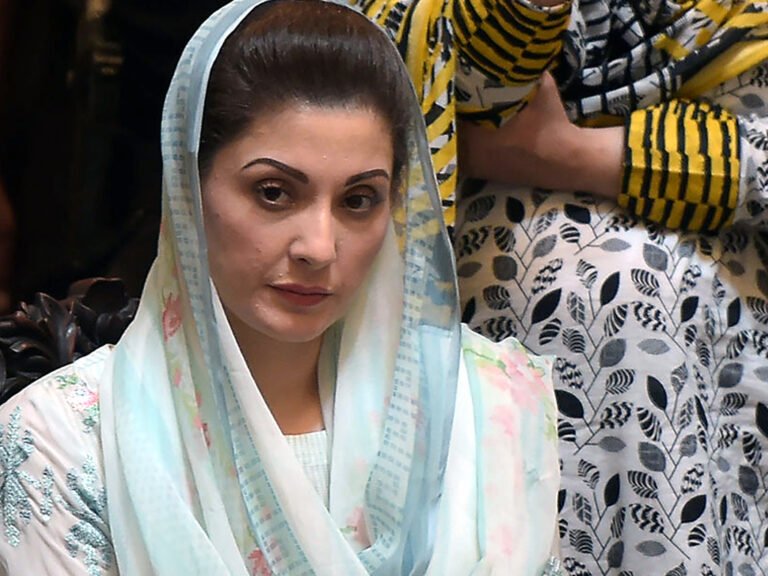
LAHORE: Punjab Chief Minister Maryam Nawaz has warned that any attempts to exert political pressure, abuse influence or exploit a woman by threatening to release “personal content” in the case involving actor Momina Iqbal and PML-N MPA Saqib Chadhar will be met with “firm and uncompromising action”.

In a tweet posted on Friday evening, the CM said the matter is a “personal issue” that will be “addressed strictly on merit and in accordance with the law”.

In a post on social media in which she tagged the PML-N leadership, Momina alleged that she had been subjected to “online harassment, cyberbullying, and death threats for a long time.”

She claimed that both she and her family had suffered severe mental stress and trauma because of the alleged conduct of the MPA, whose identity she did not disclose publicly. His identity was made public after the NCCIA summoned both of them to record their statements.

“A member of the provincial assembly belonging to the PML-N has been threatening me for an extended period. I repeatedly reported the matter to the NCCIA and the Federal Investigation Agency, but no action was taken,” she stated.

“Instead of ensuring justice, attempts were allegedly made to suppress my complaints. Even individuals associated with the office of the chief minister tried to discourage me and silence the issue rather than allowing a fair investigation,” she claimed.

In her tweet, CM Maryam said she would not spare anyone found involved in attempting to harass, threaten, or exploit a woman. “No individual, regardless of status, position, or political connections, is above the law. State institutions will perform their duties independently, impartially, and in accordance with the Constitution and the law,” she said.

“Any attempt to exert political pressure, abuse influence, or exploit a woman through threats of releasing personal content publicly will be met with firm and uncompromising action. Consider this a clear and serious warning to anyone involved.”

On Thursday, Momina and Chadhar appeared before the NCCIA to record their statements.

The same day, Momina’s sister Advocate Rimsha Iqbal, who is fighting her case, told reporters that hurdles were being created in Momina’s marriage that was going to take place next month and threats were even hurled at her fiancé.

“We have evidence to the claim Momina made against the MPA and presented it to the NCCIA,” she said and expressed the hope her sister would get justice.

Chadhar’s lawyer, Mian Ashfaq told reporters that his client and Momina had been friends since 2020-21. “Both came close to marrying but couldn’t. Mr Chadhar provided massive social, administrative and financial benefits to Ms Momina during the last five years. We will provide the details of these benefits to the NCCIA,” he said and added that harassment allegations levelled against his client by the person who remained in relationship with him for such a long period of time did not make any sense.

Chadhar is an electable. He defeated both PML-N and PTI-backed candidates in PP-97, Chiniot, in the last polls held in 2024. After winning the seat, he joined the PML-N.

Pakistan, Turkiye air forces reaffirm growing defence alignment: ISPR

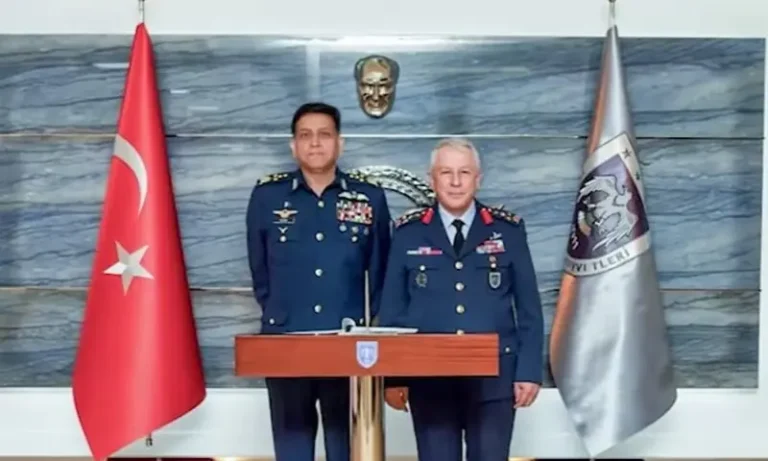
RAWALPINDI: The Pakistan Air Force and the Turkiye Air Force reaffirmed their “growing strategic convergence” in defence, aerospace innovation and emerging technologies, the military’s media wing said on Friday.

Air Chief Marshal (ACM) Zaheer Ahmed Baber Sidhu, during an official visit to Turkiye, held high-level meetings with Turkish Air Force Commander General Ziya Cemal Kadıoğlu, Defence Minister Yaşar Güler, and Baykar Technologies Chief Technology Officer (CTO) Selçuk Bayraktar, the Inter-Services Public Relations (ISPR) said in a statement.

During these engagements, ACM Sidhu reaffirmed “the growing strategic convergence and shared commitment of both nations towards enhanced collaboration in defence, aerospace innovation and emerging technologies”.

At the headquarters of the Turkish Air Force, the air chief was accorded a guard of honour. During the engagement, ACM Sidhu “discussed enhancing interoperability through joint exercises, training programmes, and professional exchanges”.

“The Turkish air chief appreciated Pakistan Air Force’s support in training Turkish pilots,” ISPR said.

ACM Sidhu, in his meeting with Güler, “reaffirmed the strong historical and strategic ties between Pakistan and Turkiye,” the ISPR stated, adding that the two sides also explored “deeper cooperation in training, capacity building and aerospace collaboration”.

The air chief also met Baykar Technologies CTO Selçuk Bayraktar, where discussions focused on “advancements in aerospace innovation, unmanned aerial systems and emerging technologies,” the military’s media wing said.

ISPR added that the discussion reflected the “shared vision of both sides to pursue greater collaboration in next-generation defence technologies”.

Pakistan and Turkiye share robust bilateral relations spanning across various sectors.

Earlier this year, Chief of Defence Forces (CDF) and Chief of the Army Staff (COAS) Field Marshal Asim Munir, in a meeting with Turkiye’s Chief of General Staff General Selcuk Bayraktaroglu, discussed the regional security landscape and bilateral defence cooperation.

It was also reported earlier this year that the country was seeking to join a defence alliance between Saudi Arabia and Pakis­tan, which was signed in September 2025.

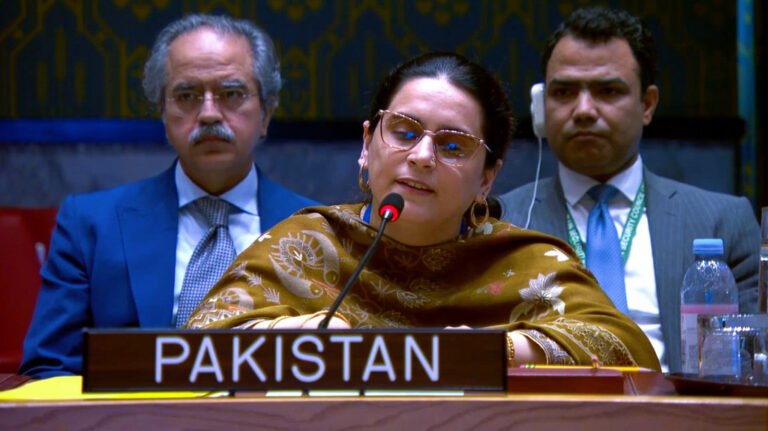
World now sees face behind the mask, Pakistan rebukes India at UNSC

ISLAMABAD: Pakistan on Wednesday hit back at India’s allegations at the United Nations Security Council (UNSC), with Pakistani diplomat Saima Saleem slamming New Delhi as being “a state that exports terrorism abroad, occupies people by force, persecutes minorities at home, weaponises water, commits aggression in the region.”

Her remarks came during a right of reply at the UNSC’s Annual Debate on the Protection of Civilians after India accused Pakistan of ignoring international humanitarian obligations and targeting civilians.

Pakistan had raised concerns over the situation in Indian Illegally Occupied Jammu and Kashmir (IIOJK) during the session. Saima criticised India’s remarks and said New Delhi had appeared before the council “wearing the mask of a victim.” “But the world can see the face behind that mask,” she said.

Earlier in the debate, India’s Permanent Representative to the UN Harish Parvathaneni accused Pakistan of failing to uphold international humanitarian obligations and alleged that it had targeted civilians. He also referred to what he described as Pakistan’s “long-tainted record of genocidal acts,” according to Indian media reports.

The Indian envoy further repeated allegations made by the Afghan Taliban regarding an alleged strike on a hospital in Kabul earlier this year.

Responding to the accusations, Saima said India’s “state-sponsorship of terrorism against Pakistan” had caused significant civilian casualties through militant groups operating from Afghan territory.

“Its terrorist proxies — including the TTP, BLA and Majeed Brigade — have killed thousands of civilians, including women and children in our mosques, markets, schools and streets,” she added.

Saima further said Pakistan’s counterterrorism operations were carried out on the basis of credible intelligence and targeted militant hideouts, training camps, and logistical networks involved in attacks against Pakistani civilians, security personnel, and infrastructure.

“These operations were directed solely against terrorists and their infrastructure, not against the brotherly people of Afghanistan or civilian facilities,” she said.

Saima also dismissed allegations raised by the Taliban administration and echoed by India, calling them part of a “disinformation campaign” intended to conceal attacks against Pakistani civilians.

On IIOJK, the Pakistani diplomat said India could “neither conceal nor deny its occupation of Jammu and Kashmir,” describing the issue as “an internationally recognised dispute that remains on the agenda of this Council.”

“In the occupied territory, civilians are killed, detained, dispossessed, and silenced; homes are demolished, freedoms are crushed, and an entire people are denied their right to self-determination,” she added.

She also criticised India’s treatment of minorities, particularly Muslims, saying the situation should “alarm the conscience of the world.”

“Under state-sponsored Hindutva extremism, Islamophobia has been normalised as policy, hate speech rewarded in politics, mob violence met with impunity,” she said, adding that Muslims, Sikhs, Dalits, and Christians faced discrimination.

Referring to the Indus Waters Treaty, Saima said India’s decision to keep the agreement “in abeyance” reflected disregard for international law. “A State that threatens the water, food security and livelihoods of millions of Pakistanis cannot certainly speak of civilian protection,” she said.

Concluding her remarks, she said Pakistan remained committed to “peace, dialogue, peaceful settlement of disputes and adherence to international law,” while accusing India of “terrorism, occupation, aggression, repression and disregard for international law.”