

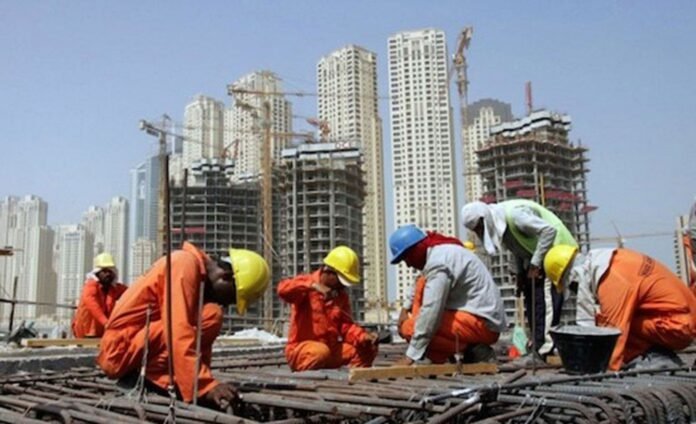
For decades, overseas Pakistanis working in the United Arab Emirates have been celebrated as the backbone of Pakistan’s economy. From Dubai’s towering skyscrapers to Abu Dhabi’s industrial zones and Sharjah’s crowded labor camps, millions of Pakistani workers contribute tirelessly to the Gulf economy while sending billions of dollars back home each year in remittances.
Yet behind this economic lifeline lies a growing humanitarian and administrative crisis. Thousands of overseas Pakistanis in the UAE increasingly complain that while the state proudly counts their remittances, it often abandons them in moments of legal, financial, and personal hardship. From sudden deportations and visa crackdowns to rising living costs and lack of consular support, many workers say they feel trapped between two indifferent systems: one that exploits their labor abroad and another that only remembers them when foreign exchange reserves begin to fall.
The UAE remains one of the largest destinations for Pakistani labor migrants. Construction workers, drivers, cleaners, security guards, mechanics, electricians, and small business employees form the backbone of this workforce. Most arrive with dreams of supporting their families, paying debts, building homes, or funding their children’s education.
But in recent years, many workers report increasing instability.
Strict visa regulations, changing labor policies, and aggressive crackdowns on undocumented workers have left thousands vulnerable to detention, fines, or forced repatriation. Workers whose companies shut down or fail to renew residency permits often become illegal through no fault of their own. Once trapped in this legal limbo, they face mounting penalties and the constant fear of arrest.
Many Pakistanis allege that recruitment agents in Pakistan continue to send workers abroad on false promises of high salaries and secure employment, only for them to discover exploitative conditions upon arrival. Some workers report passport confiscation, unpaid wages, overcrowded accommodations, and employers withholding exit permits or labor rights information.
For low-income laborers already struggling to survive in expensive Gulf cities, even a single missed salary can become catastrophic.
For many stranded workers, returning to Pakistan is no longer simple.
A growing number of overseas Pakistanis complain about the lack of effective institutional support from Pakistani diplomatic missions in the UAE. Workers facing deportation, expired documents, unpaid wages, or labor disputes often describe lengthy delays, bureaucratic indifference, and limited legal assistance.
Many laborers say they cannot even afford airfare back home after months of unemployment or withheld salaries. Others remain stuck because of unpaid fines attached to expired visas or residency violations.
Ironically, the same workers who spend years supporting Pakistan’s economy through remittances often return home with nothing but debt and disappointment. Families who once depended on Gulf income suddenly face financial collapse when a worker is deported or loses employment unexpectedly.
For some, returning home is itself a social burden. Communities that once viewed Gulf migration as a symbol of success often fail to understand the harsh realities workers endure abroad. Many returnees face unemployment, psychological stress, and renewed pressure to migrate again.
Pakistan’s overseas labor policy continues to focus heavily on exporting manpower rather than protecting workers after departure.
While official speeches regularly praise overseas Pakistanis as “national heroes,” labor rights activists argue that the state lacks a comprehensive crisis response system for workers facing emergencies abroad. Legal aid, shelter support, financial counseling, and emergency repatriation mechanisms remain limited and inconsistent.
The role of recruitment agencies also remains weakly regulated. Workers frequently complain about excessive fees, fake contracts, misleading job offers, and poor accountability once problems emerge overseas.
At the same time, overseas Pakistanis argue that their economic importance is not matched by political representation or institutional respect. Despite contributing billions annually through remittances, many feel excluded from national policymaking and ignored during periods of hardship.
Pakistan cannot continue relying on overseas labor while neglecting the welfare of the very workers sustaining the economy.
First, the government must strengthen labor agreements with Gulf states to ensure minimum protections for Pakistani workers, including transparent contracts, wage guarantees, and faster dispute resolution mechanisms.
Second, Pakistani embassies and consulates in the UAE must be transformed into active support centers rather than passive administrative offices. Dedicated legal aid units, emergency shelters, multilingual helplines, and rapid-response complaint systems are urgently needed for distressed workers.
Third, recruitment agencies operating inside Pakistan must face stricter regulation and real accountability. Agencies found guilty of fraud, overcharging, or false promises should face license cancellation and criminal penalties.
Finally, returning overseas workers need reintegration support at home, including employment assistance, skill certification, and financial rehabilitation programs. A worker who spends years serving the national economy abroad should not return home abandoned and invisible.
The story of overseas Pakistanis in the UAE is not only about migration or remittances. It is a story of sacrifice, survival, and systemic neglect.
Every month, workers send money home that keeps households functioning and stabilizes Pakistan’s fragile economy. Yet too many of these same individuals face exploitation abroad and indifference at home.
A nation that proudly depends on overseas remittances cannot afford to treat its migrant workers as disposable economic tools. If Pakistan truly values its overseas citizens, it must move beyond symbolic praise and build real systems of protection, dignity, and accountability.
Until then, thousands of Pakistanis in the Gulf will continue living with the painful belief that while their money is welcomed back home, their struggles are not.

