
ISLAMABAD: The State Bank of Pakistan (SBP) on Monday raised the key policy rate by 50 basis points to 12 per cent, its first increase since April as inflation, fuelled by high energy costs due to the Gulf conflict, remained above target.
In a statement, the Monetary Policy Committee (MPC) said it had decided to increase the policy rate, with a majority decision of nine out of ten members.
It noted that the “intensification in the Middle East conflict and low prospects of its near-term resolution” were keeping global energy prices at persistently elevated levels.
“While the impact of this global shock on the domestic economy has remained contained so far amidst proactive monetary policy adjustment and continued fiscal discipline, geopolitical developments have worsened the inflation outlook as compared to the earlier assessment,” it said.
It went on to say that although the external account and growth outlook remained broadly unchanged, risks had also increased.
“Considering these developments and the evolving risks, the MPC deemed today’s decision as necessary to keep inflation expectations anchored, contain second-round effects of the ongoing supply shock, and bring inflation within the target range of 5-7pc. This will help preserve macroeconomic stability, which is necessary for sustainable economic growth,” it said.
SBP governor cites inflationary outlook
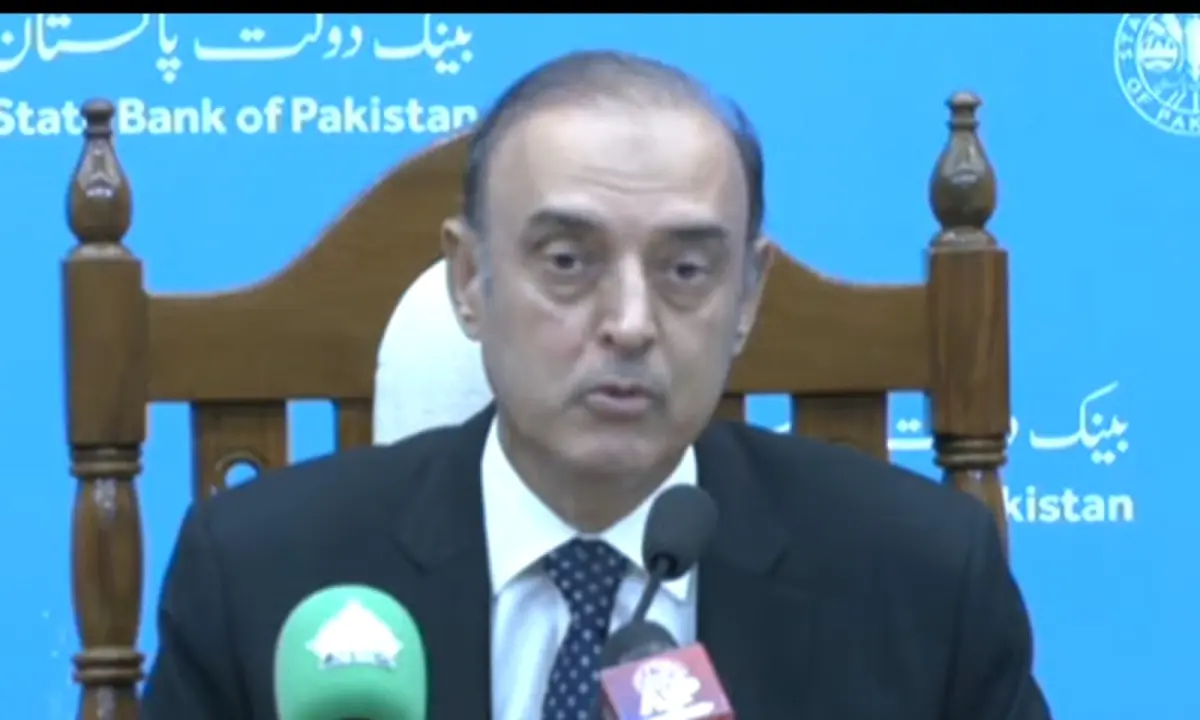
SBP Governor Jameel Ahmed also addressed a press conference to announce the decision and said there were many “underlying factors” behind the decision, especially the inflation outlook.
He cited the US-Israel war on Iran and its impact on energy and oil prices, developments in the domestic market and the subsequent impact on inflation.
He said that nine out of ten MPC members voted to raise the policy rate, while one member had a different view; they were of the opinion that it should be raised further.
He said that consumer expectations and other forecasters’ views were taken into consideration, as well as other macro factors, especially the impact of global commodity and oil prices on the external account and the impact of remittances and export trends.
Ahmed noted a deterioration in the current account since the last MPC meeting. However, he added: “The good thing is that its impact is still between zero and one per cent of GDP, and it will stay between that.”
He also shared that the central bank revised its outlook on remittances, from $44 billion to $45bn. On exports, the SBP governor said the trend was witnessing an improvement; however, it was not yet in line with the economy’s needs. He added that the bank estimated imports to be close to $71bn.
He added: “Along with that, when we talk about growth, our estimate from last year was 3.7pc […]. However, one important change was that the growth of the last quarter of the last fiscal year was revised downward and went to 2pc from 2.9, mainly due to the Middle East situation.”
Meanwhile, Topline Securities said the central bank had raised the policy rate “in line with our expectations”.
Previously, the policy rate was 11.5pc. The central bank had held the rate steady since raising it by 100 basis points in April in response to rising global energy prices and supply chain risks — its first increase in nearly three years.
The SBP has cut the key rate by a cumulative 1,050 basis points since mid-2024, from a record 22pc reached in June 2023, as inflation cooled sharply from multi-decade highs.

