
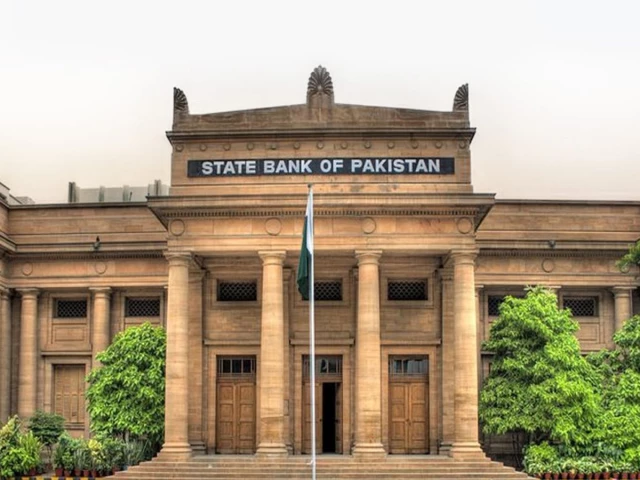
KARACHI: The State Bank of Pakistan’s Monetary Policy Committee on Monday decided to maintain the policy rate at 11.5 per cent, citing an improved macroeconomic outlook tempered by elevated risks from the renewed conflict in the Middle East.
The committee assessed that earlier de-escalation had lowered global oil prices and eased supply-chain pressures, contributing to some improvement in recent indicators.
Headline inflation eased to 11.1 per cent year-on-year in June from 11.7 per cent a month earlier, while core inflation moderated to 8.4 per cent. Both, however, remain elevated. High-frequency data pointed to a pickup in economic activity in June after a slowdown in the final quarter of FY26.
The MPC noted that proactive policy management and fiscal consolidation had helped absorb the ongoing supply shock and preserve stability. It reiterated its commitment to bringing inflation into the 5-7 per cent medium-term target range and said the current stance remains appropriate.
Key positive developments since the last meeting included SBP foreign exchange reserves surpassing the end-June target of $18 billion, an upgrade of Pakistan’s sovereign credit rating to “B” by Standard & Poor’s, easier inflation expectations among consumers and businesses, and the Federal Board of Revenue meeting its revised tax target for FY26.
The IMF, however, raised its global inflation forecasts for 2026 and 2027 amid higher commodity prices. Real GDP growth is projected in the range of 3.5-4.5 per cent for FY27, supported by better agriculture prospect, particularly a significant rise in expected sugarcane output, budgetary incentives, continued tariff rationalisation and rising private-sector credit. Risks from volatile global commodity prices and uncertain weather, including El Niño effects, remain.
The current account recorded a modest deficit of $139 million in FY26. Workers’ remittances helped contain the impact of a wider trade deficit. Reserves stood at around $17.3 billion as of July 17 after debt repayments, with a target of $20.2 billion by end-December 2026. The current account deficit is expected to stay between 0 and 1 per cent of GDP in FY27.
On the fiscal side, the primary balance is estimated to have remained in surplus for a third consecutive year, while the overall deficit narrowed significantly. For FY27, a primary surplus of 2.0 per cent of GDP and an overall deficit of 3.6 per cent are targeted.
Private-sector credit growth accelerated to 14.9 per cent, with broad-based demand across working capital, fixed investment and consumer financing. Broad money growth moderated to 13.2 per cent.
Looking ahead, the committee expects inflation to remain above the target range in the near term due to higher global commodity prices, input costs and domestic food pressures, before easing gradually towards the upper end of the 5-7 per cent band by June 2027. It stressed the need to strengthen external and fiscal buffers and accelerate structural reforms to build resilience and support sustainable growth.
While announcing the decision during a press conference, SBP Governor Jameel Ahmed said inflation had declined gradually during the first six months of the year, averaging 5.5% between July and February, remaining at the lower end of the SBP’s target range.
He said the conflict in the Middle East had pushed up petroleum and global commodity prices from early March, increasing inflationary pressures through higher fuel prices and shipping costs.
As a result, inflation accelerated to 11.7% in May before easing to 11.1% in June. The SBP expects inflation to decline further in July and continue moderating after September, he added.
He added that higher wheat prices had also contributed to inflationary pressures.
On the external sector, Ahmad said Pakistan recorded a current account deficit of $139 million during the last fiscal year, compared with a $17.5 billion deficit a year earlier. He said the current account balance was expected to remain between 0% and 1% of GDP during the current fiscal year, although the outlook would depend on developments in the Middle East.
The governor said the country’s foreign exchange reserves stood at $20.2 billion at the end of December 2026 and were expected to remain around that level through next December, with further improvement anticipated over time.
He also projected workers’ remittances to increase from $41.6 billion in the previous fiscal year to around $44 billion during the current fiscal year.

