Home Blog Page 24

US team heading to Islamabad for talks tomorrow evening: Trump

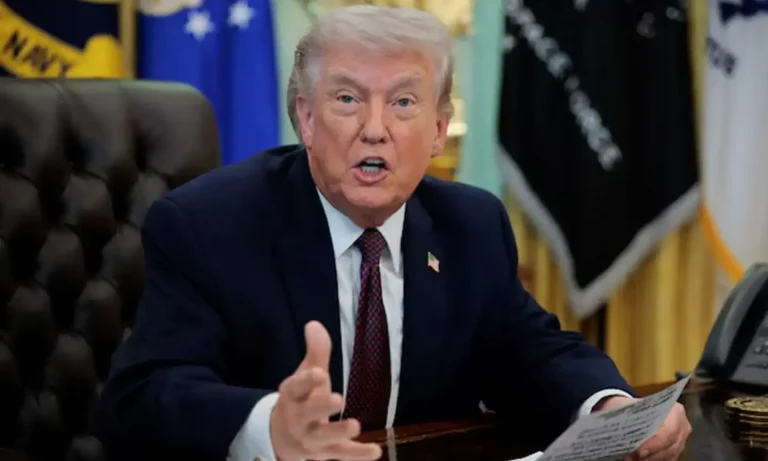
ISLAMABAD: Islamabad appeared all set on Sunday to host a second round of talks between the US and Iran, with President Donald Trump announcing that representatives from Washington were heading to Islamabad and they would be “there tomorrow evening for negotiations”.

The US president made the announcement in a Truth Social post, where he also insisted that Washington was offering Tehran “a very fair and reasonable” deal.

“And I hope they take it because, if they don’t, the United States is going to knock out every single Power Plant, and every single Bridge, in Iran,” he warned. “NO MORE MR. NICE GUY! They’ll come down fast, they’ll come down easy and, if they don’t take the DEAL, it will be my Honour to do what has to be done, which should have been done to Iran, by other Presidents, for the last 47 years. IT’S TIME FOR THE IRAN KILLING MACHINE TO END!”

The first round of historic direct US-Iran talks was held in Islamabad on April 11 and 12 had ended without an agreement, but also without a breakdown.

The talks were held as a Pakistan-brokered two-week ceasefire between Washington and Tehran remained in effect. The ceasefire, which is set to end on April 22, paused hostilities that began with the US-Israeli strikes on Iran on February 28.

Pakistan’s civil and military leadership has been engaged in feverish diplomacy, seeking to bring the US and Iran back to the negotiating table after the first round of talks yielded no result.

On Wednesday, the White House said the US was discussing a possible second round of peace talks with Iran in Islamabad and was optimistic about reaching a deal. And a day later, Trump said that if a deal with Iran to end the war was reached and signed in Islamabad, he might go there.

Despite this, Washington and Tehran were seen in a stand-off over the closure of the Strait of Hormuz on Saturday. Iran again closed the strait — which was briefly reopened after a 10-day ceasefire was agreed between Lebanon and Israel — as the US continued its blockade of Iranian ports in the Persian Gulf and Gulf of Oman. Tehran said it would not reopen the maritime trade route until the US ended its blockade of Iranian ports.

The closure of the strait has trapped hundreds of ships in the Gulf and driven up the price of oil and the costs of shipping goods, with captains avoiding the region for fear of attacks or mines.

In his Truth Social Post on Sunday, Trump alleged that Iran had “decided to fire bullets yesterday in the Strait of Hormuz — A Total Violation of our Ceasefire Agreement! Many of them were aimed at a French Ship, and a Freighter from the United Kingdom. That wasn’t nice, was it?”

He recalled that Iran recently announced that they were closing the Strait of Hormuz, which he said was “strange, because our BLOCKADE has already closed it”.

“They’re helping us without knowing, and they are the ones that lose with the closed passage, $500 Million Dollars a day! The United States loses nothing. In fact, many Ships are headed, right now, to the US, Texas, Louisiana, and Alaska, to load up, compliments of the IRGC, always wanting to be ‘the tough guy!’,” he insisted.

Meanwhile, Iran’s foreign ministry spokesperson Esmaeil Baqaei posted on X that the US naval blockade on Iranian ports was a violation of the ceasefire as well as an “unlawful and criminal” act.

“The United States’ so-called ‘blockade’ of Iran’s ports or coastline is not only a violation of Pakistani-mediated ceasefire but also both unlawful and criminal,” he said.

Baqaei added, “By deliberately inflicting collective punishment on the Iranian population, it amounts to a war crime and crime against humanity.”

It has been reported that the first round of US-Iran talks remained inconclusive, with unrestricted navigation through the Strait of Hormuz being one of the issues at the core of the impasse.

The US has also sought long-term commitments on Iran’s nuclear programme, including constraints on enrichment and safeguards against weaponisation.

On Saturday, Iran’s top national security body said the country was reviewing “new proposals” received from the United States, even as it warned that its negotiators would cut no compromises with Washington.

“In recent days, with the presence of the commander of the Pakistani army in Tehran as an intermediary and mediator in the negotiations, new proposals have been put forward by the Americans, which the Islamic Republic of Iran is currently reviewing and has not yet responded to,” the Supreme National Security Council said in a statement.

It went on to add that Iran’s negotiating delegation “will not make even the slightest compromise, retreat or leniency, and will defend with all its strength the interests of the Iranian nation”.

Meanwhile, Iran’s Parliamentary Speaker Mohammad Bagher Ghalibaf said progress had been made in negotiations with the United States to end the war, but added the sides were still far from an agreement.

“We are still far from the final discussion,” Ghalibaf, who is also one of Iran’s negotiators, said in a national televised address, adding, “we made progress in the negotiations, but there are many gaps and some fundamental points remain”.

Deputy Prime Minister and Foreign Minister Ishaq Dar spoke on Sunday afternoon with Iran’s FM Abbas Araghchi, the Foreign Office said.

It said that Dar “emphasised the need for continued dialogue and engagement as essential to resolving the current issues as soon as possible for promoting the peace and stability in the region and beyond”.

“Both leaders agreed to remain in close contact and also concurred on a phone call” between Iran’s President Masoud Pezeshkian and PM Shehbaz Sharif later today, the FO said.
PM, Recep Tayyip Erdoğan stress using ‘window of opportunity’ for lasting regional peace

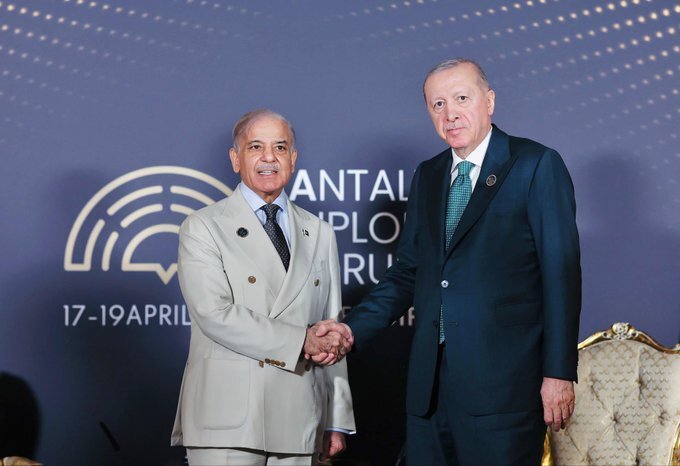
ISLAMABAD: Prime Minister Shehbaz Sharif and Turkish President Recep Tayyip Erdogan on Friday emphasised the importance of “effectively utilising the current window of opportunity to advance durable and lasting regional peace” amid the ongoing war in the Middle East.

In a statement, the Prime Minister’s Office (PMO) said that the premier met Erdogan on the sidelines of the Antalya Diplomacy Forum.

“During the warm and cordial meeting, President Erdogan welcomed the Prime Minister to Türkiye and thanked him for his participation in the 5th Antalya Diplomacy Forum,” the statement said.

According to the PMO, the premier thanked Erdogan for his warm invitation and the traditional Turkish hospitality extended to him and his delegation during his stay in Antalya. He also congratulated the Turkish president on the success of the forum, which he said had transformed into an important global event.

“The two leaders exchanged views on recent regional developments, particularly the evolving situation in the Middle East. The prime minister thanked President Erdogan for his strong support and encouragement of Pakistan’s peace efforts and shared with him the updates on how to extend the ceasefire and resume talks so that a peace agreement could be reached,” it said.

“The two leaders emphasised the importance of effectively utilising the current window of opportunity to advance a durable and lasting regional peace,” the statement said.

Both leaders also expressed satisfaction at the positive trajectory of bilateral relations and agreed to convene the eighth High-Level Strategic Cooperation Council meeting in Ankara later this year, it added.

“Both leaders emphasised the importance of expediting the implementation of ongoing initiatives and exploring new opportunities to further deepen economic engagement,” the PMO said.

“The meeting concluded with both leaders reaffirming their resolve to further strengthen the strategic partnership between Pakistan and Türkiye, building on fraternal ties, and a shared vision for peace and prosperity,” it said.

Per the handout, the meeting was also attended by Deputy Prime Minister and Foreign Minister Ishaq Dar, Information Minister Ataullah Tarar and other senior officials. Turkish Foreign Minister Hakan Fidan and other senior Turkish officials were also present.

PM Shehbaz also posted about his meeting with Erdogan on X.

“We had a substantive exchange on regional developments, particularly the evolving situation in the Middle East. I deeply appreciate Turkiye’s steadfast support for Pakistan’s peace efforts,” he said.

“We reaffirmed our shared commitment to further strengthen our deep-rooted, brotherly ties and agreed to enhance our strategic partnership, expand economic cooperation, and continue to work together for peace and prosperity in the region and beyond,” he added.

PM’s meetings with world leaders

Shehbaz also held informal meetings with world leaders on the sidelines of Antalya Diplomacy Forum, the PMO said. According to the PMO, PM Shehbaz met Erdogan, Qatari Emir Sheikh Tamim bin Hamad Al Thani, Kazakhstan President Kassym-Jomart Tokayev, Azerbaijan President Ilham Aliyev and Syrian President Ahmed Al-Sharaa.

He also held meetings with Qatari Prime Minister and Foreign Minister Sheikh Mohammed bin Abdulrahman bin Jassim Al Thani, as well as the former president of Kosovo, Vjosa Osmani, it added.

The meetings were held in a “cordial atmosphere”, the PMO said. “Regional and global situations were also discussed during the meetings,” it said.

He also participated in a trilateral meeting with Erdogan and the Qatari emir on the sidelines of the summit.

“The three leaders exchanged views on recent regional developments and ongoing peace efforts. The worrying situation in Gaza and Palestine was also discussed. They agreed to continue close cooperation to further advance dialogue and diplomacy for lasting regional peace and stability,” the PMO said.

Separately, Senior Adviser to the US President for Arab and African Affairs Massad Boulos paid a courtesy call to PM Shehbaz, according to the PMO.

During the meeting, the premier “conveyed his warm regards for US President Donald Trump, while fondly recalling his own warm and cordial interactions with him”.

PM Shehbaz expressed “deep appreciation” for the US president’s “bold and decisive leadership that had led to the ceasefire between Pakistan and India last year, when both countries were on the brink of war”.

He also commended the president for the ceasefire in Lebanon. PMO added that the two sides “discussed current regional developments, including Pakistan’s peace efforts that led to the ceasefire as well as the historic Islamabad Talks”.

The premier stressed the significance of strengthening Pakistan-US ties, “especially economic and trade cooperation, as well as matters of mutual interest in multilateral diplomacy’.

According to the statement, Boulos “conveyed greetings to the prime minister from president Trump and appreciated Pakistan’s constructive contributions to regional stability”.

The US official also expressed his country’s interest in “deepening engagement with Pakistan on shared priorities, including counter-terrorism, economic development, and addressing global challenges”.

Dar’s meetings

Dar, who accompanied the premier on his tri-nation trip, met the foreign ministers of Bosnia and Herzegovina, Bangladesh, Algeria, Austria, Northern Cyprus and Singapore’s minister of state for trade.

Dar, in his meeting with Austria’s Foreign Minister Beate Meinl-Reisinger, “reaffirmed the positive trajectory of Pakistan–Austria relations”.

During the meeting, Dar also expressed Pakistan’s “commitment to strengthening bilateral cooperation with Austria, Dar wrote on X.

The Austrian FM appreciated Pakistan’s role in the US-Iran negotiations, Dar added. “We agreed on the importance of continued engagement for regional peace and stability,” Dar said.

In his meeting with the Algerian Foreign Minister Ahmed Attaf, Dar said the two exchanged views on strengthening bilateral ties and regional developments

“FM Attaf appreciated Pakistan’s role in achieving the initial ceasefire and the continued efforts in promoting dialogue and diplomacy toward lasting peace and stability in the region,” Dar wrote in another post on X.

Regarding his meeting with the Foreign Minister of Bosnia and Herzegovina Elmedin Konaković on the sidelines of the Antalya Diplomacy Forum, Dar, in a separate post, said the two reaffirmed the strong historical bonds between the two countries, “having stood by each other in times of hardship and crisis”.

“Also exchanged views on the latest regional developments,” he said.

Dar also met Bangladesh Foreign Minister Dr Khalilur Rahman on the sidelines of the forum.

“We discussed strengthening Pakistan–Bangladesh ties and exchanged views on regional developments, including Pakistan’s role in facilitating dialogue,” Dar wrote.

“I look forward to our continued positive and forward-looking engagement,” he added.

Earlier, the Foreign Office (FO) said that Dar held a meeting with the Foreign Minister Northern Cyprus Tahsin Ertuğruloğlu.

During the meeting, the two resolved to strengthen bilateral cooperation, particularly for “education and welfare” of the Pakistani diaspora in the country, the FO said.

FO added that the two also “agreed to maintain close engagement and continue working together to promote the mutual benefit of their peoples”.

In a separate post, Dar said he met Singapore’s Minister of State for Trade and Industry Gan Siow Huang.

“As we mark 60 years of Pakistan–Singapore diplomatic relations, we reaffirmed our commitment to further strengthening cooperation across all sectors, including at the multilateral fora,” Dar wrote.

He added that during the meeting, the two discussed regional developments with Huang expressing “strong support for and appreciation of Pakistan’s efforts to promote dialogue and diplomacy for peaceful resolution of issues in the region”.

A day earlier, after spending the afternoon in Qatar to discuss regional developments with its ruler, PM Shehbaz reached Turkiye to meet Erdogan, where he will apprise the Turkish premier of the peace talks to de-escalate tensions in the Middle East, as well as attend the 5th Antalya Diplomacy Forum.

For his tri-nation trip, PM Shehbaz left Pakistan on Wednesday for Saudi Arabia, where he met Saudi Crown Prince Mohammed bin Salman in Jeddah, before his departure for Doha, where he met the Qatari ruler to discuss the US-Iran talks, brokered by Islamabad.

In its earlier statement, the FO said the visits to Saudi Arabia and Qatar were “in the bilateral context”. It added that the premier would meet the leadership there to “discuss ongoing bilateral cooperation as well as regional peace and security”.

Gulf countries — including Saudi Arabia — were facing Iranian attacks, which Tehran says were aimed at US and Israeli sites in response to the latter’s deadly large-scale strikes. Pakistan intensified efforts to act as a mediator between the United States and Iran to end the war that had engulfed the Middle East, leading to a fragile, temporary ceasefire and a first round of talks in Islamabad.

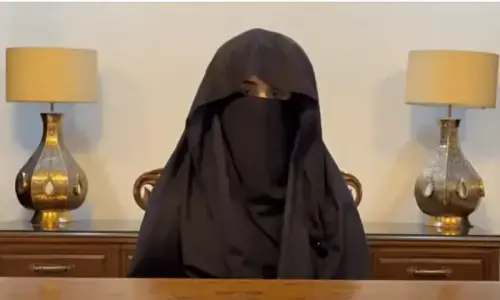
Bushra Bibi returned to prison after eye surgery: Adiala jail officials

RAWALPINDI: Bushra Bibi, the wife of incarcerated ex-premier and PTI founder Imran Khan, was shifted back to Adiala jail on Friday after undergoing an eye surgery at a Rawalpindi hospital, according to jail authorities.

Bushra is serving a seven-year sentence in the £190 million corruption case. In December 2025, she was sen­tenced to 17 years’ imprisonment in the Toshakhana 2 case, which revolved around the purchase of an expensive jewelry set gifted to Imran by the Saudi crown prince during his May 2021 visit. The PTI has expressed concern over reports about her health, demanding that she be taken to a hospital for diagnosis and treatment.

According to a press release by the Adiala jail authorities, she had complained of impaired vision in her right eye, due to which the prison administrators immediately had her examined by ophthalmologists.

The superintendent of the jail said that retinal detachment was diagnosed in the right eye. In view of the diagnosis, doctors advised surgery, he added.

On Thursday evening, the patient was shifted to a private hospital in Rawalpindi, where the necessary tests and medical examination were completed before the surgery, the superintendent said, adding that Bushra Bibi had given consent for the operation.

The surgery was performed by Professor Dr. Nadeem Qureshi and a panel, the statement elaborated.

“The patient was discharged after the surgery and one night’s hospital stay,” the superintendent said, adding that she had been taken back to Adiala jail.

“Post-operative examinations and follow-up will be done as per the doctors’ advice,” he said.

PTI chairman terms meeting with family members ‘basic right’

PTI Chairman Barrister Gohar Ali Khan had said on social media this morning that Bushra Bibi had been taken to hospital.

“I was informed [through] a message that Bushra [Bibi] had been shifted to the hospital last night and that I would be briefed about the treatment,” Gohar said on X.

He added that he would request that her family members be allowed to meet her, as well as that Imran Khan’s family be allowed to meet with him and that he be moved to the hospital for treatment.

“The earlier, the better. It is their basic right according to law,” he said. “Their health is too serious and every Pakistani is deeply concerned.”

Maryam Riaz Wattoo, Bushra Bibi’s sister, reported not long after that the family had reached Islamabad.

“She will be going through a crucial surgery today. Please pray for her,” she said on X, without elaborating on the details.

The PTI’s concern came after a document dated March 28 began circulating on social media, which stated that Bushra Bibi had been examined by a Pakistan Institute of Medical Sciences (Pims) doctor who had said the patient had a “history of blurring of vision and a black spot in the right eye for the past 11 days”.

“She also complained of headache and flashes in the right eye,” the document said.

Separately, a statement issued by the PTI said Bushra Bibi had been reportedly diagnosed with posterior vitreous detachment (PVD), along with myopia and astigmatism, terming the development “deeply concerning”.

In January, it had also surfaced that Imran was suffering from an eye ailment, and he underwent a third eye procedure at Pims last month.

In December of last year, a United Nations (UN) expert warned that Bushra Bibi was being “detained in circumstances that could pose a serious risk to her physical and mental integrity”.

Earlier that month, the same special rapporteur had warned that Imran was being held in conditions that could amount to inhuman or degrading treatment, calling on Pakistani authorities to comply with international norms and standards.

Aurangzeb praises Beijing’s backing of Pakistan’s IMF programme in talks with Chinese counterpart

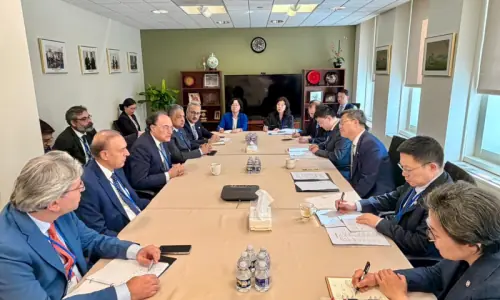
ISLAMABAD: Finance Minister Muhammad Aurangzeb appreciated China’s support in facilitating Pakistan’s engagements with the International Monetary Fund (IMF) in a meeting with his Chinese counterpart, the finance ministry said on Friday.

Aurangzeb arrived in the United States on Monday to participate in the World Bank Group and International Monetary Fund (IMF) Spring Meetings 2026, taking place from April 13 to 18 in Washington, DC. The Spring Meetings bring together finance ministers, central bank governors, policymakers and development experts from around the world amid ongoing global economic uncertainty.

While there, the finance minister held an important meeting with China’s Finance Minister Lan Fo’an on the sidelines of the meetings, the ministry said in a statement on X.

During the meeting, he expressed deep appreciation for China’s “long-standing and unwavering bilateral support” to Pakistan, as well as the constructive role played by China’s Executive Director at the International Monetary Fund (IMF) in facilitating Pakistan’s programme engagements, the statement said.

According to the ministry, Aurangzeb briefed his Chinese counterpart on Pakistan’s performance under the IMF programme.

He highlighted the successful conclusion of a staff-level agreement for the third review under the Extended Fund Facility (EFF) and the second review under the Resilience and Sustainability Facility (RSF), with approval from the IMF’s executive board expected in early May.

Aurangzeb also provided an update on the progress of Pakistan’s inaugural Panda bond issuance, as part of efforts to diversify financing sources and deepen engagement with international capital markets.

He further appreciated Minister Lan’s acknowledgement of Pakistan’s active role in facilitating dialogue and promoting stability in the region.

The finance minister conveyed Pakistan’s “full and unconditional support” for the establishment of the Shanghai Cooperation Organisation (SCO) Development Bank, particularly as Pakistan prepares to assume the SCO presidency in September, the statement added.

He also expressed appreciation for the continued support extended by China’s executive directors at both the IMF and the World Bank.

Separately, the finance minister held a meeting with representatives of global rating agency Moody’s on the sidelines of the Spring Meetings.

He briefed the representatives on Pakistan’s external financing position, noting that the country has successfully met its Eurobond repayment obligations and continues to honour all creditor commitments on schedule. He highlighted the financial support extended by Saudi Arabia, which is expected to further strengthen Pakistan’s external position.

“The finance minister outlined Pakistan’s medium-term strategy to re-access international capital markets, identifying key instruments under active preparation, including a Eurobond and a dollar-settled rupee-linked bond, as part of efforts to diversify financing sources,” the ministry said.

He also provided an overview of the government’s response to the ongoing regional crisis, it added, noting that measures had been taken to secure supply chains and implement full price pass-through, supported by targeted digital subsidies for vulnerable segments of the population.

Aurangzeb also met the governor of the People’s Bank of China, Dr Pan Gongsheng, where he expressed appreciation for China’s continued support for Pakistan.

He provided an update on Pakistan’s plans for its inaugural Panda bond issuance and requested expedited approval from the National Association of Financial Market Institutional Investors (NAFMII).

“Aurangzeb highlighted the immediate economic impact of the ongoing regional conflict, noting that the government has activated targeted subsidies and demand management measures to mitigate its effects,” the ministry said.

The meeting concluded with Pan extending an invitation to Aurangzeb to visit Beijing in the near future, it added.

The finance minister participated in a JP Morgan Investment Seminar titled “Pakistan: Economic and Monetary Policy Outlook”, where he engaged with global institutional investors on the sidelines of the WB-IMF meetings. The governor of the State Bank of Pakistan (SBP), Jameel Ahmad, also joined the session.

During the discussion, Aurangzeb briefed investors on progress towards Pakistan’s inaugural Panda bond issuance, as part of the government’s broader strategy to diversify financing sources and deepen engagement with international capital markets.

“He provided a detailed overview of the government’s energy supply management strategy in the wake of the ongoing regional conflict, noting that measures such as demand management, market timing adjustments, and full price pass-through — supported by targeted digital subsidies for vulnerable segments — have been implemented to manage the impact,” the ministry said.

During his US visit, Aurangzeb is expected to participate in over 50 high-level engagements from April 13 to 18.

On Thursday, IMF Managing Director Kristalina Georgieva commended Pakistan’s “continued progress on economic reforms” under the Fund’s programme and the resulting macroeconomic stability in a meeting with Aurangzeb.

“The remarks reflect growing international recognition of Pakistan’s reform efforts and its commitment to maintaining economic stability through prudent policymaking,” the ministry noted.

Pakistan, Saudi Arabia agree to extend $3bn deposit

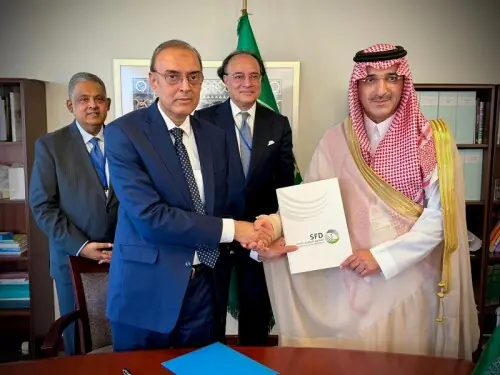
ISLAMABAAD: Pakistan and Saudi Arabia on Friday signed an agreement to extend a $3 billion deposit from the Saudi Fund for Development (SFD).

Saudi Arabia, earlier this week, pledged an additional $3 billion in deposits for Pakistan and extended its existing $5bn facility for a further three years.

“The agreement, signed between the Saudi Fund for Development (SFD) and the State Bank of Pakistan (SBP), provides for the extension in the maturity of a USD 3 billion deposit placed by SFD with the State Bank of Pakistan,” said a post on X by the Ministry of Finance.

The ministry said that the agreement was signed between SBP Governor Jameel Ahmed and Chief Executive Officer of the SFD Sultan bin Abdulrahman Al-Marshad.

Minister for Finance and Muhammad Aurangzeb witnessed the signing of an important financial agreement in Washington, DC, in the presence of Pakistan’s ambassador to the United States.

The development took place on the sidelines of the World Bank-IMF Spring Meetings.

The ministry added that the extension of the deposit reflects “strong and longstanding economic partnership between Pakistan and the Kingdom of Saudi Arabia” and will support the country’s external sector stability.

On Thursday, the Saudi Press Agency also reported that Saudi Arabia had extended the $5bn deposit with the central bank and announced an “additional $3bn deposit”.

“This assistance aims at supporting Pakistan’s economy and strengthening its resilience amidst evolving global economic challenges, and comes in accordance with the leadership’s directives to strengthen the bonds of brotherhood between the two countries, affirming the kingdom’s commitment to fostering the economic growth of Pakistan, which is expected to reflect positively on the living conditions of Pakistani citizens,” it said.

Pakistan will reportedly return a $3.5bn loan to the UAE this month, putting pressure on its reserves and risking breaches of its International Monetary Fund (IMF) programme targets.

The development comes at a sensitive time for the country’s external account position, which is already under strain from rising global oil prices and economic spillovers linked to tensions in the Middle East.

According to official figures, Pakistan’s foreign exchange reserves stood at $16.4bn as of March 27, sufficient to cover close to three months of imports. However, the repayment requirement from the UAE has added fresh pressure on the country’s external buffers.

In March, Islamabad failed to secure an agreement with the UAE to roll over the $3.5bn facility, marking the first such failure in seven years, and raising concerns about near-term financing gaps.

Pakistan’s foreign exchange position, though under pressure, remains part of a broader stabilisation effort under IMF-supported reforms.

Analysts say external financing risks remain a key vulnerability, particularly amid volatile energy prices and constrained global capital markets.

PM Shehbaz backs Qatari emir, calls for de-escalation and dialogue

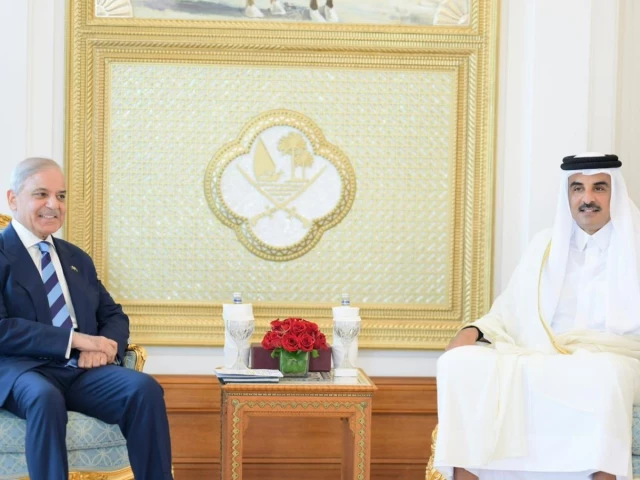
ISLAMABAD: Prime Minister Shehbaz Sharif on Thursday expressed solidarity with Qatar and urged de-escalation and dialogue for peace in the Middle East during a meeting with Emir Sheikh Tamim bin Hamad Al Thani.

According to a statement issued by the Prime Minister’s Office (PMO) on X, the meeting, held at the Amiri Diwan, lasted over an hour. Both leaders discussed the latest regional and international developments, particularly in the Middle East.

“At the outset, Qatari emir welcomed PM Shehbaz and his delegation, and expressed his deep appreciation for Pakistan’s pivotal role in supporting efforts to de-escalate tensions in the region and promote diplomatic dialogue in a manner that serves regional security and stability,” the PMO statement read.

It added that the prime minister renewed his condemnation of the attacks against Qatar and other Gulf countries, while reaffirming Pakistan’s full solidarity and support for the leadership and people of Qatar.

“Both leaders underscored the importance of supporting de-escalation efforts and enhancing international coordination to ensure the security and stability of the region, particularly ensuring the maintenance of the smooth flow of energy supply chains,” it added.

The PMO said the two leaders also reviewed bilateral relations and explored ways to further strengthen ties, particularly in the fields of security, defence and energy, in a manner that enhances partnership and opens new avenues for cooperation.

The statement added that the Qatari emir and PM Shehbaz also held a one-on-one meeting, during which they exchanged views on developments of mutual interest and emphasised the importance of continued coordination and consultation between the two countries, particularly in light of ongoing events and their implications for regional security and stability.

The meeting was attended by Qatar’s Prime Minister and Minister of Foreign Affairs Sheikh Mohammed bin Abdulrahman bin Jassim Al Thani, Chief of the Amiri Diwan Abdullah bin Mohammed Al Khulaifi and several senior officials.

On the Pakistani side, it was attended by FM Ishaq Dar, Information Minister Attaullah Tarar, Special Assistant to the Prime Minister Tariq Fatemi, and other senior officials.

Later, the prime minister in a post on X said, “I had a most warm and cordial meeting with my dear brother, Emir of Qatar His Highness Sheikh Tamim bin Hamad Al Thani, in Doha today. I thanked His Highness the Amir on behalf of the people of Pakistan for the exceptionally warm and generous gesture of sending Qatar’s fighter jets to escort our aircraft as it entered Qatari airspace.”

PM Shehbaz added that he was truly touched by the gesture, which embodied the spirit of Qatar’s renowned hospitality and the strength of the two countries’ enduring ties.

Upon reaching Doha, PM Shehbaz was received by Qatar’s Minister of State for Foreign Affairs Sultan bin Saad Al Muraikhi, where the prime minister and his delegation received a guard of honour.

In a separate statement announcing the prime minister’s arrival in Doha, the PMO detailed the grand welcome PM Shehbaz received, that upon entering Qatari airspace, “Qatari Air Force fighter jets escorted the prime minister’s aircraft in a ceremonial and security formation, accompanying it to the airport.”

The prime minister had earlier been in Saudi Arabia as part of his three-nation tour. He is also expected to visit Turkiye, with the tour scheduled to continue until Friday amid ongoing discussions on peace in the Middle East.

The premier’s meeting with the Qatari emir came four days after the US and Iran were unable to reach an agreement to end their war despite marathon negotiations lasting around 21 hours. The prolonged talks, aimed at halting hostilities that have killed thousands and driven global oil prices higher over the past six weeks, ended with both sides blaming each other for the impasse.

On April 11, US and Iranian delegations arrived in Pakistan for conclusive talks following a two-week immediate ceasefire “everywhere, including Lebanon”, announced by PM Shehbaz, who later invited delegations from both countries to Islamabad.

The US and Israel launched a joint offensive on Iran on February 28, killing thousands of people in Iran, including then-supreme leader Ayatollah Ali Khamenei and leaving tens of thousands injured, with civilian areas, including residential buildings and religious sites, among those hit.

The conflict also expanded geographically. Iran retaliated with drone and missile strikes targeting Israel as well as Jordan, Iraq, and Gulf countries hosting US military assets. It also restricted the movement of ships through the Strait of Hormuz.

Pakistan eyes nuclear ‘breakthrough’ as CDF Munir meets Iran’s speaker Ghalibaf

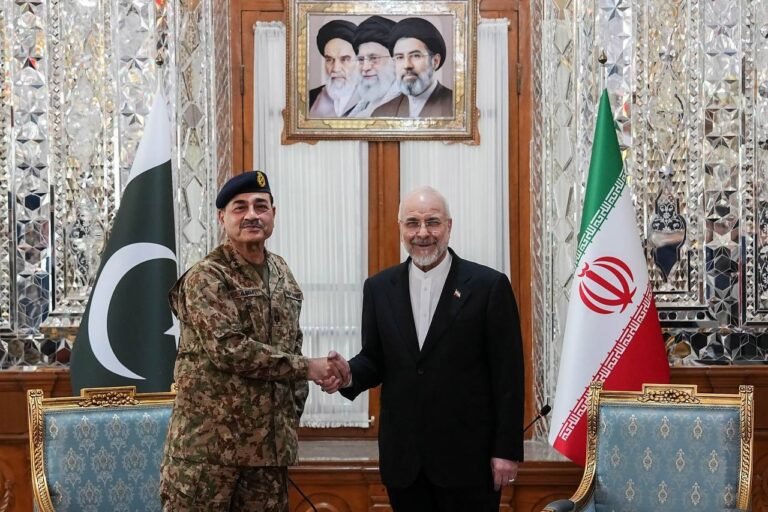
ISLAMABAD: Chief of Defence Forces (CDF) and Chief of the Army Staff Field Marshal Asim Munir met with Iranian Parliament Speaker Mohammad Bagher Ghalibaf in Tehran on Thursday, PressTV reported on X.

Meanwhile, two government sources told Anadolu that Pakistan was working for a “breakthrough” on Iran’s nuclear programme issue in “days to come” with CDF Munir holding talks with the Iranian leadership on the issue, which remains the key bottleneck in the way of a negotiated settlement with the United States.

Islamabad “is working on bringing a maximum understanding” between the US and Iran, with a focus on Tehran’s nuclear issue, before a possible new round of talks in the capital, said the sources, stressing anonymity for discussing “sensitive details” of the ongoing mediation process.

Sources also said Iran has agreed to a third-party monitoring of its nuclear programme by four nations jointly with the International Atomic Energy Agency (IAEA).

“Tehran in principle agrees to Islamabad’s proposal” of third-party monitoring on its nuclear programme, they said, adding that Iran has no objection to the inclusion of the IAEA in the four-nation monitoring framework.

Iran has conveyed its agreement to CDF Munir, while Washington has yet to react to the proposal, the sources noted.

No names were provided for potential members of the four-nation team.

The US has long demanded “strict and comprehensive” monitoring to ensure that Iran does not build a nuclear weapon.

Reports have emerged from Tehran that gaps between the US and Iranian demands have been “reduced,” while the nuclear issue remains the main issue.

Washington’s priority, however, “still is the suspension of Iran’s uranium enrichment programme for at least 20 years in exchange for sanctions relief”, the Pakistani sources added.

Iran is said to have over 400 kilogrammes of enriched uranium, and Tehran has proposed that it can suspend nuclear activity for up to five years, according to The New York Times.

They also said that CDF Munir may visit Washington, DC, “in a day or two” to meet with US President Donald Trump to discuss various issues related to Islamabad’s proposal. There has been no official confirmation or announcement regarding a possible US visit by CDF Munir.

Technical teams of the US and Iran “are constantly exchanging messages” to reach the “maximum understanding” before another round of talks, the Pakistani sources told Anadolu, adding: “Both sides want the next round of talks to be a ‘deal-signing’ ceremony.”

Expressing optimism about the prospects of a four-nation third-party team, the sources added: “There could be a different framework — a mix of four-nations formula and Washington’s demands; it could also be a 10-year moratorium on Iran instead of five years.”

The situation, they added, “would be clear” after CDF Munir’s possible US visit.

CDF Munir arrived in Tehran on Wednesday as part of the ongoing Mideast peace negotiation efforts. He was part of a delegation that also included Interior Minister Mohsin Naqvi. Iranian Foreign Minister Abbas Araghchi received the delegation, Inter Services Public Relations ISPR said in a statement.

Araghchi said he was “delighted” to welcome the field marshal on his visit. “Expressed gratitude for Pakistan’s gracious hosting of the dialogue, emphasising that it reflects our deep and great bilateral relationship. Our commitment to promoting peace and stability in the region remains strong — and shared”.

The delegation later held a meeting with FM Araghchi and other Iranian officials.

Iran had earlier said it continued to exchange messages with Washington through Pakistani mediators.

“Message exchanges continue” regarding negotiations with the US, Foreign Ministry spokesperson Esmaeil Baghaei said in a news briefing cited by the state news agency IRNA.

“Since Sunday, when the Iranian delegation returned to Tehran, multiple messages have been exchanged through the Pakistani intermediary,” he stated, adding, “Our positions have been conveyed and heard.”

On the nuclear file, the spokesperson said discussions over uranium enrichment are not new. “There is room for discussion on the type and level of enrichment,” he said. “The Islamic Republic of Iran must be able to continue enrichment based on its national needs,” he added.

The US and Iran held rare direct talks in Pakistan last weekend aimed at ending their conflict, but the talks ended early Sunday without any agreement.

On April 11, US and Iranian delegations arrived in Pakistan for conclusive talks following a two-week immediate ceasefire “everywhere, including Lebanon”, announced by PM Shehbaz, who later invited delegations from both countries to Islamabad.

Both sides were unable to reach an agreement to end their war despite marathon negotiations lasting around 21 hours in Islamabad over the weekend. The prolonged talks, aimed at halting hostilities that have killed thousands and driven global oil prices higher over the past six weeks, ended with both sides blaming each other for the impasse.

The US and Israel launched a joint offensive on Iran on February 28, killing thousands of people in Iran, including then-supreme leader Ayatollah Ali Khamenei and leaving tens of thousands injured, with civilian areas, including residential buildings and religious sites, among those hit.

The conflict also expanded geographically. Iran retaliated with drone and missile strikes targeting Israel as well as Jordan, Iraq, and Gulf countries hosting US military assets. It also restricted the movement of ships through the Strait of Hormuz.

Power minister renders apology over ‘out-of-control’ power outages

ISLAMABAD: Power Minister Awais Leghari on Thursday reiterated the government’s apology for excessive loadshedding, explaining that the external factor of the fuel supply crisis due to the Middle East war was one of the main reasons.

Addressing a press conference in Islamabad, Leghari reiterated the apology for higher than promised “load management”, which the government had blamed on lower water availability for power generation.

“If the public is facing any inconveniences due to us not providing electricity at night and during peak hours, I am directly answerable,” he said.

“We apologise too but […] the circumstances are such that they are not in our control. Even then, we ought to apologise,” the minister noted.

He said the country had a total shortfall of 4,000 megawatts (MW) due to two reasons: the shortage of fuel imports due to the ongoing Middle East war and reduced hydropower generation.

Leghari said the required liquified natural gas (LNG) “stopped coming from abroad after April 1”.

He pointed out that Qatar’s state-run energy firm had declared force majeure, which resulted in a “huge gap” in the power requirements fulfilled through gas plants during peak hours.

The minister recalled that the electricity generated from water resources was 3,200MW in April 2025, while the output from LNG plants was 3,000MW.

This year, he said, 3,200MW of hydropower was reduced to 1,671MW due to water not being released from Mangla and Tarbela.

The power minister said that the water from reservoirs was released only if the farmers needed it, and not solely for the purpose of generating electricity.

Leghari observed that the shortfall from LNG plants due to the lack of fuel imports was 2,500MW, whereas the shortfall in hydropower was 1,530MW, adding up to a total shortfall of over 4,000MW.

Speaking on the electricity demand, he said that in the first 15 days of April, the demand was 9,000MW at the minimum and 20,000MW at the maximum.

He asserted that there was and would not be loadshedding during off-peak hours, which are during the day, as there was no need for it.

“When the demand rises above 16,500MW, the power from gas plants is required. In the absence of gas, the country has no other fuel to fulfil its requirements,” the minister said.

He explained: “A shortfall occurs when the demand goes beyond 16,500MW after the consumption of every fuel resource in Pakistan — imported coal, local coal, nuclear, hydropower and solar power. And then in the evening, the loadshedding hours have to be increased as per the requirements.”

Leghari stated that one hour of loadshedding across Pakistan was implemented due to a shortfall of 500MW.

Commenting on social media comments referring to 40,000MW of installed capacity, the minister asserted that installed capacity “had no relation” with the ongoing situation.

“Installed capacity exists, which is why there was no load-shedding before April,” he contended.

The minister observed that the ongoing load management was primarily due to the Iran war.

He added that even if there was a major shortage of hydropower, LNG plants could have produced “6,000MW instead of 3,000MW” to make up for the hydropower shortfall and avoid a hike in electricity prices.

The minister said the government carried out load management last night in a “judicial manner, without differentiating between urban and rural Pakistan”.

He said that when the duration of loadshedding for the ordinary consumers exceeded three hours, the government then also began carrying out load management for industries over the past one to two days.

“In many areas of Pakistan, such as Hyderabad Electric Supply Company and K-Electric, which supply electricity to the south, there is no loadshedding. There is only economic loadshedding, which occurs every year and every time due to losses, but no addition to that has been made,” Leghari said.

The minister further said that the decision of two hours of daily loadshedding had been made to keep electricity prices in control.

Responding to a query, Leghari said that the government was trying to arrange more gas supplies, but the preference was to do so through the government’s contracts rather than on the spot market.

A day ago, Petroleum Minister Ali Pervaiz Malik told Reuters that Pakistan was considering buying LNG on the spot market to offset supply disruptions caused by the Iran war, but would favour government-to-government deals.

“We have made a lot of efforts on the diplomatic front as well,” he highlighted.

During his press briefing, Leghari asserted that the PML-N government in 2017 and over the past few years had “freed the entire public from darkness and loadshedding”.

He noted that Pakistan’s shift to renewable energy had been acknowledged in the international media, adding that it was “through the investments made by people, not with the support of IPPs (independent power producers) and expensive loans”.

Punjab Assembly backs Nobel Peace Prize nomination for PM, CDF Munir

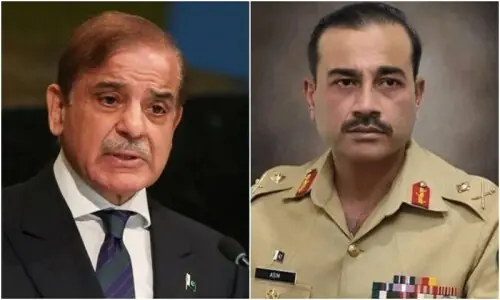
LAHORE: The Punjab Assembly unanimously adopted a resolution on Thursday, which called for awarding the Nobel Peace Prize to Prime Minister Shehbaz Sharif and Chief of Defence Forces (CDF) and Chief of Army Staff Field Marshal Asim Munir for their efforts for peace amid the war in the Middle East.

The resolution was tabled in the assembly by Punjab Minister for Parliamentary Affairs Mujtaba Shujaur Rehman. It commended Pakistan’s political and military leadership for what it described as a “highly effective diplomatic role” in promoting a ceasefire between the US and Iran, and fostering peace amid a tense international situation

The resolution paid tribute to key figures, including PML-N’s Nawaz Sharif, President Asif Ali Zardari, PM Shehbaz, Deputy Prime Minister and Foreign Minister Ishaq Dar and CDF Munir. It expressed “deep appreciation and pride” over their leadership in navigating complex global challenges.

According to the resolution, their “unwavering leadership, exceptional foresight, and tireless efforts” elevated Pakistan’s standing in the international community. It credited them with skillfully addressing intricate diplomatic challenges and helping avert a potentially devastating regional conflict through prudent strategy and sustained engagement.

The resolution also acknowledged the constructive role played by international actors, including the leadership of the US and Iran, for prioritising dialogue, restraint, and diplomacy in efforts to reduce tensions and maintain global peace.

Highlighting specific contributions, the resolution stated that PM Shehbaz’s “statesmanlike leadership” and commitment to national interest, Dar’s diplomatic acumen in effectively presenting Pakistan’s position globally, and CDF Munir’s “strong, professional, and courageous military leadership” collectively led to what it termed a “historic achievement”.

The resolution strongly recommended that PM Shehbaz and CDF Munir Munir be awarded the Nobel Peace Prize in recognition of their role in promoting peace and enhancing the country’s global stature.

The resolution concluded with a reaffirmation of Pakistan’s commitment to peace, development, and prosperity, pledging continued support for initiatives aimed at ensuring lasting stability in the region.

Pakistan Navy conducts successful test of indigenously developed anti-ship ballistic missile: ISPR

0

RAWALPINDI: The Pakistan Navy has successfully fired a locally developed anti-ship ballistic missile to engage targets at an extended range, the Inter-Services Public Relations (ISPR) said in a statement on Thursday.

“In a resolute display of preparedness and precision-strike capability, Pakistan Navy successfully conducted a live weapon firing of an indigenously developed ship-launched anti-ship missile, accurately engaging its target with high speed at extended range,” the ISPR said.

It added that Chief of the Naval Staff Admiral Naveed Ashraf, along with leading scientists and engineers, witnessed the missile firing.

The missile integrates a cutting-edge guidance system and advanced maneuverability, enabling it to “evade threats, adapt to dynamic conditions, and deliver with precision and lethality”.

The successful launch of the locally developed missile underscores the “fusion of technological excellence and operational expertise”, it added.

“This missile firing is a manifestation of the Pakistan Navy’s commitment to maintaining credible sea-based deterrence in a conventional domain and ensuring maritime security and stability in the region,” the ISPR added.

President Asif Ali Zardari, Prime Minister Shehbaz Sharif, Chief of Defence Forces (CDF) and Chief of Army Staff (COAS) Asim Munir, and services chiefs commended the participating units and scientists on achieving the milestone, it added.

The previous test of the missile was conducted in November last year.

The ISPR said the weapon system is capable of engaging targets both at sea and on land “with high precision”.