Home Blog Page 23

Locally developed air-launched cruise missile successfully tested by Navy: ISPR

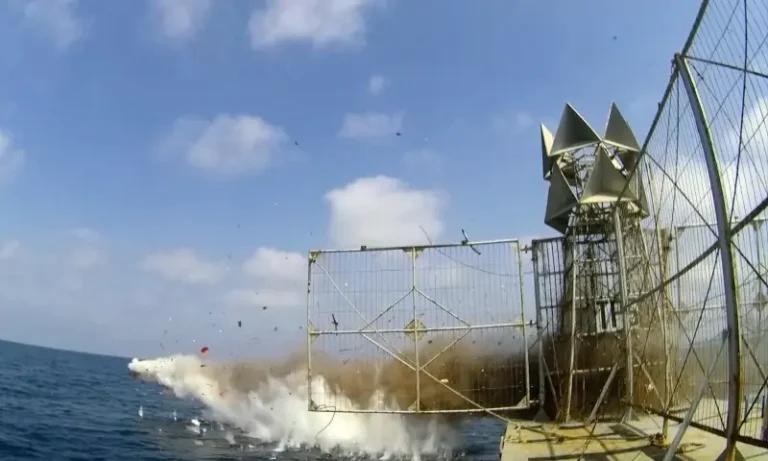
RAWALPINDI: The Pakistan Navy conducted a successful test of the indigenously developed ‘Taimoor’ air-launched cruise missile, the military’s media wing said on Tuesday.

The Inter-Services Public Relations (ISPR) said that the “Pakistan Navy has conducted successful live weapon firing of Taimoor air-launched cruise missile — an indigenously developed Anti-Ship Weapon System — in a powerful demonstration of precision strike capability and operational readiness”.

ISPR said that the cruise missile “executed its mission with exceptional precision, validating Pakistan Navy’s combat capability to detect, target and decisively neutralise enemy sea-based threats at extended ranges”.

The statement added that the test marked “a pivotal elevation of national defence capability”.

It further said that the test had “strengthened Pakistan armed forces’ multi-dimensional coordinated strike posture and capabilities in the conventional domain”.

“Pakistan Navy stands resolute in its commitment to safeguard the nation’s maritime interests and sovereign waters,” ISPR said.

“The president, prime minister of Pakistan, chief of defence forces and services chiefs have congratulated the scientists and engineers on achieving this significant milestone,” the statement concluded.

Interior Minister Mohsin Naqvi also lauded the successful test, stating that it was a “milestone” in Pakistan’s defence capabilities.

As per a statement by the Ministry of Interior, Naqvi congratulated the nation on the successful test, affirming that Pakistan Navy remained “committed to protecting the nation’s maritime borders”.

On April 16, the navy successfully fired a locally developed anti-ship ballistic missile to engage targets at an extended range.

In January, the navy conducted a “comprehensive exercise” in the north Arabian Sea, where it successfully fired a surface-to-air missile.

Chinese envoy backs Pakistan’s US-Iran peace efforts in meeting with Dar

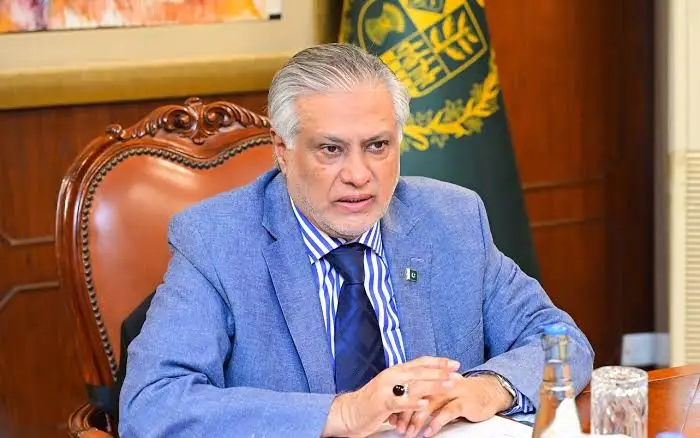
ISLAMABAD: The Chinese ambassador to Pakistan Jiang Zaidong on Tuesday expressed Beijing’s full support for Islamabad’s diplomatic efforts aimed at facilitating engagement between the United States and Iran during a meeting with Foreign Minister Ishaq Dar.

According to a statement shared by the Ministry of Foreign Affairs (MOFA) on X, Zaidong discussed regional developments and conveyed China’s “full support for and appreciation of Pakistan’s continued efforts to facilitate engagement between the US and Iran for sustained peace and stability in the region and beyond.”

The statement said discussions also focused on the latest regional situation. Dar reaffirmed the Pakistan–China “All-Weather Strategic Cooperative Partnership”, underlining the strength of bilateral ties.

“He also emphasised the importance of continued high-level exchanges between the two countries,” it added.

Earlier, FM Dar also held a telephone conversation with Egypt’s Foreign Minister Badr Abdelatty to discuss the latest regional developments.

According to MOFA, both ministers “emphasised the importance of dialogue and engagement for peace and stability” during their discussion.

It added that the two sides agreed to remain in close contact as part of ongoing diplomatic coordination on regional issues.

FM Dar has received unprecedented international recognition for his diplomatic leadership, as Pakistan positioned itself at the centre of high-stakes mediation efforts during the escalating Iran-US-Israel crisis.

Over the past week, senior officials and influential voices from more than ten countries, including Saudi Arabia, Iran, the US, China, Turkey, Azerbaijan, Bahrain, and Uzbekistan, have publicly acknowledged Dar’s role in facilitating ceasefire negotiations.

Pakistan emerged as a central facilitator in the sensitive diplomatic track, positioning itself as an “honest broker” amid sharply polarised positions between Washington and Tehran.

After 40 days of airstrikes, US and Iranian negotiators opened talks in Islamabad earlier this month, again focused on the familiar trade‑off of nuclear restrictions for economic relief.

When American and Iranian negotiators met last weekend in Islamabad, the US proposed a 20-year suspension of all Iranian nuclear activity, while Iran suggested a halt of three to five years, according to people familiar with the proposals.

The second round of talks has yet to formally begin in Islamabad, while Pakistan has further ramped up efforts for a successful deal. However, there are still hurdles in the negotiations, with issues persisting on both sides.

Xi urges Strait of Hormuz to remain open in call with Saudi crown prince

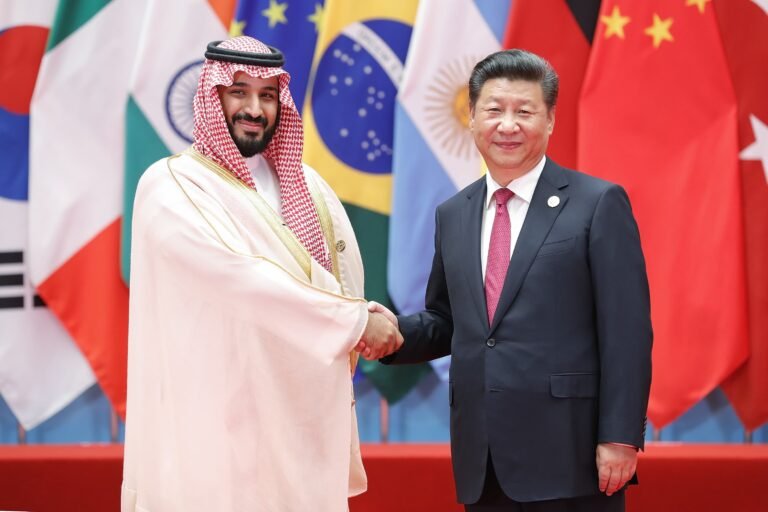
BEIJING: Chinese President Xi Jinping called for normal passage of ships through the Strait of Hormuz to be maintained, in a phone call on Monday with Saudi Arabia’s Crown Prince Mohammed bin Salman held as Beijing steps up efforts to help end US-Israel war against Iran.

China is concerned over renewed instability around the strategic waterway, as a US-Iran ceasefire came under fresh strain after the US seized an Iranian cargo ship and Tehran signalled it would not join new peace talks for now.

China is the main buyer of Iranian crude. Iran has largely closed the strait to ships other than its own since the US and Israel launched the war in February, while Washington has imposed a blockade of Iranian ships since last week.

China advocates an immediate and comprehensive ceasefire, and insists on resolving conflicts in the Middle East through political and diplomatic channels, state news agency Xinhua cited Xi as saying. “The Strait of Hormuz should remain open to normal passage, as this serves the common interests of regional countries and the international community,” he told the Saudi leader.

Worries have mounted over the survival of the ceasefire between Washington and Tehran after the US seizure of the Iranian vessel. Trump had credited Beijing with helping to get Iran to the previous negotiations with the US in Pakistan.

The Chinese foreign ministry on Monday expressed concerns over the “forced interception” by the US of the Iranian ship, while urging relevant sides to abide by the ceasefire agreement.

Xi’s call with the Saudi crown prince followed a meeting in Beijing last week with the crown prince of Abu Dhabi, when Xi urged adherence to international law.

He also told the Saudi crown prince that China supports countries in the Middle East in “taking their future and destiny into their own hands, and promoting long-term regional stability and peace”.

Vance-led US team heading to Islamabad for Iran talks: Trump

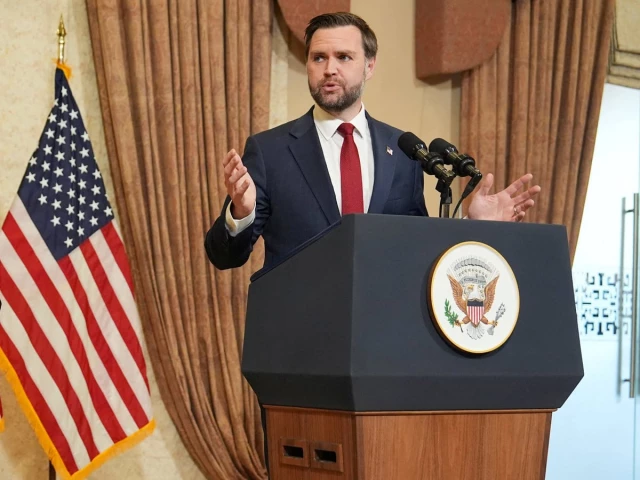
ISLAMABAD: United States President Donald Trump said on Monday that Vice President JD Vance and a US delegation were set to land in Pakistan within hours for talks on Iran and asserted that a deal would be signed “today”, adding that he would be willing to meet with Iranian leaders himself if progress was made. Trump told Fox News that the Iran deal would be signed “today” in Pakistan.

Trump warned that if no deal was signed, he would “blow up every single power plant and bridge in Iran”.

Iran has neither confirmed the claim nor announced a decision to send a delegation to Islamabad. However, Pakistani sources told the New York Post that Tehran was “willing for a second round” but that “no decision has been taken about” it.

In an interview with the New York Post, Trump said that he would be willing to meet with Iranian leaders himself if progress was made.

Trump said negotiations with Iran were expected to proceed, expressing confidence that talks would not collapse despite lingering uncertainty.

“We’re supposed to have the talks,” Trump said in a brief interview, brushing aside doubts about whether negotiations would fall apart. “So I would assume at this point nobody’s playing games.”

He confirmed that a high-level US delegation — including JD Vance, special envoy Steve Witkoff and adviser Jared Kushner — was already en route to Islamabad for the next round of negotiations.

“They’re heading over now,” Trump said shortly after 9 am EST. “They’ll be there tonight, [Islamabad] time.”

However, according to a source familiar with the matter, Vance is in the US and has not departed for Pakistan. It was not clear when he might travel, or whether other members of a US delegation were en route or already in Islamabad for talks.

Trump also signalled openness to a potential face-to-face meeting with the Iranian leadership if an opportunity arose.

“I have no problem meeting them,” he said. “If they want to meet, and we have some very capable people, but I have no problem meeting them.”

At the centre of the negotiations, Trump said, was a firm US demand that Iran abandon any pursuit of nuclear weapons.

“Get rid of their nuclear weapons. That’s all very simple,” he said. “There will be no nuclear weapon.”

He added that Iran could prosper if it complies with this condition.

“Otherwise, a wonderful country — it truly could be,” Trump said.

However, Trump declined to outline potential consequences if Tehran refused to comply or if talks collapsed, particularly as the ceasefire deadline approached.

“Well, I don’t want to get into that with you,” he said when asked whether the US would escalate measures, such as seizing additional ships tied to Iran. “You can imagine. It wouldn’t be pretty.”

Asked whether Washington was confident about its counterparts in Tehran, Trump said: “We have pretty good ideas, and we think we’re dealing with the right people.”

Naqvi meets Iran, US envoys on second round of Islamabad Talks preparations

ISLAMABAD: Interior Minister Mohsin Naqvi on Monday held separate meetings with the Iranian and US envoys to discuss arrangements made for a second round of Islamabad Talks between the two warring parties.

Naqvi’s intensified efforts come as Islamabad continues to set the stage for a possible second round of negotiations between Washington and Tehran, after the first round ended without an agreement.

The Ministry of Interior issued separate press releases detailing Naqvi’s interactions with US Charge d’Affaires to Pakistan Natalie Baker and Iran’s Ambassador to Pakistan Reza Amiri Moghadam.

According to a statement issued later in the day, Naqvi discussed “arrangements for a second round of Islamabad Talks” with the Iranian envoy, telling him that the preparations for it were complete.

“Foolproof security arrangements have been made for foreign delegations,” Naqvi told Moghadam.

Iran said earlier on Monday that Tehran has yet to decide on whether to send its delegation, and there is no official confirmation so far that talks will be held.

“An emphasis [was placed] on the need for a sustainable solution through diplomatic and negotiation channels to reduce tensions,” the ministry noted.

“Pak-Iran relations span decades. We view [these] brotherly relations with an eye of esteem,” Naqvi was quoted as saying. He stated that Pakistan was in favour of “resolving the US-Iran conflict through negotiations”.

“The enduring solution to the conflict is the guarantor of the region’s stability and peace,” he emphasised.

Islamabad’s Chief Commissioner Sohail Ashraf, Inspector General of Police (IGP) Ali Nasir Rizvi and Deputy Commissioner Irfan Memon were also present on the occasion.

Earlier in the day, Naqvi had met with Baker at the US Embassy in Islamabad’s Diplomatic Enclave, where the two discussed the latest regional situation and the promotion of Pakistan-US relations in detail, the ministry said.

US President Donald Trump announced on Sunday that representatives from Washington would be in Islamabad “tomorrow evening” for a second round of negotiations with Iran.

Naqvi informed Baker about the security measures taken for holding the talks, saying that “special security arrangements have been made for all our special guests”.

The ministry added that he was “praying for the success of the second round” of talks.

Meanwhile, the US envoy appreciated Pakistan’s sincere role in reducing tension in the region, according to the ministry.

Federal Investigation Agency (FIA) Director General Dr Usman Anwar was present on the occasion, along with IG Rizvi, DC Memon and Ashraf.

Baker and Naqvi had also met to discuss “foolproof” security measures on April 9, two days before the US delegation landed in Pakistan for the first round of talks.

February suicide attack suspect among two killed in Bannu IBO: ISPR

RAWALPINDI: A terrorist and his accomplice, an alleged suicide bomber, were killed by security forces during an intelligence-based operation (IBO) in Khyber Pakhtunkhwa’s Bannu district, the military’s media affairs wing said on Monday.

In a statement, the Inter-Services Public Relations (ISPR) said an IBO was conducted on Sunday on the reported presence of “khawarij”.

Khawarij, or Fitna al Khawarij, is a term the state uses for terrorists belonging to the banned Tehreek-i-Taliban Pakistan (TTP).

“During conduct of the operation, after [an] intense exchange of fire, two khawarij, belonging to the Indian-sponsored Fitna-al-Khawarij, including Kharji Ring leader Waheedullah alias Muktiar, along with a suicide bomber, were sent to hell,” the ISPR statement read.

It added that a suicide jacket, weapons and ammunition were also recovered from the killed terrorists.

The ISPR said Waheedullah “was amongst the most-wanted terrorist list for his active involvement in numerous terrorist activities”, including the martyrdom of security forces personnel and innocent civilians.

It noted that Waheedullah was also the “main handler” of a suicide bomber who resulted in the martyrdom of Lt Col Gul Faraz during an IBO in Bannu on February 21.

“The operation has indeed avenged the heinous act and has brought the main perpetrator to justice. Timely action of security forces also averted a major catastrophe,” the ISPR asserted.

It said a sanitisation operation was being conducted to eliminate any other “Indian-sponsored khariji” found in the area.

The military’s media wing added that the counter-terrorism campaign under vision ‘Azm-i-Istehkam’ (as approved by the Federal Apex Committee on National Action Plan) by security forces and law enforcement agencies of Pakistan “will continue at full pace to wipe out the menace of foreign-sponsored and -supported terrorism from the country”.

Bannu district has been the scene of repeated security incidents in recent months, with both civilians and local security forces coming under attack amid a broader surge in militant violence.

Violence in Bannu has included attacks on police and jirga members, prompting targeted operations by police and security forces in various localities to disrupt militant networks.

Also on Sunday, two personnel of the Federal Consta­bulary (FCN) were martyred in a firing incident carried out by militants in the jurisdiction of the Cantt police station.

Earlier this month, a suicide car bomb attack at the Domel Police Station in Bannu killed at least five civilians, while 13 others were injured, including one policeman.

Just days before that, a head constable was martyred when a police vehicle in the district came under attack, with the ensuing fire exchange killing two terrorists.

Pakistan, Egypt conclude two-week counterterrorism exercise: ISPR

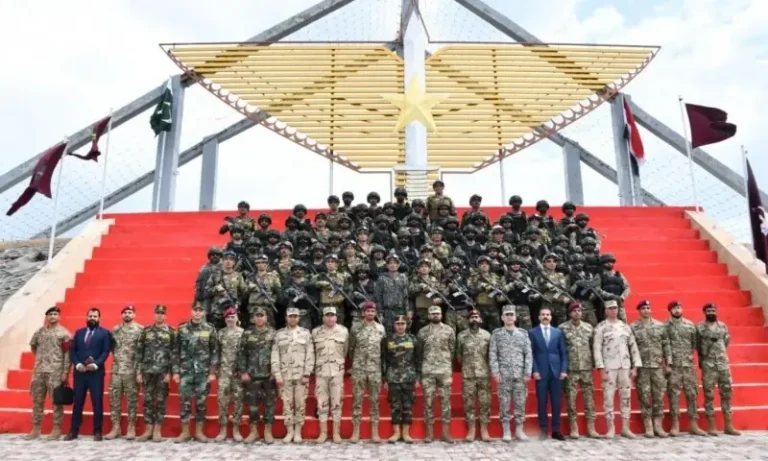
RAWALPINDI: Pakistan and Egypt concluded a two-week-long military exercise focused on counter-terrorism, the military’s media wing said on Monday.

In a press release, the Inter-Services Public Relations (ISPR) said the “Pakistan-Egypt Joint Exercise Thunder-II” concluded in Cherat, Khyber Pakhtunkhwa — the military’s premier Special Operations School (SOS).

“[The] two-week-long exercise was designed to enhance interoperability by refining drills, procedures, and techniques related to counterterrorism operations through joint training,” ISPR said.

It added that “combat teams from the Special Services Group (SSG) of the Pakistan Army and the Egyptian Special Forces actively participated” in the exercise.

The military’s media wing further said that the participants exhibited “exceptional professionalism and operational skill throughout the exercise”.

The picture shows Pakistan-Egypt Joint Exercise Thunder-II underway. — ISPR
General officer commanding SSG and Commander of Egyptian Paratroopers, Major General Mohamed Saad Abdel Razik, along with the defence attaché of Egypt, attended the closing ceremony.

“The exercise also served to further strengthen the longstanding and historic military-to-military relations between the two friendly nations,” ISPR added.

Pakistan and Egypt share long-standing bilateral relations. In October last year, Chief of the Army Staff (COAS) Field Marshal Asim Munir, in a meeting with Egyptian defence officials, reaffirmed Pakistan’s commitment to improved defence and military cooperation with Egypt.

Shipping channels unaffected by Hormuz tensions

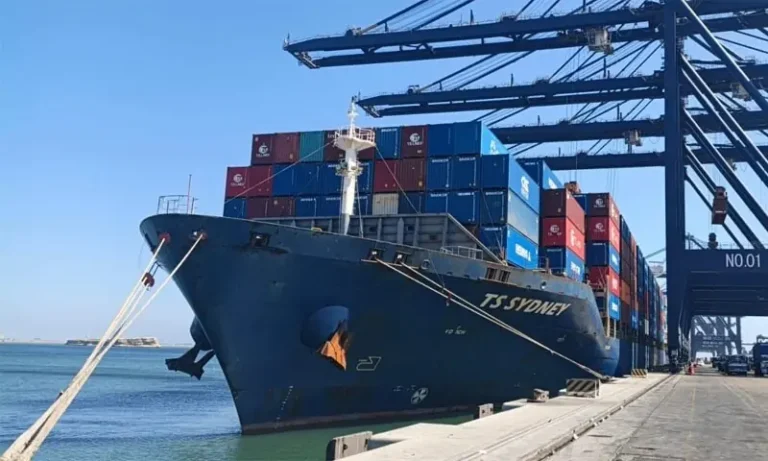
ISLAMABAD: Despite the volatile situation in the Strait of Hormuz, shipping movement rem­ains normal in Pakistan, and oil tankers continue to arrive in the country bringing fuel supplies.

After discharging crude oil brought from Fujairah, UAE, the marine tanker (MT) Sargodha, owned by the Pakistan National Shipping Company (PNSC), at Karachi port, two more are expected to berth, bringing petroleum fuel.

The three tankers expected to berth at Karachi port include MT Shalimar and MT Lahore, both belonging to the PNSC, to discharge crude oil.

Meanwhile, MT Martini is expected to berth at Karachi port on Monday evening (today) for the loading of surplus ‘fuel oil’ produced in Pakistan.

Fuel oil is a liquid petroleum by-product derived from crude oil distillation, consisting of long-chain hydrocarbons used primarily for heating, power generation, and marine engines.

Other tankers, including MT Hafnia Henriette and MT Wan HE, have berthed at Karachi port to load naphtha and ethanol, while MT Eva Gold sailed from the port after loading ethanol.

The port witnessed active containerised cargo movement of more than 60,554 tonnes, including 58,366 tonnes of import cargo and 2,188 tonnes of export-oriented containers. Meanwhile, two ships, Pan Concord and Echo GR, offloaded 1,388 tonnes of imported soya bean meal.

Three ships, Hosun, Galaxy, and Liana, are lifting 611 tonnes of rice for export, bringing total liquid, dry, and bulk cargo handling to around 80,000 tonnes at Karachi port on Sunday. Meanwhile, 19 cargo ships are scheduled to berth at Karachi port on Monday.

Twin cities tighten security, suspend transport ahead of US-Iran talks

RAWALPINDI/ ISLAMABAD: Authorities in Islamabad and Rawalpindi on Sunday announced the suspension of all public, private and goods transport services until further notice, as security was placed on high alert ahead of the expected next round of US-Iran talks in the federal capital.

Pakistan took centre stage when it brokered a 14-day ceasefire between the US and Iran, followed by high-stakes talks in Islamabad attended by senior delegations from the two countries. Although the talks did not yield the desired results, the ceasefire remains intact, with confidence-building measures being pursued to secure a permanent truce.

A second round of talks is expected to be held in Islamabad, as US President Donald Trump announced that his representatives are set to arrive in the Pakistan’s capital tomorrow.

Islamabad Deputy Commissioner Irfan Nawaz Memon confirmed the suspension of heavy and public transport across the capital in a post on X. “Heavy transport and public transport in the city are being suspended until further order. Citizens are earnestly requested to cooperate with the security agencies. Thank you,” he wrote.

In Rawalpindi, private, public, and goods transport services have also been halted as a precautionary measure in view of the evolving situation.

Rawalpindi Deputy Commissioner Hassan Waqar Cheema said, “All private, public and transport is hereby suspended with immediate effect. Further updates will be shared” in a post on X.

The Metro Bus Authority said the Red Metro Bus Service operating in the twin cities has been completely suspended from Sunday. The service will remain closed from Saddar Station in Rawalpindi to Pak Secretariat Station in Islamabad.

The suspension of the Red Metro Bus Service in the twin cities will remain in effect until further orders. The decision has been implemented in accordance with the directives of the district administrations of both cities.

Authorities in both districts said the measures were temporary and aimed at maintaining law and order during the sensitive period.

Rawalpindi police have been placed on high alert, with more than 10,000 personnel deployed across the city. Over 600 special pickets have been established, and strict monitoring is underway at all entry and exit points. Senior officers, including SSP Operations Malik Tariq Mehboob and divisional SPs, are overseeing field operations.

Islamabad SSP Investigation Muhammad Usman Tariq Butt visited various duty points and conducted a detailed review of the security arrangements. He issued instructions to officers deployed on duty regarding the proper performance of their responsibilities, Islamabad police posted on X.

Similarly, SSP Operations Ali Raza visited the Red Zone and various duty points. He conducted a detailed review of the security arrangements and issued instructions to the officers on duty regarding the proper performance of their duties, according to the Islamabad police on X.

Officials said police personnel on duty will not be allowed to use mobile phones, and all deployed officers will be required to wear anti-riot gear.

City Police Officer Khalid Hamdani is heading overall command and control arrangements. He said elite commandos, trained snipers, and quick response units — including Elite Force and Dolphin Force teams — have been deployed to ensure comprehensive security.

A total of 18,000 security personnel are expected to be deployed for the operation, with additional forces arriving from Punjab.

Islamabad Police, Rangers and the Frontier Corps (FC) will also be deployed as part of the security arrangements, working alongside other law enforcement agencies to establish joint checkpoints.

Green belts and service roads along the designated routes will be kept clear during movement operations.

It has also been decided that only properly identified personnel with valid service cards will be allowed access to duty areas along the route.

The capital police and administration have directed the managements of hostels for students and working individuals, as well as hotels, inns and guest houses, to close their premises and lock the buildings until further orders. They warned of strict legal action in case of non-compliance.

Authorities are also considering the closure and evacuation of seminaries, particularly those located near the high-security zone.

Alternative traffic plan

Authorities said the Red Zone and Extended Red Zone will remain completely closed to all types of traffic.

The Islamabad Expressway between Koral and Zero Point will also remain closed, while traffic on Srinagar Highway may be closed at intervals during the day.

Officials added that entry of all heavy transport into Islamabad from any direction has been suspended, and transporters have been advised to avoid travelling towards the capital during this period.

Residents have been urged to strictly follow the diversion plan in case of road closures.

Meanwhile, Islamabad Police has closed the entry at Jinnah Avenue near Khyber Plaza, while Club Road has been sealed from Kashmir Chowk.

Diversion plan

Under the plan, residents of Sectors G-5, G-6, G-7, F-6 and F-7 can use Margalla Road and 9th Avenue for travel between Islamabad and Rawalpindi. Traffic coming from Faisal Avenue towards Zero Point will be diverted to 9th Avenue.

In case of closure between Zero Point and Koral Chowk, traffic will be diverted via Srinagar Highway to 9th Avenue, then through Stadium Road, Murree Road (Chandni Chowk) and Rawal Road towards Koral.

If Park Road to Club Road is closed, traffic will be redirected towards Taramri Chowk.

Traffic police have been deployed at various points to assist citizens and manage traffic flow.

On February 28, the US and Israel launched a joint offensive on Iran, and Tehran retaliated with strikes on Israel and other regional countries hosting US assets.

The war has been on hold since April 8, when Pakistan mediated a two-week ceasefire.

Dar stresses continued dialogue in call with Araghchi

ISLAMABAD: Deputy Prime Minister and Foreign Minister Ishaq Dar on Sunday emphasised the need for continued dialogue and engagement to resolve ongoing issues during a telephone conversation with his Iranian counterpart Abbas Araghchi.

According to the statement issued by the Ministry of Foreign Affairs (MOFA) on X, Dar stressed the need for continued dialogue and engagement were essential for the timely resolution of current issues and for promoting peace and stability in the region and beyond.

“Both leaders agreed to remain in close contact and also concurred on a phone call between the president of Iran and the PM Shehbaz, later today,” read the statement.

The development came as US President Donald Trump signalled a new round of talks in Islamabad soon, saying that US representatives would travel to the capital for the second round of negotiations with Iran aimed at addressing the Middle East crisis.

“My representatives are going to Islamabad, Pakistan — they will be there tomorrow evening, for negotiations,” President Trump said in a post on Truth Social.

Meanwhile, Iran’s Parliament Speaker Mohammad Bagher Ghalibaf said earlier that talks with the US to end the war had made progress but remained far from an agreement, as Tehran said the crucial Strait of Hormuz would remain closed until Washington lifts its naval blockade on Iranian ports.

In a televised address to the nation on Saturday night, Ghalibaf said the “third imposed war” began during negotiations through US deception, adding that previous conflicts had also started with the assassination of commanders, Tasnim News reported.

He said proposals relayed via countries, including Pakistan, were reviewed by Iran’s security council, and Tehran resisted pressure and warned against escalation. He added that after failing militarily, the US turned to indirect messaging, while Iran remained resolute post-ceasefire.

Tehran’s reversal of the closure of the Strait of Hormuz raised the risk that oil and gas shipments through the strait could remain disrupted just as Trump weighs whether to extend the ceasefire.

When American and Iranian negotiators met last weekend in Islamabad, the US proposed a 20-year suspension of all Iranian nuclear activity, while Iran suggested a halt of three to five years, according to people familiar with the proposals.

Iran’s Deputy Foreign Minister Saeed Khatibzadeh said no date had been set for the next round of negotiations, adding that a framework of understanding must be agreed first.

Trump had said on Friday that there could be talks this weekend and that the two sides were “very close to making a deal.”

There were no signs on Saturday of preparations for new talks in the Pakistani capital, where the highest-level US-Iran negotiations since the 1979 Islamic Revolution ended without agreement last weekend.