Home Blog Page 25

Pakistan reaffirms mediatory role as ‘Islamabad Talks’ begin between US and Iran

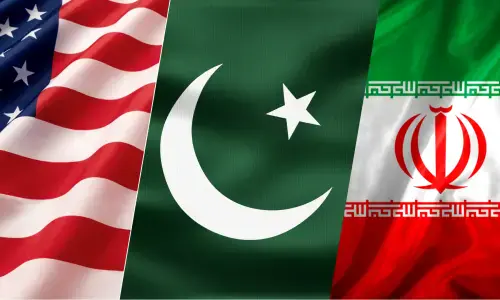
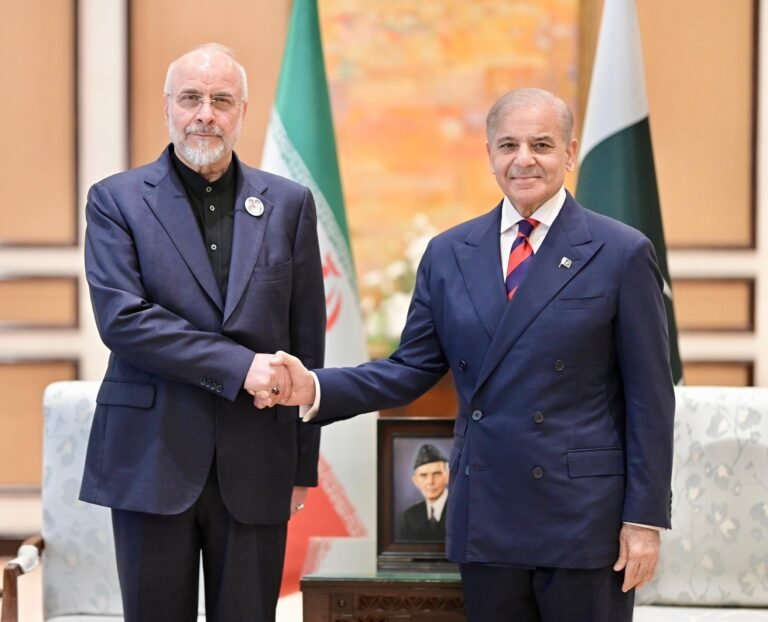
ISLAMABAD: Prime Minister Shehbaz Sharif on Saturday reiterated Pakistan’s firm commitment to facilitating dialogue as high-stakes negotiations between the United States and Iran, dubbed the “Islamabad Talks,” formally commenced in the federal capital.

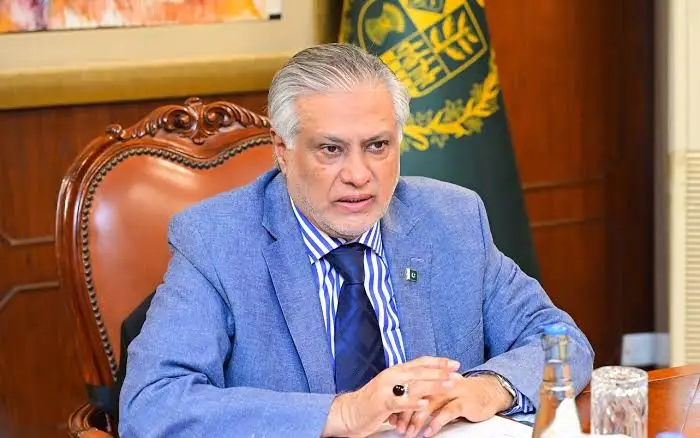
According to the Prime Minister’s Office, the Iranian delegation was led by Parliament Speaker Mohammad-Bagher Ghalibaf and accompanied by Foreign Minister Abbas Araghchi. On the Pakistani side, Deputy Prime Minister and Foreign Minister Ishaq Dar, Chief of Army Staff Asim Munir, and Interior Minister Mohsin Naqvi were present.

Welcoming Iran’s participation, the prime minister reaffirmed Pakistan’s “sincere resolve” to continue its mediatory efforts aimed at fostering meaningful progress toward regional and global peace.

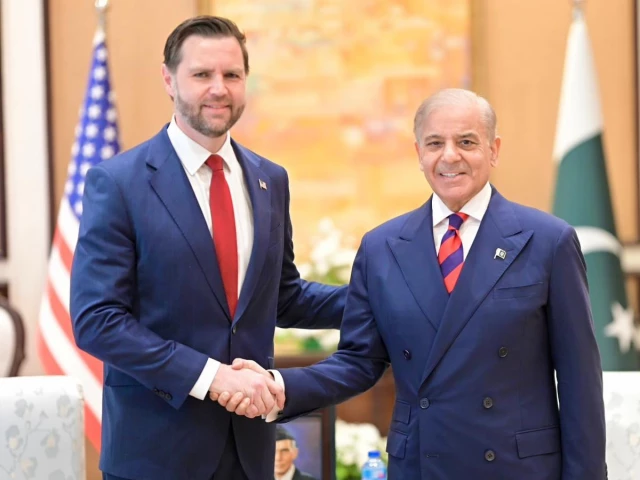
Earlier in the day, PM Shehbaz also held a meeting with US Vice President JD Vance, alongside Special Envoy Steve Witkoff and senior adviser Jared Kushner, who arrived in Islamabad as part of the American delegation for the talks.

The negotiations come in the wake of a six-week conflict involving Iran, which has resulted in thousands of casualties, disrupted global energy markets, and slowed economic growth worldwide. Both Washington and Tehran are now seeking a diplomatic resolution through these talks.

The Iranian delegation, which arrived late Friday, was received by Pakistani officials including Ishaq Dar, National Assembly Speaker Sardar Ayaz Sadiq, Mohsin Naqvi, and military leadership. Pakistan’s Foreign Office expressed hope that both sides would engage constructively and move toward a lasting settlement.

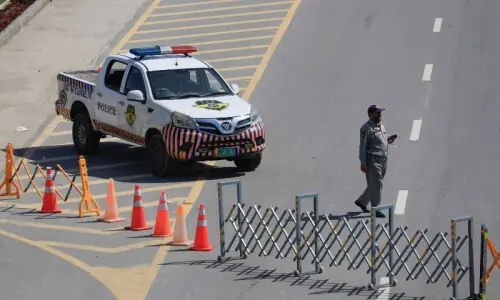
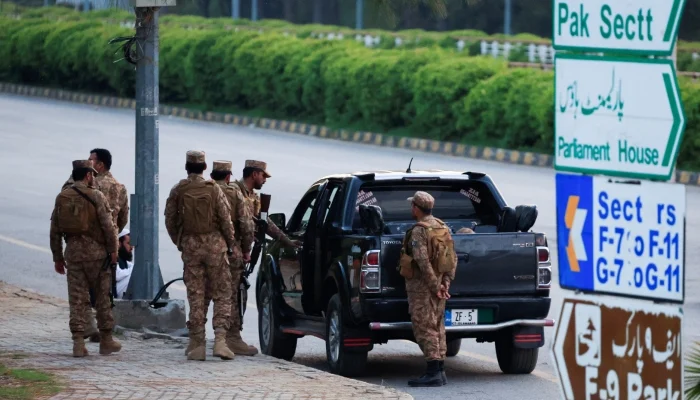
As Islamabad hosts what is being seen as one of the most significant diplomatic engagements in recent years, the city has been placed under tight security. Key routes have been sealed, security forces heavily deployed, and surveillance heightened, with the talks being held at a secure, undisclosed location.

Pakistan has played an increasingly central role in de-escalating tensions in the Middle East. Following recent airstrikes by the US and Israel on Iran and Tehran’s subsequent retaliation, Islamabad intensified diplomatic efforts to prevent further escalation.

In recent weeks, Pakistan hosted a quadrilateral meeting involving foreign ministers from Turkiye, Saudi Arabia, and Egypt, which was widely welcomed internationally. Additionally, Pakistan and China jointly proposed a five-point initiative aimed at restoring peace and stability in the Gulf and the wider Middle East.
PM Shehbaz calls on US VP Vance as Islamabad hosts US-Iran dialogue

ISLAMABAD: Prime Minister Shehbaz Sharif on Saturday met US Vice President JD Vance, along with Special Envoy Steve Witkoff and senior adviser Jared Kushner, at the Prime Minister’s Office as Pakistan hosts high-level negotiations between Washington and Tehran.

According to the Prime Minister’s Office, the premier was joined by Deputy Prime Minister and Foreign Minister Ishaq Dar and Interior Minister Mohsin Naqvi during the meeting.

The prime minister appreciated the willingness of both delegations to engage in dialogue and expressed hope that the ongoing talks would serve as a stepping stone toward lasting peace in the region. He reiterated Pakistan’s commitment to facilitating both sides in achieving a sustainable resolution to the conflict.

Vice President Vance arrived in Islamabad as part of a US delegation to participate in the negotiations, termed the “Islamabad Talks 2026,” aimed at addressing the ongoing US-Iran conflict. Upon arrival, the delegation was received by Ishaq Dar, Chief of Army Staff Asim Munir, and Mohsin Naqvi, along with US Chargé d’Affaires Natalie Baker.

Dar welcomed the US delegation and commended Washington’s commitment to regional and global peace, expressing optimism that the parties would engage constructively. He reaffirmed Pakistan’s readiness to continue facilitating efforts toward a durable settlement.

Ahead of his visit, Vance had expressed cautious optimism about the talks, stating that the United States was prepared for meaningful negotiations, while emphasising that progress would depend on Iran’s willingness to engage in good faith.

The negotiations come in the wake of a six-week conflict that has caused widespread casualties, disrupted energy markets, and strained the global economy. Delegations from both the United States and Iran, including Iranian Foreign Minister Abbas Araghchi and Parliament Speaker Mohammad-Bagher Ghalibaf, have gathered in Islamabad for the high-stakes talks.

As Pakistan hosts what is being viewed as a critical diplomatic effort, Islamabad has been placed under heightened security, with key routes sealed and strict measures implemented to ensure the safety of visiting dignitaries. The negotiations are being held at a secure, undisclosed location.

Pakistan has increasingly positioned itself as a key mediator in the region following recent escalation, including US and Israeli airstrikes on Iran and Tehran’s retaliatory strikes on regional targets. In response, Islamabad intensified diplomatic outreach to de-escalate tensions.

Earlier, Pakistan hosted a quadrilateral meeting involving Turkiye, Saudi Arabia, and Egypt, which was widely praised. Additionally, Pakistan and China jointly proposed a five-point initiative aimed at restoring peace and stability in the Gulf and the wider Middle East.
Islamabad locks down as Pakistan prepares for crucial US-Iran peace talks

ISLAMABAD: Pakistan has intensified preparations for high-stakes negotiations between the United States and Iran, set to take place in Islamabad, with efforts focused on turning a fragile two-week ceasefire into a lasting peace agreement.

Chairing a high-level review meeting, Interior Minister Mohsin Naqvi directed authorities to ensure foolproof security and exceptional arrangements for visiting foreign delegations. Officials decided that the Red Zone in the federal capital will be completely sealed during the talks, with access limited strictly to authorised personnel.

A dedicated control room has been established at the Interior Ministry to oversee security and administrative arrangements in real time.

The talks follow Prime Minister Shehbaz Sharif’s invitation to both Washington and Tehran after Pakistan played a key role in facilitating the ceasefire that came into effect on April 8.

The upcoming negotiations come in the aftermath of a devastating conflict that erupted on February 28, when the United States and Israel launched coordinated strikes targeting Iran’s leadership and military infrastructure. The escalation resulted in over 2,000 deaths within five weeks and pushed the region to the brink of a wider war.

In retaliation, Iran blocked the strategic Strait of Hormuz and carried out strikes on Israeli targets and US bases across the Gulf, severely disrupting regional stability and global energy flows.

The ceasefire agreement, though holding for now, remains fragile. Washington has reportedly put forward a 15-point proposal focusing on curbing Iran’s enriched uranium programme, limiting ballistic missile capabilities, easing sanctions, and reopening the Strait of Hormuz.

Tehran, however, has countered with a 10-point plan demanding control over the strait, the imposition of transit tolls, a complete halt to regional military operations, and the lifting of all sanctions.

Pakistan’s mediation efforts have drawn widespread international praise, with global powers backing Islamabad’s role in de-escalating tensions and facilitating dialogue.

Delegations from both sides are expected to arrive in Islamabad for Saturday’s talks. The US team will be led by Vice President JD Vance, accompanied by special envoy Steve Witkoff and senior advisor Jared Kushner.

On the Iranian side, Parliamentary Speaker Mohammad Bagher Ghalibaf and Foreign Minister Abbas Araghchi are expected to lead the delegation. It remains unclear whether representatives of the Islamic Revolutionary Guard Corps (IRGC) will participate.

Ahead of the “Islamabad Talks,” authorities have enforced heightened security measures, including the announcement of local holidays in Islamabad and Rawalpindi on April 9 and 10. Educational institutions, as well as public and private offices in the twin cities, have remained closed to ensure smooth and secure conduct of the negotiations.

With the world’s attention now on Islamabad, Pakistan is positioning itself at the center of a critical diplomatic effort that could shape the future of peace and stability in the Middle East.

US, Iran set for high-stakes Islamabad talks as Pakistan leads peace push

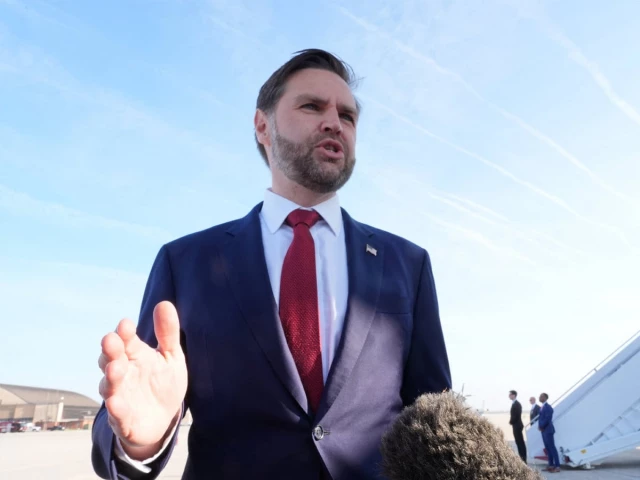
WASHINGTON/ISLAMABAD: US Vice President JD Vance on Friday expressed optimism ahead of crucial negotiations with Iran, as he departed for Pakistan to attend the much-anticipated “Islamabad Talks,” aimed at securing a lasting peace after weeks of intense conflict.

“We’re looking forward to the negotiation. I think it’s going to be positive,” Vance said, while cautioning that progress would depend on Iran’s willingness to engage in good faith. He added that the US negotiating team, guided by clear directives from President Donald Trump, would remain firm if faced with any lack of sincerity from Tehran.

Pakistan is set to host what could become one of the most consequential diplomatic engagements in recent history, as senior leadership from both the United States and Iran converge in Islamabad following a devastating six-week war that has claimed thousands of lives and shaken global economic stability.

The US delegation will be led by Vance, accompanied by key Middle East envoys Steve Witkoff and Jared Kushner. On the Iranian side, Parliamentary Speaker Mohammad Bagher Ghalibaf is expected to head the delegation, alongside Foreign Minister Abbas Araghchi and other senior officials.

Islamabad under tight security

Ahead of the high-stakes talks, Islamabad has been placed under an unprecedented security lockdown. Authorities have sealed key routes, deployed heavy security contingents, and intensified surveillance across the capital. Officials confirmed that negotiations will be held at a secure, undisclosed location to ensure maximum safety and confidentiality.

The Foreign Office has clarified that special visa-on-arrival facilities have been restricted to official delegations and accredited journalists attending the talks.

Pakistan emerges as key mediator

Pakistan’s role as a central diplomatic mediator has gained global recognition in recent weeks. The crisis was triggered when the US and Israel launched airstrikes on Iran, prompting retaliatory strikes by Tehran on Israeli targets and US military bases in the Gulf, pushing the region toward a broader conflict.

In response, Pakistan undertook intensive diplomatic efforts to de-escalate tensions, including hosting a quadrilateral meeting of foreign ministers from Turkiye, Saudi Arabia, and Egypt in Islamabad—an initiative widely praised by the international community.

Additionally, Pakistan, in collaboration with China, proposed a five-point peace initiative aimed at restoring stability in the Gulf and the wider Middle East, further cementing its role as a bridge between competing powers.

Fragile ceasefire at a critical juncture

The Islamabad Talks come at a delicate moment, with a fragile, conditional ceasefire currently in place between Washington and Tehran. The agreement, centered on a two-week pause in hostilities, seeks to halt major military operations and stabilize critical routes such as the Strait of Hormuz.

Despite both sides portraying the ceasefire as a strategic success, deep divisions persist over the terms of a long-term settlement.

At the core of the negotiations is a reported 10-point Iranian proposal, which US officials have described as a “workable basis” for dialogue. The framework includes provisions related to non-aggression, sanctions relief, management of the Strait of Hormuz, and cessation of hostilities across multiple fronts.

With talks set to begin in Islamabad, Pakistan is positioning itself at the heart of a critical diplomatic effort to transform a temporary truce into a sustainable peace agreement—one that could significantly shape the future of regional and global stability.

Global powers back Pakistan’s diplomacy as Lebanon violence tests fragile ceasefire

ISLAMABAD: Deputy Prime Minister and Foreign Minister Ishaq Dar has intensified diplomatic outreach amid escalating regional tensions, receiving separate telephone calls from French Foreign Minister Jean-Noël Barrot and UK Foreign Secretary Yvette Cooper, as Pakistan’s role in brokering a key ceasefire continues to draw international recognition.

During his conversation with Barrot, the French foreign minister congratulated Pakistan for its pivotal role in facilitating the initial ceasefire understanding between Iran and the United States. He also expressed strong support for Islamabad’s continued diplomatic engagement aimed at securing lasting peace and stability in an increasingly volatile region.

The two sides held detailed discussions on unfolding regional developments, particularly the deteriorating situation in Lebanon. Both ministers expressed serious concern over reported violations of the ceasefire, stressing that all parties must adhere fully to the agreement to prevent further escalation. They underscored that respect for the truce remains essential to sustaining fragile diplomatic gains.

Reaffirming their shared commitment to deepening Pakistan-France relations, the leaders agreed to expand cooperation across economic, trade, and diplomatic spheres. They also resolved to remain in close contact as the situation evolves.

In a separate high-level exchange, UK Foreign Secretary Yvette Cooper commended Pakistan’s diplomatic role, acknowledging its contribution to efforts that led to the Iran-related ceasefire. According to the Foreign Office, she paid tribute to Islamabad’s constructive engagement and reiterated Britain’s support for Pakistan’s ongoing efforts to promote durable peace in the region.

Dar and Cooper also reaffirmed the strength of Pakistan-UK bilateral relations, agreeing to further enhance cooperation in multiple areas. The interaction was described as a positive and forward-looking engagement, reflecting growing international backing for Pakistan’s diplomatic initiatives.

Rising tensions threaten fragile ceasefire

These diplomatic contacts come against the backdrop of renewed violence in Lebanon, where Israeli military operations have intensified despite the ceasefire framework. The escalation follows Pakistan’s mediation efforts that helped broker a temporary truce between Iran and the United States after weeks of heightened confrontation.

Reports indicate that Israel has carried out some of the deadliest strikes in Lebanon since hostilities with Hezbollah escalated, resulting in significant civilian casualties. Lebanese authorities have reported hundreds killed and over a thousand injured, raising fears that continued violence could derail fragile peace efforts and trigger a broader regional crisis.

Amid the escalating situation, former US President Donald Trump has urged Israeli Prime Minister Benjamin Netanyahu to scale back military operations, expressing hope that a wider ceasefire could hold. His remarks came after Washington announced a two-week truce with Iran, with further negotiations planned to achieve a longer-term settlement.

Pakistan calls for expanded ceasefire scope

Pakistan has maintained that the ceasefire should not remain limited to the US-Iran dimension but must also extend to Lebanon to ensure comprehensive regional stability. Officials in Islamabad have repeatedly warned that continued Israeli strikes risk undermining the agreement and weakening prospects for meaningful dialogue.

Adding to the uncertainty are differing interpretations of the ceasefire’s scope. While the United States maintains that Israeli actions in Lebanon fall outside the truce framework, Iran has argued that the continued strikes constitute a violation of the agreement. Tehran has cautioned that such developments could render ongoing peace efforts ineffective and jeopardize the chances of achieving a durable resolution.

Islamabad positions itself as key diplomatic player

With peace talks scheduled in Islamabad, Pakistan is increasingly positioning itself as a central diplomatic actor seeking to bridge divides and facilitate dialogue among key stakeholders. The Foreign Office has highlighted growing international acknowledgment of Pakistan’s role, pointing to support from major global partners including France and the United Kingdom.

Officials emphasize that sustained diplomatic engagement, adherence to ceasefire commitments, and inclusive negotiations will be critical in preventing further escalation. As tensions persist, Pakistan’s continued efforts to mediate and promote dialogue are likely to remain central to attempts at stabilizing the region and advancing a broader peace framework.

Capital on high alert ahead of US-Iran peace talks

ISLAMABAD: The federal capital was on ‘red alert’ ahead of crucial peace talks between the US and Iran in the city, with more than 10,000 police and security personnel deployed to ensure the safety of the visiting delegates.

Sources said the multi-tiered security arrangement would be supervised by the military, assi­sted by the paramilitary forces, such as Rangers, and the Islam­abad and Punjab police. The Islamabad Traffic Police and the National Highway and Motorways Police will be deployed on roads to ensure smooth traffic flow.

About 6,000 personnel of the capital police, 900 Frontier Constabulary, and 3,000 personnel of the Punjab Constabulary, along with the Rangers and Pakistan Army troops, would perform duties. About 1,000 traffic police officials would also be deployed.

The army and the Rangers would ensure the protection of the red zone and the high-security zone. The troops were deployed at important buildings in the red zone, with contingents of the Quick Response Force also stationed at different points. Troops were also deployed in the Margalla Hills.

All entry points to the red zone, except for the Margalla Road, would remain closed. Only authorised officials and residents would be allowed through the Margalla Road.

Besides, separate routes were selected for the movements of the visiting delegates from the airport to their place of stay. On the routes, the security and police personnel would protect both sides and a ‘blue book’ protocol would be extended to the delegates.

Close protection teams deployed with the VVIPs will not be allowed any kind of gadgets, including mobile phones and digital watches.

All supervisory officers will restrict the entry of unauthorised persons in the high security zone and around the venues. The capital administration will be in cha­rge of fire brigade and ambulance services, proper light arrangements on routes and around the venues, the maintenance of roads/routes, and the food arrangements.

Due to the security measures, Faisal Avenue till Zero Point and the Expressway till Koral Chowk will be closed, whereas traffic on different roads will be restricted during the movement of the delegates.

Motorists going to Rawalpindi from sectors G-5, G-6 and F-6 were asked to use 9th Avenue, while the traffic moving from Faisal Avenue to Zero Point would be diverted to 9th Avenue.Motorists moving towards Rawalpindi from Bhara Kahu would be diverted to Korang Road, Banigala, while those going towards Faizabad from I.J.P Road would be diverted to Stadium Road from the 9th Avenue traffic signal.

Pakistan grants visa-free boarding, on-arrival visas for Islamabad Talks delegates

ISLAMABAD: Deputy Prime Minister and Foreign Minister Ishaq Dar on Friday said airlines have been instructed to allow visa-free boarding for individuals travelling to the country in connection with the US-Iran talks in Islamabad.

Foreign delegations from Iran and the US are expected in Islamabad this weekend for talks aimed at ending the US-Israeli war on Iran, following a two-week Pakistan-brokered ceasefire.

In a post shared on X, Dar shared an official directive and said, “Airlines are requested to permit boarding to all such individuals without visa. Immigration authorities in Pakistan will issue them visa on arrival”.

Dar extended his welcome to “all delegates, including journalists from participating nations, travelling in relation to Islamabad Talks 2026”.

Pakistan ramps up diplomacy as Lebanon strikes strain ceasefire

ISLAMABAD: Pakistan on Thursday vowed to support Iran and the United States in reaching a peaceful settlement as Israeli strikes in Lebanon continued to weigh on the prospects of the upcoming dialogue, with Islamabad stepping up diplomatic engagement to keep a two-week ceasefire between Tehran and Washington from collapsing.

The commitment came during a meeting between Prime Minister Shehbaz Sharif and Chief of Army Staff and Chief of Defence Forces Field Marshal Asim Munir, where they reviewed the progress of Pakistan’s mediatory efforts and finalised arrangements for the talks.

“They expressed satisfaction over the de-escalation achieved so far and stressed the need for maintaining peace and ceasefire by all parties,” an official statement said.

“They appreciated the restraint demonstrated by all sides and reiterated Pakistan’s commitment to facilitate and provide all-out support to both sides to arrive at a peacefully negotiated settlement,” it added.

Iranian deputy foreign minister Saeed Khatibzadeh, in a TV interview, disclosed that their forces were last night all set to respond to the ceasefire violation when Pakistan intervened and conveyed messages that the United States would stop Israel.

The Prime Minister’s Office said PM Shehbaz lauded the commitment of the parties involved and wished them success in their pursuit of peace, as Islamabad positioned itself as a central facilitator at a time when the ceasefire remains under visible strain due to violations.

PM Shehbaz simultaneously launched a round of intensive diplomatic outreach, holding telephone conversations with multiple world leaders with a consistent focus on the worsening situation in Lebanon and the need to uphold the ceasefire to enable negotiations.

Iranian President Masoud Pezeshkian, in a statement, warned that “the repeated aggression by the Zionist entity against Lebanon is a flagrant violation of the initial ceasefire agreement and a dangerous indicator of deceit and lack of commitment to potential accords”.

“The continuation of these aggressions will render negotiations meaningless; our hands will remain on the trigger, and Iran will never abandon its Lebanese brothers and sisters,” he added.

In separate conversations with Qatar’s Emir Sheikh Tamim bin Hamad Al Thani, French Pre­sident Emmanuel Macron, Bahrain’s King Hamad bin Isa Al Khalifa, Austrian Chancellor Chr­istian Stocker, German Chancellor Friedrich Merz and Italian Prime Minister Giorgia Meloni, PM Shehbaz reiterated the urgency of preserving the ceasefire and preventing further escalation.

The foreign leaders expressed concern over continued hostilities in Lebanon and emphasised that adherence to the truce would be critical for the success of the Islamabad talks.

Separately, Deputy Prime Minister and Foreign Minister Ishaq Dar also engaged in a series of diplomatic contacts to consolidate international backing ahead of the talks.

Mr Dar spoke with British Foreign Secretary Yvette Cooper, EU High Representative Kaja Kallas, Uzbekistan For­eign Minister Bakhtiyor Saidov, South Africa’s Minister of International Relations Ronald Lamola, Azerbaijan Foreign Min­ister Jeyhun Bayramov, Saudi Foreign Minister Faisal bin Farhan, and Turkish Foreign Minister Hakan Fidan.

The flurry of calls underlined growing international concern that Israeli operations in Leb­anon, which Iran insists must be part of any ceasefire framework, could derail the diplomatic process before it begins.

National harmony the need of the hour, agree PM, Bilawal

0

ISLAMABAD: Prime Minister Shehbaz Sharif and PPP Chairman Bilawal Bhutto-Zardari on Thursday agreed that national harmony was the need of the hour to meet current challenges.

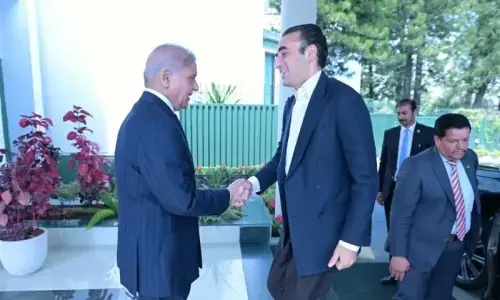
This was agreed during a telephone call between the premier and the PPP chief, who had called the former to congratulate him on successful mediation between the United States and Iran by managing to bring them to the table.

An official press release issued by the Prime Minister’s Office (PMO) said both leaders agreed that, in the present circumstances, mutual consultation and national harmony are essential to effectively address the challenges facing the country.

During the conversation, both leaders exchanged detailed views on the current situation in the country. It said the PPP chairman expressed solidarity with the PM and the government. He also appreciated Pakistan’s efforts in promoting peace in the region and highlighted the importance of national unity at this critical juncture.

PM Shehbaz thanked his ally for the support and reaffirmed Pakistan’s commitment to continue efforts for regional peace, stability, and the promotion of dialogue.

Meanwhile, a source said the PM apprised Mr Bhutto-Zardari about the arrangements made for the talks between the US and Iran. The PM lauded the role of President Asif Ali Zardari in forging political harmony in the country on the issue of the US-Israel war with Iran and its fallout, including the unprecedented hike in fuel prices.

He hoped that the two-week ceasefire by the US and Iran would turn into a permanent truce.

In the National Assembly on Wednesday, when the majority of the speakers were hailing the prime minister for successful mediation between the two warring parties, the PPP MNAs were praising President Zardari and their party chief for their supposed role in the mediation.

Dar blames Israeli strikes for derailing Pakistan’s US-Iran peace efforts

— Islamabad had secured US-Iran consent for talks on its soil before escalation

— Pakistan exchanged proposals between Washington and Tehran to build consensus

— Fresh Israeli attacks on Iran disrupt fragile diplomatic momentum

— Prolonged conflict risks global economic fallout, including rising oil prices

ISLAMABAD: Deputy Prime Minister and Foreign Minister Ishaq Dar on Tuesday accused Israel of undermining Pakistan’s efforts to broker dialogue between the United States and Iran, saying recent strikes on Tehran came just as both sides were nearing formal talks.

Addressing the Senate, Dar said Islamabad had made significant progress in facilitating negotiations, with Washington and Tehran agreeing in principle to hold talks in Pakistan. “We were very optimistic before Monday night,” he said, noting that both countries had accepted Islamabad’s role as a mediator.

According to the foreign minister, Pakistan had already played a key diplomatic role by conveying a 15-point set of conditions from the US to Iran, while also delivering Tehran’s five-point proposals to Washington in an effort to bridge differences.

However, he lamented that the momentum toward dialogue was disrupted by fresh Israeli strikes on Iran, which he said had complicated an already fragile situation. “Pakistan tried until the last moment to create space for a pause and meaningful engagement,” he added.

Dar revealed that the United Nations secretary-general had contacted him to acknowledge Pakistan’s peace efforts and offer support, but recent developments had reversed progress and heightened tensions across the region.

He warned that escalating hostilities — including Israeli attacks on Iranian fuel facilities and Iran’s retaliatory strike on Saudi Arabia’s petrochemical infrastructure — had made the situation increasingly volatile.

The foreign minister cautioned that a prolonged conflict could have far-reaching global consequences, particularly through rising oil prices and economic strain, including for Pakistan. Despite setbacks, he expressed hope that sustained diplomatic engagement could still lead to a “dignified resolution”.

Recalling earlier developments, Dar said he was in Madina attending an OIC meeting when the initial attack on Iran occurred. He immediately directed the Foreign Office to issue a strong condemnation and reached out to his Iranian counterpart to convey Pakistan’s solidarity.

Since then, Pakistan has remained in close contact with key international partners, including China, Japan, the United Kingdom, Canada and several European countries, urging restraint and de-escalation.

Highlighting Pakistan’s diplomatic outreach, Dar said Prime Minister Shehbaz Sharif, Chief of Army Staff Field Marshal Syed Asim Munir, and the Foreign Office had remained fully engaged throughout the process.

He also referred to a March 19 meeting in Riyadh hosted by Saudi Arabia, where representatives from 12 countries issued a joint statement — with Pakistan’s input — condemning Israeli actions. Additionally, a quadrilateral forum involving Saudi Arabia, Egypt, Türkiye and Pakistan sought to advance peace efforts, with follow-up discussions held in Islamabad on March 29.

Dar further noted that Pakistan had engaged China at a high level, including discussions on a five-point peace initiative during his visit on March 31.

Separately, the foreign minister held telephone conversations with his counterparts from Bahrain and Norway. In both discussions, leaders reviewed the regional situation, stressed the importance of stability, and agreed to remain in close contact as diplomatic efforts continue.