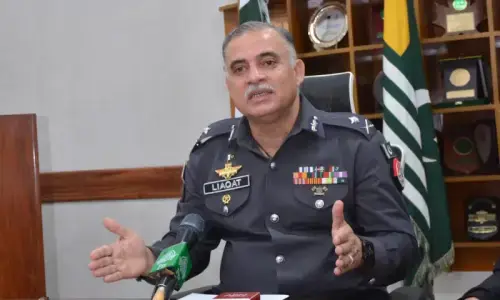
MUZAFFARABAD: AJK police chief on Thursday warned citizens at home and abroad against disinformation and AI-generated content, urging them to rely on official sources for information amid what he described as a “hybrid warfare” environment.
Addressing a press conference, Inspector General of Police Captain (retd) Liaqat Ali Malik said all entry points into AJK remained open to all types of traffic, including vehicles carrying essential commodities, and rejected reports suggesting otherwise.
He urged overseas Pakistanis, particularly members of the Kashmiri diaspora in the United Kingdom and Europe, to verify information through authentic government media and social media platforms.
“All major entry points into the territory, including Kohala, Azad Pattan and Bararkot, are open for all types of traffic without any intervention, except routine security checks within police protocols,” he said.
Malik alleged that activists of the proscribed Joint Awami Action Committee (JAAC) had erected barriers at some locations and attacked or snatched goods-laden trucks, adding that law enforcement agencies were regularly clearing roads and facilitating commuters.
Referring to a recent BBC Urdu report, Malik claimed that the report was based on unverified allegations and published without seeking the government’s version, despite the availability of official contact channels.
“We can say that this article is far away from reality […],” he said.
The IGP recalled that both he and Chief Secretary Khushal Khan had clarified during a press conference on June 23 that police were not obstructing any traffic entering AJK, including trucks carrying essential goods and public transport vehicles.
The senior police official also said the government’s position had been disseminated through the Public Information Department’s official fact-checking platform on X, and urged citizens to follow official government accounts for authentic information.
Malik also called upon media organisations to verify reports relating to AJK Police with the force’s public relations office before broadcasting them, and to avoid airing unverified videos or material circulated from anonymous social media accounts.
The press conference came amid a mixed response to the ongoing strike called by the proscribed JAAC, during which internet services remained suspended and petrol stations remained closed under government orders.
Witnesses said a partial shutdown was observed across the Muzaffarabad and Poonch divisions, while life remained largely normal in the Mirpur division.
In Muzaffarabad, long queues were seen outside the only petrol station allowed to sell fuel in limited quantities. People carrying plastic bottles and small cans waited to obtain fuel for motorcycles and generators.
Meanwhile, the government stepped up action against employees accused of participating in or facilitating sit-ins organised by the proscribed outfit.
According to official notifications, three employees of the electricity department, eight teachers, a laboratory assistant and two peons of the education department, as well as two employees of a medical college, were suspended for allegedly engaging in activities considered incompatible with government service rules.
Official sources said the government was determined to proceed against employees found supporting those challenging the writ of the state and warned that further disciplinary action, including dismissal from service, could follow.
Late on Thursday night, JAAC announced that it would continue its protest campaign through what it described as peaceful sit-ins, dispelling speculation that it might launch a long march.
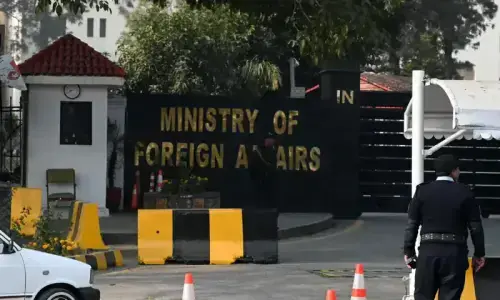
ISLAMABAD: Pakistan on Wednesday expressed optimism over ongoing high-level technical talks between Iran and the United States, saying progress in trade and economic cooperation with Iran would be linked to the easing of international sanctions on Tehran.
Addressing the weekly press briefing, Foreign Office spokesperson Tahir Hussain Andrabi said the pathway towards sanctions relief for Iran had already been initiated through talks held in Buergenstock, Switzerland.
He described the process as a positive development and expressed the hope that the negotiations would produce constructive results as they moved forward.
Responding to a question, the spokesman said there had been a temporary pause in technical-level discussions between Iran and the United States and that the talks would resume next Tuesday, in the presence of a Pakistani delegation.
He said the continuation of dialogue between the two sides was itself an encouraging sign.
“It is a very positive development that both parties are engaged in talks and remain at the negotiating table,” he remarked.
Commenting on the situation in the Strait of Hormuz, the spokesman said tensions were likely to ease as diplomatic efforts progressed. However, he noted that a complete return to normal operations in the strategically important waterway could take some time due to operational requirements.
On a question regarding control of the Strait of Hormuz, the spokesperson said Pakistan supported the initiatives of the Gulf Cooperation Council and believed in regional ownership of regional issues.
He stressed the importance of respecting the territorial integrity and sovereignty of all states in the region.
Discussing the recent visit of Iranian President Masoud Pezeshkian to Pakistan, Mr Andrabi said the two sides held extensive discussions on a range of issues, including expansion of trade, investment and economic cooperation.
He noted that progress in bilateral economic projects and trade expansion would move forward alongside the lifting of sanctions imposed on Iran.
“The overall progress of economic projects and opening up of trade with Iran will take place simultaneously with the lifting of sanctions by the United States,” he said.
Responding to a query regarding a proposed financing package of $300 billion for Iran, Mr Andrabi said the matter was expected to be discussed during the ongoing technical-level talks in Switzerland.
On Afghanistan, the spokesperson said Pakistan had implemented most of its commitments related to bilateral engagement and that Deputy Prime Minister Ishaq Dar had personally monitored the process, but certain developments later created difficulties for diplomatic efforts. He reiterated Pakistan’s position that Afghan territory should not be used for terrorist activities against Pakistan. “If diplomacy is to move forward, the starting point should be a clear assurance from Afghanistan that its soil will not be used for terrorism against Pakistan,” he said.
Andrabi acknowledged China’s constructive role in facilitating understanding between Pakistan and Afghanistan. He said Pakistan would continue to work closely with China to promote regional peace and cooperation.
“Our engagement on Afghanistan continues, and the simple solution is for the Afghan side to uphold its commitments under international law,” he added.
Replying to a query regarding Pakistan’s representation at the funeral of the late Iranian supreme leader Ali Khamenei, the spokesperson said no final decision had yet been made regarding who would attend the funeral on behalf of Pakistan.
Giving details on the implementation of the Islamabad Memorandum of Understanding signed by the US and Iran, the spokesperson said Pakistan and Qatar had hosted the first high-level committee meeting in Switzerland on June 21, attended by senior representatives from Pakistan, the US, Iran and Qatar.
He said the parties agreed on a roadmap to reach a final agreement within 60 days, establish political oversight and technical working groups, create direct communication channels to prevent incidents in the Strait of Hormuz, and set up a de-confliction mechanism involving Lebanon.
He said a technical-level meeting followed on June 22, with Pakistan and Qatar continuing their mediation efforts.
The Foreign Office welcomed international recognition of Pakistan’s role in promoting dialogue, peace and de-escalation, while also appreciating the responsible conduct of Pakistani media in maintaining confidentiality during the mediation process.
The spokesperson said Deputy PM Ishaq Dar attended the fourth R-4 Foreign Ministers’ Meeting in Cairo on June 21 alongside counterparts from Egypt, Saudi Arabia and Turkiye.
The group reviewed progress on the Islamabad MoU and discussed regional peace and security issues. Dar also continued extensive diplomatic engagements with foreign ministers from several countries, including Switzerland, Turkiye, Egypt, Saudi Arabia, China, Japan, Italy, Canada, Bahrain, Azerbaijan, Iran and Uzbekistan.
Regarding the hijacking of the oil tanker MT Honour 25 off Somalia, carrying 10 Pakistani crew members among the hostages, the spokesperson said Pakistan was pursuing diplomatic and humanitarian efforts for their safe release through engagement with Somali authorities and international partners.
On Palestine, he said Pakistan had joined eight Islamic-Arab countries in condemning escalating violence against Palestinians in the occupied West Bank and attacks on mosques near Ramallah.
The spokesperson also announced that Pakistan had facilitated the repatriation of 30 Iranian nationals, including rescued fishermen and crew members detained after maritime incidents, in coordination with Iranian, US and UK authorities.
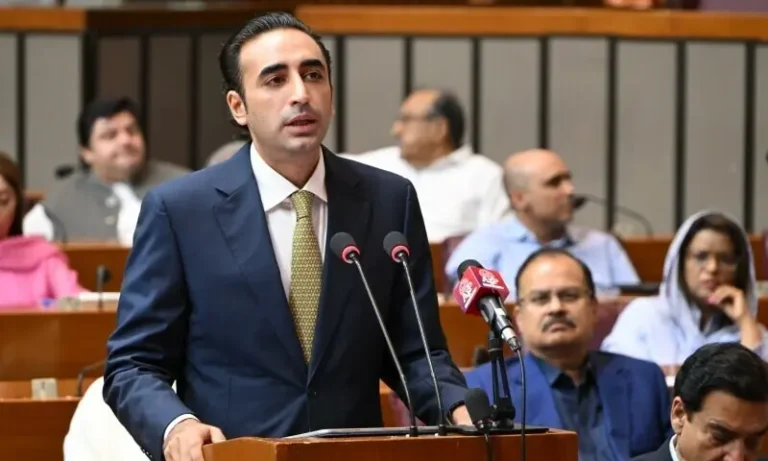
ISLAMABAD: Pakistan People’s Party (PPP) Chairman Bilalwal Bhutto-Zardari on Wednesday challenged ruling Pakistan Muslim League-Nawaz (PML-N) to hold local government (LG) elections in Islamabad and Lahore within 90 days.
Speaking in the National Assembly on the final day of the budget session, the PPP chairman hit out at the PML-N over delay in holding LG polls in Punjab and Islamabad and accused it of attempting to create differences between the PPP and the Muttahida Qaumi Movement-Pakistan (MQM-P) on the issue.
Mr Bhutto-Zardari said the local governments were functioning in the provinces under the PPP rule whereas the PML-N was scared of having LGs in Punjab and Islamabad.
“They [PML-N] are not even ready to hold a single union council election. I say introduce the same kind of local government system in Lahore that we have in Karachi. Let’s contest the polls,” he said, adding: “I challenge you to hold local government elections in Islamabad within 90 days.”
He asked the PML-N to show it to the provinces as to what powers and financial resources it wanted to give to the LG representatives so that the provinces could follow them as a role model.
Stating that the PPP had the credit of giving the 1973 Constitution to the country, Mr Bhutto-Zardari announced that his party would hold local government polls in Gilgit-Baltistan (GB) within 90 days.
It may be recalled that the PPP has formed its government in GB after the recent elections.
Stating that there was no issue between the PPP and the MQM-P, Mr Bhutto-Zardari even suggested the latter to quit the ruling coalition at the Centre as the PML-N was only giving them ‘lollypops’ over the local government issue and the proposed 28th constitution amendment.
The PPP chairman, who had actually taken the floor to respond to the controversial statements given by a couple of federal cabinet members regarding the volatile situation in Azad Jammu and Kashmir due to the ongoing protest by the banned Joint Action Committee (JAC), talked about the LG elections when MQM-P’s Dr Farooq Sattar made a fiery speech, demanding 28th amendment for strong local government system in the country.
Dr Sattar in his speech had warned that if the local governments were not strengthened in the country, there could be a ‘Karachi Action Committee’ on the lines of Kashmir JAC.
Mr Bhutto-Zardari told the MQM-P lawmakers that “someone was feeding you the wrong information.”
“This is the lollypop for the members from Karachi. It is only an excuse to keep us engaged,” he alleged.
“You do not have even a minute issue with the PPP, but those trying to tell you about the local government system are not implementing it themselves”, he said while lashing out at the PML-N.
“He asked the MQM-P members to criticise the PML(N)-led federal government for failing to fulfill their demands, instead of targeting the PPP and the Sindh government, that.
“You should leave the government as they are not fulfilling the promises made with you,” he said.
“Is Karachi more important than the treasury benches?” he asked while facing the MQM-P lawmakers.
Artificial Intelligence (AI) is no longer a concept limited to science fiction movies or advanced research laboratories. Over the past few years, AI has become an integral part of everyday life, influencing how people communicate, work, learn, shop, travel, and access information. While many individuals may not realize it, they interact with AI-powered systems multiple times throughout the day.
Artificial Intelligence refers to computer systems designed to perform tasks that typically require human intelligence. These tasks may include recognizing speech, understanding language, analyzing data, identifying patterns, making recommendations, and solving problems. Advances in computing power and data processing have enabled AI technologies to become increasingly accessible and practical for both businesses and consumers.
One of the most common applications of AI can be found in smartphones. Voice assistants help users set reminders, search for information, send messages, and manage schedules through simple voice commands. Facial recognition technology, often used to unlock devices, relies on AI algorithms to identify unique features and enhance security. Predictive text and autocorrect functions also utilize AI to improve communication and typing efficiency.
The influence of AI is equally visible in online services. Search engines use AI systems to provide relevant results based on user queries, while streaming platforms recommend movies, television programs, and music according to individual preferences. E-commerce websites analyze browsing habits and purchase history to suggest products that may be of interest to customers. These personalized experiences have become a defining feature of the digital age.
Education is another sector benefiting from artificial intelligence. Educational platforms increasingly use AI to create personalized learning experiences. Students can receive customized study recommendations, interactive lessons, and immediate feedback on assignments. AI-powered tools can help identify learning gaps and suggest appropriate resources, enabling learners to progress at their own pace. Teachers also benefit from automated administrative tasks, allowing them to focus more on instruction and student engagement.
In healthcare, AI is supporting medical professionals in a variety of ways. Advanced systems can analyze medical images, assist in disease detection, and help organize patient information more efficiently. While AI does not replace healthcare providers, it serves as a valuable tool that can improve accuracy and support informed decision-making. Researchers continue to explore new ways AI can contribute to medical diagnosis, treatment planning, and healthcare management.
Transportation has also experienced significant technological advancement through AI. Navigation applications use artificial intelligence to analyze traffic conditions and recommend optimal travel routes. Ride-sharing services rely on AI systems to match passengers with drivers and estimate arrival times. In addition, research into autonomous vehicles continues to advance, demonstrating the potential for AI to play an even greater role in future transportation systems.
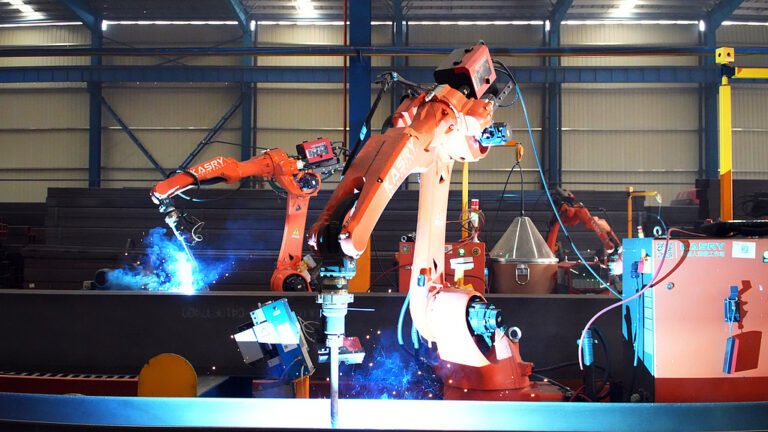
Businesses across various industries have adopted AI to improve efficiency and productivity. Customer service departments frequently use AI-powered chatbots to answer common inquiries and provide assistance around the clock. Manufacturing companies utilize intelligent systems to monitor equipment performance and identify maintenance needs before problems occur. Financial institutions employ AI to detect unusual transaction patterns and strengthen fraud prevention measures.
Despite its many advantages, the increasing use of artificial intelligence also presents challenges. One important concern involves privacy and data protection. Many AI systems rely on large amounts of data to function effectively, making responsible data management essential. Organizations must ensure that personal information is handled securely and transparently to maintain public trust.
Another consideration is the need for digital literacy. As AI technologies become more widespread, individuals must understand how these systems operate and how to use them responsibly. Basic awareness can help users recognize both the benefits and limitations of AI-powered tools while encouraging informed decision-making.
There are also ongoing discussions regarding the future of employment in an AI-driven world. While some routine tasks may become automated, new opportunities are expected to emerge in areas such as technology development, data analysis, cybersecurity, and digital services. Experts generally agree that continuous learning and skill development will play an important role in helping individuals adapt to evolving workplace requirements.
Artificial Intelligence is rapidly becoming a fundamental part of modern society. From simplifying everyday tasks to enhancing services across education, healthcare, transportation, and business, AI continues to influence how people live and work. As technology advances, its impact is likely to expand even further, creating new opportunities and challenges alike.
Understanding the role of artificial intelligence is becoming increasingly important for individuals, organizations, and communities. By promoting responsible innovation, digital literacy, and ethical practices, society can maximize the benefits of AI while addressing potential concerns. In doing so, artificial intelligence can serve as a valuable tool for improving efficiency, supporting innovation, and enhancing everyday life in the years ahead.
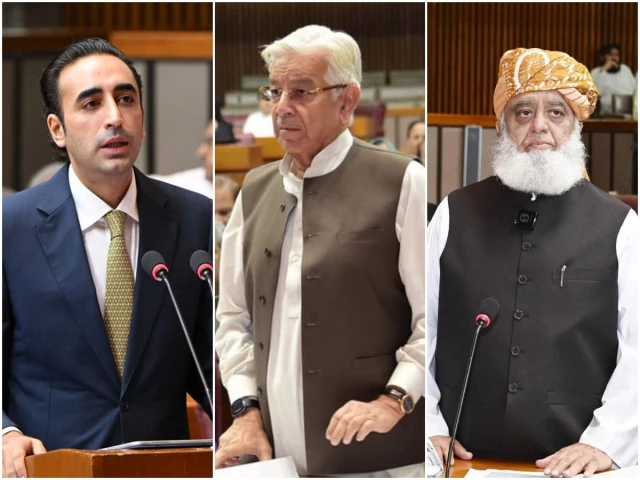
ISLAMABAD: Pakistan Peoples Party (PPP) Chairman Bilawal Bhutto Zardari and Jamiat Ulema-e-Islam-Fazl (JUI-F) chief Fazlur Rehman criticised Defence Minister Khawaja Asif over his remarks about Azad Jammu and Kashmir (AJK) during a heated session of the National Assembly on Wednesday.
In a television interview, Asif said Rawalakot — which has seen protests led by the Joint Awami Action Committee (JAAC) — was “not Kashmir” and that he did not regard its residents as Kashmiris. He later clarified the remarks on X, saying that “Kashmiriat is defined by the sacrifices and struggles waged over almost eight decades” by Pakistanis, Kashmiris and others, “not by birth certificates”.
While addressing the NA during debate on the federal budget, Bilawal said, “There are certain ministers whose politics I do not understand. Instead of helping the prime minister, they create problems for him.”
The PPP chairman went on to say that every coalition partner, every member of the opposition and every citizen of Pakistan should ask “why such a minister is still in the cabinet,” he said, adding: “How is it possible for us to accept that a federal minister can say that the Kashmiris of Rawalakot are not Kashmiris?”
Bilawal said Pakistan’s political parties needed to work together at a time of significant regional and international change. “Where Pakistan stands today, and given everything that is happening geopolitically, if all political parties unite and decide that we will collectively confront Pakistan’s challenges, then we can secure the political, economic and strategic dividends that these opportunities offer,” he said.
The PPP chairman said PM Shehbaz wanted to move the country forward in consultation with coalition partners and the opposition, arguing that many national problems could only be resolved through dialogue. “Problems can only be solved through negotiations and dialogue,” he said.
Bilawal said criticism of statements made at rallies or protests was legitimate, but argued that the comments of a serving federal minister carried a different weight. “If he is not prepared to apologise, then what justification do we have for sitting alongside that minister?” he asked.
While expressing respect for PM Shehbaz, Prime Minister’s Adviser on Political Affairs Rana Sanaullah and former prime minister Nawaz Sharif’s longstanding association with the Kashmir cause, Bilawal said a minister’s remarks had worsened an already sensitive situation.
“Instead of extinguishing the fire, it was like pouring oil on it,” he said.
Bilawal also referred to remarks allegedly made by a minister regarding AJK elections, saying such statements had provided political space for unrest. “If a minister says that we bring 12 seats in our pocket, then how can we object when people react to such statements?” he said.
Calling for a political solution to the dispute, Bilawal suggested: “As your coalition partner, is that we should give Maulana Fazlur Rehman the space to engage with the federal government, the AJK government and the protesters so that this process reaches a conclusion and the people of Kashmir do not have to protest again and again.”
He said all stakeholders should pursue “a political path” that would help protect the Kashmir cause while easing tensions.
The PPP chairman then turned his attention to local government issues, particularly in Karachi, accusing some members of the federal coalition, specifically Muttahida Qaumi Movement Pakistan (MQM-P), of misleading their allies and directing criticism towards the PPP instead of addressing grievances within the federal government.
“Your problem is not with the PPP,” he said, addressing lawmakers from Karachi. “The people creating problems for you are your own cabinet colleagues.”
He alleged that coalition partners were being offered “lollipops” instead of meaningful solutions and urged them to hold federal ministers accountable for unfulfilled commitments.
“How long will you continue to survive on lollipops?” he asked.
Bilawal defended the PPP government’s record on local government, arguing that Sindh was currently the only province where a functioning local government system was in place. “Where the PPP is in government, there is a local government system. Where the PML-N is in government, they are afraid even to hold a union council election,” he said.
He challenged political opponents to implement in Lahore the same local government model that existed in Karachi and called for local government elections to be held in Punjab and Islamabad before any constitutional amendments were considered.
The PPP chairman also pledged that local government elections would be held in Gilgit-Baltistan within 90 days if a new government was formed there with PPP participation.
Concluding his speech, Bilawal urged lawmakers to pass the budget before Ashura and avoid unnecessary political confrontation. “I also want the prime minister to succeed because if the prime minister succeeds, Pakistan succeeds,” he said.
“In my personal view, this is not the time to focus on our political differences. This is the time for us to unite and find solutions to Pakistan’s problems.”
Maulana Fazlur Rehman
The JUI-F chief also addressed the house and criticised the government’s handling of the situation in AJK, questioned remarks made by the defence minister and warned against what he described as the political involvement of state institutions.
Fazl said he had responded to a letter from the JAAC through a video message and had also informed the government of his position. “I welcome the decision of the Awami Action Committee to postpone tomorrow’s march towards Muzaffarabad,” he said, referring to planned protests in AJK.
The JUI-F chief questioned the state’s response to recent developments, asking, “How can action taken on the basis of speeches be considered an appropriate response?” “Until yesterday, we were speaking about human rights in Indian Illegally occupied Jammu and Kashmir (IIOJK). What are we doing today?” he added.
“The things Khawaja Asif has said should not have been said by a defence minister,” he told lawmakers. In an apparent reference to the government’s approach to the crisis, he remarked, “You have entrusted the conflict to Khawaja Asif and the reconciliation to Ishaq Dar.”
While acknowledging the government’s diplomatic efforts abroad, Fazl argued that, “At the international level, the government is earning goodwill through efforts for global peace, but Pakistan is losing goodwill at home,” he said.
The JUI-F chief also criticised the use of security forces in internal matters, saying, “Pakistan’s army should be on the borders; instead, it is being used within the country.”
He warned that statements such as those made by the defence minister would only inflame tensions. Fazl also pointed to his party’s recent public gathering in Charsadda, claiming it had attracted hundreds of thousands of people.
Addressing the role of institutions in politics, the JUI-F chief said his party respected the military, the establishment and all state institutions, “But if they change election results, then we will respond.”
“If they engage in politics, we will answer them in politics,” he added. Fazl rejected calls for silence on such matters, saying, “We are not mute. We will not become silent devils.”
He further argued that if institutions used taxpayers’ money for political purposes, elected representatives had a duty to raise the issue in parliament.
Rana Sanaullah
Addressing the NA, PML-N leader Rana Sanaullah outlined the federal government’s negotiations with the JAAC, stating that all 38 developmental demands presented by the committee, alongside their two primary demands, had been addressed.
He recalled that the JAAC’s two main demands were the supply of electricity to AJK at the generation rate, as stipulated in the agreement with the government of Pakistan upon construction of the Mangla Dam, and subsidies on wheat. PM Shehbaz accepted both demands, Sanaullah said, adding that electricity in AJK was currently priced at Rs3.50 per unit while wheat was subsidised at Rs2,000 per maund.
The 38 additional demands, Sanaullah said, ranged from road and bridge construction and the establishment of a military base to the supply of MRI machines to hospitals. He said the prime minister had also provided Rs10 billion to overhaul the electricity system, which was currently underway.
“Out of the 38 demands, not a single one did not work. All their demands, which were related to the development and construction of Azad Kashmir, the public welfare demands, we sat with all of them and discussed each of their demands,” he said.
On the JAAC’s demand for the abolition of the 12 seats reserved for immigrants in the AJK Legislative Assembly, Sanaullah said a six-member committee was constituted — comprising two members each from the JAAC, the AJK government, and the federal government — to present recommendations to the AJK government.
However, he said the JAAC boycotted the committee from October 2025 onwards and refused to engage further. “This is not something that can be solved in a protest,” he said.
Further, Sanaullah said that when it became apparent that elections in AJK were scheduled for July, the JAAC announced a long march for June 9, with the stated aim of halting the elections. Following this, the prime minister directed the same negotiating committee to re-engage.
A fresh round of talks was held in Muzaffarabad over two days, attended by the chief secretary of AJK and Prime Minister Faisal Rathore, at which progress on all 38 points was presented and acknowledged by the JAC itself, he said.
On the immigrant seats issue, Sanaullah said the assembled political leadership, including PML-N and PPP representatives, argued that abolishing these seats or stripping immigrants of their rights would undermine the fundamental purpose of the committee’s movement.
He said the government’s position was that the matter should be taken to the AJK Legislative Assembly for a decision. “Whatever it considers appropriate, they will decide on it. They said, no, we don’t agree to this,” Sanaullah stated.
The government subsequently offered three alternative paths for resolution: an All Parties Conference whose decision would be taken to the Assembly; a presidential reference to the Supreme Court’s full bench; or a debate within the assembly itself. The JAAC refused all three, he said.
When the government asked the JAAC to postpone the June 9 long march until after the elections, and then by at least 10 days to allow for one of the three proposed processes to proceed, the JAAC refused both requests. “They said that at any cost, on June 9, they will come to Muzaffarabad,” Sanaullah said.
Despite this, he said, an All Parties Conference was held in AJK, attended by all political parties and led by Rathore.
ISLAMABAD: Foreign Minister Ishaq Dar on Wednesday tabled the three-page US-Iran agreement in the National Assembly, saying phase two would involve technical discussions on nuclear matters, sanctions and frozen assets, and Lebanon.
While addressing the National Assembly (NA) session, Dar said placing it on record alongside the June 22 joint communique issued by the United States, Iran, Qatar, and Pakistan, saying the document had been “considerably misunderstood” and misquoted.
“It is the right of both Houses that I place this on the record of this assembly, so that if any colleague wishes to see this document, take a copy, or quote it, there is no misunderstanding,” he said.
He added that every page of the agreement carried initials and the third page bore full signatures, and that the foreign office had also uploaded the communiqué to its website.
“All agreed to it, and its copy was also placed by our foreign office on their website, so that colleagues who need to see what the outcome was, what the roadmap is, how to move forward, I will also place the copy, the one issued by all four countries from Switzerland on June 22, on the record for the foreign office, so that any member of the NA or Senate may see it,” he said.
Giving the house a detailed account of how the agreement came together, Dar said the breakthrough came after a 21-hour negotiating session on April 10 and 11. The session ran through six rounds, with breaks taken not for rest but for consultation, continuing until Fajr, Dar said. “I pay tribute to both parties,” he added, noting that they had agreed to sit at the same table on the condition that Pakistan, their mutually chosen mediator, also be present.
The foreign minister said that the US delegation comprised Vice President JD Vance, Steve Witkoff, and Jared Kushner. Iran was represented by its Senior Speaker, Bagher Ghalibaf and two other senior officials, including a National Security Council secretary.
“Pakistan’s delegation was led by me, alongside the Chief of Army Staff and Chief of Defence Forces Field Marshal Asim Munir and the DG ISI,” he said.
However, after those talks stalled — with both sides needing to refer back to their respective leaderships — Dar said serious apprehensions emerged over the following weeks that the process might not reach a conclusion.
He credited the PM Shehbaz, Field Marshal Munir, and the foreign office for persisting despite the apprehensions, saying, “They did not give up. Hope was not given up.”
Further, Dar noted that a regional forum comprising Saudi Arabia, Pakistan, Egypt, and Turkiye also became “proactively engaged”, holding meetings in Riyadh on March 19, then in Antalya, in Islamabad on March 29, and most recently in Egypt.
Regarding the agreement itself, Dar revealed that it was originally to be signed physically in Geneva on June 19 at the Intercontinental hotel, with arrangements already in place. However, on the night of June 18, a sudden development changed the sequence. President Trump, in France for the G7 summit, decided to sign electronically on the sidelines of the forum. The document was then transmitted to Iran, and President Pezeshkian signed it. PM Shehbaz then signed as mediator on Pakistan’s behalf.
“The physical ceremony was subsequently relocated to Burgenstock in Switzerland, held at a property owned by the Qatar Investment Authority at the request of the US and Qatar. Parleys there on Sunday and Monday, involving all four parties, produced the June 22 joint communique,” Dar said.
He also mentioned that Pakistan ensured discretion during the entire process, saying, “As a true and honest mediator, we were a trusted party, we treated this as a matter of trust, we did not lean toward one side or the other, we did not allow anything to become public.”
Regarding the foreign office, Dar said, “When they said to me ‘, give us a copy of the latest draft,’ I said, ‘until both parties give permission, you cannot share Pakistan’s document.'”
Dar said the agreement was structured in two phases. The first phase, aimed at resolution, had already produced visible consequences. He noted that for approximately three weeks, the government had absorbed rising fuel prices rather than passing them on, with special instructions issued to the finance ministry. After three weeks, the prices began to be passed on, and four chief ministers were called to decide on a special subsidy for public transport in Pakistan and Azad Jammu and Kashmir.
He said phase two would involve technical discussions on three issues: nuclear matters, sanctions and frozen assets, and Lebanon, which he said had “been a source of real problem.” He noted that Israel attacked Lebanon again just as the agreement was nearly finalised, delaying negotiations by two days before a fresh Lebanon-Israel ceasefire allowed the process to resume.
On the economic impact, Dar said prices had already come down, the US naval blockade had ended, and Iran had removed all fees, additional charges, permits, and permissions.
Turning to Pakistan’s broader diplomatic standing, Dar told the house that at a recent diplomatic forum, the US had officially stated that “Pakistan has become, by the role it has performed in this US-Iran dispute, something unimaginable, and Pakistan has become a net security provider to this region.”
He said this was a country that only a few years ago had been called diplomatically isolated, and that today “Pakistan has become what used to be called a terrorist country, today it is being remembered as a peacemaker.”
On China, Dar said, “I will be failing in my duty if I don’t recognise the role of China.” On March 31, China’s foreign minister invited him for a one-day visit during which Pakistan and China jointly announced a five-point peace initiative calling for the Strait of Hormuz to be kept free from any tolls or restrictions and restored to its pre-28 February status. The announcement drew calls from foreign ministers across multiple capitals. “I received dozens of calls from foreign ministers in various capitals. Europe supported it,” Dar said.
Throughout the process, according to the foreign minister, Pakistan had maintained strict neutrality as mediator, refusing to share documents even with close allies. “Even Saudi Arabia, who were particularly involved, we did not give it to them either,” he said. Dar also referenced the Strategic Mutual Defence Agreement signed with Saudi Arabia in September 2025, saying Pakistan had kept Iran informed of the sovereign pact throughout.
The foreign minister also noted that Iran had conveyed to Pakistan that “when difficult times came, we saw what a friend is, and Pakistan fulfilled the obligations of friendship.” He concluded his remarks by saying the credit belonged to PM Shehbaz’s leadership, Field Marshal Munir, and the Foreign Ministry, but that the ultimate success was God’s.
ISLAMABAD: Interior Minister Mohsin Naqvi assured his Iranian counterpart, Eskandar Momeni, during a meeting on Wednesday that Islamabad would continue its efforts for lasting peace in the Middle East.
A day earlier, Iranian President Pezeshkian arrived in Islamabad alongside Foreign Minister Abbas Araghchi and Eskandar Momeni. During the visit, the Iranian delegation held talks with President Asif Ali Zardari, Prime Minister Shehbaz Sharif and Chief of Army Staff and Chief of Defence Forces Field Marshal Asim Munir.
According to a statement issued by the Ministry of Interior today, the two sides discussed Pakistan-Iran relations and the latest regional situation following the peace agreement.
Naqvi congratulated Momeni on the joint communiqué signed in Bürgenstock, Switzerland, saying the agreement would not have been possible without the sincere efforts of the Iranian government and Momeni’s personal commitment.
“Pakistan has always sought peace and stability across the world,” Naqvi said, adding that Islamabad would continue its efforts for lasting peace in the Middle East. He expressed hope that the peace agreement would have far-reaching positive implications for the region.
During the meeting, the two sides also agreed to enhance cooperation in several areas, including security, counterterrorism, cybersecurity and immigration.
According to a statement, Momeni thanked Pakistan for the warm reception accorded to the Iranian president and his delegation during their visit.
“I will soon undertake a detailed visit to Pakistan, aimed at further advancing cooperation between the interior ministries of the two countries,” the Iranian interior minister said.
Minister of State for Interior Talal Chaudhry, the interior secretary, additional interior secretary, director general of the Federal Investigation Agency (FIA), commandant of the National Police Academy and director general of the National Cyber Crime Investigation Agency (NCCIA) were also present during the meeting.
Read: Pezeshkian praises ‘adamant and honest’ Pakistani leadership for support since war’s start in Islamabad visit
This was President Pezeshkian’s second visit to Pakistan since assuming office. The two neighbours have in recent years sought to strengthen economic ties, enhance border cooperation and increase bilateral trade. The one-day trip was Pezeshkian’s first overseas visit since the US and Israel launched a war on Iran in late February.
The first round of four-party talks involving Iran and the US, with mediation by Qatar and Pakistan, concluded in Switzerland, marking the first formal follow-up engagement since the signing of the agreement earlier this week.
On June 18, PM Shehbaz signed the ‘Islamabad Memorandum of Understanding’ as a mediator, formalising the major diplomatic breakthrough between the US and Iran. Israel, left out of the peace talks, has distanced itself from the US-Iran accord and kept up fighting against Hezbollah in Lebanon, also raising questions about whether the agreement would hold.
The US and Israel launched the war on Iran on February 28, assassinating Supreme Leader Ayatollah Ali Khamenei and military leaders on the first day. It quickly spiralled into a regional conflict that has killed more than 7,000 people, mostly in Iran and Lebanon; driven up energy prices; renewed inflationary pressures and sparked concerns about a major food supply crisis in developing countries.
ISLAMABAD: Foreign Office (FO) spokesperson Tahir Andrabi said on Wednesday that the Islamabad Memorandum of Understanding (MoU) and Lucerne Summit reinforced “our faith in dialogue and diplomacy as the most effective means for peaceful settlement of disputes and conflicts”.
He made these remarks during a weekly media briefing in Islamabad, where he recalled Pakistan’s efforts for peace between the US and Iran in recent days.
Pakistan has been leading the peace efforts since the US and Israel launched attacks on Iran in late February, setting off a war and global fuel crisis as Tehran took measures to disrupt traffic in the Strait of Hormuz — a vital maritime corridor for the supply of oil and gas.
The latest major developments pertaining to Pakistan’s efforts for de-escalation are the signing of the Islamabad MoU on June 18 — a 14-point accord aimed at ending the war — and key direct talks between the US and Iran, dubbed the Lake Lucerne Summit, held in Switzerland over the weekend.
Pakistan’s efforts have been acknowledged world over, which Andrabi also noted during his briefing.
Pakistan welcomed the “positive recognition and encouraging remarks from various countries, partners and members of the international community regarding our constructive role in promoting regional peace, dialogue and de-escalation efforts”, he said.
“Such recognition reflects the international community’s trust in Pakistan, as well as Pakistan’s commitment to advancing dialogue, peace, security and stability across the region and beyond,” he added.
The FO spokesperson said Pakistan extended its “sincere appreciation” to all countries and partners who expressed support for its peace efforts.
Moreover, he acknowledged the “responsible and constructive role” of Pakistan’s media throughout the peace process.
“Pakistan’s media demonstrated professionalism and maturity by respecting the strict requirements of confidentiality, discretion and trust that are indispensable to any credible facilitator,” he said.
Elaborating on the specifics of points agreed on after talks in Switzerland, he said the US and Iran reached an understanding on various aspects of the implementation of the Islamabad MoU.
He added that it was agreed that a high-level committee would be established for political oversight for mediation; the two sides had agreed on a roadmap towards reaching a final peace deal in 60 days; communication lines were to be established between the parties to avoid incidents of miscommunication and ensure the safe passage of commercial vessels through the Strait of Hormuz; and a de-confliction cell was to be set up between the US, Iran and the Lebanese government.
Moreover, technical teams from mediators Pakistan and Qatar would remain engaged with technical teams from the US and Iran in the coming weeks for the effective implementation of the Islamabad MoU, he said.
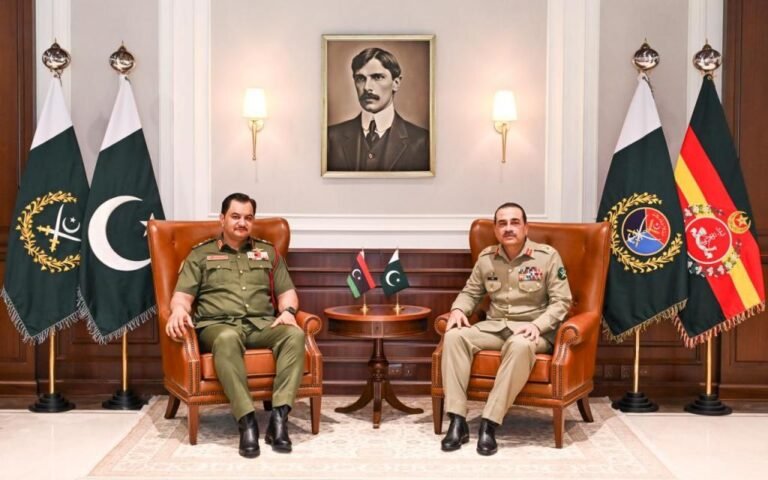
RAWALPINDI: Chief of Defence Forces and Chief of Army Staff Field Marshal Asim Munir and the Libyan armed forces’ deputy commander-in-chief held a meeting on Wednesday, and the two sides emphasised the importance of strengthening bilateral defence ties, according to a statement by the military’s media affairs wing.
The meeting was held at the General Headquarters in Rawalpindi, where Lieutenant General Saddam Khalifa Haftar was presented a guard of honour by a smartly turned-out tri-services contingent upon arrival, a statement by the Inter-Services Public Relations (ISPR) said.
It added that during his meeting with Field Marshal Munir, matters of mutual interest, regional security dynamics, defence cooperation and avenues for enhanced military-to-military collaboration were discussed.
“Both sides underscored the importance of strengthening bilateral defence ties and expanding cooperation in areas of professional military training and security,” the statement said.
It further stated that Field Marshal Munir highlighted the Pakistan Army’s commitment to promoting peace, stability and constructive engagement with friendly countries.
“The visiting dignitary appreciated the professionalism of Pakistan’s armed forces and acknowledged their contributions towards regional peace and security,” it added.
The CDF had held a meeting with the commander-in-chief and deputy commander-in-chief of the Libyan armed forces in February as well, in which he had reaffirmed Pakistan’s commitment to strengthening bilateral relations with Libya.
In December of last year, Pakistan signed a multi-billion-dollar deal to sell conventional military equipment to the Libyan army, entering a select club of countries that export conventional arms and equipment.
A copy of the deal, before it was finalised, was seen by Reuters. It listed the purchase of several JF-17 fighter jets, jointly developed by Pakistan and China, and a number of Super Mushak trainer aircraft, used for basic pilot training.
ISLAMABAD: President Asif Ali Zardari on Tuesday congratulated Iranian President Dr Masoud Pezeshkian on the signing of the Islamabad Memorandum of Understanding (MoU) with the United States, expressing hope that ongoing technical-level negotiations would culminate in lasting peace in the region.
Pezeshkian landed in Islamabad for an official visit, accompanied by a high-level delegation, in the wake of the recent US-Iran conflict and Islamabad’s role in facilitating diplomatic efforts that culminated in the signing of the MoU.
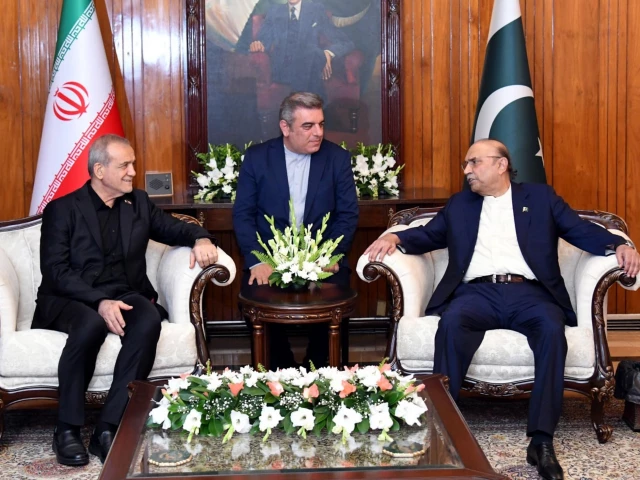
According to a statement issued by the President’s House, Pezeshkian called on Zardari at Aiwan-e-Sadr, where the two sides discussed bilateral relations, regional peace and security, connectivity, economic cooperation and other issues of mutual interest.
President Zardari welcomed the Iranian president on his first state visit to Pakistan after the recent conflict, noting that the visit reflected the longstanding brotherly relations between the two countries and their desire to remain together in good and bad times.
He congratulated President Pezeshkian on the signing of the MoU and expressed the hope that ongoing technical-level negotiations would culminate in permanent peace in the region.
The president reaffirmed Pakistan’s principled support for Iran’s peace, stability, national unity, sovereignty and territorial integrity.
“Pakistan has consistently opposed one-sided initiatives and has supported dialogue and diplomacy as the means to achieve a durable and sustainable solution to regional and global challenges,” the statement quoted him as saying.
He also underscored Pakistan’s commitment to preserving the unity of the Muslim community while maintaining strong fraternal relations with the countries of the Gulf region.
President Zardari also expressed condolences on the martyrdom of former Iranian supreme leader Ali Khamenei and said Pakistan would participate in his funeral.
President Pezeshkian thanked Pakistan for its positive and constructive efforts in support of peace and dialogue, and appreciated Islamabad’s support during recent challenging circumstances.
“Iran attaches great importance to its relations with Pakistan and looks forward to further expanding cooperation in political, economic, security and regional matters,” the Iranian president said.
President Zardari requested President Pezeshkian to convey his warm regards to Ayatollah Seyed Mojtaba Hosseini Khamenei, the supreme leader of the Islamic Republic of Iran.
The Iranian president was accompanied by Foreign Minister Seyed Abbas Araghchi, Chief of the President’s Office Mohsen Haji Mirzaei, Interior Minister Eskandar Momeni, Chief of Political Affairs of the President’s Office Saeed Abbas Mousavi, and Iran’s Ambassador to Pakistan Reza Amiri Moghaddam.
From the Pakistani side, Deputy Prime Minister and Foreign Minister Senator Ishaq Dar, PPP Chairman Bilawal Bhutto Zardari, Interior Minister Syed Mohsin Raza Naqvi, Minister of State for Interior Talal Chaudhry, Senate Chief Whip Senator Saleem Mandviwala and Dr Asim Hussain were present during the meeting.
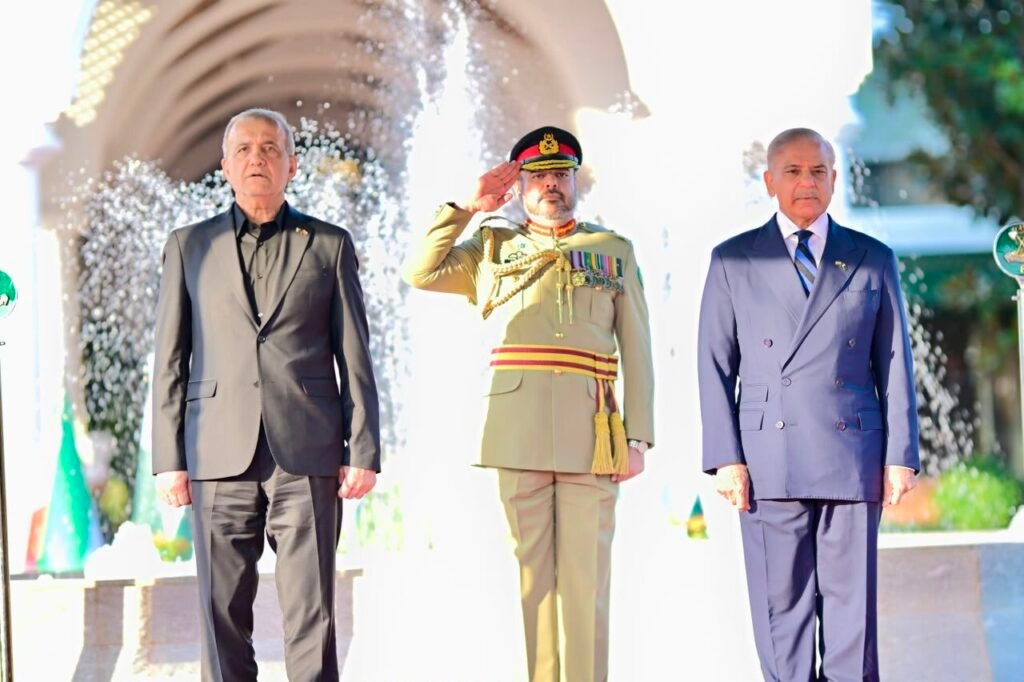
Pezeshkian receives guard of honour at PM House
Earlier, the Iranian president was received by President Zardari, Prime Minister Shehbaz Sharif, FM Dar and Iranian FM Araghchi. The Pakistan Air Force’s JF-17 fighter jets flew a ceremonial flypast to honour the visiting dignitary, and upon arrival, a 21-gun salute was presented in Pezeshkian’s honour.
Children dressed in traditional attire welcomed the Iranian president with bouquets and waved the flags of Pakistan and Iran. President Pezeshkian acknowledged their welcome by waving back.
Later, the Iranian president arrived at the Prime Minister’s House, where he was received by PM Shehbaz. A contingent of the armed forces presented him with a guard of honour.
The two leaders exchanged pleasantries before attending a ceremony held in honour of the visiting president at the Prime Minister’s House.
President Pezeshkian is visiting Pakistan at the invitation of President Zardari and PM Shehbaz. The visit is his first since the ceasefire between Iran and the United States.
During the visit, the Pakistan College of Physicians and Surgeons will confer an honorary fellowship on the Iranian president. The two leaders will also address the media.
CDF Munir, Iranian president discuss regional peace
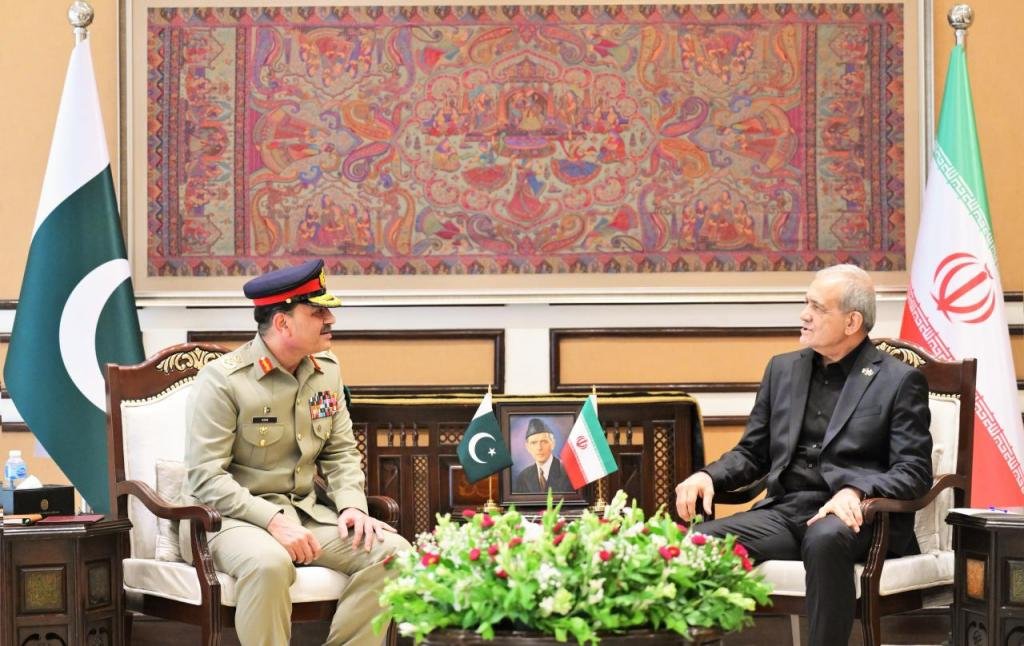
Later, Field Marshal Syed Asim Munir called on Pezeshkian, during which the two sides exchanged views on regional developments and initiatives aimed at promoting peace.
According to a statement issued by the Inter-Services Public Relations (ISPR), President Pezeshkian appreciated Pakistan’s constructive and responsible role in promoting dialogue, de-escalation and regional stability. He also acknowledged Islamabad’s consistent efforts to encourage the peaceful resolution of disputes and foster understanding among regional stakeholders at a time of heightened geopolitical challenges.
Field Marshal Munir reaffirmed Pakistan’s unwavering commitment to regional peace and stability, the statement said.
The two sides also reaffirmed their commitment to further strengthening Pakistan-Iran ties and maintaining close consultations on issues of mutual interest, with the shared objective of advancing peace, prosperity and stability across the region.
Araghchi arrives
Iranian FM Araghchi arrived in Islamabad earlier on Tuesday as part of the delegation accompanying President Pezeshkian on his visit, according to a statement released by the Foreign Office.
FO said Araghchi was “warmly received” by DPM Dar upon his arrival at Nur Khan Airbase. The statement added that Pakistan and Iran share “strong brotherly ties, deeply rooted in history, faith, and culture”, and extended a warm welcome to the Iranian delegation.
According to Iran’s state news agency IRNA, Foreign Minister Abbas Araghchi held a meeting with President Zardari and PM Shehbaz just hours before President Masoud Pezeshkian arrived in Pakistan.
Official visit
The visit comes days after Iran and the US signed the Islamabad MoU, a framework agreement aimed at ending months of conflict and creating a pathway towards a comprehensive settlement. Pakistan played a central mediating role in the diplomatic process that led to the agreement.
During the visit, Pezeshkian is expected to hold talks with President Asif Ali Zardari and Prime Minister Shehbaz Sharif, who chaired the quadrilateral talks-US-Iran-Pakistan-Qatar-in the Swiss lake city of Burgenstock on Sunday.
According to the Foreign Office, the two sides would review the entire spectrum of bilateral relations and explore ways to deepen cooperation in trade, energy, border security, people-to-people exchanges and regional connectivity.
“The forthcoming visit reflects the shared commitment of Pakistan and Iran to further deepen their historic and cultural ties and underscores their common aspiration for peace, stability, and sustainable progress in the region,” the statement said.
The visit will also provide an opportunity to discuss the implementation of understandings reached under the Islamabad MoU as well as broader regional and international developments.
Officials said the trip underscores the growing importance of Pakistan-Iran engagement at a time of major geopolitical shifts in the region and reflects the shared desire of both countries to promote peace, stability and economic cooperation.
President Pezeshkian, who will be accompanied by a high-level delegation comprising ministers and senior officials, is expected to personally convey Tehran’s appreciation for Pakistan’s diplomatic support during the conflict and its efforts to facilitate dialogue between Iran and the United States, diplomatic sources said.
This will be President Pezeshkian’s second visit to Pakistan since assuming office. The two neighbours have in recent years sought to strengthen economic ties, enhance border cooperation and increase bilateral trade. The one-day trip would be Pezeshkian’s first overseas visit since the US and Israel launched a war on Iran in late February.
Traffic plan and security arrangement
Meanwhile, stringent security arrangements have been put in place in Rawalpindi for the Iranian president’s visit, with heightened security deployed at Nur Khan Airbase and surrounding areas.
More than 600 officers and personnel of the Rawalpindi police have been deployed for security duties until the president’s departure.
According to the police, additional personnel have been stationed at key points connecting Rawalpindi and Islamabad, while no cross traffic will be allowed during VIP movement.
Islamabad Traffic Police (ITP) on Tuesday issued an alternate traffic plan following the arrival of foreign delegations and announced that the entry of all types of heavy vehicles into the federal capital from any direction would remain suspended until further orders.
An ITP official told APP that all entry points to the Red Zone, except those from Marriott and Margalla Road, would remain completely closed for all types of traffic, while special traffic arrangements and diversions had been put in place on major roads across the capital.
The official said traffic diversions would remain in effect on the Expressway from Koral to Faizabad, Murree Road and Club Road, while Srinagar Highway from Zero Point to Dhokri Chowk would remain completely closed for traffic movement.
According to the alternate traffic plan, traffic travelling between Faisal Avenue and Zero Point would be diverted towards 9th Avenue.
In case of closure between Zero Point and Koral Chowk, commuters may use Srinagar Highway, 9th Avenue, Stadium Road, Murree Road, Chandni Chowk and Rawal Road to reach Koral and adjoining areas. The official said traffic from Park Road would be diverted towards Tramri Chowk if Club Road remains closed.
Citizens travelling between Bhara Kahu and Rawalpindi have been advised to use Korang Road, Bani Gala and Lehtrar Road as alternate routes. Similarly, motorists travelling between Rawalpindi Saddar and Islamabad may use Colonel Sher Khan Road, Fakhr-e-Alam Road or 9th Avenue to avoid delays.
The official said heavy traffic travelling from Peshawar to Lahore via GT Road should use Taxila, Motorway, Chakri Interchange, Chak Beli Road and Rawat GT Road, while heavy vehicles travelling from Lahore to Peshawar should use Rawat GT Road, Chak Beli Road, Chakri Interchange, Motorway and Taxila.
Citizens were advised to plan their travel in advance and follow the alternate traffic plan to avoid inconvenience during the movement of foreign delegations.
For further information and real-time traffic updates, commuters may follow the Islamabad Traffic Police WhatsApp Channel, Islamabad Police social media platforms and tune in to ITP FM 92.4, the official added.
Earlier, Iran’s state-run IRNA news agency also reported that President Pezeshkian was scheduled to visit Pakistan on Tuesday. Pezeshkian paid a state visit to Pakistan last August.
The news came a day after the US and Iran agreed on a roadmap aimed at reaching a final agreement within 60 days after the conclusion of the first session of high-level talks held under the Islamabad MoU in Switzerland.
The first round of four-party talks involving Iran and the US, with mediation by Qatar and Pakistan, concluded in Switzerland, marking the first formal follow-up engagement since the signing of the agreement earlier this week.
On June 18, PM Shehbaz signed the ‘Islamabad Memorandum of Understanding’ as a mediator, formalising the major diplomatic breakthrough between the US and Iran. Israel, left out of the peace talks, has distanced itself from the US-Iran accord and kept up fighting against Hezbollah in Lebanon, also raising questions about whether the agreement would hold.
The US and Israel launched the war on Iran on February 28, assassinating Supreme Leader Ayatollah Ali Khamenei and military leaders on the first day. It quickly spiralled into a regional conflict that has killed more than 7,000 people, mostly in Iran and Lebanon; driven up energy prices; renewed inflationary pressures and sparked concerns about a major food supply crisis in developing countries.