Home Blog Page 19

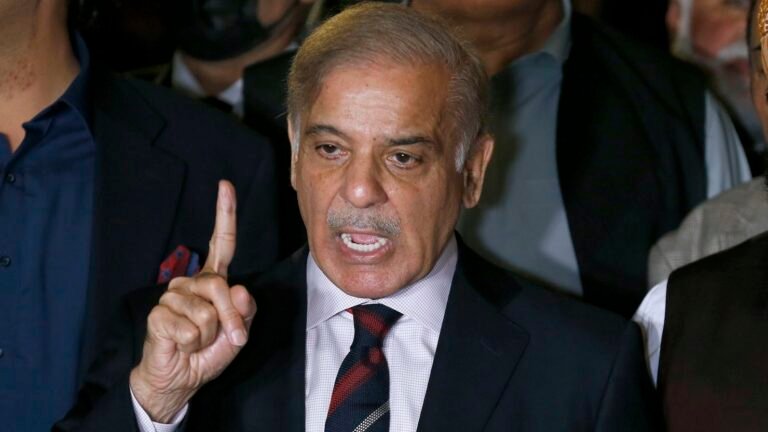
PM Shehbaz extends transport fuel subsidy by one month

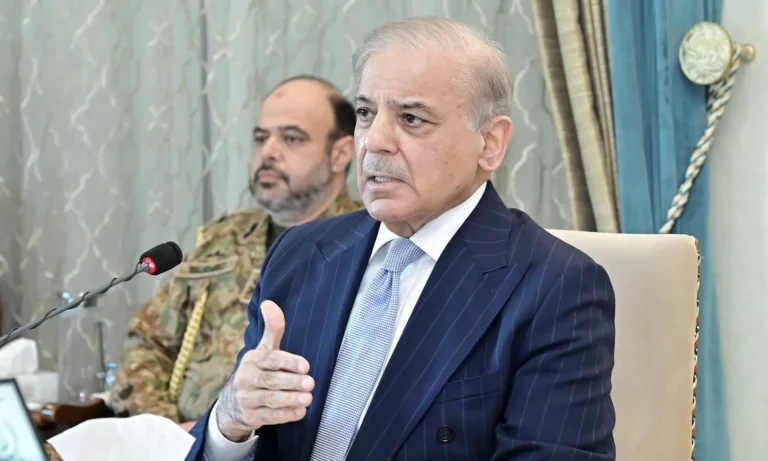
ISLAMABAD: Prime Minister Shehbaz Sharif on Thursday extended the fuel subsidy for motorcyclists, public transport and goods transport by another month as he announced the continuation of measures aimed at providing relief to the public amid the prevailing economic situation.

According to a statement issued by the Prime Minister’s Office, the premier directed the relevant authorities to ensure that any increase in passenger fares and freight charges was prevented at all costs.

He stressed the need for effective monitoring of relief measures so that their benefits reached deserving individuals directly.

“The government would continue to extend maximum possible relief to the public, with facilitating the common citizen remaining its top priority,” the prime minister said, adding that people would not be left alone under any circumstances.

PM Shehbaz said the federal government, in collaboration with the provinces, had provided a national relief package worth billions of rupees for the common man during difficult times.

He also expressed hope that the regional situation would improve soon, enabling stability in petroleum product prices.

The US and Israel launched an attack on Iran in February, after which Tehran retaliated with strikes and closed the Strait of Hormuz, disrupting global oil supplies and prompting a surge in international oil prices.

Amid rising oil prices, the government, in the first week of March, increased petroleum product prices twice, noting that the hikes exceeded the surge in the international market. However, the most significant increase was witnessed in April this year.

Earlier this month, the government raised the petrol price by Rs137 per litre, taking it to a record Rs458.4. However, a few days later, the prime minister, in a televised address, announced a Rs80 per litre reduction in the petroleum levy on petrol, bringing its price down to Rs378 per litre.

As part of the relief measures, a subsidy of Rs100 per litre was announced for motorcycle users, while goods transport operators were offered financial assistance for one month: Rs70,000 for small trucks, Rs80,000 for large trucks, and Rs100,000 for public transport buses. The measures aim to prevent increases in the prices of essential commodities and transport fares.

The government also extended support to small farmers by offering financial assistance of Rs1,500 per acre, while ensuring that economy-class fares for Pakistan Railways passengers remain unchanged. The measures were also implemented in Gilgit-Baltistan and Azad Kashmir, with the government pledging to provide all necessary resources.

Following the federal initiative, the Sindh government announced a monthly subsidy of Rs2,000 for registered motorcyclists across the province. Similarly, the Khyber-Pakhtunkhwa government launched the Ehsaas Fuel Support Programme, under which motorcycle, scooter and rickshaw owners will receive Rs2,000.
FO contacts Somalia over hijacked tanker, Pakistani sailors held hostage

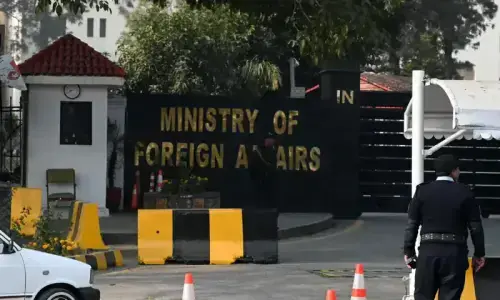
ISLAMABAD: The Foreign Office (FO) on Thursday said that it was in contact with the Somali government over the hostage crisis involving Pakistani sailors aboard a hijacked oil tanker, adding that it believed the crew members were safe and secure.

During a weekly briefing, FO Spokesperson Tahir Andrabi said the oil tanker “Honor 25” was hijacked by pirates near the southeastern coast of Somalia on April 21 while carrying oil to the Puntland region. The vessel had 17 crew members on board, including 10 Pakistanis.

The FO said Pakistan’s embassy in Djibouti had approached Somali authorities, including their foreign ministry, and was informed that the vessel was anchored off the coast of Eyl in Puntland, a semi-autonomous region of Somalia.

“We have fair reason to believe that our crew members are safe and secure,” the FO said, adding that the Somali Ministry of Foreign Affairs had been “very cooperative” and was closely monitoring the situation.

According to the statement, Somali authorities had assured Pakistan that any updates regarding the vessel and the safety of the crew would be shared promptly. “They are trying their best to ensure that the safety and well-being of our detained Pakistanis and all crew members are taken care of,” it said, noting that local authorities and the ship’s owner were in contact with the pirates.

PM Shehbaz’s daughter, son-in-law secure pre-arrest bail in Saaf Paani reference

LAHORE: An anti-corruption court on Thursday granted interim pre-arrest bail to Prime Minister Shehbaz Sharif’s daughter Rabia Imran and her husband Ali Imran Yousaf in a case pertaining to alleged irregularities in the Punjab Saaf Pani Company reference.

Both accused appeared before the court, which approved their bail petitions and directed the Anti-Corruption Establishment (ACE) to submit its reply by May 6.

The couple had previously been declared proclaimed offenders due to their absence from the country. However, they later approached a court, which suspended their arrest warrants last week and allowed them to surrender to the law.

Subsequently, the case was transferred to the anti-corruption court after the accountability court lost jurisdiction following amendments to the National Accountability Ordinance.

According to the allegations, the couple received illegal financial benefits by renting out their private building to the company for use as office premises.

Other suspects in the case, including PM Shehbaz and several senior bureaucrats, have already been acquitted.

The Saaf Pani case surfaced in November 2017 when the NAB launched a comprehensive investigation into alleged corruption in 56 public-sector companies, including the Punjab Saaf Pani Company.

The probe highlighted claims of irregularities, violations of procurement rules, nepotism, and delays in project completion.

The PM’s daughter and son-in-law were also recently granted interim bail in another case on Tuesday in a reference related to alleged corruption in the Punjab Power Development Company (PPDC).

Background

The Saaf Pani scam had surfaced after the NAB had launched a probe in November 2017 into alleged corruption in the 56 public-sector companies, including the PSPC, formed by the administration in Punjab led by PML-N President Shehbaz Sharif at the time.

NAB initiated an ‘Inquiry’ against the management, officers, and officials of the PSPC and others. This inquiry was converted into an investigation on August 20, 2018. During the investigations, NAB alleged, it transpired that a contract was awarded to the KSB Pumps for the installation of 82 water filtration plants at exorbitant rates and without proper approval of engineering estimates/technical sanction.

The illegal addendum of 36 additional filtration plants was also approved, wherein the scope of the project had already changed. The civil, electrical, and solar works were also executed at exorbitant rates during the installation of these water filtration plants in the Bahawalpur Region, the NAB had alleged.

NAB Lahore first arrested four people – Chief Technical Officer Dr Zaheerud Din, Chief Procurement Officer Nasir Qadir Badhal, Consultant Engineer M Saleem Akhtar and Managing Director KSB Pumps Masud Akhter on April 17, 2018.

They were followed by the arrest of Housing Deputy Secretary Khalid Nadeem Bukhari on May 2. NAB alleged that the accused disclosed the involvement of other co-accused Raja Qamarul Islam and former CEO Wasim Ajmal, who was also arrested on June 25, 2018.

Later, NAB arrested five more accused during the last week of November, 2018. They included former deputy secretary Zahoor Ahmed Dogar, former chief resident engineer Adnan Aftab Khan, resident engineer Masoodul Hassan, resident engineer Moeenud Din, and resident engineer Muhammad Younas.

According to the reference, the accused persons prepared the cost estimates at much higher rates, adding that the award of the contract resulted in causing a cumulative loss of Rs345.282 million to the national kitty.

Pakistan commissions first Hangor-class submarine in China: ISPR

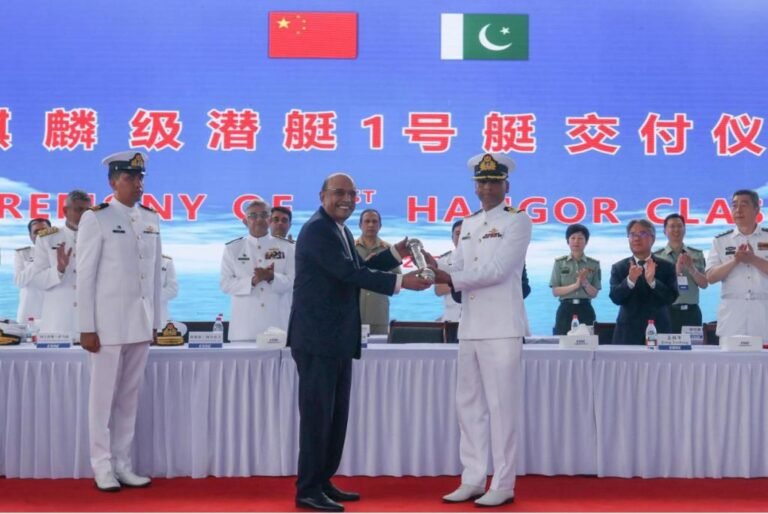
BEIJING: The commissioning ceremony of Pakistan’s first Hangor-class submarine, PNS Hangor, took place on Thursday in Sanya, China. The event was attended by President Asif Ali Zardari and Pakistan’s Naval Chief, Admiral Naveed Ashraf, to mark this significant milestone for the Pakistan Navy, the military’s media wing said.

According to the Inter-Services Public Relations (ISPR), “President Zardari described the commissioning of Hangor as a historic milestone in Pakistan Navy’s modernisation, affirming Pakistan’s resolve to maintain a robust, balanced, and credible defence posture.”

“He stated that Pakistan is fully capable of defending its sovereignty, protecting its maritime interests, and ensuring the security of its economic lifelines,” the statement added.

Admiral Ashraf highlighted that disruptions at critical maritime choke points increasingly threaten global trade and energy security. He stated that maintaining a stable, rule-based maritime order demanded technologically advanced naval forces.

He added that the Hangor-class submarines, equipped with modern weapons, advanced sensors, and Air Independent Propulsion (AIP) systems, would play a key role in maintaining regional maritime stability and deterring aggression.

“These submarines will play a pivotal role in deterring aggression and ensuring the security of vital Sea Lines of Communication (SLOCs) across the Arabian Sea and the wider Indian Ocean region,” he said.

The ISPR statement further noted that the naval chief reiterated the significance of the name Hangor in Pakistan’s national history.

“In 1971, the earlier Hangor became the first submarine since World War II to sink a warship. PNS Hangor will carry this illustrious legacy forward. This is an important milestone for Pakistan Navy that will bolster our maritime defence and modernise our fleet with cutting-edge technology,” it stated.

The statement also said that the commissioning of the first Hangor-class submarine marks another chapter in the time-tested and enriching friendship between Pakistan and China. The ceremony was attended by senior officials from the Pakistan Navy and the People’s Liberation Army Navy (PLA(N)).

“The prime minister and Chief of Army Staff and Chief of Defence Forces, Field Marshal Asim Munir have congratulated the entire nation and the Pakistan Navy on achieving this historic milestone,” the statement concluded.

Interpol issues red notices for Malik Riaz, son: NAB chief

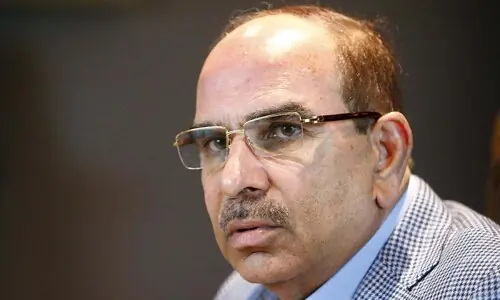
ISLAMABAD: Interpol has issued Red Notices against Bahria Town owner Malik Riaz and his son Ali Riaz, Nat­i­onal Accountability Bur­eau (NAB) Chairman Lt General (retired) Nazir Ahmed said on Wednesday.

A red notice is a request to law enforcement agencies by Interpol to locate and provisionally arrest a person pending extradition, surrender, or similar legal action.

The NAB chairman made the remarks during a press briefing at the accountability watchdog’s headquarters.

“Today I am giving you breaking news that Interpol has issued a red notice against Malik Riaz and Ali Riaz,” he said at the conclusion of the briefing.

This could not be independently verified through Interpol.

Riaz, 72, is the founder and chairman of Bahria Town, while his 48-year-old son serves as chief executive. The property tycoon is currently residing in the United Arab Emirates (UAE), where he has launched a multi-billion-dollar housing project.

During the press briefing, the NAB chairman admitted that bringing Riaz back to Pakistan would be a challenge.

“Yes, there is the aspect of Dubai’s annoyance with Pakistan,” the chairman said, adding that bringing the property tycoon back to Pakistan would not be an easy job. However, he added that NAB was sending a team for the extradition of both Riaz and his son.

Separately, the Islamabad police chief, Syed Ali Nasir Rizvi, met with an Interpol delegation at the Central Police Office.

Riaz and his real estate company have been embroiled in legal woes in the past few years, with the tycoon being an absconder in the Al-Qadir Trust case. The NAB had started the process to extradite Riaz and his son from the UAE in January 2025.

Riaz has many past cases alleging the use of land acquisition tactics for his real estate projects. He and his firm have also been at the centre of multiple court cases, including being ordered by the Supreme Court in 2019 to pay the amount he owed to the Sindh government for the acquisition of land for Bahria Town Karachi.

In August 2025, amidst legal troubles and ahead of planned auctions of Bahria Town properties, Riaz had appealed to be “given a chance to return to serious dialogue, and a dignified solution”.

In 2019, Riaz and his son agreed to forfeit £190m to Britain’s National Crime Agency (NCA) following an unexplained wealth order investigation. The settlement included proceeds from the sale of a £50m London mansion.

The NCA returned the funds to Pakistan, but the repatriated amo­unt became central to the £190m corruption case against ex-premier Imran Khan. As Riaz and his son have not been convicted of any criminal offe­n­ces, they have characterised the NCA settlement as civil in nature and accused critics of mud-slinging.

President Zardari seeks investment in priority sectors during China visit

BEIJING: President Asif Ali Zardari on Wednesday invited Chinese investment into “priority sectors,” particularly alternative energy sources, state-run Radio Pakistan reported.

The president arrived in China on Saturday for a week-long visit to the Hunan and Hainan provinces for engagements related to economic and trade cooperation.

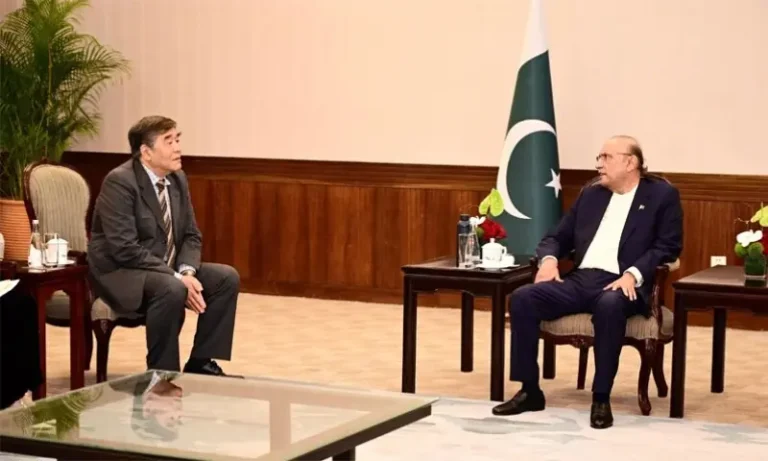
President Zardari held a meeting with the chief executive officer (CEO) of Hangzhou Jinjiang Group, Wang Jian, in Sanya, where he invited the Chinese company to invest in “priority sectors, including alternate energy, water treatment, and electric vehicle battery systems”, according to Radio Pakistan.

The president, according to the report, “noted that Pakistan is actively encouraging foreign investment in various sectors, especially water treatment, electric vehicle battery systems and alternate energy”.

“Such partnerships could support sustainable growth and industrial development,” the report said, adding that President Zardari assured the company of “all possible facilitation to foreign companies seeking to invest in the province, particularly under private partnership frameworks”.

The report added that the president was also briefed that the “Hangzhou Jinjiang Group is already engaged in multiple projects in Pakistan and ranks among the top one hundred business groups in China, with operations spanning heavy industry, fertiliser, oil and gas, coal gasification, renewable energy, agriculture and irrigation”.

President Zardari has held a range of engagements during his China visit so far, including the signing of memoranda of understanding (MoUs) to strengthen bilateral cooperation in water desalination, agricultural technology, and the tea industry.

IHC to hear Imran, Bushra appeals in £190m case tomorrow

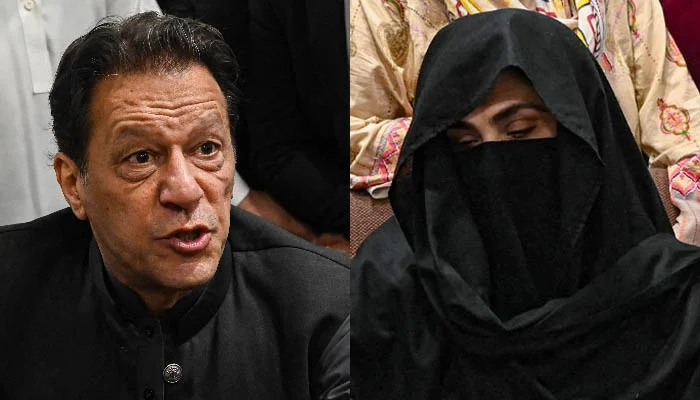
ISLAMABAD: The Islamabad High Court (IHC) on Wednesday fixed the hearing of appeals filed by Pakistan Tehreek-e-Insaf (PTI) founder Imran Khan and his wife Bushra Bibi against their convictions in the £190 million corruption reference for tomorrow.

According to the cause list issued by the registrar’s office, a division bench comprising Chief Justice Sarfraz Dogar and Justice Muhammad Asif will take up the matter.

The case had earlier been scheduled for April 22, but the cause list was cancelled due to Iran-US negotiations and the closure of the Red Zone.

Both appeals challenge the convictions under the Pakistan Penal Code, under which the sentences exceed seven years.

In January last year, an Islamabad accountability court sentenced Imran to 14 years and Bushra Bibi to seven years in prison in the reference filed by the National Accountability Bureau (NAB). The IHC is currently hearing appeals seeking suspension of these sentences.

The £190m case pertains to allegations linked to the Al-Qadir Trust, a welfare organisation established in 2018. The trust, which runs a university outside Islamabad, is accused of being used as a front to receive land worth millions of dollars from a real estate tycoon.

According to the government, the donations were made in exchange for the former premier’s administration using repatriated funds from the United Kingdom to pay fines on behalf of the businessman instead of depositing the amount into the national exchequer. Imran has denied the allegations, maintaining that neither he nor his wife derived any financial benefit from the trust or related transactions.

In a separate development, the Federal Investigation Agency (FIA) submitted a challan in court against the PTI founder and others in the prohibited funding case.

Officials said the challan was filed with Registrar Abdul Wahab of the Special Court (Commercial Banking Circle), Islamabad. The registrar’s office will forward the challan to the court after completing the scrutiny process, following which the case will be fixed for regular hearing.

The PTI founder and other accused have been nominated in the case and face allegations of foreign funding and financial irregularities.

US-Iran war hit growth, oil bill surged to $800m: PM Shehbaz

ISLAMABAD: Prime Minister Shehbaz Sharif on Wednesday said that the war in the Middle East had impacted Pakistan’s growth, with the oil bill surging to $800 million weekly.

Chairing a federal cabinet meeting in Islamabad, the prime minister said that Pakistan was heading towards a growth trajectory after achieving macro-level stability, but the US-Iran war had impacted the collective efforts of the past two years.

PM Shehbaz stated that crude oil prices were once again soaring, “We have to determine new prices by this coming Friday. The current global market situation presents a major challenge. However, thanks to collective foresight and joint efforts, we have made significant attempts to manage this situation more effectively.”

“I would like to congratulate Minister of Petroleum Ali Pervez Malik and the entire team for their collaborative efforts in implementing effective measures. As a result, unlike other countries, we did not face long queues or the need for rationing. Overall, the situation has been satisfactory,” he said.

The prime minister further explained that global market prices reflect the extent of the challenge. “Before the war, our weekly oil bill was approximately $300 million, which has now surged to $800 million. We are continuing our efforts to save, and in recent days, we have seen positive progress, with our consumption significantly reduced compared to last week.”

Speaking about payments to the UAE, the prime minister said, “Our outstanding external debts (including approximately $3.5 billion in bilateral loans) have, thank God, been paid off. Our foreign exchange reserves are also stable at their current level, and we have made our debt repayments.”

“We are extremely grateful to King Salman bin Abdulaziz and Crown Prince Mohammed bin Salman for playing a key role in this matter. I am confident that these major issues will also be resolved. Pakistan’s efforts for peace continue, and there has been no reduction in them,” he added.

He further mentioned that he had directed the committee working with the provinces to continue consultations for a month to ensure that the subsidies being provided could be maintained.

The prime minister also updated the cabinet on Pakistan’s diplomatic engagement, which led to talks between Washington and Tehran in Islamabad. “The talks between Iran and the US that took place on the night of April 11 lasted nearly 21 hours. It was a long marathon session. Pakistan made sincere and concerted efforts to bring peace to the region,” he said.

He also commended the Chief of Army Staff and Chief of Defence Forces, Field Marshal Asim Munir, Deputy Prime Minister and Foreign Minister Ishaq Dar, and other key figures who played a significant role in these efforts. “As a result of these efforts, the ceasefire was extended, and it remains in effect.”

Regarding Iran’s Foreign Minister Abbas Araqchi’s visit with his team for the second round of talks, PM Shehbaz said, “Important meetings were held during his visit. Before his trip to Russia, I had a phone conversation with him in which he assured me that all his meetings in Oman were conducted with sincerity, and after consulting with their leadership, they will give a positive response soon.”

Pakistan retaliates with strikes after Afghan border aggression: security sources

0

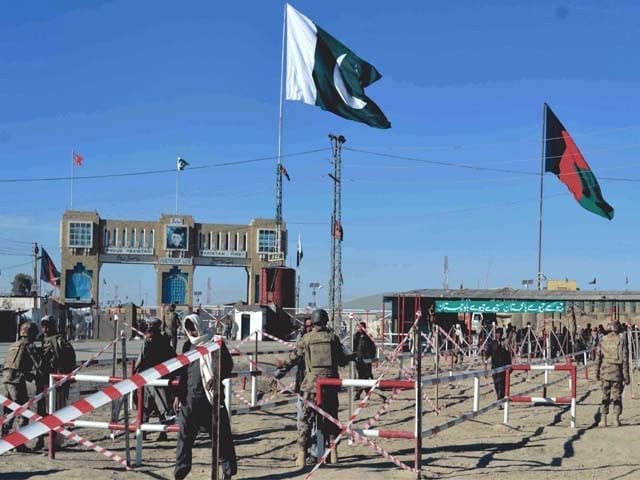
RAWALPINDI: Security forces launched a strong retaliatory response under Operation Ghazab Lil Haq after unprovoked aggression by Afghan Taliban and terrorists along the Pakistan-Afghanistan border, security sources said on Wednesday.

According to the sources, armed forces carried out precise strikes in the Chaman area, targeting and destroying several Afghan Taliban posts and vehicles. They said the effective response forced Afghan Taliban fighters and affiliated terrorists to retreat from their positions.

They added that the ongoing military action reflects the unwavering resolve of the armed forces to defend the country’s territorial integrity and ensure border security.

“The operation Ghazab al-Haq will continue until all designated objectives are achieved,” security sources said, and maintained that Pakistan’s security forces remain fully prepared and committed to responding to any cross-border aggression with force.

On Tuesday, Security forces carried out retaliatory strikes at key sites, including the Ariana Complex, Dabgai check post, police headquarters, and Zakarkhel post, which were destroyed.

Pakistan Air Force also targeted positions in Laghman province, destroying an arms depot, the ABF battalion headquarters, and the Nangarhar brigade. Sources further said a Taliban post near the Mohmand sector was also destroyed, stressing that only Afghan military targets were hit in line with international law.

On April 15, three civilians, including two children, were martyred and three others were injured when Afghan Taliban forces carried out unprovoked shelling on locals in a border area of Khyber-Pakhtunkhwa’s Bajaur district, according to state media.

The incident marked a renewed episode of cross-border aggression after a gap of over a month, following Operation Ghazab Lil Haq, launched in response to earlier unprovoked hostility from the Afghan side.

Operation Ghazab Lil Haq was launched around the end of February following renewed clashes along the Pakistan–Afghanistan border, after Afghan Taliban forces fired on multiple locations, prompting swift military retaliation by Pakistan.

The neighbouring countries were engaged in escalating hostilities along the frontier since then. The clashes intensified after Afghanistan launched a border offensive in response to Pakistani air strikes targeting terrorist positions and abated during a temporary ceasefire on the occasion of Eidul Fitr.

The escalation in tensions between the two countries followed a series of tit-for-tat actions over the past year.

Pakistan earlier carried out air strikes targeting camps of the TTP and Islamic State Khorasan Province inside Afghanistan after a wave of attacks in Pakistan, including a suicide bombing in Islamabad.

Islamabad has long maintained that TTP leaders operate from Afghan territory, an allegation that Kabul has repeatedly denied.

Tensions also surged after a series of explosions in Kabul on October 9 last year. Taliban forces subsequently targeted areas along Pakistan’s border, prompting Islamabad to respond with cross-border shelling.

The exchanges caused casualties and infrastructure damage on both sides and led to the suspension of trade after border crossings were closed on October 12, 2025.

Imran Khan receives fourth dose of eye injection: PIMS

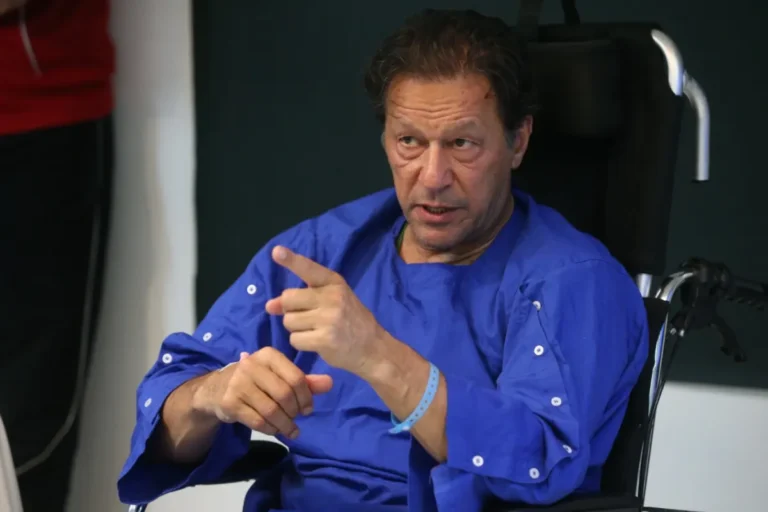
ISLAMABAD: Pakistan Institute of Medical Sciences (PIMS) said on Tuesday that Pakistan Tehreek-e-Insaf (PTI) founder Imran Khan received a fourth dose of an intravitreal injection as part of his eye treatment.

According to a statement, Imran was brought to PIMS for follow-up eye treatment on April 28. “Prior to the procedure, he was examined by ophthalmologists and was found to be clinically stable. His optical coherence tomography was performed, which showed clinical improvement.”

“After obtaining informed consent and under standard monitoring, while adopting all precautionary measures and protocols in the operation theatre, he was administered the fourth intravitreal injection under microscopic guidance by surgeons,” the statement said.

Stating that the procedure was performed as a day-care surgery, PIMS said Imran “remained vitally stable before, during, and after the procedure,” adding that he “was discharged with instructions for further care, follow-up advice, and documents.”

Read: Govt unveils report on Imran’s eye treatment

Meanwhile, PTI Chairman Barrister Gohar, in a post on X, said it had just been confirmed to him that Imran was taken to PIMS last night for an eye injection and a medical check-up.

“I would add that whatever the treatment, our concern remains unanswered — Imran and Bushra Bibi should be shifted to a hospital for treatment under the supervision of their personal doctors, accompanied by family members,” he said.

Gohar said this was their fundamental right and that they had been demanding its implementation for a long time.

In late January, Imran was first taken to the hospital for a minor eye procedure. Five days later, Information Minister Attaullah Tarar said that doctors at PIMS had conducted an examination of his eyes and, after obtaining his written consent, carried out a minor medical procedure that lasted around 20 minutes.

Amid controversy surrounding the eye treatment, PIMS confirmed that Imran was administered an anti-VEGF intra-vitreal injection to treat right central retinal vein occlusion.

The confirmation came as PTI continued to express concern over the founder’s health, alleging that jail authorities and the government were obstructing his treatment for a serious eye condition, and demanding immediate medical care that included Imran being treated at Shifa International Hospital.

In February, it was revealed by a report prepared by Barrister Salman Safdar on the Supreme Court’s direction that Imran had informed officials that his right eye was functioning at only 15% capacity. Safdar submitted the report to a two-member bench. As a result, the Supreme Court ordered that Imran be granted access to his personal physicians in Adiala Jail and that he be allowed telephone contact with his sons, Kasim and Sulaiman.

Later, a medical board examining Imran reported an improvement in his eyesight and did not recommend shifting him to a hospital. According to the medical report, Imran’s vision in his right eye improved from 6/36 to 6/9, while his left eye had 6/6 vision with the use of glasses. The assessment was carried out by a board comprising Dr Nadeem Qureshi and Dr Arif, following a detailed examination at Adiala jail.

In March, another medical check-up was conducted at Adiala, after which PIMS stated that Imran had shown significant improvement in his vision following his second dose of an intravitreal anti-VEGF injection. The third dose was subsequently administered on March 23.

Imran’s wife, Bushra Bibi, also underwent a medical examination at Adiala in March after complaining of pain in her right eye. She was reportedly examined by Dr Muhammad Arif Khan, head of the ophthalmology department at PIMS. The medical report stated that she had been experiencing blurred vision and black spots in her right eye; she also reported seeing flashes in the dark and said she was suffering from headaches.

The examination diagnosed Bushra Bibi with posterior vitreous detachment (PVD) in her right eye. The report also identified myopia and astigmatism. After the diagnosis, Bushra Bibi was prescribed eye drops and medication, along with the use of glasses. She was reportedly recommended a follow-up medical check-up after four weeks.

The former first lady then underwent eye surgery on the evening of April 16.

Imran and Bushra Bibi remain incarcerated in Rawalpindi’s Adiala Jail. They were sentenced on December 20, 2025, to 17 years in prison in the Toshakhana-II case, which pertains to allegations that the couple unlawfully retained a Bulgari jewellery set gifted by the Saudi crown prince during an official visit to Saudi Arabia.

Imran has been in custody since August 2023, serving a sentence in a £190 million corruption case. He also faces pending trials under the Anti-Terrorism Act in connection with protests on May 9, 2023.