Home Blog Page 20

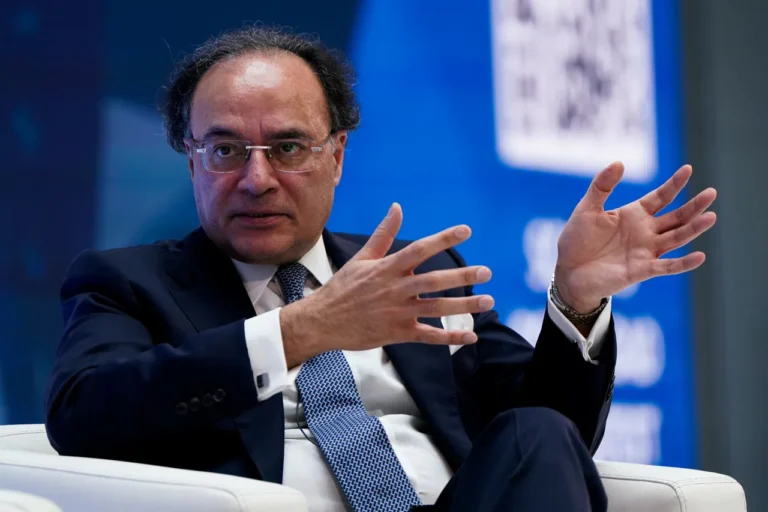
FinMin says economy likely to grow around 4% this fiscal year

ISLAMABAD: Finance Minister Muhammad Aurangzeb on Tuesday said Pakistan’s economic growth will be about four per cent this fiscal year while speaking at the EU-Pakistan High Level Business Forum in Islamabad, according to Radio Pakistan.

He noted that this represents a significant improvement over the previous fiscal year, adding that the country has been consolidating gains in terms of macroeconomic indicators.

Aurangzeb mentioned that our current account surplus was a little over one billion dollars in March this year, expressing satisfaction over IT exports, the positive trajectory of value-added segments, as well as an increase in remittances.

He added that the country’s foreign exchange reserves are expected to reach around $18 billion by the end of June, providing an import cover of three months.

Also addressing the forum, Special Assistant to the Prime Minister on Industries and Production Haroon Akhtar Khan underscored that the European Union remains Pakistan’s largest export destination, with the GSP Plus framework playing a pivotal role in expanding market access and improving standards.

Under the GSP+ scheme, eligible countries are required to implement 27 international conventions covering human rights, labour rights, environmental protection, and good governance. In exchange, the European Union reduces import duties to zero on more than two-thirds of the tariff lines applied to its exports. Pakistan is currently one of eight countries that benefit from this scheme.

However, Khan stressed that the future of this partnership lies beyond trade, focusing on investment, technological collaboration, and integration into global value chains.

He pointed to vast opportunities across sectors, including mining, tourism, renewable energy, agriculture modernisation, pharmaceuticals, logistics, and infrastructure. He particularly emphasised the untapped potential of regions such as Gilgit-Baltistan, Khyber-Pakhtunkhwa and Balochistan, rich in natural resources and investment prospects.

Inviting European partners to explore Pakistan’s tourism sector, he noted the country’s unique blend of natural beauty and cultural heritage, offering high-value investment opportunities.

The forum, scheduled for April 28-29, serves as a major platform to deepen trade and investment cooperation and to bring together a large number of participants, including government representatives, business leaders, and institutional stakeholders from Pakistan and across the EU.

UAE quits OPEC and OPEC+ in huge blow to global oil producers group

0

ISLAMABAD: The United Arab Emirates said on Tuesday it quit the Organisation of the Petroleum Exporting Countries (OPEC) and OPEC+, dealing a heavy blow to the oil-exporting groups and ​their de facto leader, Saudi Arabia, at a time when the Iran ‌war has caused a historic energy shock and unsettled the global economy.

The stunning loss of the UAE, a longstanding OPEC member, could create disarray and weaken the group, ​which has usually sought to present a united front despite internal disagreements over issues ranging from geopolitics to production quotas.

UAE Energy Minister Suhail Mohamed al-Mazrouei told Reuters the decision was taken after a careful look at the regional power’s energy strategies.

Asked whether the UAE consulted with Saudi Arabia, he said the UAE did not raise the issue with any other country.

“This is a policy decision, it ​has been done after a careful look at current and future policies related to level of ⁠production,” said the energy minister.

OPEC ⁠Gulf producers have already been struggling to ship exports through the Strait of ​Hormuz, a narrow chokepoint between Iran and Oman through which a fifth of ​the world’s crude oil and liquefied natural gas normally passes, because of Iranian threats and attacks against vessels.

Mazrouei said the move, in which the UAE will also leave the OPEC+ grouping, would not have a huge impact on the market because of the situation in the strait.

The UAE’s exit from OPEC represents a win for United States President Donald Trump, who, in a ​2018 address to the UN General Assembly, accused the organisation of “ripping off the rest of the world” by inflating oil prices.

Trump has also linked US military support for the ‌Gulf ⁠with oil prices, saying that while the US defends OPEC members, they “exploit this by imposing high oil prices”.

The move came after the UAE, a regional business hub and one of Washington’s most important allies, criticised fellow Arab ​states for not doing ​enough to protect ⁠it from numerous Iranian attacks during the war.

Anwar Gargash, the diplomatic adviser for the UAE president, criticised the Arab ​and Gulf response to the Iranian attacks in a ​session at ⁠the Gulf Influencers Forum on Monday.

“The Gulf Cooperation Council countries supported each other logistically, but politically and militarily, I think their position has been the weakest ⁠historically,” ​Gargash said.

“I expect this weak stance from the ​Arab League and I am not surprised by it, but I haven’t expected it from the [Gulf] ​Cooperation Council and I am surprised by it,” he said.

Mazrouei noted the UAE has ​been a member ⁠of OPEC and OPEC+ for a long time, but he said the world would demand more energy, suggesting his country’s move will help meet those needs.

The UAE’s exit comes as global spare capacity hovers at historically low levels, leaving the oil market increasingly tight.

Operating outside the ⁠producer group ​allows the UAE to fully leverage its position as a supplier of some ​of the world’s lowest-cost and lowest-carbon barrels.

LHC suspends PTI leader’s sentence in May 9 case, rejects Ejaz Chaudhry and Mahmoodur Raheed pleas

0

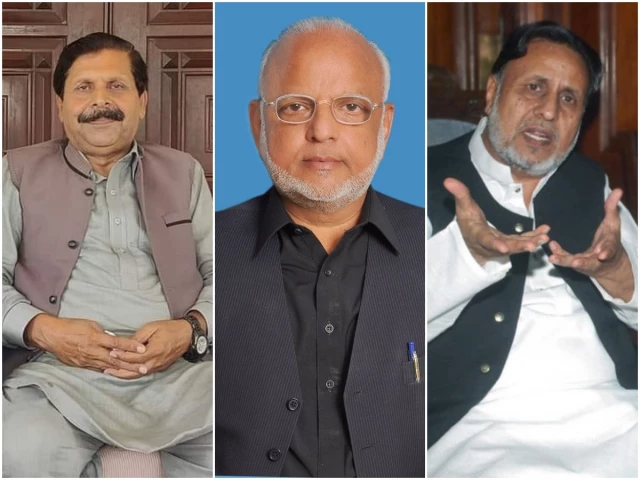
LAHORE: The Lahore High Court delivered a split verdict on appeals seeking suspension of sentences in the May 9 riot cases on Tuesday, suspending the sentence of Pakistan Tehreek-e-Insaf leader Afzal Azeem Pahat while rejecting similar pleas of Ejaz Chaudhry and Mian Mahmoodur Rasheed.

A two-member bench headed by Justice Shahbaz Rizvi heard the appeals against convictions awarded by an Anti-Terrorism Court (ATC) in Lahore, which had sentenced the accused to 10 years imprisonment in cases related to the May 9 unrest.

The court suspended Pahat’s sentence in a case of rioting and arson at Sherpao Bridge and ordered his release.

The bench dismissed four applications filed by Chaudhry and one by Rasheed seeking suspension of their sentences in similar cases.

Read More: PTI, opp bloc agree on joint strategy

During proceedings, defence counsel Barrister Mian Ali Ashfaq argued that the ATC verdicts were contrary to facts and that the convicts had already spent over two and a half years in jail, requesting suspension of sentences until final decisions in the main appeals.

The special prosecutor opposed the pleas, contending that the May 9 incidents were part of a premeditated conspiracy aimed at destabilising the country.

After hearing arguments from both sides, the court reserved its judgment and later announced the verdict.

Last year in December, ATC Lahore had sentenced Dr Yasmin Rashid, Omar Sarfaraz Cheema, Ejaz Chaudhry, Mian Mahmood-ur-Rasheed, and others to ten years in prison in another case related to the May 9 incident.

In another May 9 case, ATC Lahore sentenced Dr Yasmin, Cheema, Chaudhary, Rasheed to 10 years in prison each, while Shah Mahmood Qureshi was acquitted of all charges in the case.

These PTI leaders have previously been sentenced by various courts in Punjab in connection with incidents of unrest on May 9, 2023, when party supporters reportedly engaged in attacks on government and military properties following the arrest of PTI founder Imran Khan.

The case, registered at Races Course Police Station, pertains to the attack on Club Chowk, GOR Gate, where the accused allegedly damaged security cameras, broke police wireless equipment and gate glass, attacked officials, and vandalised public property.

JCP clears transfer of IHC Justices Mohsin Kayani, Babar Sattar and Saman Riffat

0

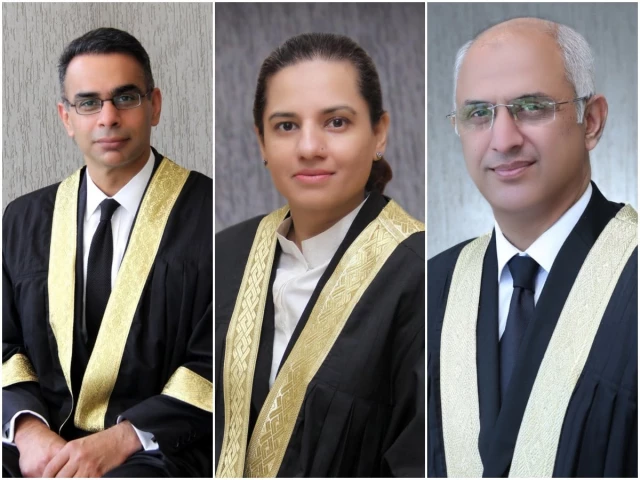
ISLAMABAD: The Judicial Commission of Pakistan (JCP) on Tuesday approved the transfer of Islamabad High Court (IHC) judges Justice Mohsin Akhtar Kayani to the Lahore High Court (LHC), Justice Babar Sattar to the Peshawar High Court (PHC) and Justice Saman Riffat Imtiaz to the Sindh High Court (SHC).

According to a statement issued by the Supreme Court of Pakistan (SCP), the JCP held a series of meetings today to consider the transfer of high court judges, with deliberations conducted under the chairmanship of Chief Justice of Pakistan Yahya Afridi.

“The meetings were convened by the secretary of the Judicial Commission of Pakistan in exercise of powers conferred by clause (22) of Article 175A of the Constitution, as the Chairman of the Commission, while giving reason therefor, declined to convene the meeting on the requisition by one third of the total members,” it said.

The statement said that the JCP deliberated on various transfer proposals, with the chief justices of the concerned high courts participating as members of the commission. The transfer decisions were made in accordance with the powers granted by the Constitution and the JCP’s procedural rules.

Additionally, proposals for the transfers of Justice Arbab Tahir and Justice Khadim Hussain Soomro were withdrawn by the members who had requisitioned them. The commission also decided, by a majority, that any vacancy created by a judge’s transfer would be filled through further transfers, rather than initial appointments.

Members of the Pakistan Tehreek-e-Insaf attended the meeting after previously boycotting similar sessions prior to the 27th Constitutional Amendment.

Speaking to the media, PTI Chairman and commission member Barrister Gohar Ali Khan said, “We will ask the commission to cancel the matter of judges’ transfers,” adding that the party would present its reservations before the forum.

He said a decision had been taken not to boycott the meeting, noting that “over the past four years, institutional structures have been significantly affected,” and that “there is a need to strengthen the judiciary in the current situation.”

Another commission member, PTI’s Senator Ali Zafar, questioned the process, saying, “Judges should not be transferred without reasons.”

He said “there should be solid grounds for such transfers,” adding that rules should have been framed before proceeding with transfers, and described Justice Sattar’s letter as raising a “valid demand”.

When asked whether the PTI and the chief justice were aligned on opposing the transfers, Zafar responded: “Yes, we support the stance of Chief Justice Yahya Afridi.”

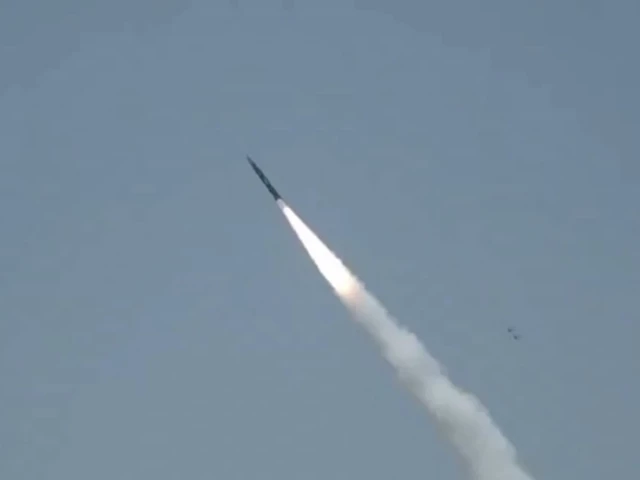
Pakistan successfully test-fires indigenously developed Fateh-II missile system: ISPR

RAWALPINDI: The Army Rocket Force Command on Tuesday conducted a successful training launch of the “indigenously developed” Fateh-II missile system, the Inter-Services Public Relations (ISPR) said in a statement.

It said that the system was equipped with advanced avionics and state-of-the-art navigational aids.

According to the ISPR, “The training launch was aimed at the training of troops, validating various technical parameters and performance evaluation of different sub-systems incorporated for improved accuracy and enhanced survivability.”

“The launch was witnessed by senior officers from the Strategic Plans Division, the Army Rocket Force Command and the Pakistan Army, along with scientists and Engineers of Strategic Organizations. The forum commended the successful training fire of the indigenously developed Missile of Fateh Series,” said the statement.

President Asif Ali Zardari, Prime Minister Shehbaz Sharif, Chief of Defence Forces and Chief of Army Staff, Field Marshal Asim Munir, and services chiefs “appreciated the technical prowess, dedication and commitment of all those who contributed towards the successful training fire of the missiles,” the ISPR concluded.

Last week, the Pakistan Navy conducted a successful test of the Taimoor air-launched cruise missile. The missile, which is an indigenously developed anti-ship weapon system, is described as “a powerful demonstration of precision strike capability and operational readiness.”

This was the second test conducted by Pakistan Navy, as earlier on April 16, the Pakistan Navy also successfully conducted a live weapon firing of an indigenously developed ship-launched anti-ship missile.

Iran looking into Trump’s request for negotiations: FM Araghchi

ISLAMABAD: Iran’s Foreign Minister Abbas Araqchi ​said on Monday that ‌Tehran was looking into United States President Donald ​Trump’s request ​for negotiations, according to a ⁠post on ​the minister’s Telegram account.

He ​told reporters in Russia that Trump requested negotiations ​because the US ​has not achieved any of ‌its ⁠objectives.

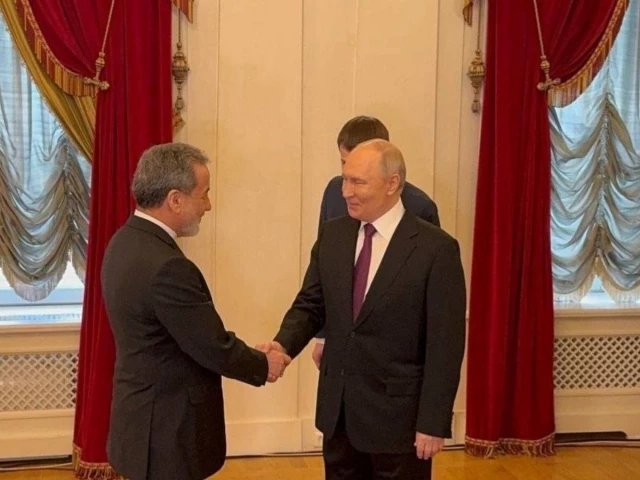
Meanwhile, Russian President Vladimir Putin said that the country would “do what it can” to achieve regional peace as he met Araghchi.

The Iranian top diplomat is currently on a visit to Russia amid a deadline in peace talks with the United States following a temporary ceasefire.

Putin met FM Araghchi in St Petersburg. Iran’s Press TV quoted him as saying that he received a message from Supreme Leader Mojtaba Khamenei.

“Russia will do what it can to support the interests of Iran and other regional countries and help bring peace to West Asia as soon as possible. I hope Iranian people overcome this difficult period and that peace is restored,” the outlet quoted him as saying.

FM Araghchi said his people had bravely resisted US aggression and would continue to do so.

“Iran and Russia have a strategic partnership and will continue to strengthen their cooperation,” he said.

Russian FM Sergei Lavrov, presidential aide Yuri Ushakov, and Admiral Igor Kostyukov, chief of the Main Intelligence Directorate of the General Staff of the Russian Armed Forces, also attended the meeting.

On the Iranian side, the delegation included Deputy Foreign Minister Kazem Gharibabadi and Ambassador to Moscow Kazem Jalali.

Pakistan, China agree to deepen partnership in desalination, agriculture, tea sectors

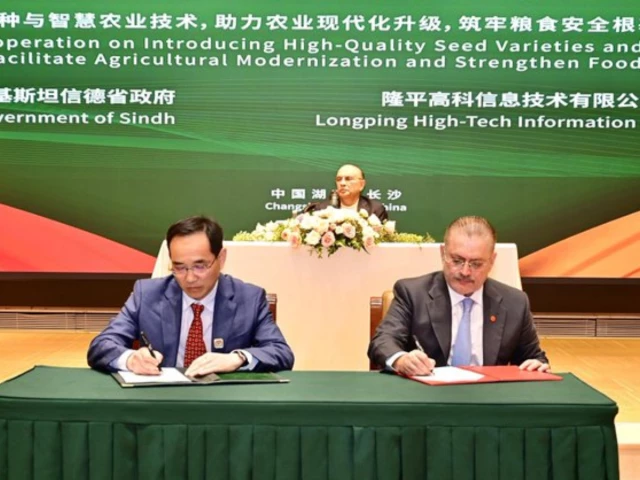
BEIJING: Pakistan and China on Monday signed three memorandums of understanding (MoUs) in Changsha, covering water desalination in Karachi, agricultural technology, and cooperation in the tea sector, according to an official statement shared by the presidency.

The MoUs aim to enhance cooperation across industrial sectors, support the development of the tea industry, and strengthen economic, trade, and people-to-people ties.

President Asif Ali Zardari witnessed the signing ceremony, which marked continued engagement between Pakistan and China in priority sectors.

Senior Sindh officials also attended the event, including Special Assistant to the Chief Minister on Investment and Public-Private Partnership Qasim Naveed Qamar, Chief Secretary Ali Hassan Barohi, and Pakistan’s Ambassador to China Khalil Hashmi.

The ceremony took place in Hunan province and was part of broader efforts to expand practical cooperation between the two countries across strategic sectors, according to the Pakistan Peoples Party.

The first MoU was signed between the Sindh Local Government Department and Luchuan Environmental Technology Group. It focuses on a project to convert seawater into potable water to help boost supply in Karachi.

Sindh Senior Minister Sharjeel Inam Memon and Yu Hui, Party Branch Secretary and Chairman of the Chinese firm, signed the agreement.

The second MoU was signed between the Sindh Local Government Department and Longping High-Tech Information Company to promote cooperation in agricultural technology. It was signed by Sharjeel Inam Memon and Chen Zhixin, Chairman of the company.

The third agreement relates to cooperation in the tea sector and was signed by Muskeen & Family Trading Company, Hunan Tea Group, and Jialong International Technology (Henan). Senator Saleem Mandviwalla signed on behalf of Pakistan, while Zhu Chongwang and Hao Jiaolong signed for the Chinese side.

The president, who is on a week-long visit to China’s Hunan and Hainan provinces for engagements related to economic and trade cooperation, said Pakistan attached high importance to expanding collaboration with China in key industrial sectors.

On Sunday, President Zardari visited SANY Heavy Industry in Changsha, where the SANY Group Chairman Tang Xiuguo briefed the president on the company’s advanced manufacturing systems, products, and ongoing investment in research and development. Later, President Zardari also visited Hunan Tea Group Co Ltd, where Chairman Zhou Zhongwang briefed him on operations, supply chain, and international market presence.

SBP raises interest rate by 100 basis points to 11.5%

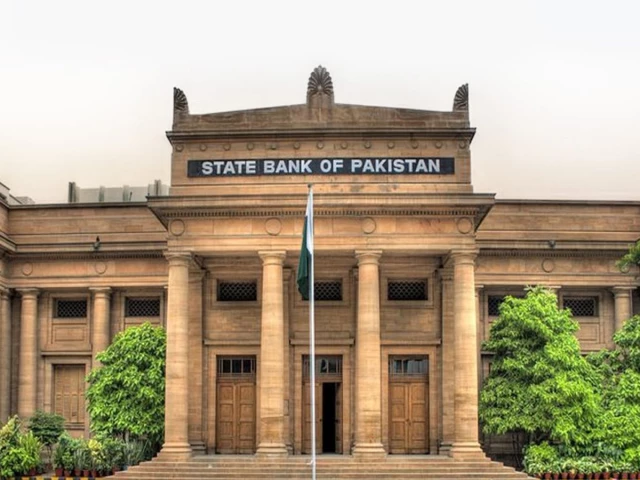
KARACHI: In a move that defied market expectations, the State Bank of Pakistan’s (SBP) Monetary Policy Committee (MPC) announced a sharp 100 basis point increase in the policy rate, raising it to 11.5%, effective April 28, 2026. The decision, revealed after the MPC meeting held earlier today, caught analysts off guard.

Arif Habib Limited (AHL) had published a detailed preview arguing forcefully for maintaining the status quo at 10.5%. “Given the supply-driven nature of current inflationary pressures, responding with tightening risks a policy error,” AHL had noted, pointing to transient base effects and contained core inflation.

Arif Habib Limited acknowledged that “calls for tightening have gained some traction, particularly around IMF considerations,” but maintained that at 10.5%, policy was already in restrictive territory. Their survey showed only 17% had predicted a 100 bps hike, with 61% expecting no change.

The SBP’s move signals a decisive pivot, prioritising inflation anchoring over near-term growth support, even as the economy posts a 3.89% GDP expansion in Q2 and a $1.07 billion current account surplus in March.

The next MPC meeting in June, alongside the federal budget, will now be watched closely for any signs of reversal—or further tightening.

Earlier in March, the SBP maintained its policy rate unchanged at 10.5% following its meeting on March 9.

The cautious pause in March was seen as support for ongoing macroeconomic stability efforts, building on prior rate reductions (including the 50 bps cut to 10.5% in December 2025), while allowing time to monitor energy price dynamics, domestic inflation trends, and external account resilience.

The SBP emphasised in its previous many PMC statements a balanced approach to safeguarding price stability while nurturing sustainable growth recovery.

PM allows fans at HBL PSL playoff matches: Naqvi

0

ISLAMABAD: Pakistan Cricket Board (PCB) Chairman Mohsin Naqvi announced on Monday that Prime Minister Shehbaz Sharif granted permission for spectators to attend the HBL Pakistan Super League (PSL) 11 playoff matches.

In a post on X, Naqvi said, “I just had a meeting with PM Shehbaz, and I’m pleased to share that we have secured his approval for public attendance at all three PSL playoff matches.”

However, he said this came with an important condition from the premier’s side that fans were strongly encouraged to use public transport or minimise fuel consumption while attending the matches in line with government austerity measures,

Naqvi added that PM Shehbaz conveyed his best wishes to the four teams participating in the playoffs. “Looking forward to some exciting and entertaining cricket ahead,” he said.

The decision came two days after PM Shehbaz allowed spectators to attend the final of HBL PSL 11 at the stadium, following a request from franchise owners.

Last month, Naqvi announced that the PSL would be held without spectators amid government austerity measures due to the ongoing regional situation that has impacted fuel supplies. He further restricted the matches to Lahore and Karachi to minimise movement in view of the energy crisis. The PCB chief also cancelled the opening ceremony.

Both federal and provincial governments have since introduced a range of austerity measures, including an additional weekly holiday, cuts in free petrol allocations for ministers, limits on protocol vehicles and proposals for subsidised fuel for students.

Trump was likely target of White House correspondents’ dinner shooting

WASHINGTON: US President Donald Trump and officials in his administration were the likely targets of a suspect who fired on a security agent guarding the White House Correspondents’ Association ​dinner in Washington, US Acting Attorney General Todd Blanche said on Sunday.

The man fired a shotgun at a Secret Service agent at a checkpoint in the Washington Hilton hotel before being tackled and arrested. Trump ‌and first lady Melania Trump were rushed out of the dinner.

“It does appear that he, he did, in fact, set out to target folks that work in the administration, likely including the president,” Blanche told NBC News’ “Meet the Press,” adding that the suspect likely traveled by train from Los Angeles to Chicago and then to Washington.

The suspect will be charged in federal court on Monday with assault of a federal officer, discharging a firearm and attempting to kill a federal officer, Blanche said, adding he did not know if there was an Iran connection to the attack.

Condemnation of shooting

Trump told reporters at a briefing at the White House after the attack that the Secret Service agent was saved by his bulletproof vest and was in “good shape.” US Secret Service spokesperson Anthony Guglielmi confirmed the officer had ​been released from the hospital.

Trump told reporters he believed that he was the target of the attack. The president has survived two previous attempts on his life since 2024, a period of ⁠deepening political polarization in the United States.

Around the world, leaders condemned the attack, adding they were relieved that Trump and all present were safe and expressing their solidarity with the United States. NATO leader Mark Rutte called it an attack “on our ​free and open societies,” and leaders stressed violence had no place in a democracy.

Suspect thought to be ‘lone wolf,’ Trump says

A law enforcement official identified the suspect as Cole Tomas Allen, a California resident about 31 years old. Little ​was immediately known about Allen’s background, but social media postings suggested he was a teacher in Torrance, near Los Angeles.

Washington interim Police Chief Jeffery Carroll said the ⁠suspect was armed with a shotgun, a handgun and multiple knives. He was taken to a local hospital to be evaluated, but it was too soon to say what his motivation was, Carroll said.

Based on ​preliminary information, he was believed to have been a guest at the hotel, Carroll added.

The chaotic events from around 8:35pm raised fresh questions about the security of top US officials, many of whom were gathered ​in the hotel’s expansive ballroom.

A focus of the investigation is likely to be how the gunman was able to smuggle the shotgun into the hotel, which hosts the annual White House Correspondents’ Association dinner, a marquee fixture of Washington’s social calendar.

The black-tie event was attended by many members of Trump’s cabinet and other senior administration officials amid heavy security. It was the first time Trump attended the event as president, having boycotted it in previous years.

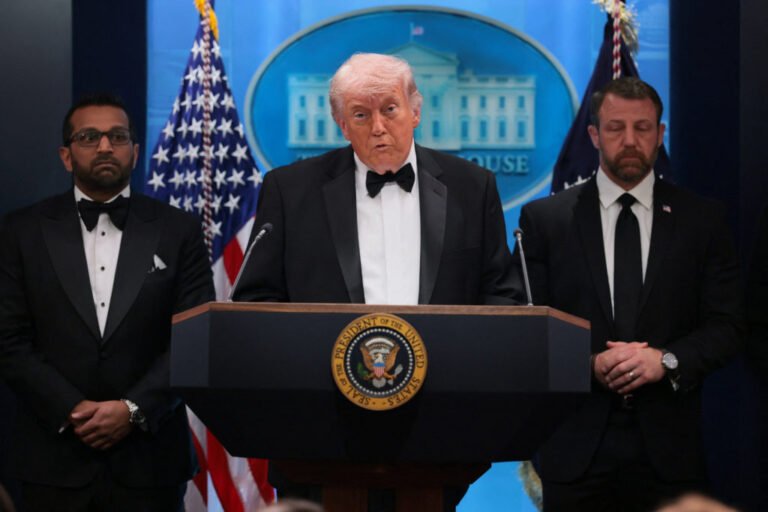
Afterwards, Trump addressed reporters, many still in ​evening attire, in an extraordinary late-night press conference in the White House briefing room, flanked by Vice President JD Vance and other cabinet members. Trump’s wife, Melania, looked on from the sidelines and demurred when he ​asked her whether she wanted to talk about the events of the evening.

The venue for the dinner was the scene of an attempt on the life of President Ronald Reagan, who was shot and wounded by a would-be assassin ‌outside the hotel ⁠in 1981.

Closed-circuit TV footage released by Trump on Truth Social showed the suspect running rapidly through a security checkpoint, momentarily catching security personnel off guard before they drew their weapons.

No shots were fired at the gunman who got through two checkpoints before being brought down.

“You know, he charged from 50 yards away, so he was very far away from the room. He was moving. He was really moving,” Trump said after the gala dinner was canceled.

Officials believe he is a “lone wolf,” Trump said.

How it unfolded

Video footage shows Trump and his wife sitting at a banquet table on stage in conversation with someone when a commotion at the rear of the ballroom – ​caused by the noise of gunshots – triggers a ​ripple of gasps through the room.

People started screaming, “Get ⁠down, get down!” Many of the 2,600 attendees dressed in tuxedos and ball gowns took cover under tables as security personnel drew their weapons, with some pushing cabinet secretaries to the floor and covering them with their bodies, while others formed a protective cordon.

Security personnel in combat fatigues stormed the stage, pointing rifles into the ​ballroom as Trump, his wife and Vance were evacuated. Cabinet members who had been sitting at tables dotted around the vast room were escorted out ​by their security details one ⁠by one.

While most guests huddled under tables, some people began chanting “USA, USA!”

Trump stayed backstage for about an hour after being hustled from the stage, a source told Reuters. He later said he had not wanted to leave the event, a remark that echoed images of him defiantly pumping his fist after narrowly escaping an assassination attempt in Butler, Pennsylvania, in 2024.

In that attempt, Trump was shot and wounded in his upper ear by a 20-year-old gunman, who ⁠was shot dead ​by security personnel.

Just over two months after the Butler shooting, Secret Service agents spotted a man wielding a gun and hiding ​in bushes at the Trump International Golf Club in West Palm Beach, Florida, while Trump was on the course. It was deemed an assassination attempt, and the suspect was sentenced to life in prison in February.