Home Blog Page 17

PM Shehbaz condemns drone strike on UAE civil infrastructure

ISLAMABAD: Prime Minister Shehbaz Sharif has condemned the “missile and drone attacks on civilian infrastructure” in the United Arab Emirates in an X post on Tuesday.

“Pakistan stands firmly with our Emirati brothers and sisters as well as with the Government of the United Arab Emirates at this difficult time,” he wrote on X.

He followed up the message by saying that the ceasefire needed to be upheld and respected to “allow necessary diplomatic space for dialogue leading to enduring peace and stability in the region.”

Authorities in the United Arab Emirates’ Fujairah said on Monday that a fire broke out at the Fujairah Oil Industry Zone following what they described as a drone attack originating from Iran.

Civil defence teams were deployed immediately to contain the blaze, Fujairah Media Office said in a statement.

The UAE defence ministry said in a post on X, “The UAE has intercepted three missiles fired from Iran over its territorial waters, with a fourth missile crashing into the sea”.

The statement added that, “The Ministry of Defence affirmed that the sounds heard in different parts of the country are a result of air defence systems engaging threats”.

“The ministry urged the public to obtain information from official sources and comply with all public safety procedures when warning messages are issued to the public,” it said.

There was no immediate comment from Iran. However, Iranian state media, citing a senior military official, said that Iran had no plan to target the UAE.

Regional peace tied to restraint, respect for sovereignty: CDF Munir

RAWALPINDI: Army’s top leadership asserted on Tuesday that peace and stability in the region were intrinsically linked to collective restraint, responsibility and respect for sovereignty, a statement issued by the military’s media affairs wing after the 275th Corps Commanders’ Conference said.

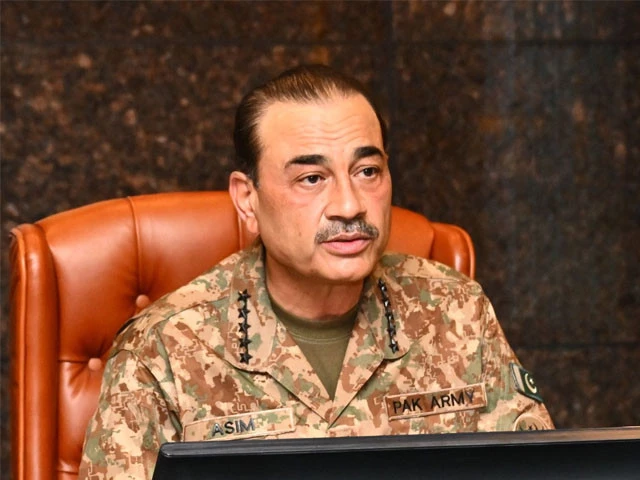
Chief of Defence Forces and Chief of Army Staff Field Marshal Asim Munir presided over the meeting at the General Headquarters in Rawalpindi, the Inter-Service Public Relations (ISPR) said.

The military leadership’s observation comes against the backdrop of a conflict between the US and Iran. It began with US-Israeli strikes on Iran in late February and later broadened into a regional crisis, involving disruption of traffic in shipping lanes attacks on Gulf countries.

The conflict is paused for now, following a fragile ceasefire that continues to be tested.

The Corps Commanders’ Conference, while deliberating on the broader regional security environment, “noted that emerging geopolitical developments carry significant implications for regional stability,” the ISPR statement said.

The top brass emphasised the importance of restraint and “avoidance of escalation” and “acknowledged Pakistan’s continued responsible role in advocating stability and supporting efforts aimed at preventing further deterioration of the situation”.

As per ISPR, the conference “reiterated that peace and stability in the region are intrinsically linked to collective restraint, responsibility and respect for sovereignty”.

Chairing the meeting, CDF Munir “expressed satisfaction over the high standards of operational preparedness, professionalism, and combat readiness of Pakistan’s armed forces”.

He commended “commanders and formations for their unwavering commitment, vigilance, and success” in counter-terrorism operations across the country.

Operation Ghazab lil-Haq

The ISPR statement said the meeting comprehensively reviewed the internal and external security environment and “resolved to maintain current operational tempo to decisively dismantle terrorist networks, disrupt their support infrastructure, and deny them any operational space within Pakistan”.

Participants of the meeting also noted “continued degradation of terrorists and their support infrastructure” by means of Operation Ghazab lil-Haq.

Operation Ghazab lil-Haq was launched by Pakistan’s armed forces on the night of Feb 26 following cross-border firing by the Afghan Taliban. The military action also targets terrorists’ hideouts.

Islamabad has repeatedly accused Kabul of providing space to the banned Tehreek-i-Taliban. UN monitoring reports over the past two years have noted the TTP’s presence in eastern Afghanistan, though the Taliban deny offering support to them.

According to ISPR, the Corps Commanders’ Conference noted that the “irrational and perverted policy of the Afghan Taliban regime to provide safe havens to khawarij and other terrorist organisations, with total disregard to [the] interests of [the] Afghan people, is increasingly backfiring and stands fully exposed”.

ISPR said that the forum also took note of the “propaganda campaign” by the Afghan Taliban to “falsely portray Pakistan as targeting civilians inside Afghanistan”.

The army’s top brass termed “such misleading narratives a part of a coordinated disinformation strategy by the regime to distract attention from their internal failures and play [the] victim card”.

“The forum categorically rejected these frivolous allegations and reaffirmed that Pakistan’s defensive actions remain focused, precise, and directed solely against infiltrators, terrorist hideouts and support infrastructures,” the ISPR statement said.

Marka-i-Haq

ISPR added that participants of the meeting also congratulated the nation and the armed forces on the first anniversary of Marka-i-Haq, recognising it as a “defining moment reflecting national unity, collective resolve, and an unyielding commitment to safeguard Pakistan’s sovereignty at all costs”.

Marka-i-Haq refers to the period of conflict between Pakistan and India last year. It began with the Pahalgam attack in occupied Kashmir on April 22 and ended with the conclusion of Pakistan’s Operation Bunyanum Marsoos and a ceasefire on May 10.

According to ISPR, the conference underscored that the “national commemoration of Marka-i-Haq serves as a clear message to [the] Indian hubristic political mindset that the Pakistani nation stands united, resilient, and fully prepared”.

“It signifies the unshakeable harmony between the people, government and armed forces of Pakistan, which stand together as ‘Bunyanum Marsoos’ against all internal and external challenges.”

Moreover, the military’s top brass “strongly condemned ongoing atrocities, extrajudicial killings, and demographic changes” in India-occupied Kashmir, reaffirming Pakistan’s unwavering diplomatic, political, and moral support for the just struggle of the Kashmiri people, the statement said.

It further stated that the forum paid rich tribute to the “martyrs of the armed forces, law enforcement agencies, and innocent civilians who laid down their lives in defence of the motherland”.

“Paying profound tribute to their unmatched sacrifices, the forum reaffirmed that the enduring legacy of the martyrs continues to serve as the bedrock of Pakistan’s national security, unity, and resilience,” the statement read.

Concluding the meeting, CDF Munir “directed commanders to maintain the highest levels of vigilance, operational readiness, and adaptability in the face of evolving threats”.

He emphasised the need for “continued focus on professional excellence, integrated response mechanisms, and proactive measures to counter both conventional and non-conventional challenges”, the ISPR statement said.

PTI’s Raja defends Punjab Coordination and Monitoring Committee composition

ISLAMABAD: PTI Secretary General Salman Akram Raja on Tuesday affirmed his decision regarding the composition of the newly formed Punjab Coordination and Monitoring Committee, saying that no existing member would be excluded and no new name would be added to the body.

On Monday, Raja notified a five-member body under the convenership of Amjad Khan Niazi to “coordinate organisational matters between the four regions of Punjab through engagement with the presidents and general secretaries of the said regions”.

PTI leaders Naeem Haider Panjotha, Shaukat Mahmood Basra, Ali Ijaz Buttar and Mehr Abdul Sattar were also named as members.

However, several PTI members and workers have been criticising Raja’s decision to nominate Niazi as the convener of the body, because he had parted ways with the party in the wake of the events related to the May 9 protests.

Raja said, “I know that some leaders have been criticising Niazi that he left the party, but they should not forget that Imran Khan himself had accepted his excuse and made him his political coordinator.“

“There is a vacuum in PTI Punjab as 80 per cent of the leadership is either in jail or underground. So, Niazi is the best option to deal with the issues and continue the political struggle in the province,” he maintained.

The terms of reference, announced by the secretary general, also detail other responsibilities, such as coordinating the planning and preparing for elections at all levels, monitoring and ensuring completion of party organisations at all levels, coordinating the activities of all affiliated wings of the party, engaging and advising regional presidents and general secretaries with respect to the effectiveness of party organisations at various levels, and proposing and monitoring the execution of political events in the province.

In addition, the body is to monitor prisoners’ welfare and provide legal support with respect to court cases. The committee is required to provide a weekly report of its activities to the Secretary General, according to the notification issued by Raja.

Replying to a question, Raja said that immense pressure was being exerted to change the members of the committee, but he would not do so.

“There were so many candidates to become members of the committee, but after failing to secure a slot, they have been criticising it. Niazi met Imran and informed him that he had to quit the party due to pressure. Later, the PTI founder appointed him as his political coordinator.”

“Basra is a seasoned worker and the party’s deputy general secretary. Sattar is a symbol of struggle and he spent five years in jail due to his stance against Okara Military Farms,” he asserted.

He added that the PTI founder had “given a direction to encourage youth” and that is why Panjotha had been made a member of the committee.

“He never skips meetings and regularly visits Adiala jail,” he added.

In response to a question, he said that PTI would continue its political struggle.

Meanwhile, PTI leader Basra said that as many as 60 first information reports had been registered against him and that he was facing multiple cases.

“We will take all possible steps to make the party stronger and more active so that Imran Khan is released,” he said.

A PTI leader, requesting anonymity, said that the formation of a Punjab Coordination and Monitoring Committee had become a matter of debate within party circles.

“While there are a number of leaders who have been opposing the decision, there are also leaders who have been supporting it,” he said.

JUI-F plans nationwide protests on Wednesday, Friday over cleric Maulana Idrees killing

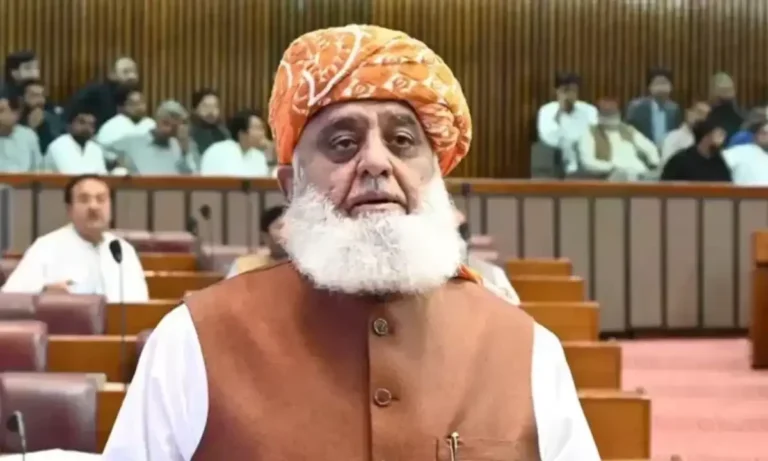
ISLAMABAD: JUI-F Chief Maulana Fazlur Rehman has announced that the party will hold protests all over the country on Wednesday and Friday against the “martyrdom” of prominent cleric Maulana Idrees.

The renowned cleric and former Jamiat Ulema-i-Islam-Fazl (JUI-F) MPA was killed on Tuesday after unidentified assailants opened fire on him, police said.

“Full and peaceful protests will be held tomorrow (Wednesday) and on Friday against the martyrdom of Sheikh Idrees”, said JUI-F spokesperson Aslam Ghouri in a statement.

He said the provincial and district organisations would arrange protest demonstrations at all four provincial headquarters and across districts.

Terming the death of Maulana Idrees an irreparable loss, Ghouri said they were exhausted by carrying the bodies of senior scholars.

“How long will the state continue to test us?” Ghouri asked, alleging that the federal and provincial governments have failed to maintain law and order.

He asked public to participate in the protests and register their protest against lawlessness.

“The government has failed. The public will have to step forward to protect themselves,” the JUI spokesperson concluded.

PM Shehbaz sends condolences to JUI chief

Prime Minister Shehbaz Sharif on Tuesday contacted the JUI chief and conveyed his condolences on the martyrdom of Maulana Idrees, the spokesperson said.

The prime minister prayed for the cleric and assured the early arrest of the killers, he said.

State-run APP reported earlier that the premier expressed deep grief over the cleric’s killing in a statement and extended his condolences to the bereaved family.

Praying for the elevation of the deceased’s rank and for patience for his family, the premier wished the injured policemen a speedy recovery.

Idrees hailed from Charsadda’s Tarangzai area. He was also the JUI-F district emir and was considered one of Maulana Fazlur Rehman’s trusted advisers.

According to Police Personal Relations Officer Safiullah, Idrees had left for Darul Uloom Noumania from his home in Tarangzai. He said that shortly before he arrived at his destination, armed assailants fired at the vehicle in the Tariqabad Utmanzai area.

The cleric’s body was subsequently shifted to the District Headquarters Hospital.

KP Inspector General Zulfiqar Hameed took notice of the incident, seeking a report from the Mardan regional police officer. He also expressed his condolences to the bereaved family and expressed his resolve to arrest those responsible soon.

Pakistan falls short of $8bn SEZ investment, 500,000-job targets: minister

ISLAMABAD: Pakistan’s quest to attract over $8 billion in foreign direct investment (FDI) in Special Economic Zones (SEZs), and to generate 500,000 jobs between 2018 and 2024, remained well below the target, according to the investment minister.

As of 2025, only four SEZs have advanced beyond the planning stage with partial implementation, Investment Minister Qaiser Ahmed Sheikh said on Tuesday.

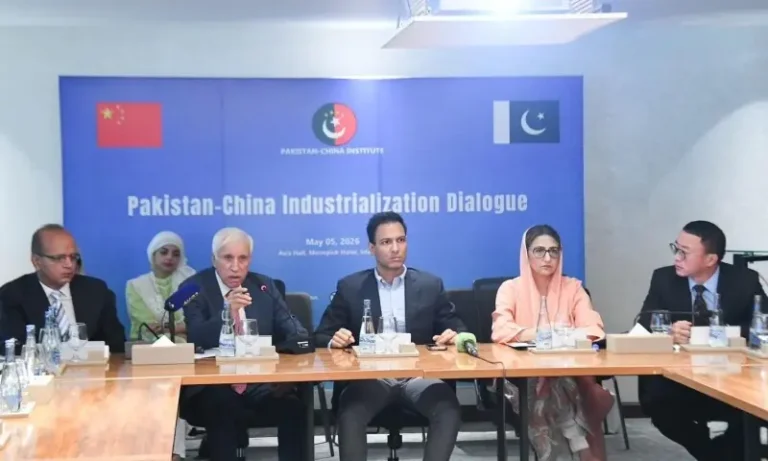
Speaking at the ‘Pakistan-China Industrialisation Dialogue’ in Islamabad, the minister explained that the four SEZs are located in Rashakai in Khyber Pakhtunkhwa, Allama Iqbal Industrial City in Punjab, Dhabeji in Sindh, and Bostan in Balochistan.”

“Under the China-Pakistan Economic Corridor (CPEC), nine SEZs were designated in the first phase, targeting sectors including food processing, ceramics, textiles, pharmaceuticals, and auto assembly, he added.

Sheikh emphasised that Pakistan is now entering a decisive phase of CPEC, shifting focus towards industrialisation, export-led growth, and enhanced business-to-business partnerships.

“Pakistan has immense potential, but we must transition from an import-driven economy to one that produces and exports value-added goods,” he remarked.

The minister added that the Joint Cooperation Committee (JCC), at its meeting in Beijing last September, had proposed government-to-government SEZs in Karachi and Islamabad, specifically targeting Chinese industrial relocation in electronics, textiles, pharmaceuticals and electric vehicles, addressing the industrial transfer gaps.

He stated that Pakistan has proposed government-to-government industrial parks targeting the relocation of Chinese manufacturing capacity in electronics, electric vehicles, pharmaceuticals, and textiles as China’s own industrial cost structure shifts upward.

The minister added that China has been Pakistan’s largest trading partner for twelve consecutive years.

However, China’s exports to Pakistan rose from $16.67bn in 2023 to $20bn in 2024, a 17.7 per cent year-on-year increase, while Pakistan’s exports to China remained about $3bn annually against China’s total annual imports of $2 trillion. The resulting bilateral trade deficit reflects a structural asymmetry, the investment minister elaborated.

Pakistan exports predominantly primary commodities like cotton, seafood and gum resins, while importing capital goods, machinery, organic chemicals, and electronics from China.

The first phase of the China-Pakistan Free Trade Agreement (CPFTA), which has been in force since 2007, increased bilateral trade by 242pc between 2007 and 2018, but Pakistan’s trade deficit with China simultaneously rose from 25pc to 35pc of bilateral trade, reaching $13bn.

The second phase of CPEC, focusing on the industrialisation agenda, aims to close this export gap through value-added manufacturing for re-export to the Chinese market, Sheikh said.

The investment minister also said that CPEC, originally valued at $46bn at inception in 2015, expanded to $62bn by 2020 and $65bn by 2022, making it China’s single largest overseas investment and Pakistan’s largest inbound investment since independence.

As per the latest factsheet, CPEC has cumulatively attracted $30bn in realised investment across energy, transport, and industrial sectors, and directly created over 261,000 jobs, he added.

CPEC has directly produced over 261,000 jobs since 2015, with the 1,320MW Port Qasim coal power project alone creating over 5,000 direct local jobs and the Sahiwal coal power plant generating over 3,770 direct positions.

Additionally, the CPEC Consortium of Universities now comprises 130 member institutions across both countries, supporting higher education linkages and joint research capacity. Beijing and Islamabad have also established vocational training infrastructure, directly targeting skills gaps in the industrial workforce.

Sheikh said the focus is on labour-intensive manufacturing in textiles, electronics assembly and light engineering, which are estimated to have the potential to generate 500,000 formal jobs within the CPEC framework by 2030.

He added that Pakistan’s internet penetration grew from 11pc in 2015 to 54pc by 2024, creating a foundation for digital-industrial integration.

“CPEC’s commerce value grew from $4.8bn in 2015 to $16bn in 2023, and with the second phase fully operationalised, projections suggest Pakistan’s industrial export capability could increase by 20pc, provided that SEZ governance, security infrastructure, and regulatory frameworks are brought to investment-grade standards,” he outlined.

Referring to the Mainline-1 (ML-1) project, Sheikh stated it would benefit the industrial sector by reducing freight transit time between Karachi port and inland manufacturing centres by an estimated 40pc, lowering logistics costs that currently consume a disproportionate share of Pakistani manufacturers’ operating expenses.

“The project has faced financing realignments, with Pakistan exploring ADB (Asian Development Bank) co-financing for some segments previously designated for Chinese concessional loans, reflecting the broader need to diversify CPEC’s financing architecture as the second phase advances,” he said.

Participating in the dialogue, Counsellor Yang Guangyuan from the Chinese embassy underscored the vast potential for bilateral cooperation across multiple sectors, including agriculture, information technology, pharmaceuticals, and manufacturing.

He also mentioned successful joint ventures such as tyre production and industrial services, and reaffirmed China’s commitment to supporting Pakistan’s industrialisation agenda under CPEC phase-II and highlighted how the country’s focus should be to attract more Chinese investors.

The dialogue highlighted that while China has remained Pakistan’s largest trading partner for over a decade, there is a pressing need to address the trade imbalance by increasing Pakistan’s exports through value-added manufacturing.

Participants agreed that CPEC Phase II provides a strategic opportunity to achieve this objective.

IHC denies ownership rights to One Constitution Avenue apartment buyers

ISLAMABAD: The Islamabad High Court (IHC) on Monday issued a detailed judgment in the One Constitution Avenue case, upholding the cancellation of the lease of the multi-billion-rupee project.

It ruled that buyers of luxury apartments in the development do not have ownership rights and may instead pursue legal remedies against the builder for recovery of their investment.

In a detailed judgment, IHC Chief Justice Sardar Muhammad Sarfraz Dogar dismissed a set of petitions filed by M/s BNP (Pvt) Limited — the developer of the project — along with investors and other stakeholders, challenging the Capital Development Authority’s (CDA) decision to terminate the lease.

The court held that the impugned action was in accordance with law and consistent with the framework laid down earlier by the Supreme Court (SC).

In the case, leading lawyers, including former SC judge Ijazul Ahsan, represented the BNP, while advocate Kashif Ali Malik represented the CDA.

The dispute concerns a 2005 lease agreement between the CDA and BNP for the development of a five-star hotel. The BNP converted it to a residential project — namely, One Constitution Avenue, a high-end residential and commercial project located in a prime area of the federal capital.

The lease was initially terminated in 2016 but later restored by the SC in January 2019, subject to stringent financial conditions. These included payments of Rs17.5 billion within eight years through structured instalments backed by bank guarantees, and a stipulation that termination could only take place in case of default after issuance of a 30-day notice.

The IHC observed that the SC’s judgment was binding and created a complete framework governing the rights and obligations of the parties. It held that strict compliance with those directions was mandatory and that any deviation would have legal consequences.

Examining the conduct of the petitioner, the court found that BNP failed to honour its financial commitments under the revised terms.

The judgment noted that the developer did not make timely payments of instalments and also failed to furnish bank guarantees in the form acceptable to the CDA. The court rejected BNP’s stance that the delays were caused by the CDA, observing that the petitioner could not justify prolonged non-compliance on that basis.

The IHC further observed that the petitioner had undertaken a substantial financial obligation under SC’s order and was expected to demonstrate both capacity and readiness to fulfil those obligations. Instead, the record showed a pattern of delays and failure to adhere to agreed timelines, which, according to the court, constituted a material default.

Addressing BNP’s contention that the CDA had frustrated performance by delaying the handing over of possession and approval of bank guarantees, the court held that even if certain administrative delays occurred, they did not absolve the petitioner of its primary responsibility to comply with the payment schedule.

It emphasised that the doctrine of reciprocal obligations could not be invoked to excuse non-performance where the defaulting party itself failed to take concrete steps to fulfil its commitments.

On the issue of due process, the IHC held that the CDA had complied with the requirement of issuing notices prior to termination. It observed that the developer was given sufficient opportunity to cure the default but failed to do so within the stipulated time. Therefore, the termination of the lease could not be termed arbitrary or unlawful.

The IHC also rejected the argument that the impugned action was mala fide, noting that the CDA exercised its statutory powers within the limits prescribed by law and SC’s judgment. It reiterated that administrative discretion, when exercised in accordance with binding judicial directions, could not be interfered with lightly.

In relation to the claims of apartment buyers and investors, the court held that their rights were contingent upon the validity of the lease held by the developer.

Since the lease itself stood lawfully terminated, no independent ownership rights could accrue in their favour. The court observed that such purchasers were essentially dealing with the developer at their own risk and could not claim protection against the CDA in the absence of a valid title.

Justice Dogar, however, noted that the affected buyers were not without remedy and could seek recovery of their amounts by initiating legal proceedings against M/s BNP.

The judgment further highlighted that although the case involved contractual elements, it also had significant public law implications, as it concerned the exercise of statutory authority by the CDA over public land. In such circumstances, the court held, the actions of the authority must be assessed on the touchstone of legality, fairness and compliance with judicial directives.

Concluding that the petitioner had failed to establish any illegality in the CDA’s decision, the IHC dismissed all petitions and upheld the termination of the lease.

Dar, Araghchi discuss regional situation, Pakistan’s diplomacy

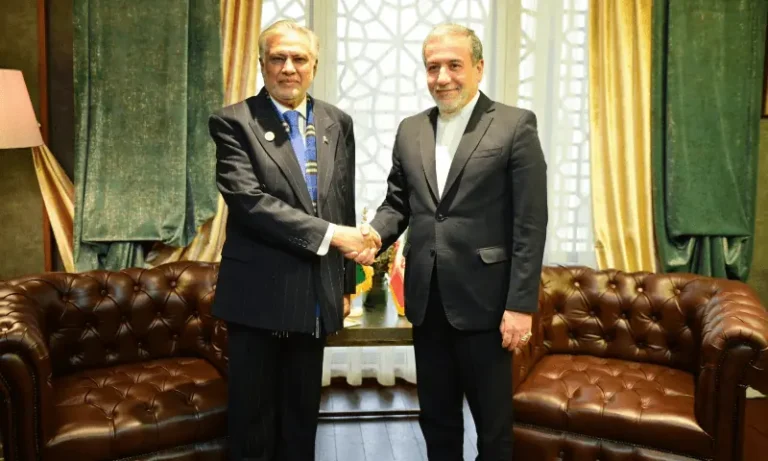
ISLAMABAD: Deputy Prime Minister and Foreign Minister Ishaq Dar spoke with Iranian Foreign Minister Abbas Araghchi, with the regional situation and Pakistan’s ongoing diplomatic efforts coming under discussion, the Foreign Office (FO) said on Monday.

“Discussion focused on the regional situation and Pakistan’s ongoing diplomatic efforts for peace and stability in the region,” the FO said, adding that the call took place late Sunday night.

It added that the Iranian foreign minister appreciated Pakistan for its “constructive role and sincere mediation efforts between the parties”.

The FO said that Dar reaffirmed Pakistan’s continued commitment to promoting constructive engagement and underscored that “dialogue and diplomacy remain the only viable path toward the peaceful resolution of issues and achieving lasting peace and stability in the region and beyond”.

The development comes after Tehran said on Sunday that the United States had responded to its new peace proposal. Iranian state media said Washington had conveyed its response to Iran’s 14-point proposal via Pakistan, and that Tehran was now reviewing it.

Subsequently, US President Donald Trump said that his representatives were having “very positive discussions” with Iran that could “lead to something very positive for all”.

Negotiations between the US and Iran had been deadlocked since a ceasefire, brokered by Pakistan, came into effect on April 8, with only one round of direct peace talks held in Islamabad so far.

US news website Axios reported, citing two sources briefed on the proposal, that it set “a one-month deadline for negotiations on a deal to reopen the Strait of Hormuz, end the US naval blockade and permanently end the war in Iran and in Lebanon”.

Separately, Al Jazeera reported, citing sources, that the proposal envisaged three main stages, aiming to “transform the ceasefire into an end to the war within 30 days”.

According to the report, the proposal “envisions a pledge of nonaggression, including from Israel, to ensure there’s no return to war and an end to fighting throughout the Middle East”.

It said the proposal suggested the gradual reopening of the Strait of Hormuz in the first phase, as well as lifting the US blockade of Iranian ports.

Under the proposed plan, Tehran would take charge of dealing with sea mines, the report said.

It added that the second phase was proposed to include “Iran’s return to uranium enrichment after the time limit at 3.6 per cent in accordance with the ‘zero-storage principle’“.

Moreover, the plan includes the US and Israel refraining from attacking Iran and its allies in exchange for Iran refraining from launching strikes, the report said, adding that Iran had also rejected “dismantling nuclear infrastructure or destroying Iran’s facilities”.

“Lifting sanctions includes the gradual release of frozen funds,” it said.

In the third phase, Tehran proposed to enter “into a strategic dialogue with Arab neighbours and building a security system that includes the entire Middle East”, the report stated.

Pakistan does not bow, Bilawal hails victory over India in Marka-i-Haq

KARACHI: PPP Chairman Bilawal Bhutto-Zardari on Monday hailed Pakistan’s “victory” against India during last year’s military conflict, affirming that the country was “not a nation that bows”.

He was addressing an event in Karachi organised by the Sindh government to commemorate Marka-i-Haq, where Chief Minister Murad Ali Shah also spoke.

The term “Marka-i-Haq” is used by the state to refer to the 2025 conflict with India, starting from the April 22 Pahalgam attack to the end of Operation Bunyanum Marsoos with a ceasefire on May 10.

“This victory was not the victory of weapons alone. It was a triumph of resolve. It was a triumph of unity and of people who refused to kneel,” said Bilawal, who is also the former foreign minister and had led a delegation abroad to convey Pakistan’s stance on the conflict.

“From the mountains of the north to the shores of the Arabian Sea, from the fields of Punjab to the deserts of Sindh and Balochistan, Pakistan stood as one,” he affirmed.

“We are not a nation that bows before pressure. We are not a nation that compromises its sovereignty. We are a nation that rises again and again, stronger, prouder and more united,” the PPP chairman declared.

Bilawal recalled, “Our armed forces fought with courage, discipline and honour. Our diplomats defended our position with clarity and conviction, and our brave and resilient people stood firm behind their nation.”

“Today, we do not merely mark the passage of time. We mark the endurance of a nation. We commemorate not just a victory, but the vindication of the very idea of Pakistan,” he said.

Bilawal recalled that a year ago, Pakistan “stood at the edge of uncertainty [as] drums of conflict echoed our borders”. “The air was thick with fear, speculation, and the designs of those who believed Pakistan could be bent, broken or bullied. They were wrong,” the PPP chairman added.

He emphasised that victory was “not measured by territory held or battles won”, but by “dignity preserved [and] sovereignty defended”. Victory, he added, was measured “by the message sent to the world that Pakistan will never be coerced, never be silenced, and will never surrender”.

The ex-FM also took aim at those “beyond our borders who seek to rewrite history”, asserting that history was “not written by noise”, but rather by nations that endured.

Bilawal clarified that Pakistan did not seek conflict or glorify war.

“But when the test came, we did not falter. We stood our ground not out of aggression, but out of necessity; not out of ambition, but out of duty. This moment demands not arrogance but reflection, not complacency but responsibility.”

The PPP chairman also spoke about the country’s path forward, noting that victory brought with it the “burden to build a stronger Pakistan”.

“The burden to ensure that the sacrifices made are honoured not only in words but in action. […] This means investing in our people, education, health, and opportunity. It means strengthening our economy so that no external pressure can dictate our destiny. It means pursuing peace not as a sign of weakness, but as a reflection of strength,” he added.

The former FM asserted that peace must be just, dignified and mutual. Addressing the youth, he said, “This victory belongs to you as much as it does to any institution or any individual. You are the custodians of this nation’s future.”

IHC denies Imran, Bushra pleas to suspend sentences in £190m graft case

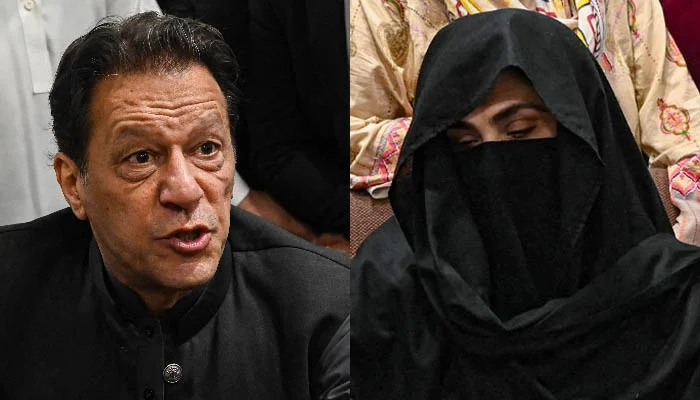
ISLAMABAD: The Islamabad High Court on Monday rejected the petitions of former prime minister Imran Khan and his spouse Bushra Bibi seeking the suspension of their sentences in the £190 million corruption case, observing that their main appeals were already fixed for hearing.

A two-member bench headed by Chief Justice Sardar Muhammad Sarfraz Dogar will take up the central appeals on May 7. In view of this, the court declared the suspension applications infructuous.

During the hearing on April 30, Justice Dogar had emphasised that the best course would be an early disposal of the main appeal.

Imran — imprisoned since Aug 5, 2023, for concealing details of Toshakhana gifts — is serving a 14-year sentence at Rawalpindi’s Adiala jail in the £190m case, also known as the Al-Qadir Trust case.

An accountability court in Islamabad had sentenced Imran and Bushra to 14 and seven years in prison, respectively, on Jan 17, 2025, in the case. Subsequently, both had challenged their convictions before the IHC.

The case alleges that the couple obtained billions of rupees and land worth hundreds of kanals from Bahria Town Ltd to legalise Rs50 billion identified and returned to the country by the United Kingdom during the PTI government.

Bushra Bibi’s daughter seeks access to her mother

Separately, Justice Arbab Muhammad Tahir also heard a petition filed by Bushra’s daughter seeking access to a personal physician and permission for a family meeting.

During the hearing, counsel Salman Akram Raja informed the court that an application had already been submitted to the authorities of Adiala Jail both through courier and in person. He further stated that Bushra Bibi underwent surgery on the night between April 16 and 17.

The court directed the jail superintendent to decide the application within two days and pass a reasoned order. The superintendent was also summoned in personal capacity on May 6.

Justice Tahir observed that the court was forwarding the request to jail authorities for an appropriate decision, noting that such matters were also being discussed publicly.

It should be mentioned that on April 19, Bushra had also approached the IHC seeking suspension of her sentence in the £190 million corruption case on medical grounds.

In a related proceeding, the IHC sought a response from jail authorities in a contempt matter regarding the failure to arrange a meeting between Imran and his lawyer. The court was informed that jail officials had not yet signed the counsel’s power of attorney.

The order pertains to a March, 2025 judgment, which restored the incarcerated former premier’s visitation rights to twice a week.

Separately, the court also issued notice to PTI Chairman Barrister Gohar Ali Khan in a petition seeking closure of Imran’s account on X, formerly Twitter.

The petition, filed in September 2025, alleged that inflammatory posts were made from the official X account of the PTI founder.

Further hearing of these matters was adjourned till next week.

FinMin urges banks to boost cyber defence

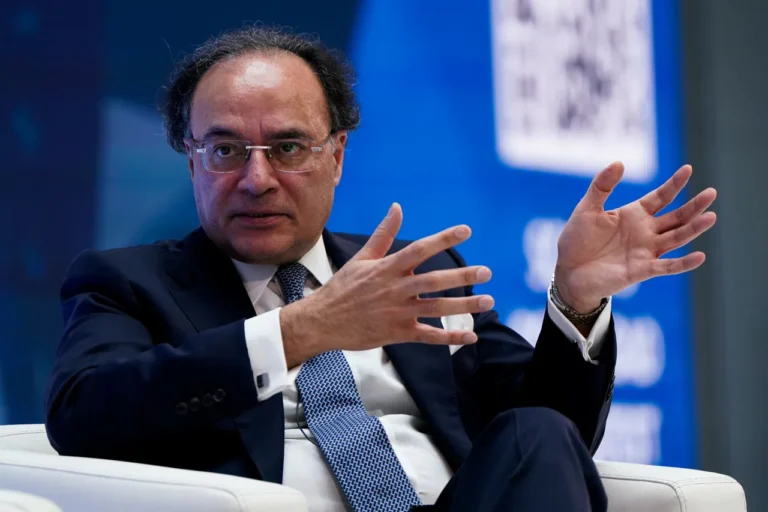
ISLAMABAD: Federal Minister for Finance and Revenue has chaired a virtual meeting with presidents and chief executive officers of commercial banks, along with their chief information security officers (CISOs), to enhance cybersecurity preparedness across Pakistan’s financial sector in light of emerging technological risks and evolving threat dynamics.

The finance minister appreciated the active engagement of financial institutions, regulators and technical experts, and underscored the importance of coordinated efforts to safeguard critical financial infrastructure. He emphasised that as Pakistan’s financial ecosystem continues to digitise, strengthening cyber resilience must remain a central policy priority.

A detailed presentation outlined the evolving cyber threat landscape, including the growing sophistication of AI-enabled cyber tools capable of identifying vulnerabilities, developing exploits and executing multistage attacks at unprecedented speed. The presentation highlighted potential exposure across digital banking channels, payment systems and core financial infrastructure, while emphasising the need for enhanced vigilance and preparedness.

The discussion also drew on international experiences, noting recent cyber risk trends in countries such as Japan and India, where financial ecosystems have faced increasing exposure to attacks targeting digital payment platforms and interconnected systems. Participants observed that these developments offer valuable lessons for strengthening Pakistan’s defensive capabilities and institutional readiness.

Participants were also briefed on evolving international policy responses to emerging AI-driven cyber risks. It was noted that finance ministries and central banks globally are increasingly treating such developments as high-priority systemic concerns, engaging through coordinated high-level platforms, including the IMF-World Bank Spring Meetings and bilateral consultations with major financial institutions. The discussion highlighted that Pakistan’s ongoing engagement on these issues aligns with global efforts to strengthen next-generation financial infrastructure, enhance cyber resilience and promote responsible innovation.

Participants deliberated on enhancing coordination between regulators, financial institutions and other stakeholders, while strengthening governance frameworks and aligning cybersecurity policies with evolving global standards. Emphasis was placed on improving threat intelligence sharing, addressing legacy system vulnerabilities and leveraging emerging technologies to strengthen detection and response mechanisms.

“The finance minister urged the State Bank of Pakistan and the Pakistan Banks” Association to undertake a comprehensive review of existing frameworks, identify key gaps, and assess all relevant aspects of cyber risk management and institutional preparedness. He further emphasised the need for close coordination among regulatory authorities, financial institutions and technical teams to develop well considered, actionable recommendations to strengthen the cybersecurity posture of the banking sector.

Separately, the finance minister chaired a virtual meeting of a focus group established for the promotion of Real Estate Investment Trusts (REITs) and the development of the capital market. The meeting was attended by prominent business figures, including Arif Habib, Nadeem Riaz and Ali Jameel, along with key officials from both the public and private sectors.

The finance minister said that REITs provide a transparent and structured mechanism to shift real estate investment towards productive sectors of the economy, which not only promotes documentation but also strengthens the formal inclusion of construction and development sectors. Detailed discussions were held on improving the tax system related to REITs, simplifying procedures and increasing participation of investors, especially small investors.