Home Blog Page 15

Pakistan, Bangladesh move to strengthen trade, business and cultural ties

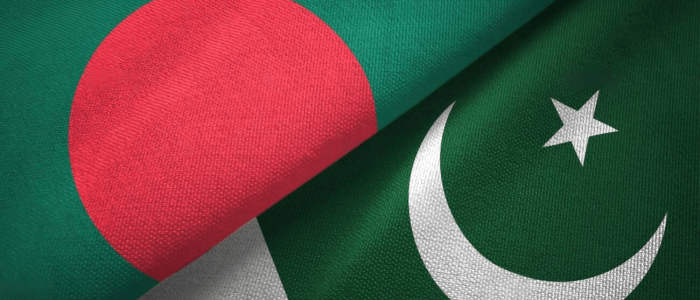
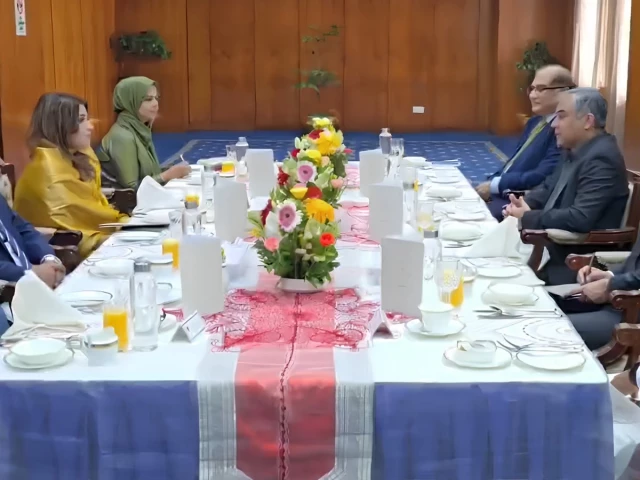
DHAKA: Interior Minister Mohsin Naqvi met with Bangladesh’s Minister of State for Foreign Affairs Shama Obaed Islam on Sunday, the Ministry of Interior (MoI) posted on X.

According to the ministry, both undertook a “detailed exchange of views on bilateral relations, the regional situation, and Pakistan’s reconciliatory role.” Minister Islam appreciated Pakistan’s role in the United States-Iran conflict.

Both sides agreed to enhance cooperation in the fields of trade, business, and culture. It was also agreed to increase mutual exchanges of delegations for the promotion of trade and cultural relations.

“There are vast opportunities for investment in Pakistan,” Naqvi said in the meeting.

Further, discussions were also held regarding the visit of the Bangladeshi minister to Pakistan.

Bangladesh Foreign Ministry Secretary Muhammad Nazrul Islam, Director General South Asia Ishrat Jahan, Director Shamima Yasmin, and Pakistani High Commissioner Imran Haider were also present on the occasion, the MoI stated.

The meeting comes as part of Naqvi’s two-day visit to Bangladesh and a day after he met his Bangladeshi counterpart, Salahuddin Ahmed. The two signed a memorandum of understanding (MoU) to enhance bilateral cooperation in combating drug smuggling, narcotics trafficking, and drug abuse. Both sides also agreed to boost security ties.

The formulation of a joint strategy to disrupt the illegal sale and supply lines of narcotics was also agreed to, along with the exchange of timely information by relevant agencies of both countries regarding drug smugglers and networks.

Further, an agreement was reached on the shared training of personnel, use of modern technology, and the establishment of a secretary-level joint working group between the two interior ministries to take cooperation forward.

The development has come against the backdrop of a broader recalibration in Pakistan-Bangladesh relations following the ouster of former prime minister Sheikh Hasina in August 2024. Since then, ties between Islamabad and Dhaka have shown signs of gradual transformation after decades of limited engagement, particularly in the domain of defence and security.

While Bangladesh’s relations with India, traditionally its closest regional partner, have remained strained amid political and strategic differences, Dhaka has quietly explored new avenues of cooperation with Pakistan.

In January, Pakistan and Bangladesh took a step towards deepening defence cooperation as a high-level Bangladesh Air Force (BAF) delegation, led by Air Chief Marshal Hasan Mahmood Khan, held talks with Chief of Air Staff Air Chief Marshal Zaheer Ahmed Baber Sidhu at the Air Headquarters with discussions also covering the potential procurement of JF-17 Thunder fighter aircraft.
Nation stands with forces on first Marka-e-Haq anniversary

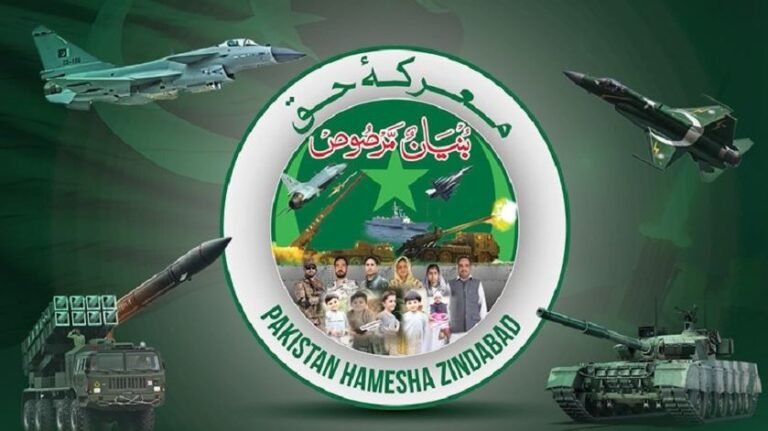
RAWALPINDI: Prime Minister Shehbaz Sharif said Pakistan can neither be “intimidated nor subdued by any aggressor” as the nation prepares to mark the first anniversary of Marka-e-Haq today with a high-profile ceremony at the General Headquarters (GHQ).

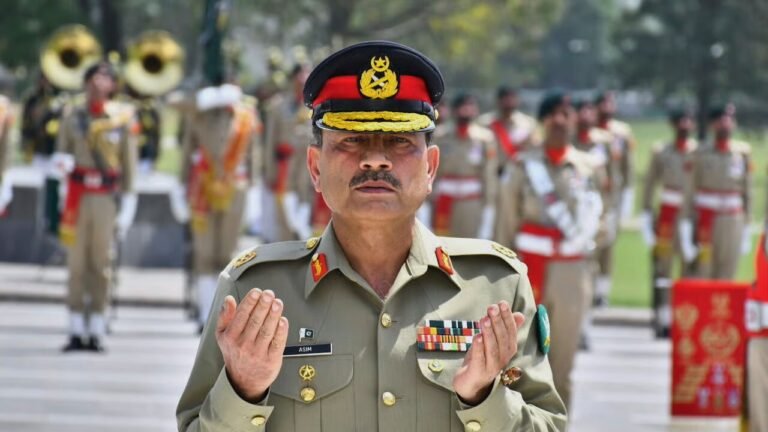
The prestigious ceremony commemorating Pakistan’s historic success in Marka-e-Haq will be held on Sunday at GHQ, with Chief of Army Staff (COAS) and Chief of Defence Staff (CDF) Field Marshal Syed Asim Munir attending as the chief guest.

Chief of the Air Staff Air Chief Marshal Zaheer Ahmed Babar Sidhu and Chief of the Naval Staff Admiral Naveed Ashraf will also participate in the event.

The ceremony will begin with the laying of a floral wreath at Yadgar-e-Shuhada, where smartly turned-out contingents of the three armed forces will present a salute.

Field Marshal Syed Asim Munir will address the gathering and deliver an important speech highlighting the significance of Marka-e-Haq and the sacrifices rendered for the defence of the country.

In a statement released by the Inter-Services Public Relations (ISPR), the military said that the brief conflict demonstrated Pakistan’s measured and resolute response and “exposed adversarial conspiracies, false flag narratives and disinformation campaigns, diminishing their credibility internationally”.

The ISPR said that Marka-e-Haq is a “defining landmark” in the nation’s journey.

“Marka-i-Haq has become a defining landmark in the nation’s journey, reflecting national resolve, military excellence, and strategic maturity.”

“Despite facing conventional and hybrid challenges, including proxy terrorism, the Armed Forces demonstrated superior operational competence across land, air, sea, cyber, and information domains,” the statement added.

According to ISPR, Chief of Defence Forces and Chief of Army Staff Field Marshal Asim Munir, Chief of Air Staff Air Chief Marshal Zaheer Ahmed Baber Sidhu and Chief of Naval Staff Admiral Naveed Ashraf also congratulated the nation and all ranks of the armed forces on the day.

The statement added that the anniversary is being observed with “deep reverence, gratitude, and national fervour”, adding that the day stands as a testament to the “enduring spirit of courage, professionalism, and unity”.

In the aftermath of Marka-e-Haq, Pakistan bolstered its defence capabilities and reinforced full-spectrum deterrence despite a disparity in resources, ISPR stated, adding that the occasion is a testament to the military’s “preparedness, dedication, and professionalism, which decisively strengthened public confidence in their armed forces”.

“The anniversary also reaffirms Pakistan’s steadfast commitment to safeguarding its sovereignty while promoting peace and stability in the region,” the statement read.

“Pakistan believes that sustainable peace in South Asia can only be achieved through meaningful dialogue, mutual respect, and adherence to international law and principles of justice.”

‘Peace-loving yet courageous’

President Asif Ali Zardari also paid tribute to the nation and the armed forces on the first anniversary of Marka-e-Haq.

According to a statement issued by the President’s Office, the president said CDF Munir’s leadership, strategy and “courageous decisions” were key to the success of Marka-e-Haq.

He also lauded the air chief and the Pakistan Air Force for their “exceptional skill and professionalism”.

President Zardari praised the naval chief and naval forces, describing their full operational readiness and defence capabilities as a source of national pride.

“Pakistan is a responsible and peace-loving state. By giving a strong but measured response to enemy aggression, we have conveyed our defensive capability to the world,” the president said.

He added that the issue of Jammu and Kashmir must be resolved in accordance with United Nations resolutions.

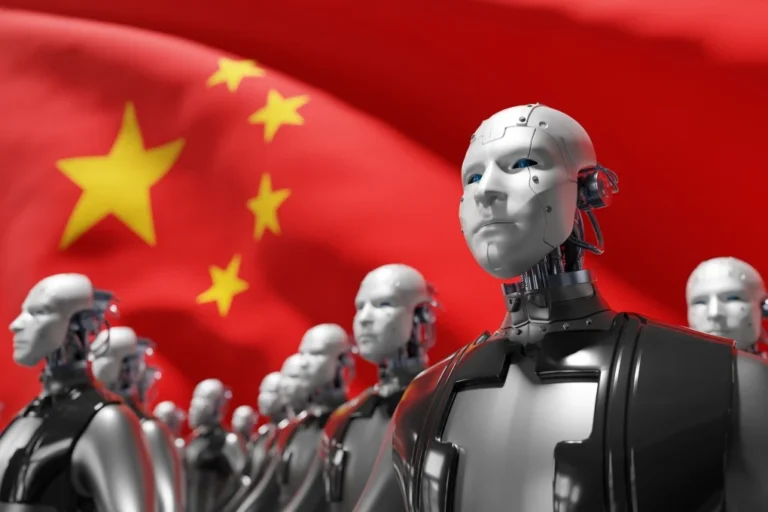
China issues guidelines to regulate, advance AI agents

0

BEIJING: Chinese authorities have issued implementation guidelines to promote the standardized application and innovative development of artificial intelligence (AI) agents, amid the country’s accelerated push to advance the “AI plus” action.

The guidelines, jointly issued by the Cyberspace Administration of China, the National Development and Reform Commission (NDRC) and the Ministry of Industry and Information Technology (MIIT), aim to incorporate the State Council’s guidelines on implementing the “AI plus” action and foster the orderly growth of intelligent agents as key forms of AI products and services, according to an official statement.

The document defines AI agents as intelligent systems capable of autonomous perception, memory, decision-making, interaction, and execution that are rapidly integrating with cyberspace and the physical world as advanced technologies such as large language models emerge.

The guidelines outline fundamental principles for the development of AI agents, stressing safety and controllability, orderliness and standardization, innovation-driven growth and application-oriented traction.

Four major areas of measures are identified in the guidelines. First, efforts should be made to consolidate development foundations, improve technological infrastructure and establish standards and protocols.

Second, the document calls for ensuring safety and security.

Third, the guidelines call for application-driven traction, identifying 19 typical application scenarios spanning scientific research, industrial development, consumption boost, public well-being and social governance.

Fourth, the guidelines promote the development of an innovation ecosystem, industrial cooperation, and increased application promotion.

China, France share key role in global peace and stability: Wang Yi

0

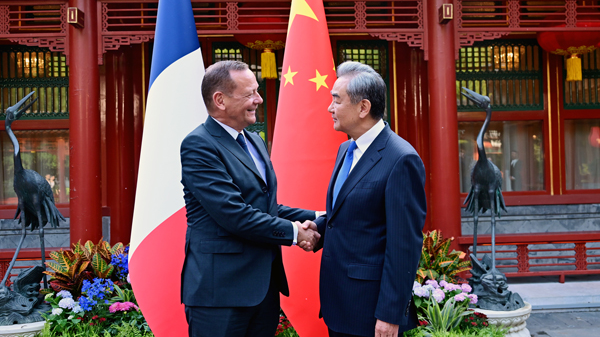
BEIJING: China and France, as permanent members of the UN Security Council and major independent countries, shoulder important responsibilities for upholding international peace, stability and development, China’s top diplomat Wang Yi said on Friday.

Wang, a member of the Political Bureau of the Communist Party of China Central Committee and director of the Office of the Central Commission for Foreign Affairs, made the remarks when holding talks with Emmanuel Bonne, diplomatic adviser to the French president, in Beijing.

Noting that the strategic guidance of the two heads of state reflects the high level and special nature of bilateral relations, Wang said China stands ready to work with France to achieve greater progress in China-France cooperation and deliver more benefits to the two peoples.

China values the recent passage by the French Parliament of a bill to ease the return of colonial-era looted artifacts, and is ready to strengthen cooperation with France in this regard to enhance people-to-people and cultural exchanges, and mutual learning between civilizations, Wang said.

Against the backdrop of growing turmoil in today’s world, it is necessary for both countries to strengthen strategic communication and coordination, jointly address global challenges, and advance the China-France comprehensive strategic partnership to achieve sound and steady development free from various types of interference, Wang said.

He stressed that the foundation of China-France relations lies in solid political mutual trust, and the key is mutual respect for each other’s core interests. He expressed the hope that France will abide by the one-China principle in practice, refrain from any form of official interaction with Taiwan authorities, and not send any wrong signals to the “Taiwan independence” separatist forces.

Indicating that China and Europe are always partners, not rivals, Wang said it is hoped that France will play a positive and constructive role in encouraging the EU to adopt a correct and rational perception of China and pursue a practical and open economic and trade policy toward China.

Bonne said France highly values the long-standing friendship and mutual trust between the two heads of state, adding that France fully understands the importance and sensitivity of the Taiwan question, adheres to the one-China policy, and will not change its position on this issue.

France looks forward to working closely with China to find constructive solutions to global crises, he said, adding that given the current international situation, it is crucial to maintain dialogue and cooperation between Europe and China.

Noting that the EU needs China and hopes to be mutually reliable partners with China, Bonne added that France is ready to play an active role in promoting EU-China dialogue and cooperation.

The two sides also had in-depth exchanges of views on issues of common concern, including global economic governance and the situation in the Middle East.

PLA Navy commissions ‘five carrier essentials’ in major modernisation boost: MND spokesperson

0

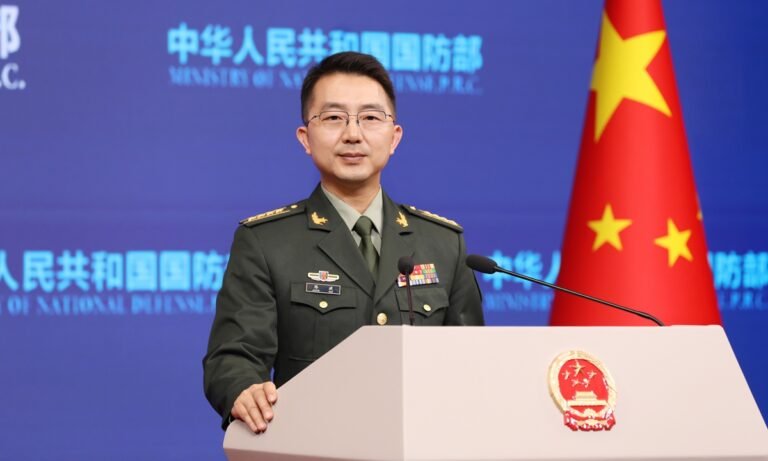
BEIJING: When asked to comment on the Chinese People’s Liberation Army (PLA) Navy’s successful commissioning of all “five essentials for aircraft carriers,” including stealth carrier-based fighters, multirole catapult-assisted carrier-based fighters, fixed-wing carrier-based early warning aircraft, fixed-wing electronic warfare aircraft, and anti-submarine helicopters, Senior Colonel Jiang Bin, a spokesperson for the Ministry of National Defense, stated on Saturday that this is a vital link in forming the systematic combat capability of aircraft carrier formations and a significant achievement in the PLA Navy’s accelerated transformation and development.
Jiang said building a strong PLA Navy embodies the century-old aspiration of the Chinese nation to grow into a maritime power and serves as an important guarantee for the great rejuvenation of the Chinese nation.

Entering the new era, the modernization of the PLA Navy has become increasingly solid and powerful. From the air to the sea, from coastal waters to the open ocean, the types and functions of various weapon platforms have been continuously improved, achieving leapfrog development and innovative breakthroughs, providing stronger guarantees for safeguarding national sovereignty, security and development interests, the spokesperson said. 

The Chinese PLA Navy has always adhered to the vision of a maritime community with a shared future, Jiang said. Whether it is escort missions in the Gulf of Aden, international humanitarian relief operations, or the “Mission Harmony” carried out by PLA Navy hospital ships, practice has shown that a strong Chinese navy has always been an anchor of peace and a bridge of cooperation for the world, the spokesperson noted.

“We stand ready to work with navies of all countries in the same spirit of mutual support and sincere cooperation to make new and greater contributions to maritime security and world peace,” Jiang said.

Pakistan, Bangladesh sign anti-drug MoU, strengthen security ties

ISLAMABAD: Pakistan and Bangladesh on Saturday signed a memorandum of understanding (MoU) to enhance cooperation in combating drug smuggling, narcotics trafficking and drug abuse, with both sides agreeing to boost security ties.

According to a statement issued by the Ministry of Interior, Interior Minister Mohsin Naqvi met his Bangladeshi counterpart, Salahuddin Ahmed, in Dhaka, where the two sides signed the agreement aimed at strengthening cooperation between the two countries.

Naqvi signed on behalf of the Government of Pakistan, while Ahmed signed on behalf of the Bangladeshi government.

“Under the MoU, both countries will fully cooperate to prevent the illegal transportation and smuggling of narcotics. Joint efforts will be made to eliminate the growing trend of drug use in society and counter its negative impacts, while a joint strategy will be formulated to disrupt the illegal sale and supply lines of narcotics,” it said.

The statement further added that the relevant agencies of both countries would also exchange timely information regarding drug smugglers and networks, and would share training of personnel, use of modern technology, and best practices for narcotics prevention.

“The two interior ministers also agreed to establish a secretary-level joint working group between the two interior ministries to take cooperation forward,” said the statement.

Further, both sides agreed to enhance cooperation in Pakistan-Bangladesh bilateral relations, internal security, and training of civil armed forces.

“Discussions were also held on increasing cooperation in counterterrorism and the prevention of human smuggling, with the interior ministers agreeing on joint measures to address the matter,” it added.

According to MOI, detailed discussions were also held on enhancing mutual cooperation regarding cybercrimes, organised crimes, and financial fraud, as well as cooperation in training programmes for officers at police academies.

Naqvi also offered full cooperation to his Bangladeshi counterpart in the Safe City project. “We will support the Government of Bangladesh in every aspect regarding the Safe City project,” he said.

Naqvi also extended an invitation for Ahmed to visit Pakistan. Bangladesh Foreign Secretary Asad Alam Saem, Cabinet Secretary Naseem Ghani, Interior Secretary Manzoor Choudhury, and Pakistan’s High Commissioner to Bangladesh Imran Haider were also present on the occasion.

The development came against the backdrop of a broader recalibration in Pakistan-Bangladesh relations following the ouster of former prime minister Sheikh Hasina in August 2024. Since then, ties between Islamabad and Dhaka have shown signs of gradual transformation after decades of limited engagement, particularly in the defence and security domain.

While Bangladesh’s relations with India, traditionally its closest regional partner, have remained strained amid political and strategic differences, Dhaka has quietly explored new avenues of cooperation with Pakistan.

Recent months have seen an uptick in diplomatic contacts and defence-related engagements, signalling a more pragmatic approach on both sides.

In January, Pakistan and Bangladesh took another step towards deepening defence cooperation as a high-level Bangladesh Air Force (BAF) delegation, led by Air Chief Marshal Hasan Mahmood Khan, held talks with Chief of Air Staff Air Chief Marshal Zaheer Ahmed Baber Sidhu at the Air Headquarters with discussions also covering the potential procurement of JF-17 Thunder fighter aircraft.
Earlier, in February, Foreign Minister and Deputy Prime Minister Ishaq Dar and Bangladesh’s Foreign Minister Dr Khalilur Rehman discussed strengthening bilateral ties and expanding cooperation across various sectors.

In August of 2025, the two countries signed several agreements to enhance cooperation in trade, diplomacy, media, education and cultural exchanges, marking a significant step in efforts to reset relations after years of strained ties.

CDF Munir to head Marka-e-Haq anniversary ceremony at GHQ tomorrow

RAWALPINDI: Chief of Defence Forces (CDF) and Chief of the Army Staff Field Marshal Syed Asim Munir will lead a ceremony at the General Headquarters (GHQ) in Rawalpindi on Sunday morning to mark the completion of one year since last year’s victory against India in May 2025.

The term “Marka-e-Haq” refers to the 2025 conflict with India, which began with the April 22 Pahalgam attack and concluded with a ceasefire on May 10 following Operation Bunyanum Marsoos.

State-run Radio Pakistan reported that CDF Munir will be the chief guest at the ceremony, which will also be attended by Chief of Air Staff Air Chief Marshal Zaheer Ahmed Baber Sidhu and Chief of Naval Staff Admiral Naveed Ashraf.

A wreath will be laid at the martyrs’ monument, followed by a salute presented by contingents of the three armed forces. CDF Munir will also deliver an address on the occasion.

Meanwhile, President Asif Ali Zardari paid tribute to the nation and the armed forces on the first anniversary of Marka-e-Haq.

According to a statement issued by the President’s Office, the president said CDF Munir’s leadership, strategy and “courageous decisions” were key to the success of Marka-e-Haq.

He also lauded the air chief and the Pakistan Air Force for their “exceptional skill and professionalism”.

President Zardari praised the naval chief and forces, describing their full operational readiness and defence capabilities as a source of national pride.

“Pakistan is a responsible and peace-loving state. By giving a strong but measured response to enemy aggression, we have conveyed our defensive capability to the world,” the president said.

He said the issue of Jammu and Kashmir must be resolved in accordance with United Nations resolutions.

“Pakistan will continue its moral, political and diplomatic support for the Kashmiri people,” he said.

Terming India’s attempt to suspend the Indus Waters Treaty as “water aggression”, he said water was a matter of life for millions of Pakistanis.

Turning to cross-border terrorism from Afghanistan, he said Kabul must ensure its territory was not used for terrorism against Pakistan or other countries in the region.

He said terrorism backed by external support must be eliminated for lasting peace in the region.

The president said Pakistan was emerging as a symbol of balance and stability in the region due to the efforts of Prime Minister Shehbaz Sharif and CDF Munir.

He added that Pakistan’s diplomatic efforts for a peaceful resolution of the Iran–US conflict had been widely appreciated at the global level.

“Pakistan’s nation and armed forces are fully prepared to face every challenge and defend the homeland,” President Zardari said.

One-China principle, 3 joint communiques vital for stable US ties: Chinese FM

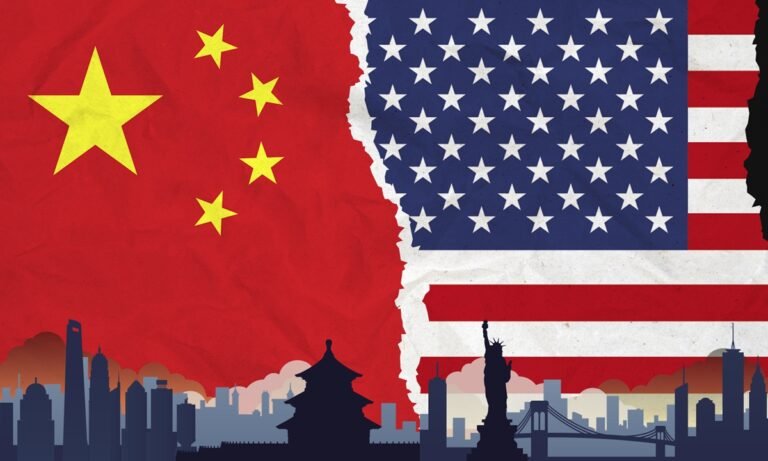
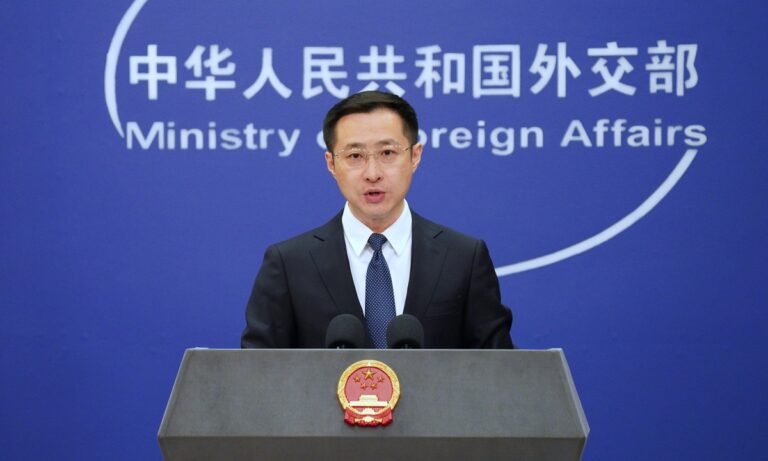
BEIJING: Adhering to the one-China principle and the three China-US joint communiques, as well as honoring the commitments made by previous US administrations on the Taiwan question, are international obligations that the United States must fulfill, Chinese Foreign Ministry spokesperson Lin Jian said on Thursday.

“It is also a necessary prerequisite for the stable, sound and sustainable development of China-US relations,” Lin said at a regular news briefing when answering a related question.

Lin said that the Taiwan question is the core of China’s core interests and the foundation of the political bedrock of China-US relations.

“China’s determination to safeguard national unity and territorial integrity remains unshakable. ‘Taiwan independence’ separatist activities and peace in the Taiwan Strait are utterly incompatible. It is essential to take a clear and firm stance against ‘Taiwan independence’ to ensure peace and stability in the Taiwan Strait,” he said.

China to complete spacesuit upgrade with Tianzhou-10 mission

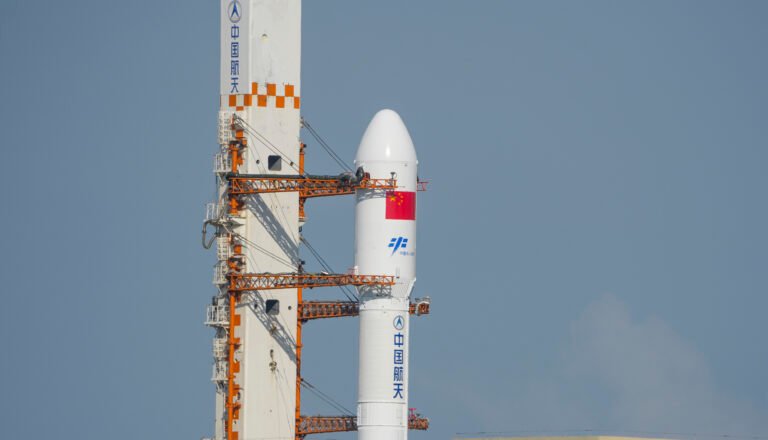
BEIJING: China’s upcoming Tianzhou-10 cargo mission will complete a full upgrade of the space station’s spacesuits, with a third new-generation suit set to be delivered, China Media Group announced.

The Tianzhou-10 cargo spacecraft, atop a Long March-7 Y11 rocket, underwent vertical transportation on Friday to the launch site in south China’s Hainan Province.

The spacecraft will carry nearly 6.3 tonnes of supplies to China’s space station. The shipment includes more than 220 items across astronaut support, space station operations, cargo spacecraft systems and space application projects, as well as about 700 kilograms of propellant.

Among the cargo is a third upgraded extravehicular suit, identical to the two delivered by Tianzhou-9. Its arrival will mark the completion of a full replacement of the station’s spacesuit system.

The mission will also deliver a new space treadmill and six scientific experiment payloads weighing about 280 kilograms in total. The experiments will support research in areas such as fluid physics under microgravity and advanced space technologies. It marks the largest number of uplink payload projects carried by a Tianzhou mission since China entered the space station construction phase.

Most of the cargo has already been loaded, while temperature-sensitive items, including fresh fruit and vegetables, refrigerated consumables, and biological or cell-based experiment samples, will be installed closer to launch. Researchers have carried out full-process rehearsals for sample preparation, loading and integration to ensure smooth final operations.

After the rocket-spacecraft combination reaches the launch pad, it will enter final launch-site testing, which usually takes about three days and includes tower coordination, tank replacement procedures and airtightness checks.

Tianzhou-9 undocked from the Tiangong space station on Wednesday and re-entered the atmosphere in a controlled manner on Thursday, with surviving debris falling into designated waters in the South Pacific, according to the China Manned Space Agency.

Its departure has cleared a docking port for Tianzhou-10. The Shenzhou-21 crew has conducted manual rendezvous and docking training in orbit to prepare for the cargo spacecraft’s arrival.

China stays engaged with Israel, other parties on Middle East situation: Chinese FM

BEIJING: The current situation in the Middle East is at a critical stage of transition between war and peace. China maintains communication and exchanges at various levels with relevant parties, including Israel, covering high-level interactions as mentioned, Chinese Foreign Ministry spokesperson Lin Jian said on Friday.

Lin made the remarks at a regular press conference on Friday, when asked by a reporter from foreign media to comment that since the outbreak of the US-Israel military operation against Iran, China has maintained close communication with Iran, the US, and other relevant countries, and that since Iranian Foreign Minister Seyed Abbas Araghchi paid a visit to China recently, whether China has had high-level communication and exchanges with Israel.

China supports all parties in resolving differences and disputes through political and diplomatic means, achieving a comprehensive and lasting ceasefire, and safeguarding peace and stability in the Middle East and the Gulf region, Lin told the press conference.

China is willing to act in accordance with the spirit of the four-point proposal on promoting peace and stability in the Middle East put forward by the Chinese leader, and work together with the international community to continue playing an active and constructive role in this regard, Lin said.