Home Blog Page 7

Leghari dismisses reports of subsidy withdrawal for protected consumers

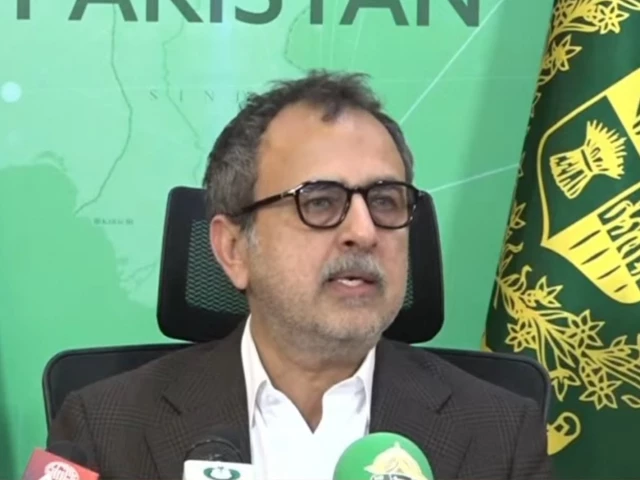
ISLAMABAD: Power Minister Awais Ahmed Khan Leghari on Sunday rejected reports suggesting that electricity subsidies for protected consumers were being withdrawn, describing such claims as inaccurate and misleading.

Leghari’s remarks come against the backdrop of reports last month that Pakistan had committed to the International Monetary Fund (IMF) to gradually end untargeted electricity subsidies for residential consumers and provide future support through the Benazir Income Support Programme (BISP) as part of conditions attached to a $1.2 billion climate support loan.

Addressing a press conference about the government’s power sector reforms, Leghari said the number of protected consumers had increased from 9.5 million to 21.5 million over the past four years.

“The government is not withdrawing electricity subsidies for protected consumers,” he said, adding that around 29.57 million domestic consumers — representing 86 per cent of the total — were currently receiving subsidised electricity.

The minister said the volume of electricity subsidies had increased from Rs199 billion to Rs423b, while total subsidies worth Rs527b were being provided to the agricultural and domestic sectors.

“Eligible consumers will continue to receive uninterrupted subsidies through the QR code-based system,” he said.

Leghari said the government had introduced a registration mechanism to ensure that subsidies were directed only to deserving consumers, adding that more than two million single-phase consumers had already completed the registration process.

He maintained that reports regarding the discontinuation of subsidies were contrary to facts, while government claims about reductions in electricity prices were accurate.

Read More: Pakistan assures IMF to withdraw untargeted power subsidies in January

Highlighting developments in the power sector, the minister said the review of agreements with Independent Power Producers (IPPs) had generated savings of Rs3.5 trillion.

He said reductions in losses incurred by power distribution companies (DISCOs) had resulted in savings of Rs193b, while circular debt had declined by Rs780b during fiscal year 2024-25.

According to Leghari, the sale of surplus machinery of JNCs had generated savings of Rs47b. He said ongoing reforms had significantly reduced electricity generation and distribution costs, with positive results becoming increasingly visible across the energy sector.

The minister said the reforms had provided direct relief to consumers, while lower subsidy allocations in the budget had eased pressure on the national exchequer. He added that the burden of cross-subsidies on industrial consumers had also been reduced.

Providing details of tariff reductions, Leghari said electricity prices had declined across all consumer categories between March 2024 and May 2026.

“Tariffs for protected consumers have fallen by 31pc, while domestic consumers have benefited from a 16pc reduction,” he said.

He added that industrial electricity rates had declined by 33pc, commercial tariffs by 8pc, and agricultural tariffs by 14pc. Consumers in Azad Jammu and Kashmir had seen electricity rates decline by 45pc, while tariffs for bulk consumers had been reduced by 13pc.

According to the minister, the average electricity tariff nationwide had fallen by 20pc, which he attributed to reforms and greater reliance on domestic energy resources.

Discussing the country’s energy transition, Leghari said the share of clean energy in Pakistan’s power mix was expected to rise from the current 55pc to 90pc by 2035.

During the same period, electricity generation from local resources was projected to increase from 74pc to 96pc, while renewable energy currently accounted for 57pc of the country’s energy mix, he said.

Comparing regional trends, the minister said India’s renewable energy share stood at around 48pc. He stressed that the government was not discouraging solar energy adoption but was introducing measures aimed at improving transparency and efficiency.

“The government is not discouraging solar energy adoption,” he said.

Leghari said the National Energy Plan included 8 gigawatts of distributed solar energy and that the recently introduced net billing policy would not affect 90 per cent of domestic consumers.

“No major changes have been made for single-phase residential solar users,” he said.

The minister also highlighted solarisation projects in Gilgit-Baltistan and Gwadar and announced that licensing requirements for solar projects of 25 kilowatts or below had been abolished to encourage wider adoption of renewable energy.

According to Leghari, the National Electric Power Regulatory Authority (NEPRA) had approved additional facilities for small-scale solar projects at the request of the Power Division, while transparency had been enhanced through the digitisation of the net billing system.

He also clarified that net metering had not been abolished.

“Reforms have been introduced to improve billing procedures and create a balanced framework that protects the interests of both solar consumers and other electricity users,” he said.

Reaffirming the government’s position, the minister said subsidies for protected consumers would continue and were not being eliminated.
Hegseth hails Pakistan’s role in US-Iran talks, says true friendship with US is growing

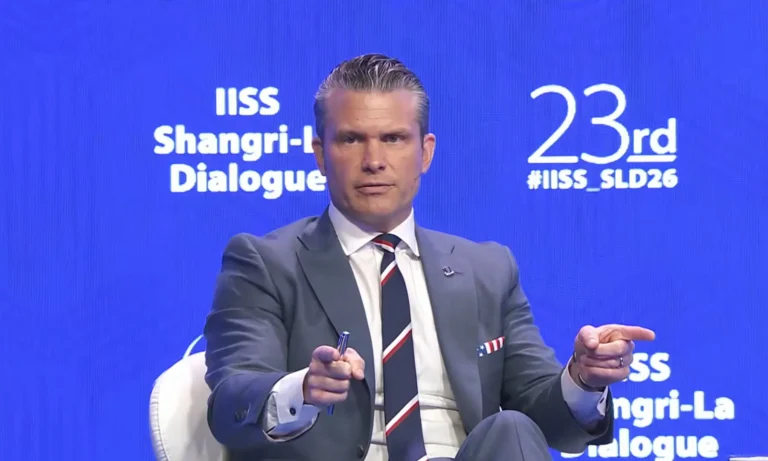
ISLAMABAD: United States Secretary of Defense Pete Hegseth on Saturday said Washington and Islamabad were developing a “true friendship” as he lauded Pakistan’s role in the ongoing US-Iran peace negotiations.

With Pakistan acting as the official interlocutor between Washington and Tehran in the ongoing peace negotiations that resulted in the April 8 US-Iran ceasefire, Trump and his top officials have hailed Islamabad’s role several times.

At the three-day Shangri-La Dialogue in Singapore, Hegseth was asked about former director of national intelligence Tulsi Gabbard’s remarks on Pakistan’s future missile capabilities potentially posing a threat to the US, and whether India’s Agni-VI missile programme posed a similar threat.

The question was posed after Hegseth, in his speech, had lauded US defence cooperation with Indo-Pacific and Southeast Asian countries, as well as India, which he termed a “critical anchor to hold the line”.

“I mentioned India here, but I very easily could have mentioned Pakistan and the role that the field marshal and the prime minister are playing in peace negotiations,” Hegseth replied, praising PM Shehbaz Sharif and Chief of Defence Forces and Chief of the Army Staff Field Marshal Asim Munir.

“I think an unexpected development and a true friendship [is] developing there, which I think is important,” he added.

Noting that both India and Pakistan were nuclear-capable countries, Hegseth said, “I think both sides are going to see understandable threats coming from the other, maybe some of which we see differently, and countries are going to want to develop ICBM threats.”

However, he added, “But we’re not pointing fingers, at least from our view, right now, at either country and calling them a threat to us.”

The defense secretary further said that the US was “grateful for, in each of their lanes, the benefits they’ve given to peace around the world”.

Hegseth also reiterated Washington and Islamabad’s stance that President Donald Trump brokered a ceasefire between Pakistan and India during the May 2025 conflict — a narrative that India’s PM Narendra Modi has denied, irking Trump.

The US president has lauded PM Shehbaz and CDF Munir on multiple occasions, calling the prime minister “great” and the military chief “fantastic” last month.

In February, at the inaugural meeting of the US-led Board of Peace, Trump had praised Shehbaz and described the field marshal as a “tough man” and a “serious fighter”.

The US president has even referred to the army chief as “my favourite field marshal”.

In November 2025, US Secretary of State Marco Rubio said the US saw an opportunity to expand its strategic relationship with Pakistan and that the recent strengthening of ties between the two countries did not come at the expense of Washington’s relationship with New Delhi.

K-P CM Afridi seeks G-B chief judge’s intervention over election concerns

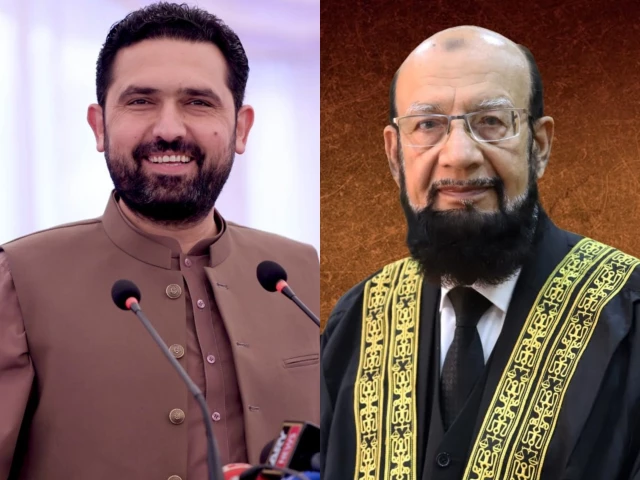
PESHAWAR: Khyber-Pakhtunkhwa Chief Minister Mohammad Sohail Afridi on Saturday wrote to the chief justice of the Supreme Appellate Court of Gilgit-Baltistan, seeking immediate judicial intervention over what he described as a concerning situation ahead of the upcoming elections in the region.

The letter to Justice Sardar Muhammad Shamim Khan was written a day after Pakistan Tehreek-i-Insaf (PTI) K-P President Junaid Akbar Khan was arrested by the G-B Police in Hunza while campaigning for the upcoming elections, which are scheduled to be held on June 7.

In the letter, CM Afridi said reports regarding the electoral environment in G-B were “extremely concerning”, alleging that a political party was facing unnecessary restrictions on its election-related activities, including public gatherings, election campaigning and the movement of its leadership and workers.

“There are reports of political workers being harassed, unlawfully arrested and prevented from carrying out political activities,” he wrote, warning that if such actions were not stopped, they could “seriously undermine the credibility and transparency of the electoral process”.

The chief minister said the Constitution guaranteed every political party and citizen the fundamental right to participate in “free, fair, transparent and impartial elections”.

“Any deviation from these constitutional and democratic principles is not only a violation of the Constitution but is also contrary to democratic values,” he said.

Afridi urged the court to issue clear directions to the relevant institutions to ensure the conduct of “free, fair, transparent and impartial elections” in G-B. He also called for an immediate end to what he described as unlawful harassment, arrests and restrictions against political workers and party leaders.

He further requested that all political parties be allowed to continue their election campaigns and political activities without discrimination, and called for immediate and effective action against any violations of constitutional and democratic rights during the electoral process.

The chief minister appealed to the court to exercise its constitutional authority and issue necessary orders to uphold the rule of law, protect democratic values and maintain public confidence in the electoral process.

“I request the court to use its constitutional powers to ensure the rule of law, safeguard democratic values and uphold public trust in the electoral process,” he said.

Expressing hope for judicial intervention, Afridi said, “Timely action by the judiciary will help ensure transparent, free and credible elections in G-B and fully protect the democratic right of the people to vote.”

A copy of the letter was also sent to Chief Justice of Pakistan Yahya Afridi.

Earlier in the day, senior PTI leader Asad Qaiser claimed that he was prevented from reaching Islamabad Airport and missed his flight to Skardu for the election campaign in G-B.

In a post on X, Qaiser said: “Punjab Police did not allow entry into Islamabad Airport, blocked the airport’s access routes, and we, along with the general public, had to face severe difficulties.”

The former National Assembly speaker alleged that police kept him in custody until his flight to Skardu had departed.

Qaiser claimed that the incident showed that “the G-B election is being manipulated at all costs, and the people are being deprived of their right to vote”.

Later, PTI leaders and members of the opposition Tehreek-e-Tahaffuz-e-Ain Pakistan (TTAP), including Mustafa Nawaz Khokhar and Noor-ul-Haq Qadri, held a press conference condemning the incident.

Qaiser told the press conference that leaders of all political parties were travelling to Skardu for election campaigning, but Punjab Police had prevented him from departing.

“Stopping us while allowing others to go is discrimination in politics,” the PTI leader said, recalling the treatment meted out to Akbar, who was arrested by G-B police in Hunza on Friday while campaigning for the upcoming elections.

“I appeal to the people of Gilgit-Baltistan that you must cast your vote and also protect your vote,” he said, demanding that the chief election commissioner ensure a level playing field for all political parties.

“If you cannot provide a level playing field to all political parties, then resign from your office,” he added.

Senate Opposition Leader Allama Raja Nasir also took to X to express his displeasure over the incident.

“Stopping Asad Qaiser is not only regrettable but a blatant violation of democratic values and political freedoms,” he said.

Nasir added that in G-B, “federal ministers and leaders of other political parties are conducting full-fledged election campaigns, yet leaders of PTI and TTAP are being continuously targeted.”

Dar dismisses rumours of Pakistan joining Abraham Accords

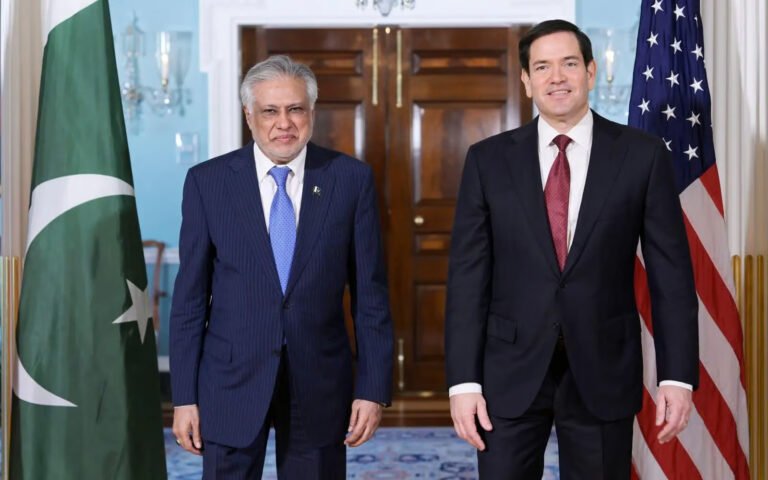
WASHINGTON: US Secretary of State Marco Rubio met with his Pakistani counterpart at the State Department in Washington on Friday, as negotiations aimed at ending the war with Iran drag on.

The meeting with Foreign Minister Ishaq Dar—whose country is acting as mediator between the United States and Iran—came days after Rubio’s visit to India.

The two officials did not address the press.

Meanwhile, Rubio acknowledged Pakistan’s “sincere diplomatic and mediatory efforts” for peace and stability in the region during the meeting.

According to a statement issued by the Foreign Office, Dar held a bilateral meeting with Secretary Rubio in Washington DC.

“The two leaders expressed satisfaction over the positive momentum in the Pak-US bilateral relations and exchanged views on the evolving regional and global situation,” the statement said.

It added that Secretary Rubio acknowledged Pakistan’s “sincere diplomatic and mediatory efforts for peace and stability in the region and beyond”.

The statement said both sides agreed to strengthen bilateral cooperation in areas of mutual interest, including trade and investment, security and counterterrorism.

“The two leaders agreed to advance the Pak-US partnership, propelled by high-level exchanges and shared interests in regional peace, security and prosperity,” it added.

A detailed statement said Rubio commended the close engagement and continued coordination between Pakistan’s leadership and the US administration, while FM Dar expressed confidence that Pakistan’s continued sincere efforts for peace and stability would yield positive results.

He also “deeply appreciated the pivotal role” played by President Trump and Secretary Rubio in de-escalating tensions between Pakistan and India last year and averting a broader conflict between the two nuclear-armed states. Dar further conveyed Pakistan’s concerns regarding the use of Afghan territory by terrorist groups against Pakistan and stressed the need for enhanced counter-terrorism cooperation to address security challenges.

Dar said he had a “very good meeting” with Rubio. “Always a pleasure to engage with him on further strengthening Pak-US bilateral relations and advancing our shared goals of peace, stability and prosperity for our two countries and the wider region.”

Later, in a post on X, Rubio thanked Dar for Pakistan’s role in advancing peace in the Middle East. “We agreed upon the importance of working together to further strengthen a meaningful partnership for better security and more prosperity for our two nations,” Rubio said.

The US State Department said Rubio thanked FM Dar for the “constructive role Pakistan continues to play in realising President Trump’s vision for peace in the Middle East and its mediation efforts with Iran”.

It said both agreed upon the importance of working together to “further strengthen a meaningful partnership that fosters security and prosperity” for both Americans and Pakistanis.

The State Department added that Rubio also expressed his condolences for the victims of the recent Balochistan Liberation Army terrorist attack in Quetta.

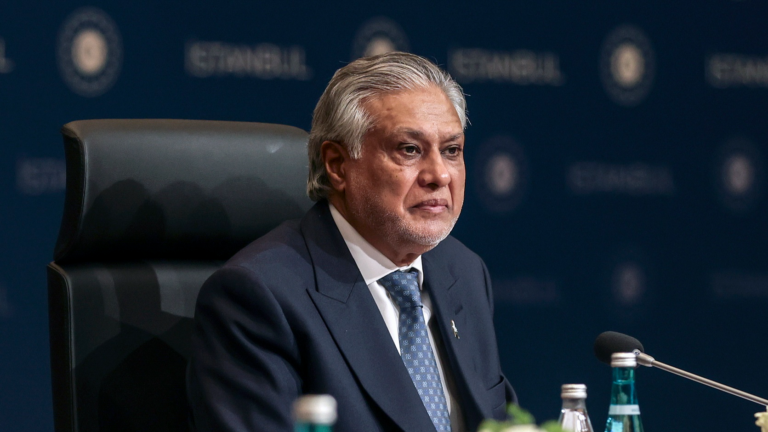
Later, Dar categorically rejected any notion of Pakistan joining the Abraham Accords, reiterating that there would be “no flexibility” in Islamabad’s position on the matter until the recognition of an independent Palestinian state.

“There are a lot of rumours going on related to the Abraham Accord, let me clear that Pakistan’s stance is very clear and consistent on that. Until Palestine is recognised with the pre-1967 model with Quds Al Sharif as its capital, there will be no flexibility,” Dar said while addressing the media at the Pakistan Embassy in Washington, DC.

The clarification came days after US President Donald Trump said he had asked several countries, including Qatar, Saudi Arabia, Pakistan, Egypt, Jordan and Turkiye, to join the Abraham Accords to normalise relations with Israel.

In a lengthy social media post, Trump listed countries whose leaders he said he had spoken to regarding efforts to end the war with Iran.

“After all the work done by the United States to try and pull this very complex puzzle together, it should be mandatory that all of these countries, at a minimum, simultaneously sign onto the Abraham Accords,” Trump wrote.

“Those countries discussed are Saudi Arabia, the United Arab Emirates, Qatar, Pakistan, Turkiye, Egypt, Jordan, and Bahrain,” he added.

Trump has repeatedly expressed his desire to expand the accords, which were brokered during his first term in office.

The Abraham Accords are US-sponsored agreements that normalised relations between Israel and several Muslim-majority countries during Trump’s first term.

The United Arab Emirates and Bahrain signed the accords in 2020, becoming the first Arab states in a quarter century to establish ties with Israel. Morocco, Kazakhstan and Sudan later followed suit.

Trump had earlier expressed optimism that Saudi Arabia would also join the accords following a ceasefire in Gaza last year, although Riyadh has yet to indicate willingness to move forward. Egypt and Jordan already have diplomatic relations with Israel.

Pakistan has long maintained support for an independent Palestinian state based on pre-1967 borders with Al-Quds Al-Sharif as its capital.

Last year, after US Special Envoy for the Middle East Steve Witkoff suggested that additional countries not previously “contemplated” were preparing to join the accords, Pakistan again ruled out the possibility of recognising Israel.

“We are not ready to recognise Israel until the two-state solution to the Palestine conflict is accepted,” Dar had said at the time. “There is no change in our stated policy on the Palestine issue.”

He had also said that signing the Abraham Accords would amount to abandoning Pakistan’s longstanding demand for a Palestinian state with Al-Quds Al-Sharif as its capital, based on pre-1967 borders.

“Let it be clear to everyone that our seven-decades-long policy remains unchanged,” he had said.

Senate, NA budget sessions to begin on June 5

ISLAMABAD: President Asif Ali Zardari on Friday approved summoning the budget session of the National Assembly at 5:00 pm and the Senate session at 6:00 pm on June 5.

The federal budget for the financial year 2026–27 will be presented in the National Assembly. The agenda for the upcoming National Assembly and Senate sessions will be issued in the coming days.

The next budget is to be presented in consultation with the International Monetary Fund (IMF), with most matters already settled.

The federal government has also prepared proposals in the upcoming budget for salary increases for the salaried class and pensions for pensioners.

Adviser to the Prime Minister on Political and Public Affairs Senator Rana Sanaullah said that relief will be provided on a broad basis, including to the salaried class.

On Monday, Sanaullah said the government was preparing a comprehensive strategy to provide maximum relief to inflation-hit segments of society in the upcoming budget.

Talking to the media, He said that no amendment regarding voters’ age limit was under consideration and the government remained fully committed to safeguarding constitutional and democratic rights of the youth.

He said that the upcoming federal budget would provide major relief to the masses and Prime Minister Shehbaz Sharif would formally announce the public-friendly package soon.

FY27 budget may offer limited relief

Pakistan’s upcoming federal budget for FY27 is shaping up to be less about headline-grabbing relief measures and more about reinforcing a commitment to economic stabilisation, despite mounting political, social and economic pressures. After three years of adjustments under the International Monetary Fund (IMF) programme, the government now faces the challenge of balancing fiscal discipline with demands for tax relief, growth support and investor confidence.

Research previews by leading brokerage houses Topline Research and JS Global Capital indicate that the budget is likely to be viewed less through the lens of populist measures or dramatic policy shifts, and more as a reinforcement of fiscal discipline and policy continuity for investors and lenders. Both reports expect continued fiscal consolidation with a fourth consecutive primary surplus in FY27, but sustaining it will require strong revenue mobilisation amid a fragile recovery.

According to IMF-linked targets highlighted in the reports, the Federal Board of Revenue (FBR) is expected to collect approximately Rs15.3 trillion in taxes during FY27, implying revenue growth of around 14- 20% depending on the final FY26 collection base. The challenge becomes even greater because FY26 itself is expected to close with another revenue shortfall despite downward revisions in collection targets.

This creates the central tension of the budget. On one side, the government is considering relief for salaried individuals and select corporate sectors due to domestic pressure. On the other, the IMF has tightened oversight by upgrading FBR benchmarks to quantitative performance criteria, leaving minimal room for slippages, exemptions or discretionary relief.

Govt cuts petrol, diesel prices by Rs22 as Eid relief

ISLAMABAD: The federal government on Friday reduced the prices of petrol and high-speed diesel (HSD) by Rs22 per litre, saying the move was aimed at providing relief to the public.

Following the reduction, the price of petrol was set at Rs381.78 per litre, down from Rs403.78.

Similarly, the price of HSD was reduced to Rs380.78 per litre from Rs402.78.

According to a statement issued by the Prime Minister’s Office on Friday, Prime Minister Shehbaz Sharif said he had promised the nation that relief would be extended to the people whenever financial space became available.

“That promise has been fulfilled exactly as committed,” the prime minister said, describing the reduction as an Eid gift for the people as the announcement came on the third day of Eid.

The statement said the government had decided to reduce the prices of both petrol and diesel by Rs22 per litre.

“Providing relief to the people is among my top priorities,” the premier said.

The statement added that the government had also reduced fuel prices last week as part of its public relief measures.

The announcement came amid a continued decline in global oil prices on hopes of a possible ceasefire between the United States and Iran. Oil markets remained volatile this week as investors assessed the prospects of a breakthrough between Washington and Tehran that could help restore normal shipping through the Strait of Hormuz, a key global oil transit route.

The announcement came as oil prices continue to decline, with the hope of a US-Iran ceasefire. Oil markets have whipsawed this week as investors weigh the chances of a breakthrough between Washington and Tehran that could potentially resume normal shipping through the crucial Strait of Hormuz.

This marks the third consecutive reduction in fuel prices in as many weeks. Last week, the government reduced the prices of petrol and diesel by up to Rs6.80 per litre, after cutting the rates of both fuels by Rs5 per litre earlier this month.

The US and Israel launched an attack on Iran in February, after which Tehran retaliated with strikes and closed the Strait of Hormuz, disrupting global oil supplies and triggering a sharp rise in international oil prices.

As petroleum prices surged, prompting the government to raise fuel prices by more than 50%.

Amid rising prices, the government increased petroleum product rates twice during the first week of March, noting that the hikes exceeded the increase in international market prices. However, the sharpest increase was witnessed in April this year.

Last month, the government raised the petrol price by Rs137 per litre, taking it to a record Rs458.4 per litre. A few days later, however, the prime minister, in a televised address, announced an Rs80 per litre reduction in the petroleum levy on petrol, bringing its price down to Rs378 per litre.

Earlier this month, the government again increased the prices of both petrol and high-speed diesel by Rs26.77 per litre despite no corresponding increase in international rates, after imposing an additional levy of nearly Rs27 per litre on fuel.

A week later, petroleum product prices were increased once again, pushing rates close to Rs400 per litre. Subsequently, the Petroleum Division issued another notification earlier this month, raising prices by nearly Rs15 per litre.

PTI’s Junaid Akbar, lawmakers held during Gilgit-Baltistan poll drive

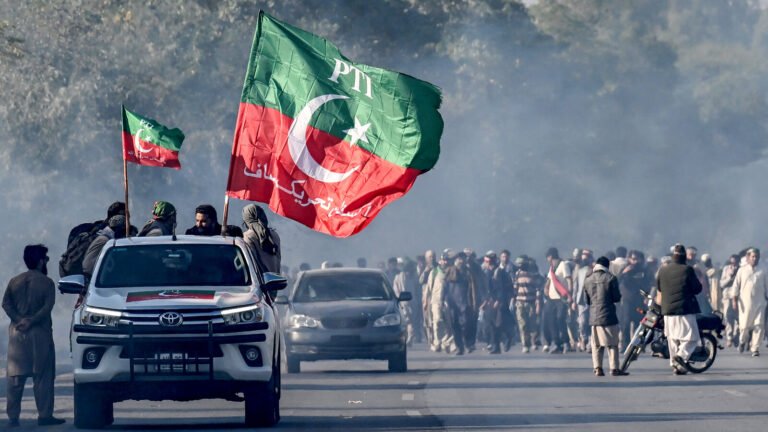
ISLAMABAD: Pakistan Tehreek-e-Insaf (PTI) Khyber-Pakhtunkhwa President Junaid Akbar Khan was arrested by the Gilgit-Baltistan (G-B) Police at Hunza while campaigning for the upcoming elections, according to party leaders and officials.

Ahead of the general elections scheduled in G-B on June 7, Akbar was visiting various areas of the region as part of the party’s election campaign when he was detained along with Members of the National Assembly Saleemur Rehman and Syed Mehboob Shah.

Speaking after the incident, Akbar said he was told to leave Gilgit because he did not possess a no-objection certificate (NOC).

“I was told that since I do not have an NOC, I should leave Gilgit,” he said, questioning, “Is Gilgit-Baltistan not part of Pakistan?”

Reacting to the arrests, PTI Information Secretary Sheikh Waqas Akram strongly condemned the detention of Akbar and other party leaders in G-B.

He termed the move “a failed attempt to suppress political activities and influence the elections”, and urged the National Assembly speaker to intervene immediately to ensure the release of the detained leaders.

“Democracy cannot be silenced through arrests and pressure,” he said.

Responding to the development, K-P Chief Minister Suhail Afridi warned that he would personally travel to G-B if the detained parliamentarians were not released soon.

He said questions would be raised regarding the alleged mistreatment by the “puppet government” in G-B and those seeking to form a government there.

“These attitudes are harming Pakistan and increasing hatred,” the chief minister said, adding that denying PTI a level playing field in the elections through “force and oppression” was damaging the democratic system.

He further said that the G-B chief minister was not responding to his calls and described the situation as “undemocratic and unpolitical”.

“We will not allow Gilgit-Baltistan to become a no-go area,” he added.

K-P Minister for Higher Education and Local Government Meena Khan Afridi also condemned the arrest, calling it “regrettable” that Akbar was detained during the election campaign.

He said harassment of political workers and leaders ran counter to democratic values and warned that suppressing dissent by force was not a positive sign for democracy.

Afridi demanded that Akbar be produced immediately and called for a transparent and free political environment for the G-B elections.

He also condemned what he described as “political victimisation and undemocratic tactics”, urging law enforcement agencies to act in accordance with the Constitution and the law.

Provincial Information Minister Shafee Jan also criticised the arrests, calling them “the worst example of political revenge”.

He said the detention of elected lawmakers was against democratic norms and amounted to disrespecting the public mandate.

“Taking part in an election campaign is the constitutional, legal and democratic right of every political party,” he said.

Jan alleged that while other political parties were being allowed to campaign freely in G-B, the PTI was being obstructed.

He questioned why the G-B government was “afraid” to the extent that elected lawmakers were being arrested.

“Such tactics cannot weaken the resolve of PTI workers,” he said, adding that the party would continue to contest elections despite what he termed political revenge.

He further said the people of G-B would reject the politics of political victimisation through the power of the vote.

“The government has become so fearful of Imran Khan’s public popularity that it has resorted to such tactics ahead of the elections,” he added.

Rubio-Dar talks set as deputy PM reaches Washington

WASHINGTON: Deputy Prime Minister and Foreign Minister Ishaq Dar on Friday arrived in Washington, DC, for an official visit, during which he will meet with US Secretary of State and National Security Advisor Marco Rubio to discuss matters of bilateral and regional significance, following the conclusion of his engagements at the United Nations in New York.

According to a statement issued by the Foreign Office (FO), Dar was received by Pakistan’s Ambassador to the United States, Ambassador Rizwan Saeed Sheikh, along with senior officials of the Embassy of Pakistan.

“Following the conclusion of his official engagements, he will return to Islamabad later the same day,” the statement added.

On Thursday, the FO said that discussions during the visit would focus on strengthening cooperation in key sectors as well as Pakistan’s efforts to promote regional peace and stability through “dialogue and diplomacy”.

Dar’s Washington visit comes immediately after a series of high-level engagements at the United Nations headquarters in New York, where he participated in an open debate of the United Nations Security Council (UNSC) convened under China’s presidency of the council.

While addressing the UNSC session, Dar on Tuesday called for restraint and de-escalation in the Middle East, warning the UNSC that another prolonged conflict would endanger regional peace and further strain the fragile international order.

Addressing an open debate, Dar, while referring to the ongoing efforts to achieve a resolution to the conflict between Iran and the US, stated that the principle of peaceful settlement must apply equally to all long-standing disputes on the Security Council’s agenda.

“The entire world is watching. We must succeed in the interest of regional and global peace and security,” he told the 15-member UNSC. “As a friendly neighbour of Iran and brotherly countries of the Gulf, Pakistan consistently stood for restraint, de-escalation and a return to diplomacy.”

During his stay in New York, Dar also held meetings with UN Secretary-General Antonio Guterres and other senior diplomats, where discussions covered regional conflicts, Afghanistan, Palestine, South Asia and reform of the UN Security Council. Pakistan also reiterated its support for greater multilateral cooperation and reforms to global governance institutions.

The foreign minister’s latest visit signals continued momentum in Pakistan-US diplomatic engagement at a time when Islamabad has assumed an increasingly visible role in regional diplomacy, particularly regarding ongoing indirect contacts between Washington and Tehran.

Recent international reports have highlighted Pakistan’s involvement in facilitating communication channels aimed at easing tensions between the two sides.

Pakistan-US relations have witnessed renewed engagement in recent months, with cooperation expanding beyond traditional security issues into diplomacy, regional stability and economic coordination. Washington has also increasingly acknowledged Islamabad’s role in mediation efforts linked to the Middle East crisis, while both countries continue discussions on trade, energy cooperation and broader regional security matters.

The visit comes amid continued diplomatic engagement between Islamabad and Washington on regional security and bilateral cooperation. According to the statement, Dar will return to Islamabad later the same day following the completion of his official engagements.

Youm-i-Takbeer reflects Pakistan’s strength, sovereignty and unity: PM Shehbaz

ISLAMABAD: Prime Minister Shehbaz Sharif said on Thursday that Youm-i-Takbeer stands as a defining moment in Pakistan’s history when the nation demonstrated unwavering resolve, unity and courage by emerging as a nuclear power and restoring the strategic balance in South Asia.

Youm-i-Takbeer marks the historic day of May 28, 1998 when Pakistan joined the ranks of nuclear powers after atomic tests in the hills of Chagai, Balochistan.

In his message, PM Shehbaz said Pakistan conducted successful nuclear tests on May 28, 1998 in response to India’s nuclear explosions, sending a clear message to the world that the country would never compromise on its defence and sovereignty.

He said the day bears testimony that the defence of Pakistan remained in strong and capable hands. He also paid tribute to all those who contributed to Pakistan’s nuclear programme, including former prime ministers Zulfikar Ali Bhutto and Nawaz Sharif.

He also acknowledged the services of national heroes Abdul Qadeer Khan and Samar Mubarakmand, along with scientists, engineers, experts, armed forces personnel and workers who played a historic role in making Pakistan’s defence impregnable.

The prime minister said India carried out nuclear tests driven by militaristic ambitions and expansionist designs, while Pakistan responded with wisdom and determination to foil hostile intentions. He noted that despite international pressure, economic threats and financial inducements, then-prime minister Nawaz refused to compromise on the country’s independence and security.

PM Shehbaz said that Youm-i-Takbeer symbolised national dignity, sacrifice, unity and an unshakeable commitment to the defence of the homeland. He said Pakistan’s nuclear capability and the preparedness of its armed forces remained a decisive deterrent against enemy aggression.

Referring to recent tensions with India, the prime minister said, Pakistan had demonstrated its resolve by delivering a befitting response to aggression during Marka-i-Haq. He said that India had staged a false flag operation in occupied Kashmir’s Pahalgam, targeting Pakistani civilians and mosques under that pretext. He said that Pakistan’s armed forces and nation stood united like Bunyanun Marsoos to thwart enemy designs and challenge its perceived military superiority.

PM Shehbaz also praised the leadership of Chief of Defence Forces (CDF) and Chief of Army Staff Field Marshal Asim Munir, stating that the armed forces displayed exceptional professionalism under his command. He also commended Chief of Air Staff Zaheer Ahmad Babar and Chief of Naval Staff Naveed Ashraf for their exemplary performance.

The prime minister said Pakistan has no aggressive intentions against any country but retained the full right to defend itself. He warned that after facing setbacks in direct confrontation, hostile forces were now attempting to undermine Pakistan’s security through proxy elements, including Fitna al Khawarij and Fitna al Hindustan.

Fitna al Khawarij is a term the state uses for terrorists belonging to the banned Tehreek-i-Taliban Pakistan, while Fitna al Hindustan is a term designated by the state for terrorist organisations in Balo­chistan.

PM Shehbaz said Pakistan remained determined to eliminate all such threats and their facilitators through continued operations, including Operation Bunyanun Marsoos and Operation Ghazab lil-Haq.

He reaffirmed that Pakistan’s armed forces were fully prepared and equipped with modern capabilities to defend every inch of the motherland. He urged the nation to renew its pledge for unity, stability, peace and progress and to continue working collectively for a strong, prosperous and dignified Pakistan.

200 Federal Constabulary personnel to receive diplomatic security training in Saudi Arabia

ISLAMABAD: Two hundred personnel from the Federal Constabulary’s Special Diplomatic Protection Unit will receive training in Saudi Arabia, the interior ministry said on Thursday.

The decision was taken during a meeting between Interior Minister Mohsin Naqvi and his Saudi counterpart Abdulaziz bin Saud Al Saud in Mina, Saudi Arabia.

In a social media post on X, the ministry said both ministers exchanged Eidul Azha greetings, while the Saudi minister congratulated Naqvi on performing Haj.

During the meeting, detailed discussions were held on bilateral relations between the two countries and internal security matters, the ministry said.

“It was decided that 200 personnel of the Federal Constabulary Special Diplomatic Protection Unit will receive training in Saudi Arabia,” it stated.

The two ministers also discussed the recent situation in the region, with the Saudi minister praising Pakistan’s positive role in reducing tensions, the ministry said.