Home Blog Page 4

Budget to bring relief as govt moves to tax informal economy: PM

ISLAMABAD: Prime Minister Shehbaz Sharif said that the upcoming budget would include measures aimed at providing relief to the public, while efforts were being made to bring the informal economy into the tax net.

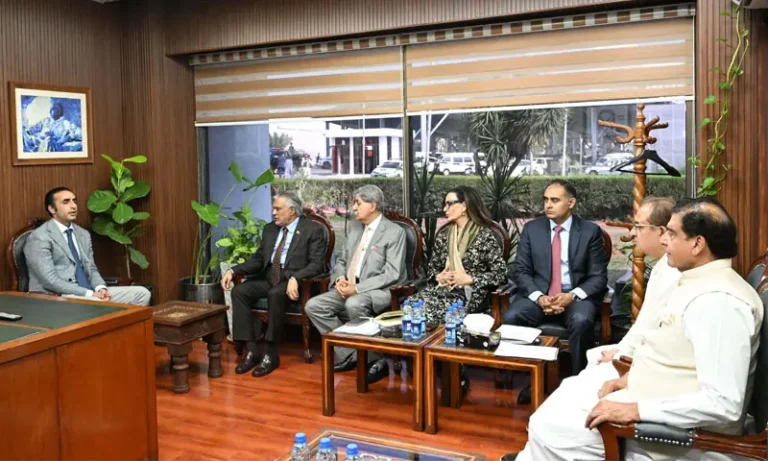
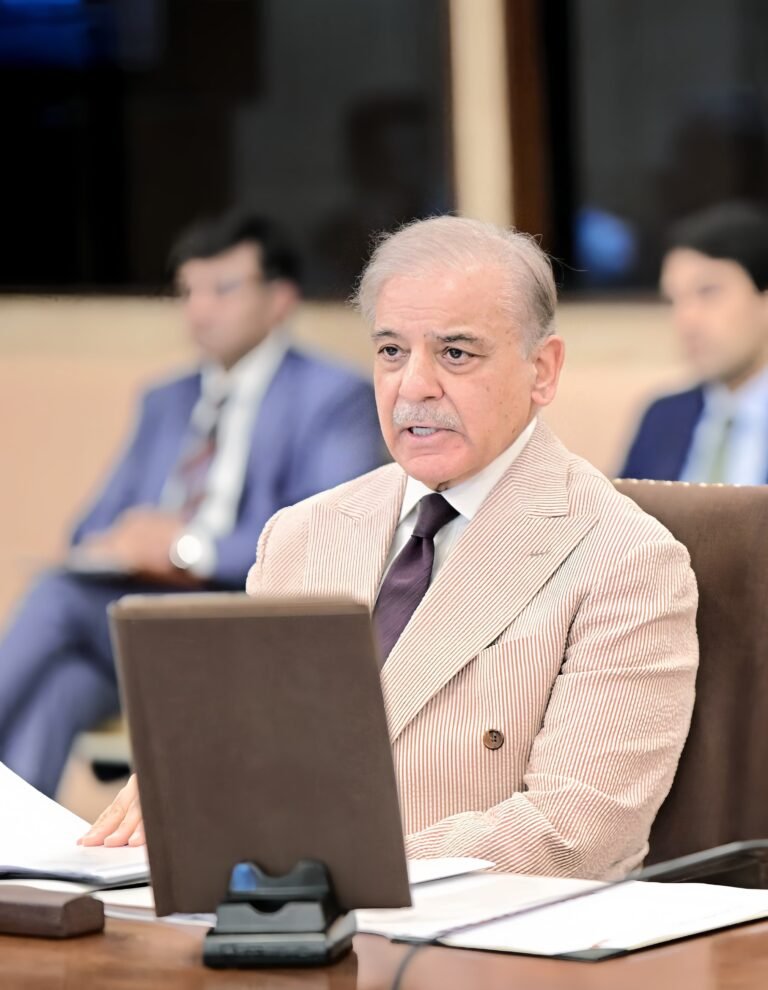
According to a statement by the Prime Minister’s Office, the prime minister held a consultative meeting with leading industrialists and business figures on Wednesday to seek input on priorities for the upcoming federal budget 2026–27, with a focus on shaping economic policy and sustaining recovery efforts.

“The discussion centred on the overall direction of economic growth, export-led development, and measures aimed at strengthening investment and job creation ahead of the upcoming budget,” it said.

The prime minister said consultations with the business community were “of critical importance” in policy formulation, adding that Pakistan’s economic recovery depended on a strong partnership between the government and the private sector.

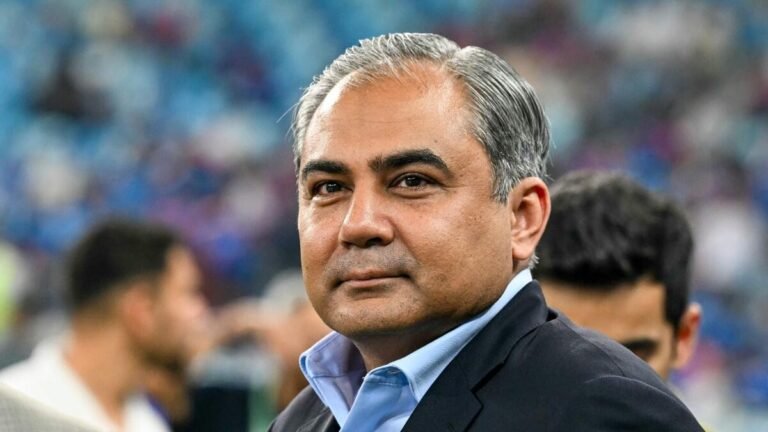
The delegation included prominent industrialists and business leaders such as Mian Muhammad Mansha, Arif Habib, Ahsan Zafar Syed, Muhammad Ali Tabba, and others representing key sectors of the economy.

Several federal ministers and senior officials also attended the meeting, including Food Security Minister Rana Tanveer Hussain, Law Minister Azam Nazeer Tarar, Climate Change Minister Musadik Malik, Economic Affairs Minister Ahad Khan Cheema, Information Minister Attaullah Tarar, IT and Telecommunication Minister Shaza Fatima Khawaja, Petroleum Minister Ali Pervaiz Malik, Power Minister Sardar Awais Ahmad Khan Leghari, Minister of State for Finance Bilal Azhar Kayani, Special Assistant to the Prime Minister Haroon Akhtar Khan, Attorney General Mansoor Usman Awan, and State Bank of Pakistan Governor Jameel Ahmad, along with other senior officials.

Addressing the delegation, the prime minister said, “You are ambassadors of Pakistan and our identity in the world,” and played a key role in shaping the country’s international economic reputation.

He thanked the business community for supporting the government during difficult economic conditions and said sustained cooperation between the public and private sectors was essential for growth.

“We are moving towards an export-led growth model, which remains the core of our economic policy,” the prime minister said.

The prime minister added that reforms were underway to improve the resolution of tax disputes through tax tribunals, with what he described as transparent hiring processes, while a committee had been formed to establish special commercial courts.

PM Shehbaz said that the government were moving forward on an export-led growth path; this was the central focus of the country’s economic policy, and efforts were being made to bring the informal economy into the tax net.

He said the upcoming budget would include measures aimed at providing relief to the public while supporting business-friendly policies to attract investment and stabilise the economy.

Read: US proposes tariffs on goods from 60 economies, including Pakistan

The prime minister also highlighted the government’s focus on expanding industrial, agricultural, and information technology sectors, saying these areas would generate employment and strengthen long-term economic stability.

He added that technical and vocational training programmes had been launched to improve youth employability and support national development.

Officials briefed participants on ongoing reforms, including improvements to tax tribunals to expedite the resolution of tax disputes, the establishment of special commercial courts, and infrastructure projects aimed at improving freight connectivity from Karachi ports to the rest of the country.

These include upgrades to the M-10 motorway and work on the Pipri freight corridor, as well as the development of the M-13 (Kharian–Rawalpindi) motorway to reduce travel time between Lahore and Islamabad.

The briefing also highlighted rail infrastructure upgrades under Pakistan Railways’ ML-1 and ML-2 projects, designed to improve freight movement and logistics efficiency.

The briefing also highlighted the development of a national AI transformation plan and the use of video analytics in industrial sectors such as sugar and cement to improve revenue collection.

Business leaders welcomed the government’s economic direction, praising efforts to stabilise the economy, improve financial management, and promote digitisation. They also expressed support for tax reforms, energy cost reductions for industry, and timely tax refunds.

The delegation commended diplomatic efforts for regional peace and thanked the prime minister for involving the business community in budget consultations.

They reiterated their commitment to working with the government to strengthen industry, boost exports, and create employment opportunities.

PM urges focus on freight expansion and rail project completion

PM Shehbaz also chaired a high-level meeting on railway development projects and commended Pakistan Railways for improving passenger facilities and upgrading railway stations across the country.

He said that the railway department must prioritise freight expansion and the timely completion of major infrastructure projects.

The meeting was attended by Railways Minister Muhammad Hanif Abbasi, Economic Affairs Minister Ahad Khan Cheema, Finance Minister Aurangzeb, Planning Minister Ahsan Iqbal, Special Assistant to the Prime Minister for Industry and Production Haroon Akhtar Khan, the Railways Secretary, and other relevant officials.

PM Shehbaz noted that an efficient, international-standard freight service would ease the transportation of industrial goods and significantly increase Pakistan Railways’ annual revenue.

He directed that financial and institutional approvals for ongoing mega projects must be ensured in advance to avoid unnecessary delays and disruptions in execution.

The prime minister stressed the need for coordinated efforts between federal and provincial governments for the early completion of key projects, including ML-1, ML-3, and the Thar coal rail project.

He said the timely and quality completion of mega projects would reduce construction costs and save valuable public resources. PM Shehbaz added that adequate budgetary allocation for railway mega projects would be ensured in the upcoming federal budget.

He further emphasised that adherence to international standards, transparency, and improved administrative efficiency in all ongoing projects remained a top government priority.

Officials briefed the meeting on the progress of ongoing projects and reforms in Pakistan Railways. They said freight service reforms were expected to generate historic revenue of up to Rs40 billion by June this year.

The briefing said these reforms had significantly improved efficiency and revenue potential in the freight sector.

Salman Akram Raja, PTI leaders barred from entering G-B ahead of polls

ISLAMABAD: Pakistan Tehreek-e-Insaf (PTI) Secretary General Salman Akram Raja, along with party founder Imran Khan’s Spokesman on Legal Affairs Naeem Panjutha and MPA Shaukat Basra were reportedly barred from entering Gilgit-Baltistan (G-B) on Tuesday to partake in the final phase of campaigning ahead of the upcoming June 7 polls.

In a post on X, Raja stated that the PTI leaders were stopped from proceeding into G-B, with his name listed with the deputy superintendent of police. “We, along with friends who had come from ISF, have been surrounded by police vehicles and expelled from the province,” he added.

In a separate post, the secretary general stated that his name, along with those with him, was given to the authorities so that the group may be barred from entering G-B. He added that “the foundational relationship between the public and the state, formed on the basis of votes, has been broken.”

Further, Raja claimed that the authorities told him and the group that they had been directed to stop the group and ensure they did not enter G-B.

The PTI also posted a statement on its official X account, saying that G-B police stopped the leaders at the first checkpoint as soon as they entered Gilgit.

Panjutha, part of the exiled group, stated that the PTI was not being allowed to campaign, writing that sometimes the party symbol was taken away and other times, the authorities were ordered to conduct raids. “Everyone else is being allowed vehicles, but we’re not being let go,” he said.

The party’s Khyber-Pakhtunkhwa (K-P) president, Junaid Akbar Khan, was arrested by G-B Police at Hunza on Friday while campaigning for the upcoming polls. Akbar was visiting various areas of the region as part of PTI’s election campaign when he was detained along with Members of the National Assembly Saleemur Rehman and Syed Mehboob Shah.

Akbar said he was told to leave Gilgit because he did not possess a no-objection certificate (NOC).

Reacting to Raja’s group being stopped and expelled from the province, Akbar took to X, terming the incident as “extremely shameful and condemnable”. He added, “My question is: if the elections are truly free and transparent, then why such fear of PTI and its leadership?”

“Those claiming to conduct the elections: will the “transparency’ of elections be ensured by tying the hands and feet of political opponents, arresting them, and expelling them from the province? Has this reign of darkness now simply been named democracy?” he asked.

Meanwhile, PTI Provincial General Secretary Ali Asghar Khan stated that “every limit of shamelessness has been crossed.”

Senior PTI leader Asad Qaiser, on May 30, also claimed that he had been barred from reaching Islamabad Airport and missed his flight to Skardu for the election campaign.

“Punjab Police did not allow entry into Islamabad Airport, blocked the airport’s access routes, and we, along with the general public, had to face severe difficulties,” Qaiser said after the incident. The former speaker of the National Assembly added that police kept him in custody until his flight to Skardu departed.

Instances of PTI leaders claiming they are being restricted from campaigning in G-B for the polls came as those from other political parties, such as the Pakistan Muslim League-Nawaz and the Pakistan People’s Party continue their push to mobilise voters in the region through rallies and public gatherings.

Nawaz pledges G-B infrastructure upgrades, airport expansion push

ISLAMABAD: Pakistan Muslim League-Nawaz (PML-N) President Nawaz Sharif on Tuesday pledged to pursue major infrastructure, aviation and energy projects in Gilgit-Baltistan (G-B), saying he would take the region’s concerns directly to Prime Minister Shehbaz Sharif, pushing for long-overdue development initiatives.

Addressing a public gathering in G-B, the former prime minister said he would seek federal action to improve road infrastructure, expand Gilgit Airport and address chronic electricity shortages in the region.

Highlighting infrastructural deficits in the region, the PML-N chief said when he arrived in G-B, “The condition of the roads caused me great pain and sadness,” adding that he saw so many potholes, and told people three or four times that seeing the roads made him very sad.

“Once, these roads were built with enthusiasm,” he said, adding that during his tenure, they “started the road from Mansehra, and it was completed very well up to Thakot.” However, he asked why it was not completed up to Gilgit and why it did not continue beyond Gilgit to Chilas.

“I do not want to speak against any party. I do not want to criticise any government, but my heart compels me to ask: you had the opportunity to govern this country, so why did you neglect this region so much?” Nawaz said. He added that seeing the current condition of G-B saddens him. “Why was no attention paid to it? What was the reason? Your attention was focused elsewhere,” he stated.

Further discussing the road project, Nawaz noted that during his tenure the road was extended to Skardu at a cost of nearly Rs50 billion. “This is the right of the people of Gilgit, it is not a favour from me,” he said.

“My heart weeps. Why was all this allowed to happen? Why was the money that should have been spent on you not spent on you? Where was that money spent?” Nawaz questioned, noting that if hospitals were built in the region, it was PML-N that had built them, applying the same to power plants and hydropower projects, along with the Jaglot-Skardu project, all of which he stated were initiated and completed by his party.

“Tell me the name of any other party that even laid the foundation stone of a project here or started construction of a road here,” Nawaz said. Referring to a four-lane highway from Islamabad to Mansehra that he said should have been extended all the way to G-B, the former prime minister stated that he regretted to say that even the airport remains exactly as it was during his tenure. “It has neither been expanded nor upgraded, the flights are still the same,” Nawaz stated, adding that the airport should have been expanded so that jet aircraft could land there, just as they do in Skardu.

“If that has still not happened, then it causes me great regret, and I express my sorrow to you from the bottom of my heart,” he said. Nawaz added that he had flown to the region on a Pakistan International Airlines (PIA) aircraft, questioning how many flights operate in the region in a week and saying that it should be 30.

The PML-N chief assured the gathering that he would meet with PM Shehbaz and ask him to expand the airport, creating the capacity for jets to land and take-off from the region. Saying that the travel time from Gilgit to Skardu had been cut down to three hours from nine, Nawaz stated that the party had saved the people of Gilgit six hours of travel time. “How many opportunities have we created for you and your children? Fulfilling this was one of our heartfelt aspirations,” he said.

Discussing Lowari Tunnel in Khyber-Pakhtunkhwa (K-P) that connects Dir and Chitral, Nawaz stated that the project had remained unfinished for 30 to 40 years before it was completed during his tenure. “But here, projects are started and then never seem to reach completion,” he added, noting that the electricity projects in the region remain a particular source of concern for him due to a shortage of electricity despite the abundance of water resources.

Extending gratitude to his brother, the PML-N chief stated, “I appreciate Shehbaz Sharif, who has allocated 100 megawatts for solar energy here,” but he noted he would tell the prime minister that “20 to 22 hours of load-shedding in winter is not acceptable, and neither is 10 to 12 hours of load-shedding in summer.”

“Others may find it acceptable, but I do not,” Nawaz stated, assuring the gathering that he would speak to PM Shehbaz as soon as he returns to Pakistan. “Whether the solution is found or not, only God knows, but we do not deprive you of these things,” he said.

He concluded his address saying that he would continue to come to G-B “every second or third month” so that the projects in question may be initiated. “I would like to see them being completed under my own supervision and oversight,” the former prime minister added.

Nawaz arrived in G-B on a one-day visit amid ongoing campaigning for the upcoming elections on June 7. Upon his arrival, he was received by Federal Minister for Kashmir Affairs Amir Muqam, former G-B chief minister Hafiz Hafeezur Rehman, Captain (retd) Muhammad Safdar, along with other party leaders.

Federal ministers including Khawaja Asif, Ahsan Iqbal, Rana Sanaullah, along with Senator Pervaiz Rashid, Punjab Senior Minister Marriyum Aurangzeb, Senator Anusha Rahman, and Kazim Pirzada are accompanying Nawaz during his visit.

While in G-B, the PML-N president will hold meetings with party leaders and party ticket holders contesting the elections.

A day ago, the Election Commission issued a No Objection Certificate (NOC) clearing Nawaz to visit G-B to launch his election campaign. The polls, due to take place on June 7, have spurred major political parties to make a final push to mobilise voters across the region before campaigning officially ends later this week.

However, allegations by the Pakistan Tehreek-e-Insaf that the party had been barred from campaigning intensified the political temperature in the region.

In the notification issued by the Election Commission Secretariat of G-B, the chief election commissioner of G-B accorded permission for Nawaz’s visit on Tuesday, “for participation in election-related activities.”

It added that the NOC was subject to strict compliance with the Elections Act, 2017, applicable election laws and rules, and the Code of Conduct for General Elections 2026. “Any violation thereof shall entail legal consequences under the relevant election laws and may result in appropriate proceedings against the concerned candidate(s) and other persons responsible for such violation,” it stated.

Khawaja Asif cautions against Taliban’s mixed signals on TTP support

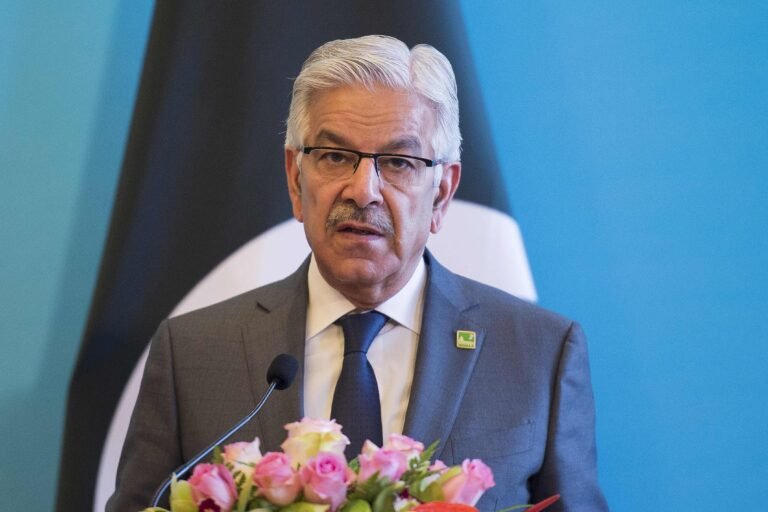
ISLAMABAD: Defence Minister Khawaja Asif said on Monday that the Afghan Taliban regime’s support for the banned militants of the Tehreek-e-Taliban Pakistan (TTP) remains intact, warning against believing in the interim rulers’ “mixed signals” regarding the halting of cross-border terrorism.

He made the remarks during an interview with a private news channel. Referring to a report claiming that the Taliban Supreme Leader Hibatullah Akhundzada had warned the TTP to stop attacks in Pakistan, Asif said “It is only in the media,” and that “practically there has been no change in the situation on ground.”

Further, Asif called on the Taliban’s top leadership to stop supporting the TTP militants “once and for all,” adding, “It should come from the horse’s mouth” regarding the reported withdrawal of Taliban support to the TTP.

Asif also referred to contradictory statements of the Afghan Taliban regime, saying “It will be very dangerous to trust the mixed signals” being sent by them regarding terrorism. “There is absolutely nothing on ground,” the defence minister stated.

Pakistan launched Operation Ghazab Lil Haq against Afghan Taliban positions in Kabul in February this year. The operation followed renewed clashes along the Pakistan-Afghanistan border, after Afghan Taliban forces fired on multiple locations, prompting swift military retaliation by Pakistan.

According to the latest update by Information Minister Attaullah Tarar on April 5, 796 Afghan Taliban operatives had been killed while more than 1,043 had been injured during the operation. Despite many rounds of talks, most recently those facilitated by China in Urumqi, Islamabad and Kabul have failed to reach an agreement to resolve the conflict.

The defence minister, during his interview, also responded to remarks by the Indian army chief, saying that New Delhi was still dealing with the consequences of its defeat in Marka-e-Haq last year in May, warning against any potential military gamble in the future.

“India is still bearing the humiliation of its failure in the recent war,” Asif had said, responding to the Indian army chief stating that Operation Sindoor remains active despite a temporary cessation of hostilities. The army chief reportedly also said that the Indian armed forces are ready for a possible ‘Operation Sindoor 2.0’ if required.

Asif stated that Islamabad was prepared to counter any future aggression, saying that India was using Afghanistan as a means to wage a proxy war against Pakistan.

Regarding the possibility of renewed tensions, the defence minister reiterated, “The Pakistan Army will inflict an even stronger defeat on India than it did last time.” “What happened to India last time perhaps did not satisfy them. If India wishes to try again, it may do so, and it will receive its answer,” he said.

The conflict began after the April 22 Pahalgam attack and concluded with a ceasefire on May 10 following Operation Bunyanum Marsoos.

Pakistan, Italy sign visa-free travel accord for diplomatic passport holders

ISLAMABAD: Pakistan and Italy have signed an agreement to abolish visa requirements for holders of diplomatic passports.

Pakistan’s Ambassador to Italy Ali Javed and Italian Foreign Affairs Secretary General Ambassador Riccardo Guariglia signed the accord at a ceremony hosted at the Italian Ministry of Foreign Affairs in Rome, according to an official handout.

Ahead of the signing, the two diplomats held one-on-one talks and reviewed the full spectrum of bilateral engagement and cooperation at multilateral platforms including the United Nations and European Union.

Both sides expressed satisfaction with the “substance, intensity and soaring trajectory” of their strategic cooperation, the statement said.

The agreement, they said, would facilitate smooth exchanges of diplomatic delegations and strengthen bilateral engagement. Officials termed the accord a reflection of mutual trust and friendship and an “excellent addition” to existing mechanisms for cooperation, it added.

Pakistan and Italy already have 15 government-to-government agreements in areas ranging from tourism and culture to science and technology, sports, higher defence studies and anti-narcotics cooperation. Other 21 memorandum of understanding (MoUs) exist between universities and think tanks, the statement said.

It added that key existing frameworks included the Defence Cooperation accord signed in 2009, the Strategic Engagement Plan established by foreign ministers in 2013, and the Joint Economic Commission set up in 2005. Earlier treaties include the Investment Protection Treaty of 1997, the Dual Citizenship Agreement of 1983 and the Extradition Treaty of 1972.

On May 7, 2025, the two countries also concluded an MoU on ‘Labour Mobility and Migration’ in Islamabad — Pakistan’s first labour accord with a European state. It qualifies Pakistani workers for 10,500 Pakistan-specific jobs in Italy, it said.

Meanwhile, Ambassador Javed reiterated an invitation to the secretary general, on behalf of the foreign secretary, to visit Pakistan for the 7th Round of Bilateral Political Consultations.

He conveyed readiness to convene the talks in the last quarter of 2026, along with keenness to inaugurate the newly built Italian Embassy in Islamabad — Italy’s largest diplomatic mission overseas — underscoring the salience of ties with Pakistan, it added.

Judicial restoration, free polls only acceptable deal: Aleema Khan

ISLAMABAD: Aleema Khan, sister of incarcerated former premier Imran Khan, on Tuesday said that the only acceptable “deal” would be the restoration of an independent judiciary and the holding of free and fair elections in the country, as authorities once again denied her a meeting with her brother.

Speaking to the media outside Adiala Jail, Aleema said it was their constitutional right to meet Imran. She vowed to continue visiting Adiala, saying it was the only way to exert pressure on the “powers that be”.

“The family of Imran and party leaders will continue efforts for an independent judiciary and a free media,” she emphasised.

Replying to a question regarding rumours of a meeting between the PTI founder and a former military chief, she rejected such claims, terming them politically motivated.

“No such meeting has taken place, and such rumours are circulated whenever political temperatures rise.”

Aleema said that she had earlier asked PTI Chairman Barrister Gohar Khan about reports of a meeting with Interior Minister Mohsin Naqvi. According to her, Barrister Gohar confirmed the meeting and conveyed assurances regarding access to the PTI founder.

However, she said those assurances did not materialise, adding that priority should instead be given to ensuring proper medical treatment and care for the former premier.

She also said that if any political consultations or meetings were being held on behalf of the party leadership, they should be conducted “transparently and communicated openly to party members”.

Commenting on the security arrangements around Adiala jail, the PTI founder’s sister claimed that road closures and restrictions reflected the government’s “fear of public support for Imran Khan”. She further alleged that the authorities were attempting to prevent discussions about Imran’s health.

Aleema maintained that the “objective of the current political efforts was the release of Imran Khan”. She added that any elected representative who genuinely worked for his release would be regarded as a hero by the people.

Referring to developments in Gilgit-Baltistan, Aleema criticised alleged electoral irregularities, political repression, arrests, travel restrictions and the use of force against political workers and candidates.

“Governments resort to oppression when they lack public support, while popular movements draw strength from the backing of the people. Attempts are being made to silence the PTI founder, but he remains committed to his principles and is prepared to make personal sacrifices for his cause,” Aleema claimed.

Rejecting speculation about political negotiations for personal gain, she said that the only acceptable “deal” would be the restoration of an independent judiciary and the holding of free and fair elections.

She further argued that judicial independence was essential for ensuring transparent democratic processes.

Aleema stated that veteran political figures such as Mahmood Khan Achakzai and Allama Raja Nasir Abbas had been chosen by the PTI founder due to their political maturity. She maintained that authorities should grant Imran the rights guaranteed to him under the law and added that pressure tactics would eventually force stakeholders towards dialogue and negotiations.

Meanwhile, Khyber Pakhtunkhwa Chief Minister Sohail Afridi said that their only demand was that Imran be shifted to Shifa International Hospital for treatment.

Replying to a question about why a forward bloc was made against him, he said that no one can remove the chief minister in KP apart from Imran.

“They want to do something with Imran Khan and that is why they are not allowing a meeting with him,” he added.

“The propaganda surrounding the forward bloc has begun to divert attention from the upcoming budget, under which the masses will once again be made to suffer,” he said.

“I would like to request you to keep focusing on the budget and Imran Khan’s health. They have no foreign policy or any agenda for the masses. We have prepared the KP budget, which will be the best budget. However, the entire country will be affected by the federal budget,” Afridi said.

Bilawal vows fight for Gilgit-Baltistan’s rights under 18th Amendment

SKARDU: Pakistan People’s Party (PPP) Chairman Bilawal Bhutto-Zardari on Tuesday said Gilgit-Baltistan should be granted the same constitutional protections, powers and facilities available to the provinces under the 18th Amendment, asserting that only then would its people become owners of their resources and masters of their own destiny.

As political activity gathers pace ahead of the G-B general elections scheduled for Sunday after a four-month delay attributed to harsh winter weather, Bilawal addressed a public gathering in Skardu attended by First Lady Aseefa Bhutto-Zardari.

Recalling the previous elections, he said there had been an atmosphere of celebration at the time, whereas the current election campaign was taking place in an atmosphere of grief.

“I toured G-B on foot in the last elections. I wanted to do the same this time,” he said, adding that there was an “air of grief” for both the people of G-B and himself.

He said there was no politician in the country who had travelled as extensively as he had, adding that he had visited every tehsil of G-B.

The PPP chairman said his party was the only political force representing the underprivileged and the poor, stressing that Pakistan could only progress when workers and young people were economically empowered.

“Progress is when the farmer gets the fruit of their hard work, progress is when employment opportunities are created for the youth,” he said, recalling that the policies of his grandfather, Zulfikar Ali Bhutto, had “made labourers the owners of mills”.

Calling for greater rights for the people of G-B, the PPP chairman said his party’s new generation would continue the struggle to secure the region’s right to govern, own its resources and create employment opportunities for its youth.

“I have to struggle along with G-B’s new generation. If we have to implement the manifesto of roti, kapra, makaan in its true sense, then we will have to work on three principles — we will have to secure the right to govern, the right to ownership and the right to employment,” he said.

He added that the struggle of the PPP’s new generation would be aimed at securing the people of G-B’s right to govern and that this would only be achieved when the region received the protections, facilities and powers provided under the 18th Amendment.

“We believe all of this will only be possible when G-B is granted the same powers and facilities that will make its people owners of their resources and masters of their own destiny.”

Bilawal said this would happen when G-B received the same authority under the 18th Amendment that was available to Sindh, Punjab, Balochistan and Khyber-Pakhtunkhwa.

“When G-B has those powers and that constitutional protection, only then will our new generation feel that we have succeeded,” he added.

Referring to the situation in the Middle East, the PPP chairman said innocent children had been martyred after a school in Iran was targeted by missiles and that people around the world were bearing the burden of the conflict.

He added that Zionist forces had targeted a girls’ school, resulting in the martyrdom of innocent schoolgirls, and also referred to the reported martyrdom of Ayatollah Ali Khamenei during the holy month of Ramazan.

“We pray that the efforts for peace being undertaken by the field marshal prove successful. The Pakistan People’s Party has always opposed war. The recent conflict has resulted in casualties not only in Iran but also in Palestine, Lebanon and Syria, where Muslims are being martyred. In this situation, every Pakistani is praying for the success of the role being played by the Pakistan Armed Forces and the field marshal for the establishment of peace,” he said.

Bilawal said the conflict was also having economic consequences that had adversely affected people across the world.

He also referred to the presence of foreign air bases in some Middle Eastern countries and said Pakistan’s history included a period when a military ruler had allowed foreign powers to establish air bases in the country.

“However, when the Salala incident occurred, and Pakistan’s sovereignty came into question, President Asif Ali Zardari took a courageous decision and shut down all foreign bases, sending a clear message that no compromise would be accepted on Pakistan’s territory and sovereignty. It was a moment when the state prioritised national dignity and self-respect over hospitality,” he said.

Referring again to the PPP’s slogan of “roti, kapra aur makaan”, he said the party would have to secure the right to govern, the right to ownership and the right to employment for the people of G-B if it wished to implement its manifesto in its true spirit.

The PPP chairman said that during his tenure as foreign minister, the Benazir Income Support Programme (BISP) was the only institution about which other countries asked Pakistan for assistance in establishing similar initiatives.

“From Egypt to Brazil, and across many countries in Africa, there is a desire to launch programmes similar to the Benazir Income Support Programme to serve poor people,” he said.

Without naming any party, he said some political forces called for the abolition of BISP rather than examining subsidies provided to the wealthy or the taxes paid by the business community.

“This is the only institution from Islamabad that reaches every poor household. From Balochistan to the former tribal districts, and from there to the mountains of G-B, this financial assistance provided to poor women in the name of Shaheed Mohtarma Benazir Bhutto reaches those in need. The conspiracies of political parties that oppose this programme will fail,” he said.

Read More: Barrister Gohar, Bilawal arrive in Skardu as G-B election campaign enters final stretch

Bilawal said the PPP would not only protect BISP but that the prime minister would announce an increase in its allocation in the upcoming budget.

He further said that everything could not be controlled from Islamabad and that G-B must be granted ownership rights.

“It must be accepted that local people should be given ownership in every project. This is how it was done in Sindh. When coal was extracted from Thar, electricity was provided to local communities, jobs were created for them in the projects, and they were even offered shares. They chose financial compensation instead of shares. The benefits of Thar coal are being enjoyed by all of Pakistan, but the local people benefited first. This is what the PPP wants,” he said.The

PPP chairman said he compared Sindh not with other provinces but with the wider world.

“The housing project in Sindh is the largest of its kind in the world. Previously, Nepal held the record for post-earthquake housing construction. Now that the record belongs to Sindh, where two million permanent homes are being built after the floods. These homes will not be destroyed even if floods occur again, and they will be registered in the names of women,” he said.

Shehbaz, Naqvi review security situation

ISLAMABAD: Prime Minister Shehbaz Sharif on Sunday reviewed the country’s overall law and order and security situation during a meeting with Interior Minister Mohsin Naqvi in Lahore.

During the meeting, the two leaders held a detailed discussion on national security and public safety measures, according to an official statement.

The interior minister briefed the prime minister on special arrangements made to ensure the protection of citizens’ lives and property and to enhance security at public places during Eidul Azha.

Naqvi also informed the premier about the preparations undertaken by security agencies to ensure the peaceful, transparent and orderly conduct of the upcoming elections in Gilgit-Baltistan.

He said a comprehensive security plan had been devised to maintain law and order and provide a secure environment for voters throughout the electoral process.

The premier appreciated the efforts of the Ministry of Interior, law enforcement agencies and security forces in maintaining peace and stability in the country and safeguarding the public.

He also commended the interior minister and his team for putting in place effective security arrangements for the Gilgit-Baltistan elections and reiterated the government’s commitment to taking all necessary measures to support the democratic process.

Leghari dismisses reports of subsidy withdrawal for protected consumers

ISLAMABAD: Power Minister Awais Ahmed Khan Leghari on Sunday rejected reports suggesting that electricity subsidies for protected consumers were being withdrawn, describing such claims as inaccurate and misleading.

Leghari’s remarks come against the backdrop of reports last month that Pakistan had committed to the International Monetary Fund (IMF) to gradually end untargeted electricity subsidies for residential consumers and provide future support through the Benazir Income Support Programme (BISP) as part of conditions attached to a $1.2 billion climate support loan.

Addressing a press conference about the government’s power sector reforms, Leghari said the number of protected consumers had increased from 9.5 million to 21.5 million over the past four years.

“The government is not withdrawing electricity subsidies for protected consumers,” he said, adding that around 29.57 million domestic consumers — representing 86 per cent of the total — were currently receiving subsidised electricity.

The minister said the volume of electricity subsidies had increased from Rs199 billion to Rs423b, while total subsidies worth Rs527b were being provided to the agricultural and domestic sectors.

“Eligible consumers will continue to receive uninterrupted subsidies through the QR code-based system,” he said.

Leghari said the government had introduced a registration mechanism to ensure that subsidies were directed only to deserving consumers, adding that more than two million single-phase consumers had already completed the registration process.

He maintained that reports regarding the discontinuation of subsidies were contrary to facts, while government claims about reductions in electricity prices were accurate.

Read More: Pakistan assures IMF to withdraw untargeted power subsidies in January

Highlighting developments in the power sector, the minister said the review of agreements with Independent Power Producers (IPPs) had generated savings of Rs3.5 trillion.

He said reductions in losses incurred by power distribution companies (DISCOs) had resulted in savings of Rs193b, while circular debt had declined by Rs780b during fiscal year 2024-25.

According to Leghari, the sale of surplus machinery of JNCs had generated savings of Rs47b. He said ongoing reforms had significantly reduced electricity generation and distribution costs, with positive results becoming increasingly visible across the energy sector.

The minister said the reforms had provided direct relief to consumers, while lower subsidy allocations in the budget had eased pressure on the national exchequer. He added that the burden of cross-subsidies on industrial consumers had also been reduced.

Providing details of tariff reductions, Leghari said electricity prices had declined across all consumer categories between March 2024 and May 2026.

“Tariffs for protected consumers have fallen by 31pc, while domestic consumers have benefited from a 16pc reduction,” he said.

He added that industrial electricity rates had declined by 33pc, commercial tariffs by 8pc, and agricultural tariffs by 14pc. Consumers in Azad Jammu and Kashmir had seen electricity rates decline by 45pc, while tariffs for bulk consumers had been reduced by 13pc.

According to the minister, the average electricity tariff nationwide had fallen by 20pc, which he attributed to reforms and greater reliance on domestic energy resources.

Discussing the country’s energy transition, Leghari said the share of clean energy in Pakistan’s power mix was expected to rise from the current 55pc to 90pc by 2035.

During the same period, electricity generation from local resources was projected to increase from 74pc to 96pc, while renewable energy currently accounted for 57pc of the country’s energy mix, he said.

Comparing regional trends, the minister said India’s renewable energy share stood at around 48pc. He stressed that the government was not discouraging solar energy adoption but was introducing measures aimed at improving transparency and efficiency.

“The government is not discouraging solar energy adoption,” he said.

Leghari said the National Energy Plan included 8 gigawatts of distributed solar energy and that the recently introduced net billing policy would not affect 90 per cent of domestic consumers.

“No major changes have been made for single-phase residential solar users,” he said.

The minister also highlighted solarisation projects in Gilgit-Baltistan and Gwadar and announced that licensing requirements for solar projects of 25 kilowatts or below had been abolished to encourage wider adoption of renewable energy.

According to Leghari, the National Electric Power Regulatory Authority (NEPRA) had approved additional facilities for small-scale solar projects at the request of the Power Division, while transparency had been enhanced through the digitisation of the net billing system.

He also clarified that net metering had not been abolished.

“Reforms have been introduced to improve billing procedures and create a balanced framework that protects the interests of both solar consumers and other electricity users,” he said.

Reaffirming the government’s position, the minister said subsidies for protected consumers would continue and were not being eliminated.

Hegseth hails Pakistan’s role in US-Iran talks, says true friendship with US is growing

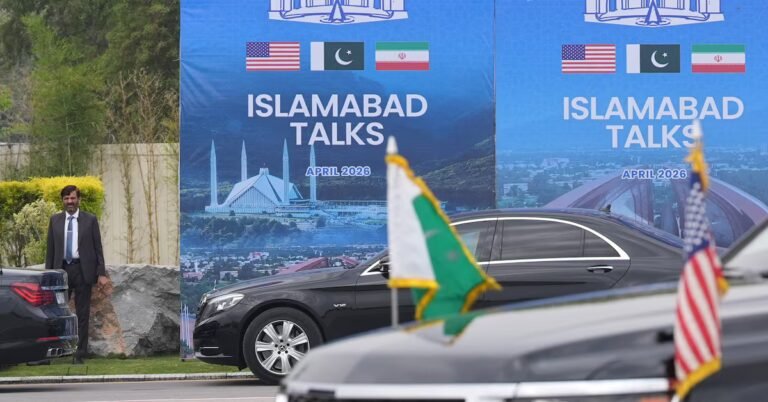
ISLAMABAD: United States Secretary of Defense Pete Hegseth on Saturday said Washington and Islamabad were developing a “true friendship” as he lauded Pakistan’s role in the ongoing US-Iran peace negotiations.

With Pakistan acting as the official interlocutor between Washington and Tehran in the ongoing peace negotiations that resulted in the April 8 US-Iran ceasefire, Trump and his top officials have hailed Islamabad’s role several times.

At the three-day Shangri-La Dialogue in Singapore, Hegseth was asked about former director of national intelligence Tulsi Gabbard’s remarks on Pakistan’s future missile capabilities potentially posing a threat to the US, and whether India’s Agni-VI missile programme posed a similar threat.

The question was posed after Hegseth, in his speech, had lauded US defence cooperation with Indo-Pacific and Southeast Asian countries, as well as India, which he termed a “critical anchor to hold the line”.

“I mentioned India here, but I very easily could have mentioned Pakistan and the role that the field marshal and the prime minister are playing in peace negotiations,” Hegseth replied, praising PM Shehbaz Sharif and Chief of Defence Forces and Chief of the Army Staff Field Marshal Asim Munir.

“I think an unexpected development and a true friendship [is] developing there, which I think is important,” he added.

Noting that both India and Pakistan were nuclear-capable countries, Hegseth said, “I think both sides are going to see understandable threats coming from the other, maybe some of which we see differently, and countries are going to want to develop ICBM threats.”

However, he added, “But we’re not pointing fingers, at least from our view, right now, at either country and calling them a threat to us.”

The defense secretary further said that the US was “grateful for, in each of their lanes, the benefits they’ve given to peace around the world”.

Hegseth also reiterated Washington and Islamabad’s stance that President Donald Trump brokered a ceasefire between Pakistan and India during the May 2025 conflict — a narrative that India’s PM Narendra Modi has denied, irking Trump.

The US president has lauded PM Shehbaz and CDF Munir on multiple occasions, calling the prime minister “great” and the military chief “fantastic” last month.

In February, at the inaugural meeting of the US-led Board of Peace, Trump had praised Shehbaz and described the field marshal as a “tough man” and a “serious fighter”.

The US president has even referred to the army chief as “my favourite field marshal”.

In November 2025, US Secretary of State Marco Rubio said the US saw an opportunity to expand its strategic relationship with Pakistan and that the recent strengthening of ties between the two countries did not come at the expense of Washington’s relationship with New Delhi.