
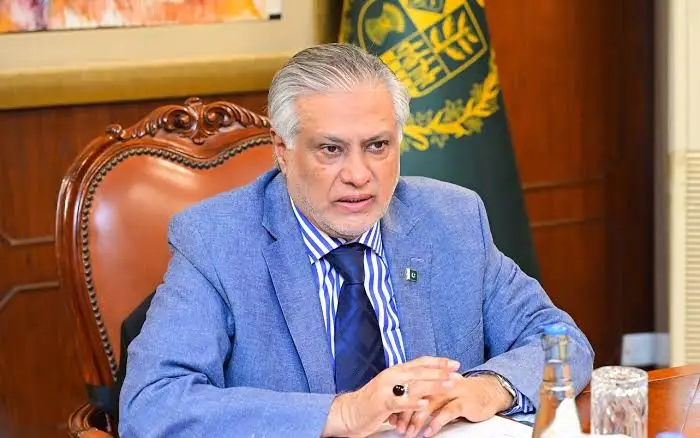
ISLAMABAD: Deputy Prime Minister and Foreign Minister Ishaq Dar has intensified diplomatic outreach amid escalating regional tensions, receiving separate telephone calls from French Foreign Minister Jean-Noël Barrot and UK Foreign Secretary Yvette Cooper, as Pakistan’s role in brokering a key ceasefire continues to draw international recognition.
During his conversation with Barrot, the French foreign minister congratulated Pakistan for its pivotal role in facilitating the initial ceasefire understanding between Iran and the United States. He also expressed strong support for Islamabad’s continued diplomatic engagement aimed at securing lasting peace and stability in an increasingly volatile region.
The two sides held detailed discussions on unfolding regional developments, particularly the deteriorating situation in Lebanon. Both ministers expressed serious concern over reported violations of the ceasefire, stressing that all parties must adhere fully to the agreement to prevent further escalation. They underscored that respect for the truce remains essential to sustaining fragile diplomatic gains.
Reaffirming their shared commitment to deepening Pakistan-France relations, the leaders agreed to expand cooperation across economic, trade, and diplomatic spheres. They also resolved to remain in close contact as the situation evolves.
In a separate high-level exchange, UK Foreign Secretary Yvette Cooper commended Pakistan’s diplomatic role, acknowledging its contribution to efforts that led to the Iran-related ceasefire. According to the Foreign Office, she paid tribute to Islamabad’s constructive engagement and reiterated Britain’s support for Pakistan’s ongoing efforts to promote durable peace in the region.
Dar and Cooper also reaffirmed the strength of Pakistan-UK bilateral relations, agreeing to further enhance cooperation in multiple areas. The interaction was described as a positive and forward-looking engagement, reflecting growing international backing for Pakistan’s diplomatic initiatives.
Rising tensions threaten fragile ceasefire
These diplomatic contacts come against the backdrop of renewed violence in Lebanon, where Israeli military operations have intensified despite the ceasefire framework. The escalation follows Pakistan’s mediation efforts that helped broker a temporary truce between Iran and the United States after weeks of heightened confrontation.
Reports indicate that Israel has carried out some of the deadliest strikes in Lebanon since hostilities with Hezbollah escalated, resulting in significant civilian casualties. Lebanese authorities have reported hundreds killed and over a thousand injured, raising fears that continued violence could derail fragile peace efforts and trigger a broader regional crisis.
Amid the escalating situation, former US President Donald Trump has urged Israeli Prime Minister Benjamin Netanyahu to scale back military operations, expressing hope that a wider ceasefire could hold. His remarks came after Washington announced a two-week truce with Iran, with further negotiations planned to achieve a longer-term settlement.
Pakistan calls for expanded ceasefire scope
Pakistan has maintained that the ceasefire should not remain limited to the US-Iran dimension but must also extend to Lebanon to ensure comprehensive regional stability. Officials in Islamabad have repeatedly warned that continued Israeli strikes risk undermining the agreement and weakening prospects for meaningful dialogue.
Adding to the uncertainty are differing interpretations of the ceasefire’s scope. While the United States maintains that Israeli actions in Lebanon fall outside the truce framework, Iran has argued that the continued strikes constitute a violation of the agreement. Tehran has cautioned that such developments could render ongoing peace efforts ineffective and jeopardize the chances of achieving a durable resolution.
Islamabad positions itself as key diplomatic player
With peace talks scheduled in Islamabad, Pakistan is increasingly positioning itself as a central diplomatic actor seeking to bridge divides and facilitate dialogue among key stakeholders. The Foreign Office has highlighted growing international acknowledgment of Pakistan’s role, pointing to support from major global partners including France and the United Kingdom.
Officials emphasize that sustained diplomatic engagement, adherence to ceasefire commitments, and inclusive negotiations will be critical in preventing further escalation. As tensions persist, Pakistan’s continued efforts to mediate and promote dialogue are likely to remain central to attempts at stabilizing the region and advancing a broader peace framework.

