Home Blog Page 28

Pakistan, China deepen ties at 10th Consular Consultations in Beijing

0

BEIJING: Pakistan and China held the 10th round of their Consular Consultations on March 31, 2026, reaffirming their commitment to strengthening bilateral cooperation and facilitating closer people-to-people links.

The meeting, hosted by the foreign ministries of both countries, was led by Tariq Wazir, Director General (China), on behalf of Pakistan, while Long Zhao, Director General of the Department of Consular Affairs, headed the Chinese delegation.

During the consultations, both sides reviewed the full spectrum of consular matters, including visa regimes, immigration processes, and the protection and welfare of their respective nationals. Officials expressed satisfaction over the steady growth in exchanges between the people of Pakistan and China.

The two countries also reiterated their resolve to further enhance consular cooperation and improve facilitation mechanisms for citizens traveling and residing in each other’s territories.

Consular Consultations between Pakistan and China serve as an institutionalised platform to address a wide range of issues, ensuring smoother coordination on visa, immigration, and citizen welfare matters while reinforcing the broader bilateral relationship.

Stalemate in Urumqi: Pakistan-Afghanistan rift persists as China pushes fragile peace effort

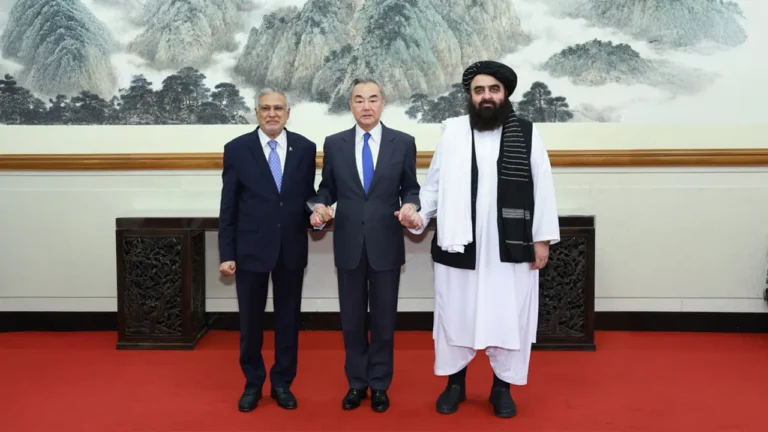
ISLAMABAD: Senior officials from Pakistan, Afghanistan, and China met in Urumqi on Wednesday under a trilateral framework, in a high-stakes attempt to ease escalating tensions between Islamabad and Kabul.

The meeting came after a prolonged diplomatic freeze triggered by Pakistan’s launch of Operation Ghazab lil-Haq on February 26. Despite the significance of the engagement, officials confirmed that the talks ended without any major breakthrough, underscoring the deep-rooted mistrust between the two neighbours.

A Pakistani official, speaking on condition of anonymity, described the discussions as “exploratory,” noting that while dialogue had resumed, no tangible outcomes were achieved. China, however, signalled its commitment to continue engaging both sides in a bid to prevent further escalation.

Clarifying the nature of the talks, a senior official from Pakistan’s Ministry of Foreign Affairs stated that the meeting was not a formal mediation effort, but rather a platform to exchange views on the rapidly evolving regional security situation.

At the heart of the discussions were competing priorities—security versus economic cooperation. Beijing reportedly urged confidence-building steps, including reopening trade routes, in an effort to stabilise ties between Pakistan and Afghanistan.

Islamabad forcefully reiterated its concerns over the presence of Tehreek-i-Taliban Pakistan sanctuaries inside Afghan territory. In response, Afghan Taliban representatives signalled a willingness to engage but maintained their long-standing position that TTP’s actions within Pakistan do not fall under their jurisdiction.

Despite the sharp differences, both sides showed limited openness to reducing tensions. Pakistani officials indicated readiness to revive trade and economic cooperation, suggesting a pragmatic approach aimed at managing conflict while preserving economic interests.

Diplomatic sources revealed that Beijing played a pivotal role in convening the meeting after Kabul sought China’s assistance in bringing Islamabad back to the table. China also raised its own security concerns regarding the East Turkestan Islamic Movement, which it views as a serious regional threat.

In a notable development, the Afghan side reportedly agreed to discuss a verifiable mechanism addressing concerns related to both TTP and ETIM—an indication of cautious, though uncertain, progress.

The talks, attended by senior diplomatic, military, and intelligence officials from both countries, reflected a shared recognition of the risks posed by continued instability, even as core disagreements remain unresolved.

Relations between Pakistan and Afghanistan have sharply deteriorated since the Afghan Taliban’s return to power in 2021, with Islamabad repeatedly accusing Kabul of failing to act against militant sanctuaries.

Operation Ghazab lil-Haq, launched following cross-border hostilities, continues to define the current security landscape. Although a temporary pause was observed during Eid ul-Fitr, Pakistani authorities have made it clear that the operation will persist until its objectives are met.

Efforts by regional players such as Saudi Arabia, Qatar, and Türkiye to de-escalate tensions have led to brief pauses, but a lasting resolution remains elusive.

Pakistan’s military leadership continues to stress that sustainable peace hinges on the Afghan Taliban severing ties with militant groups—an issue that remains the central obstacle in an already fragile relationship.

Strict action ordered against petroleum smuggling, hoarding: PM

0

ISLAMABAD: Prime Minister Shehbaz Sharif on Tuesday instructed that stringent measures should be taken against the smuggling and “illegal hoarding” of petroleum products, a statement issued by his office said.

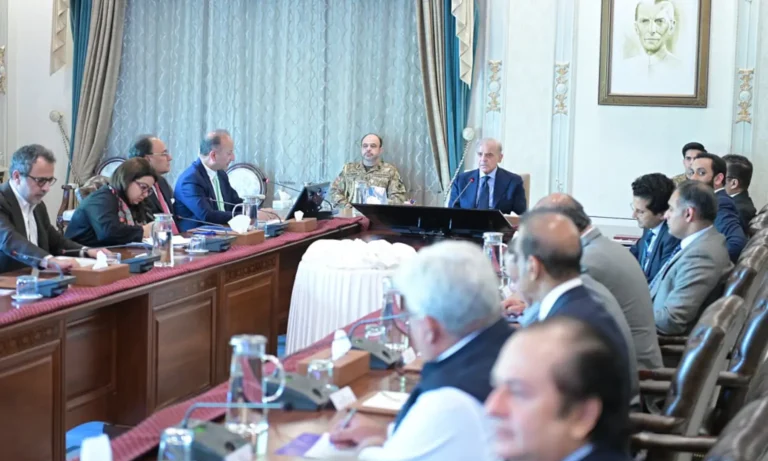
The statement was released by the Prime Minister’s Office (PMO) after the premier chaired a meeting in Islamabad with a focus on the petroleum products’ supply chain and austerity measures that were announced in view of the ongoing Middle East conflict.

The conflict began with the US and Israel launching attacks on Iran on February 28. The world has faced a fuel crisis since, primarily resulting from the disruption of traffic in the Strait of Hormuz — a corridor that had been the route for 20 per cent of global liquified natural gas and a quarter of seaborne oil until the war began.

In view of the situation, the government announced unprecedented austerity measures on March 9 and initially also hiked petrol and diesel prices by Rs55 per litre. But, according to PM Shehbaz, he has rejected proposals for a further hike in the prices of two oil products thrice since then.

The meeting that he chaired on Tuesday reviewed measures to provide relief to low-income groups in the present situation, the PMO statement said.

“The prime minister directed the relevant ministries to consult provinces on the matter and then present final recommendations,” it said, adding that he also issued instructions for strict action against the smuggling and “illegal hoarding” of petroleum products.

It quoted PM Shehbaz as saying: “The federal government has taken significant steps over the past three weeks to provide relief to low-income groups, and it will continue to take such measures in the future as well.”

He said the federal government had managed to provide a relief of Rs129 billion to the common man by making cuts in the development budget and implementing austerity measures.

“Sufficient stocks of petroleum products are available to meet the country’s requirements due to the federal government’s timely decisions,” he added.

“Providing relief to the people is our top priority,” he asserted.

The PMO statement said the meeting was also briefed on the progress of the implementation of austerity measures and was told that the petroleum products’ supply, demand and the supply chain were being regularly monitored through a digital dashboard.

Several federal ministers and officials attended the meeting, the statement said.

Finance minister assures KP CM of full support on legitimate issues

0

ISLAMABAD: Finance Minister Muhammad Aurangzeb on Tuesday assured his “full support” to Khyber Pakhtunkhwa Chief Minister Sohail Afridi for the “resolution of all legitimate issues”, according to the finance ministry.

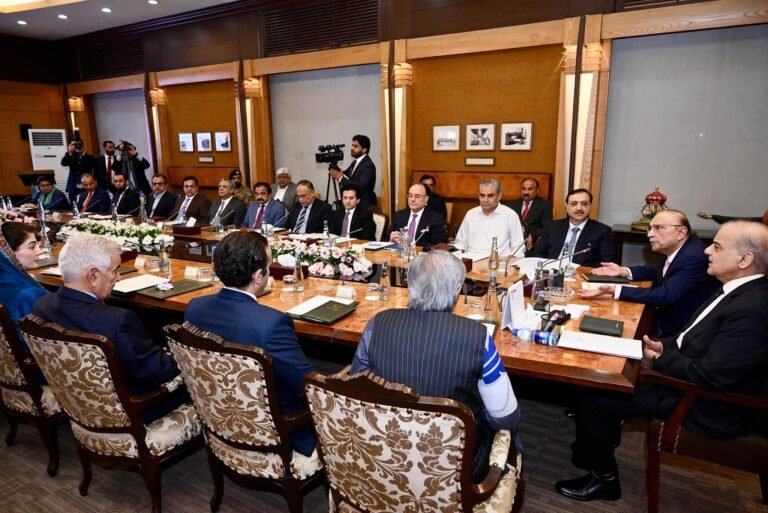
The meeting comes a day after President Asif Ali Zardari chaired a meeting in Islamabad with Prime Minister Shehbaz Sharif and the chief ministers of all provinces, including Afridi.

His presence was considered significant, as he usually does not attend such meetings due to the political differences of his party, the PTI, with the ruling alliance.

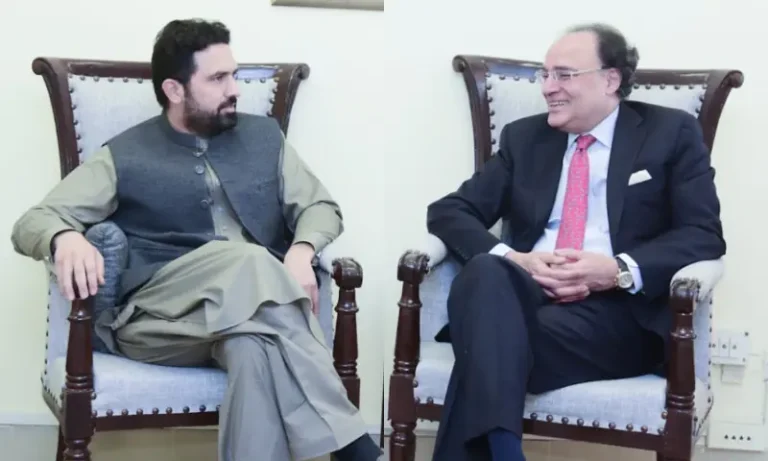
In a post on the social media platform X on Tuesday, the finance ministry said that Aurangzeb held a meeting with CM Afridi at the Finance Division

“The meeting was held in a cordial and constructive atmosphere. The chief minister apprised the finance minister of various economic and financial issues being faced by the province,” it said.

It stated that Aurangzeb assured CM Afridi of “his full support for the resolution of all legitimate issues”, adding that he also reaffirmed the federal government’s commitment to facilitating provincial governments in addressing their financial challenges.

Since becoming the provincial chief executive in October last year, Afridi has repeatedly accused the federal government of stalling the release of funds allocated for KP, particularly those committed for the merged districts under the National Finance Commission (NFC).

Last week, the provincial government had requested the Centre to revise the NFC re­so­urce distribution formula and, if needed, to institute discretionary grants for all provinces pending the emergence of a consensus on formula updates.

In his February meeting with Prime Minister Shehbaz Sharif, he also emphasised the need for cooperation between the Centre and the KP government while discussing provinces’ due shares.

In January, CM Afridi had also written a letter to PM Shehbaz over what he dubbed the Centre’s “persistent failure” to release “constitutionally guaranteed” funds, demanding the “full and unconditional” release of all outstanding federal dues.

£190m case hearing adjourned as defence seeks more time

0

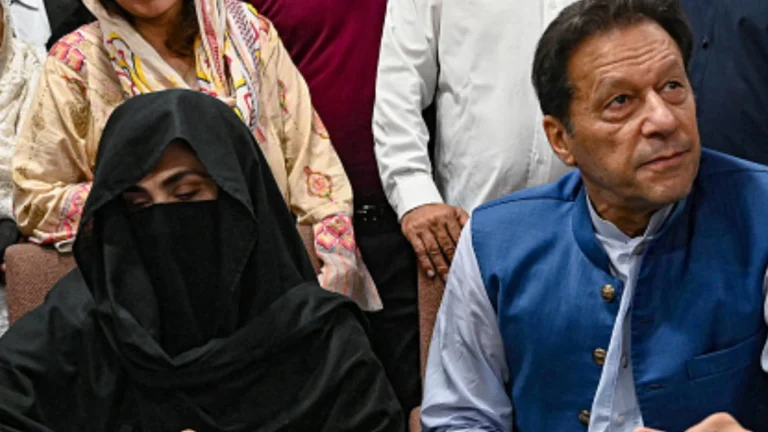
ISLAMABAD: The Islamabad High Court (IHC) on Tuesday adjourned the hearing of the suspension of sentence applications filed by Imran Khan and his spouse, Bushra Bibi, in the £190 million case, after the defence counsel sought time to obtain fresh instructions from his clients.

A division bench headed by IHC Chief Justice Sardar Muhammad Sarfraz Dogar and including Justice Muhammad Asif presided over the proceedings.

During the hearing, defence counsel Salman Safdar appeared alongside National Accountability Bureau (NAB) Special Prosecutor Javed Ashraf and prosecutor Rafay Maqsood. The hearing was also attended by the PTI founder’s sisters, Aleema Khanum, Uzma Khan and Noreen Niazi.

At the outset, the NAB prosecutor argued that two separate applications for suspension of sentence had already been filed, stressing that such pleas could not be heard without issuance of notice in the main appeals, particularly after recent amendments to the NAB law.

He urged the court to proceed with arguments on the appeals if the defence was ready.

Responding to this, Barrister Safdar contended that his clients were convicted on Jan 17, 2025, and despite the passage of over a year, the prosecution had repeatedly sought adjournments. He maintained that the defence had remained present throughout and pressed for suspension of sentence and release on bail, also citing medical grounds.

The bench, however, questioned whether the defence could proceed with arguments on the main appeals against the conviction, even suggesting allocation of two hearing days per week.

Safdar replied that he had not been able to meet or obtain instructions from Imran and Bushra Bibi for the past five months, making it difficult to proceed on the appeals at this stage.

Justice Dogar observed that if the appeals were fixed for hearing, the suspension of sentence applications might not be taken up separately. Safdar reiterated that he could not advance arguments without consulting his clients and sought time for that purpose.

The NAB prosecutor countered that while bail matters are brief, appeals require detailed arguments, questioning the defence’s reluctance to proceed if the case was indeed straightforward.

After hearing both sides, the bench allowed time to the defence to consult their clients and adjourned the proceedings until April 6 (Monday).

Tribunal rejects petition against Tarar’s NA-127 win

0

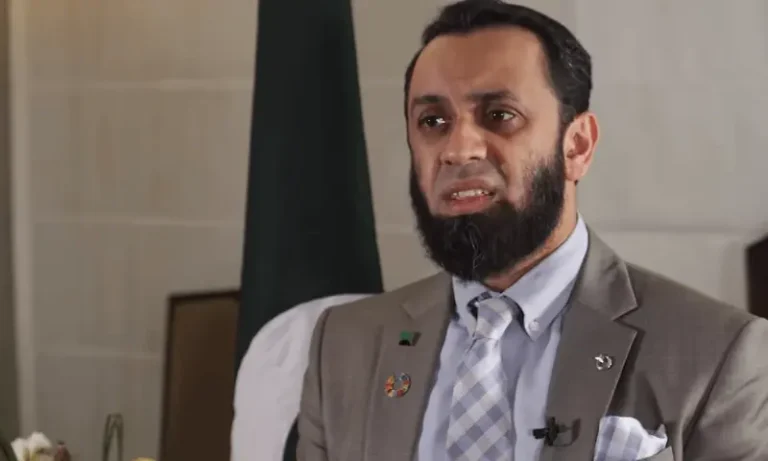
LAHORE: An election tribunal on Tuesday dismissed an election petition against Information Minister Attaullah Tarar’s victory from NA-127 in the 2024 general elections as non-maintainable.

The decision was announced by the tribunal, comprising retired justice Rana Zahid Mehmood, on the election petition filed by PTI-backed independent candidate Zaheer Abbas Khokhar, who had contested against Tarar.

Khokhar had lost his election to Tarar with a margin of 15,980 votes as the latter bagged 98,210 votes against 82,230 of the former.

PPP Chairman Bilawal Bhutto Zardari had also contested the 2024 general election from the same constituency; however, he stood third with 15,005 votes.

The tribunal dismissed the petition on technical grounds, declaring it not maintainable for failing to comply with statutory requirements under the Election Act 2017.

In his petition, Khokhar had alleged the impugned notification of the respondent’s victory was a result of “corrupt and illegal practices” committed on the polling day.

He alleged that the Election Commission of Pakistan (ECP) had manipulated and forged Forms-45 and -47 to declare the respondent a returned candidate.

Khokhar had asked the tribunal to set aside the impugned notification and declare the petitioner a returned candidate from NA-127.

The election tribunal had previously sought arguments on the maintainability of the election petition in November 2024.

Pakistan, China unveil five-point peace plan to halt Iran war, stabilise Gulf

ISLAMABAD: Pakistan and China on Tuesday jointly rolled out a comprehensive five-point initiative aimed at restoring peace and stability in the Gulf and the wider Middle East, as the ongoing US-Israel war on Iran continues to escalate and threaten regional security.

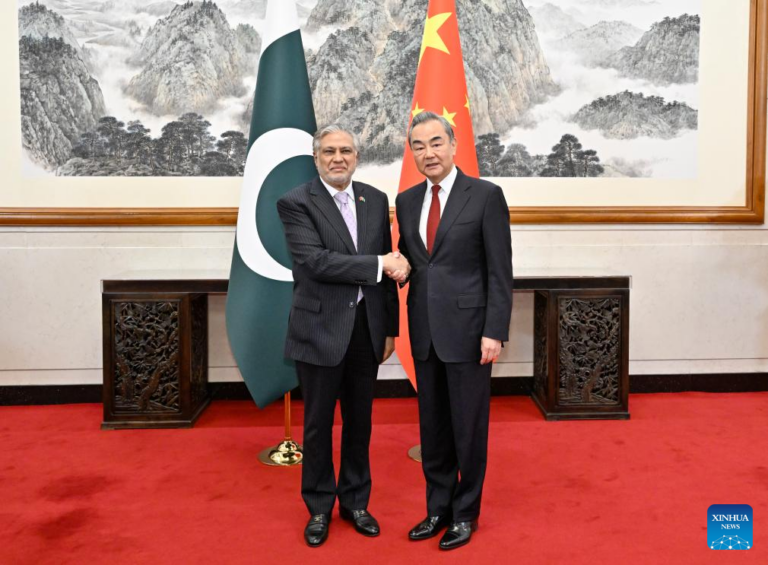
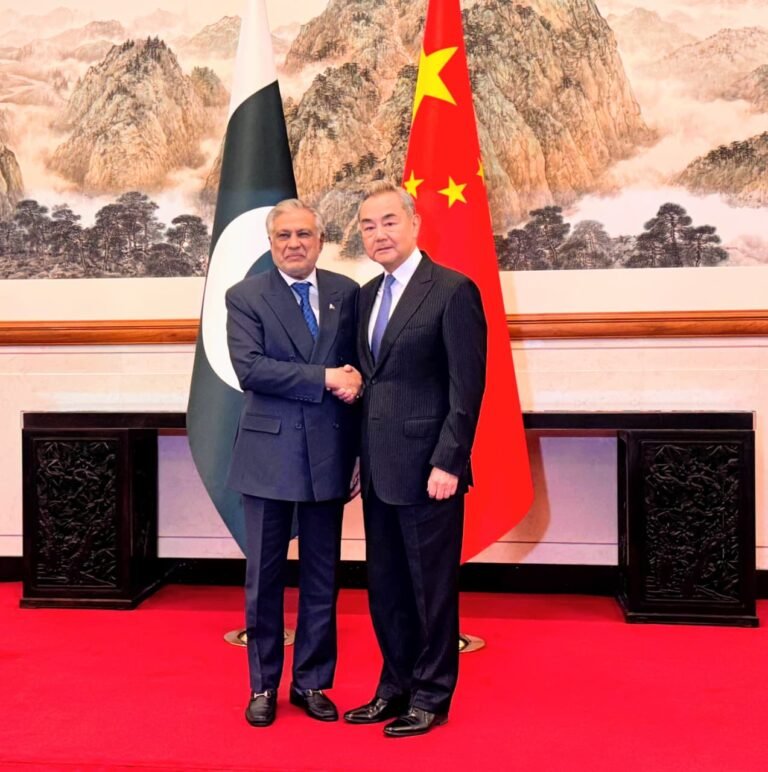
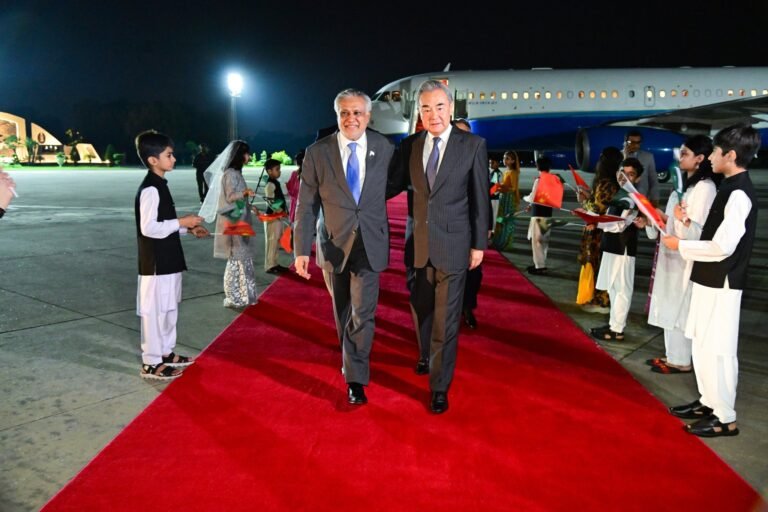
The proposal was announced during Deputy Prime Minister and Foreign Minister Ishaq Dar’s one-day visit to Beijing, where he held detailed talks with Chinese Foreign Minister Wang Yi on the rapidly evolving situation in the region.

According to a statement issued by the Foreign Office, both sides expressed deep concern over the intensifying conflict and agreed that an immediate ceasefire was critical to prevent further escalation. They urged all parties to exercise maximum restraint and prioritise diplomatic engagement over military confrontation.

A key component of the initiative was the urgent call to launch peace negotiations without delay. Pakistan and China stressed that dialogue and diplomacy remained the only viable path to resolving the crisis and ensuring long-term stability in the region. They emphasised that sovereignty, territorial integrity, and national independence of all states, including Iran and Gulf countries, must be fully respected.

The two countries also highlighted the importance of protecting civilians and non-military infrastructure. They called on all sides to strictly adhere to international humanitarian law and immediately halt attacks on civilian populations, energy installations, desalination plants and nuclear facilities, warning that such strikes could have catastrophic humanitarian and environmental consequences.

Another major concern raised in the joint initiative was the security of global shipping routes, particularly the Strait of Hormuz, through which a significant portion of the world’s energy supplies passes. Both nations urged all parties to ensure the safety of commercial vessels and crew, facilitate the smooth flow of trade, and restore normal maritime operations as soon as possible to prevent a global energy crisis.

In addition, Pakistan and China underscored the need to strengthen multilateral cooperation under the framework of the United Nations. They called for renewed international efforts to build a comprehensive peace framework grounded in the principles of the UN Charter and international law, aimed at achieving a durable and lasting resolution to the conflict.

Earlier, China reaffirmed its commitment to closely coordinate with Pakistan on the Iran situation, with its foreign ministry describing both countries as “all-weather strategic partners” working together to promote peace.

The initiative comes amid intensified diplomatic activity, with Pakistan increasingly positioning itself as a key mediator between Washington and Tehran. Officials say indirect communication between the two sides is ongoing, facilitated through coordinated efforts involving regional stakeholders.

Meanwhile, Iran’s Ambassador to Pakistan welcomed Islamabad’s proactive diplomacy, describing it as a constructive effort to de-escalate tensions and restore stability in a region facing one of its most volatile crises in recent years.

The joint move by Pakistan and China signals a growing push by regional and global players to shift the focus from conflict to negotiation, as fears mount over the wider implications of the war for global energy security, trade routes, and geopolitical stability.

Dar departs for China to discuss regional peace, Iran-US talks

0

ISLAMABAD: Deputy Prime Minister and Foreign Minister Senator Ishaq Dar will depart for an official visit to China today at the invitation of Chinese Foreign Minister Wang Yi, the Foreign Office (FO) announced on Monday.

Describing Pakistan-China relations as an “all-weather strategic cooperative partnership,” the FO highlighted the tradition of close coordination and regular consultations on regional and global issues. The visit is expected to provide a platform for detailed discussions on regional developments, as well as bilateral and international matters of mutual interest.

Dar’s decision to travel despite medical advice to rest following a hairline shoulder fracture underscores the importance Islamabad places on its relationship with Beijing.

The trip follows a recent telephone conversation between Dar and Wang Yi, during which the two leaders exchanged views on the evolving regional situation, particularly the Iran-related conflict. A summary from the Chinese ministry noted that both sides agreed to promote a ceasefire, halt hostilities, and support the resumption of peace talks, while safeguarding civilian infrastructure and key maritime routes, including the Strait of Hormuz.

Wang acknowledged the challenges of initiating peace talks in the Iran conflict but emphasized that such efforts are crucial for restoring safe navigation in the vital waterway. He also reaffirmed China’s support for Pakistan’s mediation role. Dar later said Beijing appreciated Islamabad’s ongoing diplomatic efforts, with both sides agreeing to continue resolving disputes through dialogue and diplomacy.

The visit comes as Pakistan assumes a central role in mediation between the United States and Iran, coordinating with Saudi Arabia, Türkiye, and Egypt. Officials say indirect communications between Washington and Tehran are ongoing through structured message exchanges rather than direct talks.

China urges immediate US-Iran peace talks, lauds Pakistan’s role in dialogue process

0

BEIJING: China on Monday urged the United States and Iran to begin peace talks “as soon as possible”, while praising Pakistan for its ongoing mediation efforts amid rising tensions in the Middle East.

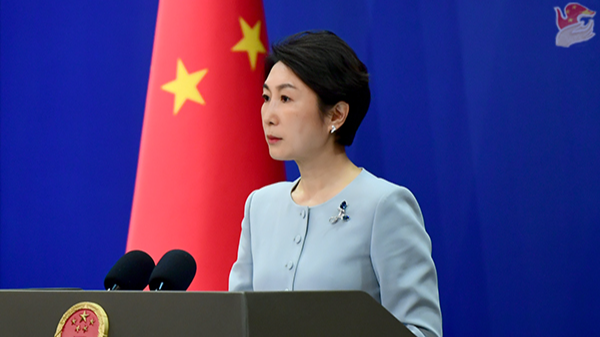
“China calls on relevant parties to start peace talks without delay,” Chinese Foreign Ministry spokeswoman Mao Ning told reporters, emphasizing that Beijing supports all initiatives that promote de-escalation and dialogue.

“We commend Pakistan for its efforts to ease tensions,” Mao added, responding to questions from Anadolu Agency. She also highlighted China’s readiness to work with Pakistan and other parties to strengthen coordination, aiming to end hostilities and safeguard regional peace and stability.

Pakistan’s Foreign Minister Ishaq Dar recently said Islamabad would be “honoured” to host US-Iran talks as part of its broader mediation efforts. The country also hosted a quadrilateral foreign ministers’ meeting focused on easing the conflict.

Mao reiterated China’s opposition to attacks on civilians and civilian infrastructure, stressing that “military means will not solve the root cause. The conflict serves no one’s interests.”

The Middle East has witnessed escalating violence since Israel and the US launched an offensive against Iran on February 28, killing over 1,400 people, including Iran’s then-Supreme Leader Ayatollah Ali Khamenei. Iran has retaliated with drone and missile strikes targeting Israel, Jordan, Iraq, and Gulf countries hosting US military assets, causing casualties, infrastructure damage, and disruptions to global markets and aviation.

Zardari, Shehbaz review regional situation, implications for Pakistan

0

ISLAMABAD: Prime Minister Shehbaz Sharif on Monday called on President Asif Ali Zardari to discuss the overall national security situation and key challenges facing the country, according to the President’s Secretariat.

The meeting comes a day after the quadrilateral ministerial moot in Islamabad, involving the foreign ministers of Pakistan, Saudi Arabia, Turkiye and Egypt, discussing possible ways to bring an “early and permanent end” to the war in the region. The foregin ministers of Saudi Arabia, Egypt, and Turkiye had also called on PM Shehbaz after the meeting concluded.

According to President’s Secretariat, the meeting was attended by Deputy Prime Minister and Foreign Minister Ishaq Dar, PPP Chairperson Bilawal Bhutto-Zardari, and Interior Minister Mohsin Naqvi. National Security Adviser and Inter-Services Intelligence (ISI) Director General (DG) Asim Malik also participated in the meeting.

During the meeting, participants held a detailed discussion on the overall national security situation, reviewed the evolving regional scenario and its implications for Pakistan, the secretariat said.

They further deliberated on economic, energy and security challenges, it added. It stated that the leadership also “emphasised the need for a coordinated national strategy and institutional harmony”.

Last week, President Zardari had also chaired a high-level meeting with PM Shehbaz, Chief of Defence Forces and Chief of Army Staff Field Marshal Asim Munir and other ministers.

The meeting had reviewed the economic, energy and regional situation amid oil and gas supply concerns, focusing on coordination, austerity, fuel conservation and public relief.

President chairs consultative meeting

Later in the day, President Zardari also chaired an “expanded consultative meeting” at Aiwan-i-Sadr with PM Shehbaz and the leadership of all provinces, as well as Gilgit-Baltistan and Azad Jammu and Kashmir in attendance, a statement by the President’s Secretariat said.

It said ISI DG Malik, Dar, Bilawal and Naqvi, as well as several other federal ministers, also attended the meeting, among others.

President Zardari directed during the meeting that, keeping in view the “oil and gas supply pressures, escalating energy costs, and the evolving regional environment, all possible measures should be taken to ease the burden of rising prices on the common man, especially for essential goods and services”, the statement said.

It added that the meeting was briefed on the steps being taken by governments of the four provinces, as well as that of GB and AJK, to “manage price pressures, ensure the availability of essential supplies and mitigate the impact on the public, enabling a coordinated national response”.

The meeting also reviewed the broader regional situation and its potential effects on Pakistan’s security environment, economic outlook and food security, it said.

“The meeting was assured that despite the global crisis, timely decisions have ensured no disruption to fuel supply, and that adequate fuel stocks are currently available to meet the country’s needs, with arrangements for the future also underway,” it added.

DPM Dar informed the meeting about the government’s “proactive diplomatic outreach, including his recent engagements with the leadership of Turkiye, Saudi Arabia and Egypt, as well as leaders of countries involved in the conflict. He also briefed the meeting on his upcoming visit to Beijing”, the statement said.

It said the meeting was informed that proposals to increase oil prices had repeatedly been rejected by the prime minister, and that funds saved through austerity measures were being channelled towards public relief.

“It was noted that the spirit of austerity had begun with the government cutting down its own expenditure, including cuts to the development budget and the immediate grounding of 60 per cent of official vehicles,” the statement said.

It further stated that the president reiterated that the “economically vulnerable people would not be left alone in this difficult time”.

He directed “coordinated decision-making”, with alignment between economic management, energy planning, food security measures and security preparedness.

“The president also asked for the need for public awareness efforts, focusing on reducing fuel consumption, encouraging the use of public transportation and promoting shared mobility practices as part of a broader demand management approach,” the statement said.