Home Blog Page 27

Centre, provinces must jointly deliver relief amid global oil crisis: PM Shehbaz

0

ISLAMABAD: Prime Minister Shehbaz Sharif on Thursday said the Centre and provinces need to set their priorities and make collective efforts to provide relief to the needy amid the global oil crisis triggered by the US-Israeli war on Iran.

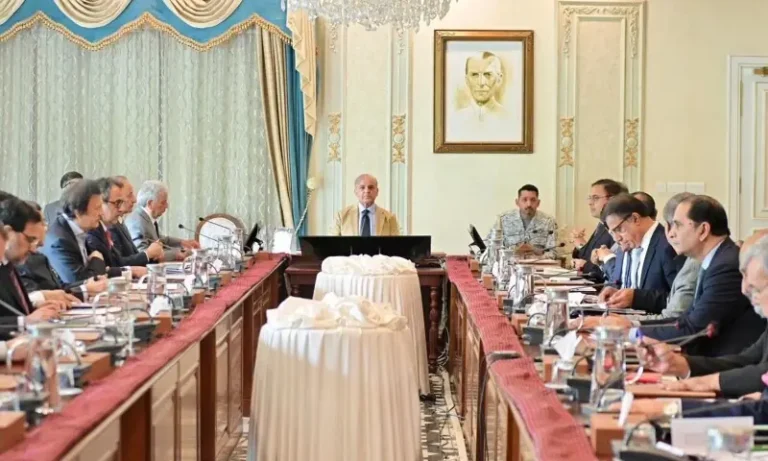
He made the remarks while addressing a high-level meeting, attended by Chief of Defence Forces Field Marshal Asim Munir, the chief ministers from all four provinces and federal ministers.

The premier said that the Centre and provinces should utilise their resources sagaciously and curtail their development projects as much as possible while also utilising their resources on agricultural-related initiatives.

“We have to spend this money on public goods and transport. Now we have to set our priorities jointly,” he added.

He also highlighted the government’s initiatives to protect the economy and the common man from the adverse impact of the global oil crisis.

In his remarks, PM Shehbaz also said that like other countries across the world, Pakistan was “being severely affected by this war”.

He added that after achieving macroeconomic stability, the “time for prosperity and development had arrived but unfortunately, as a result of this war, we are facing unlimited economic difficulties”.

He said two Pakistani vessels that were “waiting to pass through the Strait of Hormuz” were able to do so thanks to the efforts made by Deputy Prime Minister and Foreign Minister Ishaq Dar and CDF Munir.

“In recent days, arrangements were made for 20 more Pakistani-flagged vessels” [to pass through the strait], which will see further progress in the coming days,” he highlighted.

He also recalled that his teams held separate meetings with the chief ministers soon after the conflict sparked, after which it was decided to “pass on” hikes of Rs55 in petroleum prices.

The PM also highlighted the various austerity measures undertaken by the government, especially thanking PPP Chairman Bilawal Bhutto-Zardari for “showing great interest” and calling upon him, as well as President Asif Ali Zardari for holding meetings.

“We gave a blanket cover in these three weeks, and regarding this, the Centre contributed Rs129bn. We made a Rs100bn cut in the Public Sector Development Programme and we added the savings into the account, from which the Centre bore the expenses,” he said.

Talks with Afghanistan hinge on ‘visible, verifiable action’ by Kabul: FO

0

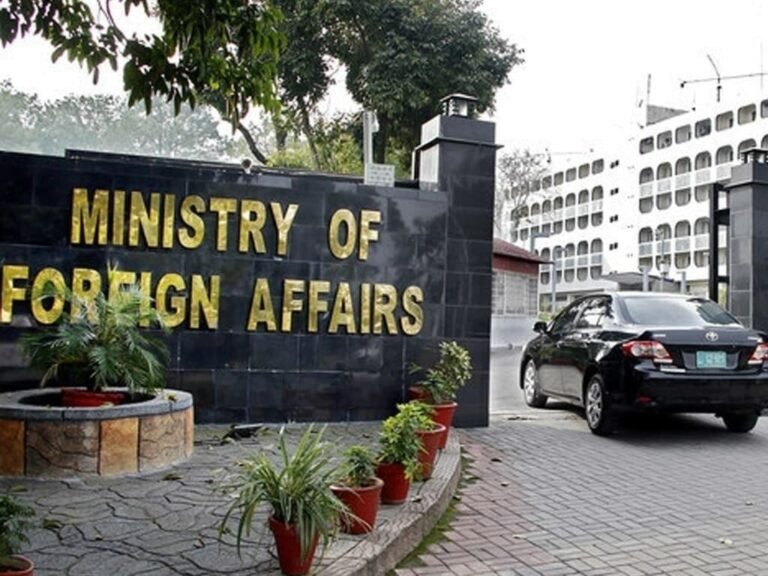
ISLAMABAD: Pakistan is holding talks with Afghanistan to end the current conflict between the two countries, but Kabul must “demonstrate visible and verifiable actions”, said Foreign Office Spokesperson Tahir Andrabi on Thursday.

Since Pakistan launched Operation Ghazab lil-Haq against terrorist hideouts in Afghanistan on February 26, diplomatic contact between the two sides had largely ceased.

The talks in the northwestern Chinese city of Urumqi were being held between senior officials of the two countries, the spokesperson said in his weekly press briefing.

The meeting was focused on sharing perspectives on the latest escalation. No major outcomes were expected, though it was believed that China was pushing for confidence-building measures, such as reopening trade routes.

The spokesperson recounted the visit of Deputy Prime Minister and Foreign Minister Ishaq Dar to Beijing earlier this week at the invitation of Chinese Foreign Minister Wang Yi, saying that it “provided an opportunity for both sides to hold in-depth discussions on regional issues as well as bilateral matters of global and mutual concerns”.

During his opening remarks, Andrabi mentioned that Afghanistan was one of the issues that came up for discussion between the two foreign ministers. Pressed later for details, he confirmed that Pakistan had sent a delegation to Urumqi for talks.

The spokesperson added that Pakistan had sent the delegation “in line with its consistent position and longstanding practice of supporting a credible process that can lead to [a] durable solution … to stop border terrorism from Afghanistan”.

“Our participation is a reiteration of our core concerns,” he stated. “The burden of real process, however, lies with Afghanistan, which must demonstrate visible and verifiable actions against terrorist groups using Afghan soil against Pakistan.”

Andrabi added that the deputy prime minister’s visit to Beijing, despite medical advice to rest after suffering a hairline fracture during the quadrilateral talks in Islamabad, was evidence of the importance that the country placed on its relationship with China.

The spokesperson also referred to a “milestone” achieved during the visit, a five-point initiative by China and Pakistan for restoring peace and stability in the region, in which they called on the immediate cessation of hostilities and starting peace talks as soon as possible.

He said that the initiative had been well-received, garnering appreciation “across the region and beyond”.

“It is an effort towards ending war, it is an effort towards cessation of hostility and it is an effort towards paving the way for a sustainable pathway towards finding the lasting settlement of the ongoing hostilities,” he said.

In addition, speaking on the quadrilateral consultations between the foreign ministers of Pakistan, Saudi Arabia, Turkiye and Egypt, he said that Pakistan “highly values” its relations with these “brotherly countries”.

“These interactions provided an opportunity to further strengthen Pakistan’s cooperation and coordination with these three countries across multifaceted areas of mutual interest,” he added.

The meeting, chaired by FM Dar, brought together foreign ministers from Pakistan, Saudi Arabia, Turkiye and Egypt as part of a coordinated regional push to de-escalate the conflict between the United States and Iran that has now completed its first month, raising fears of wider spillover and disruption to global energy supplies.

There has been a resurgence in terrorism in Pakistan since the Afghan Taliban returned to power in Kabul in 2021.

Islamabad has repeatedly urged the Taliban administration to dismantle terrorist sanctuaries on Afghan soil, particularly those linked to the banned TTP. Officials say those appeals have gone unheeded.

Operation Ghazab lil-Haq was launched on the night of February 26, following unprovoked firing by the Afghan Taliban from across the border.

From March 18 to 23, Pakistan observed a five-day temporary pause in the operation on the occasion of Eidul Fitr, with the FO later saying it would continue “until its objectives are achieved”.

De-escalation requests from Saudi Arabia, Qatar and Turkiye were part of the reasons behind the pauses announced by both sides, according to their respective statements.

8 terrorists killed along Pak-Afghan border in North Waziristan: ISPR

0

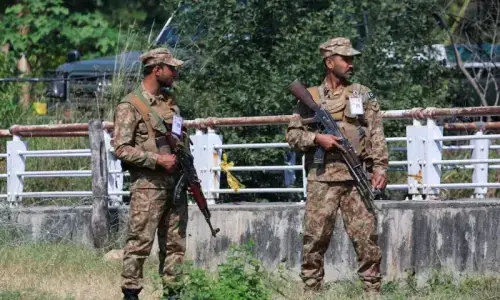
RAWALPINDI: Security forces have killed eight terrorists while responding to their movement along the Pak-Afghan border in North Waziristan district, the military’s media affairs wing said on Thursday.

In a press release, the Inter-Services Public Relations (ISPR) said the engagement took place on Wednesday after the “movement of a group of khwarij” was picked up by the security forces.

“As a result of precise and skilful engagement, eight khwarij belonging to Indian proxy Fitna al Khwarij were sent to hell,” the ISPR said, adding that weapons and ammunition were also recovered from them.

Fitna al Khawarij is a term the state uses for terrorists belonging to the banned Tehreek-i-Taliban Pakistan (TTP).

“Sanitisation operations are ongoing to eliminate any other Indian-sponsored khawarij in the area”, the military said.

“The engagement once again substantiates our repeated stance regarding abject failure of Afghan Taliban regime to ensure effective border management on their side of the border,” the ISPR pointed out.

“[The] Afghan Taliban Regime must fulfil its obligations and deny the use of Afghan soil by khwarij and involvement of its citizens in terrorism inside Pakistan,” it demanded.

The military reaffirmed that the security forces remain resolute and unwavering in their commitment to defend the nation’s frontiers.

The ISPR stated that the “relentless counter-terrorism campaign under vision ‘Azm-e-Istehkam’ (as approved by Federal Apex Committee on National Action Plan) by security forces and law enforcement agencies of Pakistan will continue at full pace to wipe out the menace of foreign-sponsored and supported terrorism from the country”.

President Asif Ali Zardari paid tribute to the security forces for their “timely and effective” action against terrorists.

In a statement shared by his party, the president said, “The role of the security forces in defending the homeland and protecting the borders is a source of pride.”

President Zardari urged the Afghan interim government to prevent its territory from being used for terrorism against Pakistan.

Interior Minister Mohsin Naqvi hailed the security forces for “foiling the infiltration attempt by khwarij from across the Afghan border”.

He saluted the soldiers for “thwarting the nefarious designs of Indian-backed terrorists”, adding that the nation took pride in the army’s professional capabilities.

Terrorism concerns

The military engagement comes as Pakistan presses on with Operation Ghazab lil-Haq, targeting terrorist hideouts in Afghanistan.

A day ago, officials from Pakistan, Afghanistan and China met in the Chinese city of Urumqi under a trilateral mechanism.

While a foreign ministry official said the meeting was not a “mediation effort per se”, it was believed that China was pushing for confidence-building measures, such as reopening trade routes.

There has been a resurgence in terrorism in Pakistan since the Afghan Taliban returned to power in Kabul in 2021.

Islamabad has repeatedly urged the Taliban administration to dismantle terrorist sanctuaries on Afghan soil, particularly those linked to the banned TTP. Officials say those appeals have gone unheeded.

Following unprovoked firing by the Afghan Taliban from across the border, Pakistan had launched Operation Ghazab lil-Haq on the night of February 26.

A five-day temporary pause was observed from March 18 to 23 on the occasion of Eidul Fitr, with the FO later saying the operation would continue “until its objectives are achieved”.

Power Division seeks World Bank backing for new industrial tariff structure

0

ISLAMABAD: The government is preparing a new power tariff structure to encourage industrial consumers to maximise their operations during the daytime and minimise them during peak consumption hours in the evening.

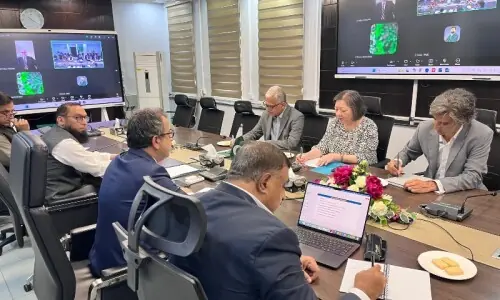
Federal Minister for Power Sardar Awais Ahmed Leghari discussed the concept with World Bank Country Director Bolormaa Amgaabazar on Thursday.

The minister said that electricity consumption in Pakistan has been steadily increasing, reflecting the success of the government’s policies.

He further said that the government is aiming to make electricity tariffs competitive so that key economic sectors can benefit.

He informed the World Bank country director that the Power Division, after assessing concessional tariffs, is currently working on Time of Use (ToU) proposals to further enhance the country’s energy competitiveness.

Leghari noted that the aim is to leverage Pakistan’s solar potential while providing concessional tariffs to industries. He added that the Power Division is currently consulting all relevant stakeholders.

The minister maintained that the Power Division is also considering major policy decisions to utilise the country’s indigenous resources for electricity generation.

He added that the current situation in the Middle East has further strengthened the government’s efforts to make use of these domestic resources.

The minister appreciated the World Bank for its continued cooperation in the energy sector and acknowledged the successful implementation of ongoing projects. He reaffirmed the government’s commitment to working closely with the bank to further strengthen Pakistan’s energy infrastructure.

Amgaabazar appreciated the Power Division’s reform agenda and reaffirmed the bank’s commitment to working with the ministry on priority areas, including tariff rationalisation, transmission and distribution networks, and renewable energy integration, an official statement said.

Trump signals US exit from Iran conflict as military presence continues to grow

0

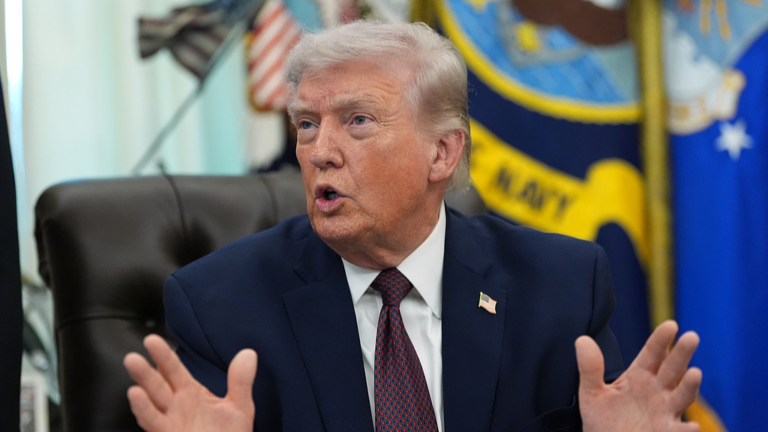
ISLAMABAD: US President Donald Trump said the United States could end ​its military attacks on Iran within two to three weeks, adding that a formal deal may not be necessary for the conflict to wind down.

The remarks highlight shifting US statements regarding “Operation Epic Fury,” which has now entered its 33rd day.

“We’ll be leaving very soon,” Trump told reporters at the White House on Tuesday, saying the exit could take place “within two weeks, maybe two weeks, maybe three.”

When asked if diplomacy with Iran was a prerequisite for ending the campaign, Trump replied, “Iran doesn’t have to make a deal, no. No, they don’t have to make a deal with me.”

These comments contrast with his Monday threats to obliterate Iranian energy infrastructure and reopen the Strait of Hormuz. White House spokesperson Karoline Leavitt posted on X that Trump will update the nation in an address on Wednesday night.

Meanwhile, the Nimitz-class aircraft carrier USS George H.W. Bush and its accompanying warships are deploying to the Middle East, joining the USS Abraham Lincoln and USS Gerald R. Ford carrier strike groups already in the region, the Wall Street Journal reported on Tuesday, citing US officials.

Amid mounting tensions, Iran’s Islamic Revolutionary Guard Corps (IRGC) announced on Tuesday a new threat against US companies in the Middle East starting Wednesday. It listed 18 businesses, including Microsoft, Google, Apple, Tesla and Boeing. The IRGC warned employees to leave their workplaces immediately and urged civilians within a one-kilometer radius to move to safety.

On the military front, the IRGC launched the 88th wave of Operation True Promise 4 on Tuesday, delivering heavy and decisive blows to American and Israeli targets such as the Hawk anti-drone system of the US Fifth Fleet and an Israeli container ship, according to Tasnim News Agency.

Regarding diplomacy, Iranian Foreign Minister Abbas Araghchi was quoted by Al Jazeera as saying that he has been receiving direct messages from US special envoy Steve Witkoff, though he clarified these do not constitute “negotiations.” The messages include exchanged views delivered through “friends,” he added.

Meanwhile, Iranian President Masoud Pezeshkian stated that any decision regarding the end of the conflict would be based solely on Iran’s stated conditions and the framework of ensuring the nation’s dignity, security and interests, Tasnim News Agency reported.

Iran’s Supreme Leader Mojtaba Khamenei has sent a message to Hezbollah chief Naim Qassem, pledging continued support for the resistance against the United States and Israel, the semi-official Fars news agency reported early Wednesday.

Separately, Israeli Prime Minister Benjamin Netanyahu said in a recorded video statement that Israel has smashed Iran’s industrial capability and is creating “new alliances” in the region.

Netanyahu hailed the “enormous achievements” of the conflict, saying, “Iran has the launch capability to threaten us, but they can no longer threaten our existence.” He also expressed hope that he would soon inform Israeli citizens about these new alliances.

So far, the month-long conflict has spread across the region, killed thousands, disrupted energy supplies and threatened to send the global economy into a tailspin.

A latest Reuters/Ipsos poll found that 66% of respondents believe the US should work to end its involvement in the Iran war quickly, even if the administration’s original goals are not fully achieved.

One of the war’s most visible effects in the US has been the rising cost of gasoline, which rose above $4 a gallon on Monday for the first time in more than three years, data from price tracking service GasBuddy shows.

Japan’s long-range missile deployment breaches defence-only policy

0

BEIJING: Standing behind temporary barricades outside the Japan Ground Self-Defense Force’s (JGSDF) Camp Kengun in Kumamoto on Tuesday, a group of Japanese protesters hoisted placards bearing a firm message: “We don’t need missiles.”

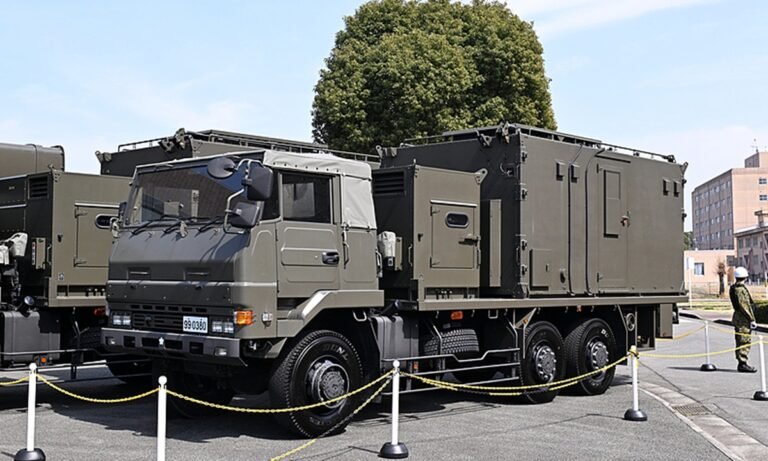
The demonstration marks a flashpoint in a fiercely debated pivot in Japan, as Tokyo is deploying long-range missiles under Japan’s so-called enemy base strike capabilities—a controversial expansion of military power that stretches the historical limits of its pacifist constitution.

According to the Asahi Shimbun, the newly deployed arsenal includes the upgraded Type 12 surface-to-ship missile, a weapon boasting a 1,000-kilometer range that is capable of reaching China’s coastal areas and waters around the Taiwan island, and the Hyper Velocity Gliding Projectile for island defense at Camp Fuji in Shizuoka.

Experts said that the deployment far exceeds Japan’s defense needs, violates the “exclusively defense-oriented” principle and its underlying strategic intent poses a significant security risk to neighboring countries.

Rising risks

According to a post by JGSDF on Tuesday, both weapons were given new official names, the Type-25 Surface-to-Ship guided Missile (25SSM) and Type-25 Hyper velocity Gliding Projectile (25HGP).

Japan has acquired such enemy base attack capability for the first time, Kyodo News reported on Tuesday, adding that the move aims “to strengthen the so-called deterrence against China.”

If Japan determines that the enemy has begun an armed attack, it may exercise the capability even before any damage occurs. However, if the judgment is mistaken, there is a risk that the action could constitute a preemptive strike prohibited under international law, per the report.

This also marks a major turning point in Japan’s defense policy, which has long been based on Japan’s “exclusively defense-oriented policy,” Asahi Shimbun claimed.

Both types of weapons are highly destructive, with the 25HGP posing a more pronounced threat due to its stronger penetration capability, Chinese military affairs expert Song Zhongping told the Global Times. He noted that even though the 25SSM is a high-subsonic system, it still boasts considerable strike capacity. “At a minimum, Japan’s strategic intent behind these developments poses a substantial security risk to neighboring countries,” Song added.

The 25SSM, which also features a stealth design and terrain-matching guidance, enables precise strikes against land targets, far exceeding Japan’s defensive requirements, said Xiang Haoyu, a distinguished research fellow at the China Institute of International Studies.

As for their locations, Xiang said the coverage of Camp Kengun and Camp Fuji together forms an “east west pincer posture.” This combination of range and deployment is clearly targeted at neighboring countries. Acting offensively under the pretext of defense, it marks a fundamental shift in Japan’s post-war security policy from defense-oriented to offensive, the expert noted.

In 2022, Japan revised its three key security documents, including the National Security Strategy and the National Defense Strategy. The updated policies formally introduced the concept of “counterstrike capabilities” – the ability to strike enemy missile launch sites or other military targets if Japan comes under attack, a report by The Diplomat noted.

Notably, while Japan’s Defense Minister Shinjiro Koizumi announced the deployments and their new names on Tuesday, dozens of citizens protested in front of the main gate of Camp Kengun, holding placards that read “We oppose the deployment” and “We don’t need missiles,” Kyodo News reported.

There was no explanation from the Defense Ministry to local residents regarding the transport-in, and participants complained that it was “an outrageous act like a surprise attack,” per the report by Kyodo News.

“Camp Kengun is situated in a residential area in the city center, 1.5 kilometers from the prefectural government office, adjacent to Kumamoto City Hospital, and only about 200 meters from my home,” Hideaki Takabayashi, a professor from a local university in Kumamoto, told the Global Times on Tuesday.

Takabayashi added that within a 2-kilometer radius of the camp, there are 29 childcare facilities, 12 elementary schools, seven junior high schools, eight high schools, and one university. “Deploying long-range missiles in such an area would naturally cause deep anxiety among local residents,” he said.

Takabayashi said that the local residents’ opposition stems not only from the extremely high security risks associated with deploying long-range missiles, but also from the fact that their deployment violates the Japanese Constitution.

Takabayashi stated that Japan’s Constitution defines national sovereignty, respect for fundamental human rights, and pacifism as the core principles of state governance. The deployment of long-range missiles threatens the basic human rights of people across Asia, including the Japanese people. Such an action openly violates the “exclusively defense-oriented” principle and constitutes a breach of the Constitution.

Xiang said that under the pretext of “self-defense,” Japan is pursuing military expansion at the cost of its own domestic security. Public concerns of becoming targets of attack are not unfounded worries, but a rational response to the government’s risky policies, the expert warned.

Rightward turning

Chinese observers have pointed out that the Japanese Self-Defense Force (SDF)’ deployment of new missiles has aroused grave concern, largely because it coincides with the increasingly blatant resurgence of a new form of militarism in Japan. This alarm is compounded by the recent incident in which a member of the SDF broke into the Chinese Embassy in Tokyo armed with a knife. With the SDF undergoing a clear rightward shift, there is a strong likelihood that they are becoming a vehicle for this emerging militarism. By breaching the long-standing “exclusively defense-oriented” principle, the potential danger is self-evident.

In recent months, Takaichi’s administration has invoked “regional threats” to advance military expansion and promote a revisionist view of history, and the incident involving the officer’s intrusion into the Chinese embassy has also exposed the infiltration of far-right ideology into the SDF, while historical revisionist education has distorted military values, Xiang said.

Following the latest development, in which the officer has been sent to prosecutors by the Japanese police, Chinese Foreign Ministry spokesperson Mao Ning noted on Tuesday that parents of the SDF officer who broke into the Chinese embassy said they saw no radical behavior while he was growing up and receiving education in his hometown, and they had no idea at all why he acted like this. But at the SDF, he received nine months of training for reserve officers.

“So the question is, during those nine months, what kind of views was he indoctrinated by the SDF and what kind of education did he receive?” Mao asked.

Pakistan, Norway sign carbon market deal under Paris Agreement: milestone

0

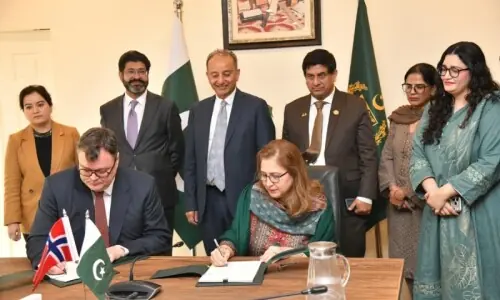
ISLAMABAD: Pakistan and Norway on Wednesday signed the former’s first-ever carbon market deal under the Paris Agreement, according to an official press release.

According to the press release, “Pakistan and Norway on Wednesday signed the country’s first landmark bilateral agreement under Article 6.2 of the Paris Agreement, opening the door to international carbon trading, climate finance and major investment in clean energy and climate-smart agriculture.”

To tackle climate change and its negative impacts, world leaders at the UN Climate Change Conference (COP21) signed the Paris Agreement on December 12, 2015, according to the United Nations. The agreement included commitments from all countries to reduce their emissions and work together to adapt to the impacts of climate change, and called on countries to strengthen their commitments over time.

The press release issued on Wednesday said that a memorandum of understanding (MoU) signed in Islamabad under the auspices of the Ministry of Climate Change and Environmental Coordination marked Pakistan’s “formal entry into the global carbon market and is being seen as a breakthrough in the country’s climate diplomacy”.

Under the agreement, Pakistan will be able to develop carbon-credit generating projects in sectors such as clean energy, agriculture, transport and waste management and potentially sell the resulting emission reductions to Norway, the statement said

Minister for Climate Change and Environmental Coordination Musadik Malik termed the agreement a “historic milestone”, saying it would shift Pakistan from carbon market preparedness to practical implementation, the statement added.

“This is Pakistan’s first bilateral agreement under Article 6.2 and an important step towards implementation,” Malik said.

“It creates a credible pathway for international cooperation and investment in Pakistan’s climate priorities.”

Malik said the agreement would strengthen Pakistan’s position in international carbon markets and create new opportunities for the country’s emerging green economy.

“Carbon markets cannot be treated as an end in themselves. They must help countries like Pakistan finance transition pathways, create jobs, attract technology and deliver real benefits to communities,” he said.

The climate minister said Pakistan had already put in place the country’s first national policy guidelines for carbon trading, approved by the federal cabinet in January 2025, and was now moving to establish rules, reporting systems and bilateral arrangements needed to operationalise the market.

He said Pakistan had strong mitigation potential in sectors such as renewable energy, agriculture, transport and waste management, and that the agreement would encourage project developers and investors to move forward.

Addressing the signing ceremony, Norway’s Ambassador to Pakistan Per Albert Ilsaas said the accord marked the beginning of a new era in bilateral environmental cooperation, the statement added.

“Pakistan is among the countries most affected by climate change, and we believe this partnership can deliver both measurable emission reductions and real development benefits,” he said.

“Norway, which aims to become climate neutral by 2030, was seeking to purchase Internationally Transferred Mitigation Outcomes (ITMOs) under Article 6, not to meet its formal climate targets but to go beyond them,” he said.

“Norway is not purchasing ITMOs to meet its nationally determined contribution targets. We are purchasing them to achieve climate neutrality beyond those commitments,” he said.

Ilsaas said Norway’s Global Emission Reduction Initiative, launched in 2024 with a budget of $1.5 billion, would provide carbon finance to countries such as Pakistan.

“Through Norwegian Global Emission Reduction (Noger), we want to channel carbon finance into countries such as Pakistan and help bridge the gap in climate mitigation finance,” he said.

He added that Norway was looking beyond individual carbon-credit projects and was interested in large-scale programmes in renewable energy, industry and agriculture.

“We are looking beyond individual projects. We are interested in cooperation across entire sectors where climate policies can generate emission reductions at scale,” the ambassador said.

The ambassador said Norway had already signed similar agreements with Benin, Indonesia, Zambia, Jordan and Senegal and was working to buy 15 million carbon credits by 2030.

The statement said that Ambassador Ilsaas also invited Pakistan to present a broader pipeline of projects, specifically pointing to renewable energy ventures such as the Zhenfa 100-megawatt solar project and the Indus wind energy project as possible candidates for future cooperation.

“Both sides also agreed that the new ambitious pact could significantly boost Pakistan’s access to climate finance and private-sector investment, while helping the country pursue low-carbon growth and meet its climate commitments under the Paris Agreement,” it concluded.

Pakistan met essential goods demand, supply amid regional conflict: PM Shehbaz

0

ISLAMABAD: Prime Minister Shehbaz Sharif said on Wednesday that many countries were facing difficulties in maintaining the balance between demand and supply of essential commodities due to the global situation, but Pakistan was addressing the challenging situation “successfully and effectively,” the Prime Minister Office (PMO) said.

According to a statement by the PMO, the prime minister made these remarks during a review meeting which was held to devise a comprehensive strategy to prevent the country from the financial and economic impacts arising from the regional conflict.

PM Shehbaz commended the effective and timely measures taken by institutions to prevent any emergency situation regarding the demand and supply of essential goods.

He appreciated the steps taken by relevant ministries and institutions through mutual coordination to address the financial and economic challenges and directed them to further enhance their cooperation.

“After meeting domestic needs of food and essential items, progress is being made on a comprehensive strategy to export surplus production,” the prime minister was quoted as saying.

PM Shehbaz said the government would continue taking all necessary steps for the stability and development of the national economy with firm resolve, as well as for public welfare.

Considering a hike in prices in the global market, the prime minister directed to devise a comprehensive medium and long-term strategy to tackle the economic and financial impacts on the country.

The prime minister issued special directions that the strategy, focused on stability and growth of the economy, be formulated in cooperation with relevant ministries and institutions, the PMO said.

While preparing the strategy, the external and internal macroeconomic impacts must be carefully evaluated, the premier directed.

He also directed that effective measures be proposed to minimise the impact of rising production costs, due to the regional conflict, on the country’s exports and overall domestic output.

“Available resources and opportunities should be fully utilised to prevent the adverse effects of the current economic challenges on agricultural and industrial production,” the PMO said, citing the prime minister.

As per the premier’s directives, relevant ministries and institutions were reviewing the economic impacts of the regional situation on a daily basis.

FCC seeks KP CM response over ‘Imran Khan release force’ plan

0

ISLAMABAD: The Federal Constitutional Court (FCC) on Wednesday directed Khyber Pakhtunkhwa Chief Minister Sohail Afridi to respond within 10 days to a petition seeking to prevent the mobilisation or activation of a “release force” for jailed PTI founder Imran Khan.

Headed by FCC Chief Justice Aminuddin Khan, a three-judge bench also issued notices to respondents in the petition, namely the KP government, the PTI, the federal government and the Election Commission of Pakistan (ECP).

The proposed force was announced by CM Afridi in February after a days-long protest to secure a meeting with Imran failed to budge the government. It aims to continue the party’s struggle for the release of its founder, who has been imprisoned in Rawalpindi’s Adiala jail since Aug 5, 2023.

In the petition filed before the FCC, Advocate Ali Nawaz Kharal has contended that he was filing the plea in the public interest and seeking the court’s intervention to prevent the formation or mobilisation of any private force or militia in violation of the Constitution. The petition had also sought to stay the formation of such a force.

During the hearing on Wednesday, Justice Ali Baqar Najafi inquired whether the provincial cabinet had granted permission for the formation of such a force. The counsel, however, responded in the negative.

The court asked the federal government to ensure that the law was not violated and that the public at large was protected.

When announced, the proposal had divided the PTI and caused concerns among the party leaders, who questioned the rationale for the force. They questioned whether the PTI was going to form another ‘Al-Zulfikar’, a left-wing militant outfit formed by the sons of former PM Zulfikar Ali Bhutto in 1979.

A party leader, wishing not to be named, said that the announcement had shocked many.

However, several other party leaders believe the protest should be launched immediately rather than “wasting time” on membership drives, after PTI leader Salman Akram Raja announced that they would start the registration for the movement after Eidul Fitr.

Petition

The petition argued that the statement by a sitting chief minister to form such a force was not only shocking but in violation of the oaths he had taken as an elected member of a provincial assembly and as the provincial chief executive.

In the past, the petition said, such terminologies of a release force were also used by different political parties, which led to the emergence or perception of militant wings associated with political parties.

Though such a force had not yet been formally constituted or operationalised by the PTI, the public announcement regarding its intended formation, organisational structure and mobilisation generated, amongst the general public, grave concern, an atmosphere of fear, uncertainty, unrest, and panic, the petition said.

The petition also noted the constitutional prohibition against private militias under Article 256 of the Constitution, as well as the Private Militias (Abolition and Prohibition) Act, 1974, thereby necessitating the intervention of the FCC in anticipation of any such unlawful formation and acts associated thereto, the petition contended.

The petition argued that Article 5 of the Constitution imposed a fundamental duty of loyalty to the State and obedience to the Constitution and law upon every citizen, including those holding public office, and any action contrary thereto is ultra vires the Constitution.

Article 17 of the Constitution guaranteed freedom of association but expressly subjects this right to “reasonable restrictions imposed by law in the interest of sovereignty or integrity of Pakistan, public order or morality,” the petition reminded, adding that the formation of a private force or militia clearly falls outside permissible association.

Likewise, Article 256 of the Constitution explicitly prohibited private organisations capable of functioning as military or paramilitary forces, declaring any such organisation illegal.

Thus, the statements made by chief minister KP indicate an intention to establish a force capable of exercising organised physical power, which constituted a clear violation of Article 256 of the Constitution, the petition argued, adding the Private Military Organizations (Abolition and Prohibition) Act, 1973 empowered the federal government to prohibit such private militias and prescribes penal consequences for the formation, organisation, training, equipping, or membership in such organisations.

The mobilisation and operationalisation of such a force raises serious questions as to how the chief minister intends to “secure the release” of Imran, the petition said.

13 terrorists killed in two KP IBOs: ISPR

0

RAWALPINDI: Security forces killed 13 terrorists in two separate engagements in Khyber Pakhtunkhwa, said a statement by the Inter-Services Public Relations (ISPR) on Wednesday.

The military’s media wing said the engagement took place on March 30 and the terrorists belonged to “Indian Proxy Fitna al Khawarij”.

Fitna al Khawarij is a term the state uses for terrorists belonging to the banned Tehreek-i-Taliban Pakistan.

During the first intelligence-based operation (IBO) conducted in the Bara area of Khyber district, security forces killed 10 terrorists.

“During the conduct of operation, own troops effectively engaged khawarij location and after an intense fire exchange, 10 khawarij were sent to hell,” said the ISPR.

In another IBO conducted in the Bannu district of the province, three terrorists were killed by security forces.

“Sanitisation operations are being conducted to eliminate any other Indian-sponsored kharji found in the area, as the relentless Counter Terrorism campaign under vision ‘Azm-e-Istehkam’ (as approved by the Federal Apex Committee on National Action Plan) by security forces and law enforcement agencies of Pakistan will continue at full pace to wipe out the menace of foreign-sponsored and supported terrorism from the country.”

President Asif Ali Zardari and Prime Minister Shehbaz Sharif commended the security forces for eliminating 13 terrorists, state-run Radio Pakistan reported.

In their separate statements, they expressed unwavering national resolve to completely eliminate “foreign-backed terrorism”, the report said.

President Zardari asserted that operations against the terrorists will continue to ensure national security and the protection of the people.

PM Shehbaz said security forces were like a solid wall against terrorism for the country’s protection.

KP has seen a rise in terrorist attacks in the past year.

According to the Annual Security Report 2025 from the Centre for Research and Security Studies (CRSS), KP recorded a significant surge in violence last year as “fatalities rose from 1,620 in 2024 to 2,331 in 2025”.

Due to a resurgence of militancy, especially in KP and Balochistan, where attacks often target security personnel and LEAs, the state has intensified counter-terrorism operations.

On March 15, security forces killed five terrorists during an IBO in Lakki Marwat.

A week before that, 13 terrorists were eliminated in five separate operations across KP.