Home Blog Page 26

Army top brass condemns Iranian strikes on Saudi facilities, warns of escalation risks

— Corps Commanders call attacks a threat to ongoing peace and mediation efforts

–Pakistan backs diplomacy, urges restraint in escalating Middle East conflict

— Military reaffirms resolve to eliminate terror proxies and continue operations

— Leadership rejects Indian narratives, flags rights abuses in Indian Illegally Occupied Jammu and Kashmir

RAWALPINDI: Pakistan’s military leadership on Tuesday strongly condemned recent Iranian missile and drone attacks on Saudi Arabia’s petrochemical and industrial facilities, terming them an “unnecessary escalation” that could undermine ongoing efforts to resolve the Middle East crisis.

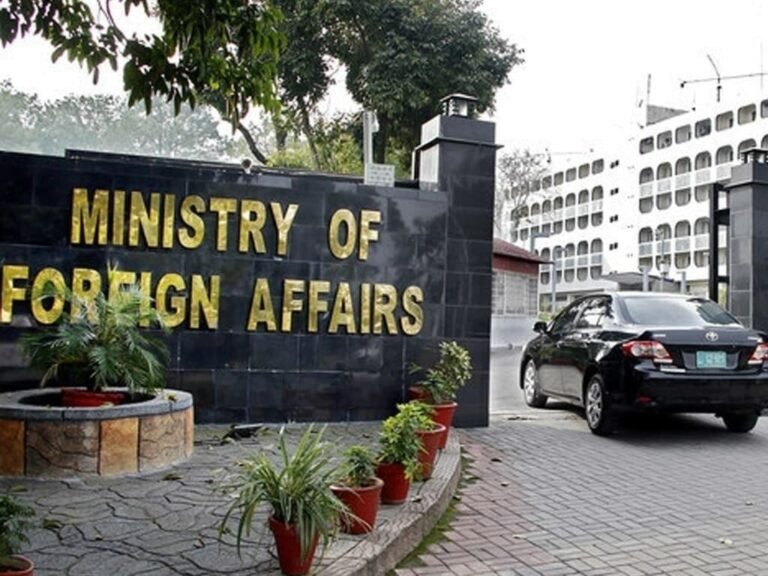
The strikes targeted a major petrochemical complex in Jubail, an industrial hub in Saudi Arabia’s Eastern Province. Pakistan’s Foreign Office also expressed deep concern, issuing an unequivocal condemnation of the attacks.

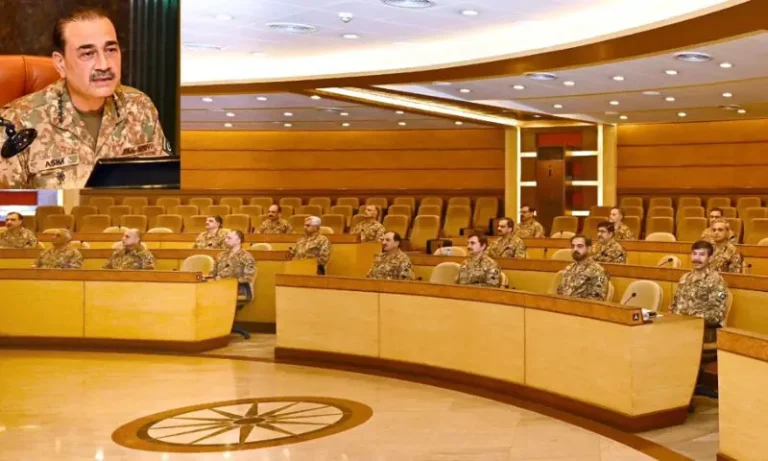
According to the Inter-Services Public Relations (ISPR), the issue was discussed at the 274th Corps Commanders’ Conference held at General Headquarters in Rawalpindi. The forum warned that such actions risk derailing diplomatic initiatives aimed at peaceful conflict resolution.

The military leadership noted that Saudi Arabia had shown restraint despite serious provocations, creating space for mediation and dialogue. However, it cautioned that continued aggression could disrupt the fragile environment necessary for de-escalation.

The forum appreciated Pakistan’s diplomatic efforts to end the conflict, reaffirming the country’s commitment to principled diplomacy and constructive engagement. It reiterated Pakistan’s role as a responsible regional actor contributing to stability.

Regional tensions have surged following US and Israeli strikes that killed Iran’s Supreme Leader Ayatollah Ali Khamenei and senior officials earlier this year, prompting retaliatory actions by Iran and widening the conflict.

In response, Iran targeted US military installations across Gulf states, significantly expanding hostilities. Amid this backdrop, Pakistan has stepped up mediation efforts, including hosting a high-level quadrilateral meeting in Islamabad involving Türkiye, Saudi Arabia, and Egypt.

Diplomatic engagement intensified as the United States and Iran explored a potential framework to end the conflict. The proposal, facilitated by Pakistan, envisaged an immediate ceasefire followed by negotiations on a comprehensive settlement within weeks. However, Tehran rejected the plan, insisting on a permanent resolution rather than a temporary truce.

Chief of Defence Forces and Army Chief Asim Munir remained in continuous contact with key international figures, including US Vice President JD Vance, envoy Steve Witkoff, and Iranian Foreign Minister Abbas Araghchi, as diplomatic efforts unfolded.

Separately, the conference reviewed Pakistan’s internal and external security environment, reiterating a firm resolve to eliminate all terrorist threats. The military vowed to continue operations against militant networks, including those allegedly backed by India and other external actors.

The forum emphasized that Operation Ghazab Lil Haq would proceed until militant safe havens are dismantled and the use of Afghanistan’s territory against Pakistan is decisively ended.

It also rejected what it termed persistent disinformation and “false flag” narratives attributed to India, stating that such claims have lost credibility internationally. Concerns were raised over ongoing human rights violations in Indian Illegally Occupied Jammu and Kashmir, including alleged extrajudicial killings.

In his concluding remarks, General Munir directed commanders to maintain high operational readiness and adaptability, expressing confidence in the armed forces’ ability to counter all threats and safeguard national sovereignty.

The meeting concluded with prayers for martyrs from the armed forces, law enforcement agencies, and civilians, with participants paying tribute to their sacrifices and reaffirming their central role in Pakistan’s security.
Pakistan condemns Iranian strikes on Saudi energy facilities as dangerous escalation

0

ISLAMABAD: Pakistan on Tuesday expressed concern and also condemnation of Iranian missile and drone strikes on Saudi Arabia’s energy facilities, terming the attacks as “a dangerous escalation” that undermined regional peace and stability.

In a statement, the Foreign Office (FO) said, “The government of Pakistan expresses its deep concern and unequivocal condemnation of the missile and drone attacks carried out by the Islamic Republic of Iran last night against energy facilities in the Eastern Region of the kingdom of Saudi Arabia.”

The statement said that Pakistan also mourned the loss of life resulting from these attacks and “strongly deplores the damage inflicted on vital infrastructure”.

The statement also conveyed Pakistan’s condolences to the families of the victims, adding that the country firmly stood in solidarity with the government and people of the Kingdom of Saudi Arabia during this difficult time.

“The government of Pakistan considers these attacks a serious violation of Saudi Arabia’s sovereignty and territorial integrity and a dangerous escalation that undermines regional peace and stability,” the FO said.

“Pakistan reaffirms its unwavering support for the Kingdom’s security,” the statement concluded.

PM speaks to Saudi crown prince

Separately, Prime Minister Shehbaz Sharif said on X that he spoke with Saudi Crown Prince Mohammed bin Salman and “conveyed Pakistan’s unwavering solidarity with the Kingdom of Saudi Arabia”.

“Condemned today’s attack on the Al Jubeil oil facility. We stand shoulder to shoulder with our Saudi brothers and sisters,” he said.

“Appreciated the kingdom’s restraint under the wise and sagacious leadership of his royal highness the crown prince and reaffirmed Pakistan’s commitment to advancing peace efforts for de-escalation in the region,” he said.

A separate statement by the Prime Minister’s Office said, “During their warm and cordial conversation, the two leaders discussed the ongoing hostilities in the region.”

“The prime minister lauded the wisdom and sagacity of the Saudi leadership in exercising maximum restraint during the ongoing crisis, and stated that Pakistan was working assiduously for the success of the peace efforts, in partnership with other countries. He also apprised the crown prince on latest developments in Pakistan’s mediation efforts to de-escalate the Middle East crisis,” the PMO handout said.

“The crown prince appreciated Pakistan’s peace efforts, aimed at restoring peace and stability in the region,” it added.

Attack on Saudi Arabia

The kingdom has come under attack from hundreds of Iranian missiles and drones since the US and Israel launched the war on Iran on February 28, most of which were intercepted, authorities have said.

Early on Tuesday, Saudi Arabia’s defence ministry said that it had intercepted ballistic missiles towards its eastern region, with debris falling near energy facilities. However, it had not specified who launched the projectiles.

Meanwhile, a witness who requested anonymity told AFP on Tuesday that overnight attacks on Saudi Arabia hit a petrochemical complex in a sprawling industrial area in the eastern city of Jubail, hours after similar installations in Iran were struck.

“An attack caused a fire at the SABIC plants in Jubail. The sounds of explosions were very loud,” the source said, referring to the Saudi Basic Industries Corporation.

Jubail in eastern Saudi Arabia is home to one of the world’s largest industrial cities, where steel, gasoline, petrochemicals, lubricating oil and chemical fertilisers are produced.

The source later told AFP that workers in affected areas had been evacuated from their living quarters.

Bahrain, Saudi Arabia and the United Arab Emirates issued simultaneous public safety alerts on Tuesday, while the bridge that connects Saudi Arabia to Bahrain was briefly closed as a precautionary measure following warning alerts.

It should be noted that Pakistan and Saudi Arabia signed a “Strategic Mutual Defence Agreement” in Riyadh last year, pledging that any attack on either nation would be treated as an act of aggression against both.

Last month, Deputy Prime Minister and Foreign Minister Ishaq Dar disclosed that Pakistan’s diplomatic intervention helped deter heavier Iranian strikes on Saudi Arabia.

Amid the ongoing conflict, Chief of Defence Forces and Chief of Army Staff Asim Munir met Saudi Defence Minister Khalid bin Salman Al Saud while PM Shehbaz met the Saudi crown prince.

In the latter meeting, the premier expressed Pakistan’s “full solidarity and support” for Saudi Arabia “in these challenging times” and agreed to work together for regional peace and stability.

No impact yet of Middle East conflict on Gulf remittances: Finance Minister

0

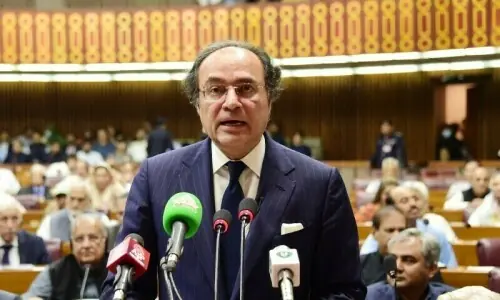
ISLAMABAD: Finance Minister Muhammad Aurangzeb on Tuesday said the ongoing conflict sparked by the US-Israeli war on Iran has not adversely impacted Pakistan’s remittances from the Middle East.

“Some members spoke of remittances, which is true. [However,] thankfully, there has been no impact on remittances as of yet,” Aurangzeb said while speaking on the National Assembly floor.

“However, the reality is, roughly between 40 to 50 per cent of our remittances are coming from the GCC (Gulf Cooperation Council) countries,” the minister said, pointing out the region’s large contribution.

“So we are also reviewing its elasticity, that what difference it can make on the balance of payments and the current account,” he added.

Noting that other lawmakers had “rightfully” wondered what impacts the conflict would have on Pakistan’s economy, Aurangzeb said the government was regularly monitoring several aspects.

“Not only is the oil and gas bill increasing, but trade and insurance cost has gone up and the vessels available that bring these molecules,” he added.

Commenting on Pakistan’s diplomatic efforts to secure peace in the Middle East, Aurangzeb said, “Pakistan is playing its role, with prime minister sahib, field marshal sahib, deputy prime minister sahib. May God make us take things to the finishing line.”

However, he cautioned that even if hostilities cease soon, the resulting crisis would remain for “weeks and months” as energy infrastructure has been hit and continues to be hit across the Gulf.

During his speech, Aurangzeb detailed that government meetings are held on a daily basis, where steps taken by others in South Asia and even those in Southeast Asia are studied.

“Rationing has begun in a lot of countries […] even people with deep pockets have already transmitted the price. If you compare internationally, in the UAE, petrol prices were increased by 30pc and diesel prices by 70pc,” he said.

The minister cited Bangladesh, Sri Lanka, India, Philippines and Cambodia as examples of nations hit hard by the ongoing crisis.

In an apparent response to remarks made by other lawmakers, Aurangzeb stressed the need to set some facts straight after “statements were made that had no connection with reality”.

The minister highlighted that a blanket subsidy had been given, halting the transmission of oil price hikes to the public from March 14 to April 4.

“It is important to reinforce that a blanket subsidy of Rs129 billion was given,” he asserted, pointing out that funds were sourced through austerity measures, which were also facing a third-party audit.

The budget for Public Sector Development Programme (PSDP) was cut by Rs100bn, Aurangzeb noted, adding that dividends and profits were obtained from state-owned enterprises (SOEs).

“On the question of whether the deserving segments were taken care of or not, so a targeted subsidy was announced right at that time,” he said, referring to the subsidies aimed at bikers, public transport and small-scale farmers.

“We have not just announced the subsidies; the dirbursement are underway and the process had begun on Saturday,” Aurangzeb highlighted.

The minister noted that “very constructive suggestions” had come from the treasury and opposition benches.

“While we should hope for the best, we have to plan for the worst and hope is not a strategy,” he remarked.

Section 144 imposed in Rawalpindi ahead of PTI protest, April 9 rally

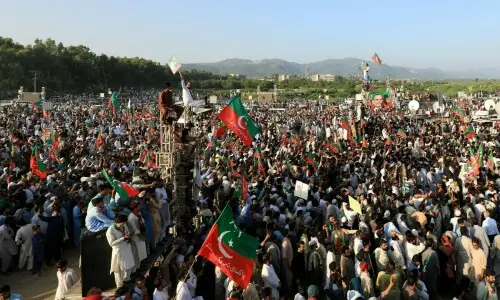
RAWALPINDI: The district administration has banned gatherings across the district for 15 days ahead of PTI’s protest outside the Adiala jail on Tuesday and a separate gathering on April 9.

In an order issued on Monday, Rawalpindi Deputy Commissioner Hassan Waqar Cheema imposed Section 144 of the CrPC from April 6 to April 20, banning gatherings, sit-ins, and protests.

“It has been brought to my attention by the District Intelligence Committee (DIC) in its meeting held on April 4 that there exists an imminent threat within the limits of District Rawalpindi, particularly surrounding sensitive installations, prominent roads and other critical infrastructure,” the order read.

It added that the DIC has reported intelligence suggesting that “certain groups and elements are actively mobilising with intentions to disturb the law and order situation through large gatherings, protests and disruptive assemblies”.

“The forum further indicates that these elements may target soft locations and mobilise individuals with the potential to engage in violent actions near key installations and other sensitive sites,” the order stated.

In light of the above circumstances, the DC termed it “essential to ensure the security of the people and installations buildings against any potential threat”. Subsequently, he banned gatherings of five or more persons across Rawalpindi.

The display of arms (other than carried by law enforcement personnel) and “objectionable/hate speeches” was banned as well.

The DC also prohibited carrying “weapons, spikes, laden batons, gulels, ball bearings, petrol bombs, improvised explosives or any other instrument that could potentially be used for violence”.

Pillion-riding and the use of loudspeakers were also banned.

Later in the day, multiple PTI leaders were reportedly detained, including the Opposition leader in the Punjab Assembly Moeen Qureshi, parliamentary leader Farrukh Javaid Moon, and MPA Ali Imtiaz Warraich from Kallar Kahar, an associate of Moon told.

The associate added that the leaders were on their way to Adiala jail in Rawalpindi.

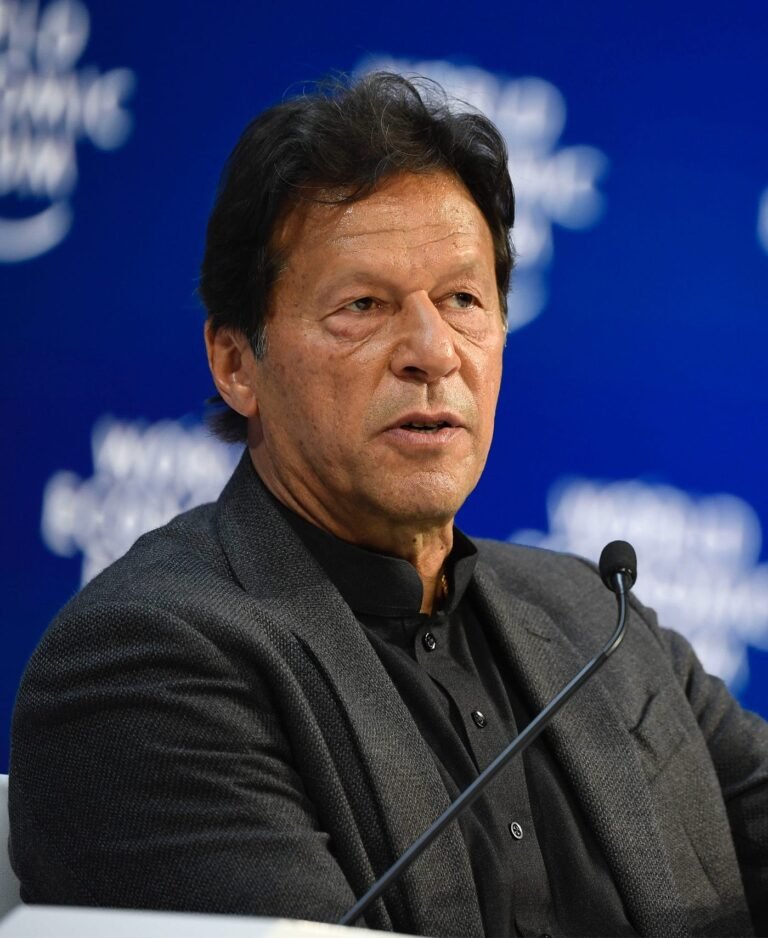
Over the past few months, PTI has staged sit-ins near or outside the prison complex every Tuesday and Thursday — the court-mandated days for visiting the former premier and PTI founder Imran Khan, who remains incarcerated at the Adiala jail and has faced restrictions on meetings with family and party leaders.

The PTI has called for a “peaceful protest” outside the Adiala jail today against the restrictions on meeting Imran.

The party has also announced a protest in Rawalpindi on April 9 (Thursday), marking the day the former prime minister was ousted in a no-confidence motion in 2022.

On Monday, Khyber Pakhtunkhwa Chief Minister Sohail Afridi said the protest in Rawalpindi would be a one-day peaceful activity.

“The April 9 protest is meant to highlight concerns regarding democratic backsliding, economic decline, inflation, delays in the hearing into PTI founder Imran Khan’s cases, as well as his and his wife’s continued illegal detention and inhumane treatment,” Afridi told a news conference at the KP House in Islamabad.

He called upon authorities to grant permission for the gathering, and any denial would compel participants to register a protest at the point of obstruction.

The CM said that his convoy would leave Peshawar for Rawalpindi at 11am on April 9, with participants joining it from various districts.

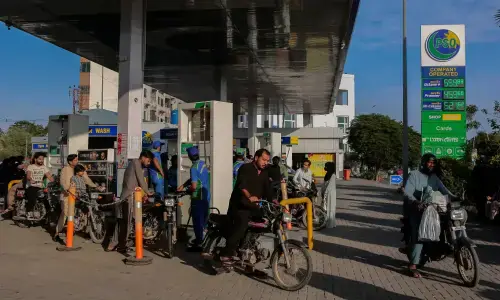
Opposition slams oil price hike as govt defends move

0

ISLAMABAD: The opposition in the National Assembly on Monday slammed sharp increase in petroleum prices while the government defended the decision which it said was warranted by fluctuation in international oil market.

At the very outset of the proceedings, opposition lawmaker Shahid Khatak demanded suspension of question hour to discuss hike in petroleum prices, with many other members of the House supporting the view and subsequently the question hour was suspended.

Petroleum Minister Ali Pervaiz Malik told the House that oil prices substantially increased in the global market after the US-Israeli war against Iran, but the government bore the burden of rising oil prices for three weeks, coming to Rs50-60 billion per week.

He said the national leadership, in consultation with the provinces, decided to increase petroleum prices while providing targeted subsidies to vulnerable segments of society.

The minister said the country meets 80 to 90 per cent of its petroleum demand through imports. He said the war in the Middle East has adversely affected global energy supply chains.

He further said the government has ensured an uninterrupted supply of petroleum products by using alternative routes. He said Pakistan is now importing oil via the Yanbu port in Saudi Arabia and Fujairah port in the UAE through Oman. He said the cost of insurance and transportation has also gone up because of the war.

He said while the high price of oil was a challenge, there was no shortage of petroleum products in the country.

Fertiliser stocks

Regarding fertiliser availability, Ali Pervaiz Malik said an uninterrupted gas supply was being ensured to all 10 fertiliser factories. He said the prime minister has issued directives to maintain fertiliser availability at Rs4,500 per bag. Briefing the House on the targeted subsidy, the minister said millions of rupees were being disbursed to motorcyclists, passengers, goods transporters, and farmers through digital wallets. He asked members to check their mobile phones for crude oil prices, saying crude oil had gone from $70 to $170. PTI’s parliamentary leader Shahid Khattak raised the issue of increase in petroleum prices.

Speaker Ayaz Sadiq allowed the opposition member to speak on the issue. JUI’s Noor Alam Khan also raised the issue, asking the finance minister to explain why petroleum prices were increased if the economy was growing. MQM’s Aminul Haque demanded a discussion on the issue.

Speaker Ayaz Sadiq said they would have a discussion on petroleum prices instead of pointing fingers. PPP’s Naveed Qamar said the House represents the whole country, and if they don’t take the House into confidence, what would happen? The House suspended the Question Hour for a discussion on petroleum prices. Finance Minister Muhammad Aurangzeb gave a policy statement, saying they planned immediately after the Iran attack and had been taking measures for five weeks.

The petroleum minister then briefed the House, saying they took measures to protect people from price shocks and provided over Rs100 billion in subsidies. He said the government bore the burden of prices for two to three weeks.

Ali Amin Khan said they had to plan considering new circumstances, and the prices of everything had increased worldwide. He thanked the Saudi government for providing oil through special routes.

Highest in region

PTI Chairman Barrister Gohar Ali wanted to know why the increase in petroleum prices was highest in the region. He said India asked the petroleum companies to lower their profit margin and questioned as to why it was not done by Pakistan.

He accused the government of punishing the people for not voting for it. He also chided Punjab Chief Minister Maryam Nawaz for what he called “taxing the cow dung” to meet expenses of a recently purchased luxury jet. MQM parliamentary leader Dr Farooq Sattar observed that the government needed to take extraordinary measures along with basic economic reforms to cope with the ongoing situation.

He proposed doing away with petroleum levy and heavy custom duties. “Every opposition party criticises petroleum levy but when it comes to government collects the same levy as easy money to generate revenue,” he said.

The MQM lawmaker also demanded the government to expand tax collection net by taxing every taxable income to provide relief to the masses. Mehtab Akbar Rashdi of PPP criticised the government for increase in prices of diesel and petrol saying the decision had put people in great trouble.

ADB to back Pakistan’s solar transition, power sector reforms

0

ISLAMABAD: The Asian Development Bank (ADB) is expected to provide financial and technical support for the transition of solar power to battery energy storage systems, as well as for integrated planning, digitisation, and data governance in Pakistan’s power sector.

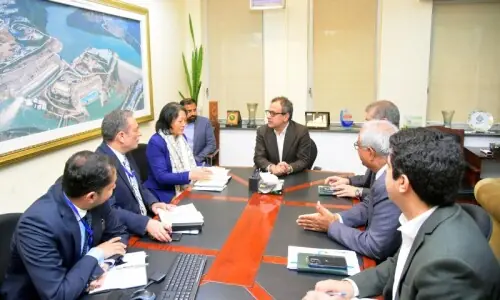
This was indicated on Tuesday during a meeting of the ADB delegation with the Power Division, ahead of an upcoming visit by the ADB’s vice president to Pakistan later this month.

“ADB is conducting studies on the impact of rooftop solar and battery energy storage systems (BESS) in the power sector,” said Emma Xiaoqin Fan, the country director of the Manila-based lending agency, according to the Power Division, following the meeting between Power Minister Awais Leghari and Fan.

The meeting discussed ongoing reforms and future cooperation in the power sector, the Power Division said.

The minister said that Pakistan’s power sector had recently shown strong resilience despite global energy challenges, attributing this stability to greater use of indigenous resources, including local coal, hydel, and solar energy.

He added that the government was focused on increasing the share of indigenous fuels for power generation to keep electricity prices affordable.

Fan acknowledged the government’s proactive measures and noted that these efforts in the power sector have significantly improved the overall resilience of the national economy.

She said ADB is interested in delving deeper into the requirements of the energy sector and supporting new initiatives such as digitisation, integrated planning, data governance, privatisation, and institutional governance in Pakistan.

The country director added that ADB is already providing technical assistance for AMI meters and is conducting studies on the impact of rooftop solar and battery energy storage systems (BESS) in the power sector.

She also highlighted capacity-building programmes, including specialised training opportunities in Korea for power sector professionals to build skills and support reforms.

The minister stressed that the selection process for such programs should be fair and transparent, noting that professionals equipped with modern skills will help drive institutional improvements.

Leghari highlighted the importance of the National Grid Company (NGC) and sought necessary support for its restructuring. He said the government has engaged the Pakistan Business Council (PBC) to encourage investment in the transmission sector, adding that the focus will shift more towards transmission after privatisation.

Fan said that the vice president of the bank is expected to visit Pakistan later this month.

Both sides agreed to continue close cooperation for a modern, efficient and sustainable power sector in Pakistan.

5 policemen injured in IED attack on patrol in Lakki Marwat

0

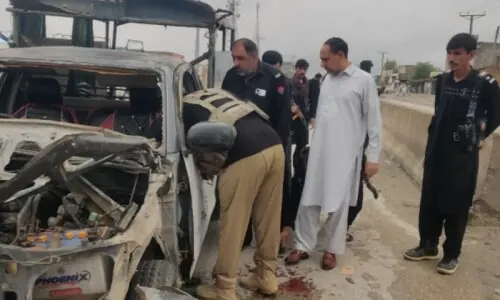
LAKKI MARWAT: At least five policemen, including an officer, were injured in an explosion in the Shahbazkhel town of Lakki Marwat district, police said on Tuesday.

A spokesperson for the district’s police, Qudratullah, confirmed that the attack was carried out by Fitna-al-Khawarij on the Bannu-DI Khan section of the Peshawar-Karachi Indus Highway.

Fitna al Khawarij is a term the state uses for terrorists belonging to the banned Tehreek-i-Taliban Pakistan (TTP).

He said that terrorists had fitted an improvised explosive device (IED) to a motorcycle parked along the roadside, which later exploded with a loud bang. The official added that a police patrol from Shahbazkhel police station was the target of the blast.

The police spokesperson said that “the explosion was heard throughout the area and left one assistant sub-inspector (ASI) and four constables injured”, adding that the police van they were patrolling in was also damaged in the blast.

The official elaborated that the injured cops were moved to the District Headquarters Hospital after the attack for medical treatment.

“After the blast, a large police contingent reached the town, surrounded the area and launched a search for the perpetrators of the attack,” he added.

Lakki Marwat District Police Officer (DPO) Nazir Khan, along with personnel from Counter-Terrorism Department and Bomb Disposal Squad, inspected the blast site.

The DPO issued instructions to subordinate officials to beef up security and trace and arrest the perpetrators of the terrorist attack.

Over the past few months, several areas of Khyber Pakhtunkhwa — including Bannu, Peshawar, Karak, Lakki Marwat and Bajaur — have witnessed a series of attacks on police forces.

KP has seen a rise in terror attacks in the past year. According to the Annual Security Report 2025 from the Centre for Research and Security Studies (CRSS), KP recorded a significant surge in violence last year as “fatalities rose from 1,620 in 2024 to 2,331 in 2025”.

Pezeshkian says ready to ‘sacrifice life’ to defend Iran

0

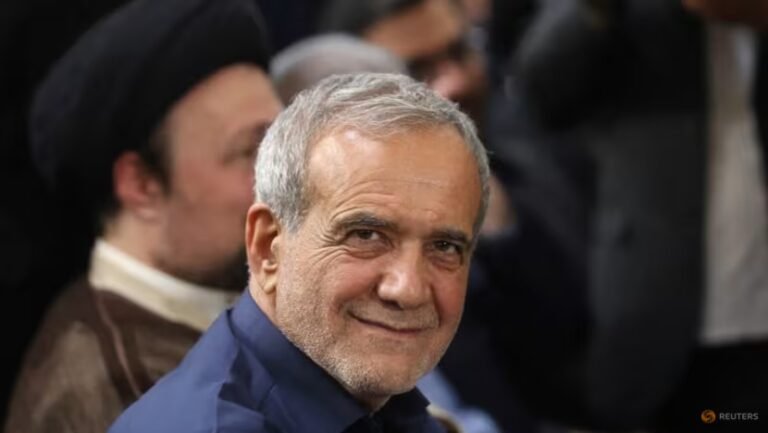
Iranian President Masoud Pezeshkian said on Tuesday that “14 million Iranians have registered to sacrifice their lives to defend Iran.”

“I too have been, am, and will remain devoted to giving my life for Iran,” he said in a post on X.

Since the war began on February 28, Israel has carried out multiple assassinations of Iranian leadership, such as that of former Supreme Leader Ali Khamenei and Ali Larijani, the secretary of Iran’s Supreme National Security Council.

According to Al Jazeera, at least 2,076 people have been killed in Iran and 26,500 wounded.

UNSC to vote on Iran-Hormuz resolution amid Trump ultimatum

The UN Security Council is set to vote on Tuesday for a resolution addressing Iran’s threats to the Strait of Hormuz, diplomatic sources told AFP.

The latest draft, seen by AFP, demands Iran end its attacks on commercial vessels and halt “any attempt to impede transit passage or freedom of navigation in the Strait of Hormuz”.

But objections from several veto-holding permanent members have seen the text watered down, and the latest draft does not expressly authorise force.

Meanwhile, at least three explosions were heard in Tehran as fighter jets flew above the Iranian capital, according to Al Jazeera.

According to Iran’s semi-official Mehr news agency, Iran’s Khorramabad airport has been targeted by a US-Israeli airstrike.

Pakistan peace efforts reach critical stage

Pakistan’s “positive and productive” efforts to stop the US-Israeli war with Iran are approaching a “critical, sensitive” stage, Iran’s Ambassador to Pakistan Reza Amiri Moghadam said in a post on X on Tuesday.

Three suspects killed in shootout near Israeli consulate in Istanbul

Al Jazeera reported that Turkish media reported that gunfire near the Israeli Consulate in the Besiktas district of Istanbul had occurred.

According to CNN Turk, citing a statement from the Istanbul police department, three suspects were killed after being met with an immediate security response.

According to the report, the exchange of fire left two police officers injured.

The Israeli Foreign Ministry stated that there were no staff present at the consulate at the time of the shooting, and the Governor of Istanbul said there were no diplomatic personnel at the Consulate for the last two and a half years.

The Governor of Istanbul has said that the attackers used rifles and guns to carry out the attack.

Damage reported in central Israel after Iranian attack

According to Al Jazeera, Israeli media reported damage in central Israel after Iran launched several projectiles, some of which were intercepted.

Israeli broadcaster Kan reported several impact sites. A vehicle overturned, but no injuries were reported.

The Times of Israel cited rescue services who said the damage had been caused by cluster submunitions from an Iranian ballistic missile.

The news outlet said Rosh Haayin and Ramat Hasharon were among the areas hit across central Israel.

Hezbollah claimed attacks on Israeli settlements, military forces

The Lebanese armed group said its fighters launched two attacks on Shlomi and Even Menachem in northern Israel with rocket barrages, according to Al Jazeera.

The group also said its fighters targeted two Israeli helicopters with surface-to-air missiles over the southern Lebanese town of Biyyadah, forcing both aircraft to retreat from Lebanese airspace.

Prior to this, Al Jazeera reported the Lebanese group said its fighters launched two attacks targeting the Kiryat Shmona settlement in northern Israel with rocket barrages, alongside additional strikes on the Metula and Kfar Yuval settlements.

Hezbollah further said its fighters targeted an Israeli army force east of the Khiam detention centre in southern Lebanon.

Additionally, Al Jazeera reported two separate Israeli air attacks on southern Lebanon have killed five people and injured several, according to the country’s National News Agency (NNA).

Two people were killed when their home in the town of Maarakeh was hit, NNA reports. The attack left many others injured as well.

In a separate air attack on the town of Tayr Debba overnight, three people were killed, and two were injured, according to the report.

Synagogue in Tehran destroyed in US-Israeli attack

According to Iran’s semi-official Mehr news agency, a residential building in central Tehran was targeted in one of the latest strikes and a synagogue adjacent to the residential building was also destroyed.

The report said that due to the narrowness of the streets surrounding the building that was targeted, the exterior and interior of the nearby buildings were also “severely damaged”.

There was no immediate report on casualties.

Additionally, Al Jazeera stated that Iranian state media reported that US-Israeli air attacks on residential areas in Alborz province have killed 18 people, including two children.

According to the state-linked Fars news agency, the deputy governor of Alborz province confirmed the deaths, adding that 24 others were wounded.

Israeli military warns Iranians against using trains

The Israeli army issued a statement warning Iranians against using trains for their “safety” until 9pm local time (10:30pm PKT).

“Your presence on trains and in the vicinity of railway lines endangers your life,” the military said on its Persian-language X account.

Seperately, Al Jazeera reported that the King Fahd Causeway Authority has confirmed the full resumption of vehicle movement across the strategic bridge linking Saudi Arabia and Bahrain after a brief suspension earlier today.

IEA chief: current fuel crisis worse than 1973, 1979, 2022 together

The current oil and gas crisis triggered by the blockade of the Strait of Hormuz is “more serious than the ones in 1973, 1979 and 2022 together”, Fatih Birol, the head of the International Energy Agency (IEA), told Le Figaro newspaper.

“The world has never experienced a disruption to energy supply of such magnitude,” he said in an interview with the French newspaper released in its Tuesday edition.

He said the European countries, as well Japan, Australia and others will suffer, but the countries most at risk were developing nations which will suffer from higher oil and gas prices, higher food prices and a general acceleration of inflation.

The IEA member countries agreed last month to release part of their strategic reserves. Some of this had already been released and the process continues, said Birol.

In reaction to the strikes by Israel and the US, Iran has almost entirely blocked the traffic in the Strait of Hormuz, through which about 20% of world oil and gas regularly flows, creating a surge in energy prices.

IHC orders lawyer-Imran meeting, signals swift hearing in £190m Case

ISLAMABAD: The Islamabad High Court (IHC) on Tuesday directed jail authorities to arrange a meeting between PTI founder Imran Khan and his lawyer to prepare arguments in the £190 million corruption case, while signalling a fast-track hearing of the appeals.

A division bench headed by Chief Justice Sardar Muhammad Sarfraz Dogar, along with Justice Muhammad Asif, issued the directive during proceedings on petitions filed by Imran and his spouse, Bushra Bibi, seeking suspension of their sentences.

Barrister Salman Safdar, representing Imran, requested time to consult his client. The court approved a meeting at 2pm on Wednesday and instructed authorities to ensure access, noting that court-approved ملاقات days had faced restrictions.

The bench indicated it could decide the main appeals within a week if arguments begin, proposing to fix hearings twice weekly. “You meet your client and assist the court,” the chief justice remarked, underscoring the intent for expeditious proceedings.

However, Safdar urged the court to first take up the suspension of sentence applications, particularly for Bushra Bibi, before formally commencing appeal hearings.

The case was adjourned till April 9.

Imran Khan, jailed since August 2023, is serving a 14-year sentence in the £190m case, also known as the Al-Qadir Trust case, while Bushra Bibi was sentenced to seven years. Both had challenged their convictions earlier this year.

The case pertains to allegations that the couple received financial benefits and land from a private housing society in exchange for facilitating the legalisation of funds repatriated from the United Kingdom.

Separately, Imran also faces conviction in another Toshakhana case and ongoing trials under the Anti-Terrorism Act linked to the May 9, 2023 unrest.

Chinese FM pledges to work with Bahrain to end war, restore peace

0

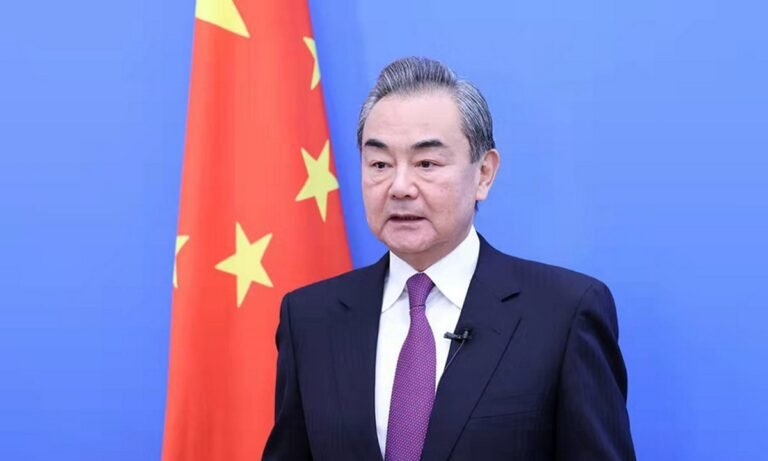
BEIJING: China stands ready to work with Bahrain to promote the end of war, restore peace and achieve lasting stability in the Middle East, said Chinese Foreign Minister Wang Yi on Thursday, the Xinhua News Agency reported.

Wang, also a member of the Political Bureau of the Communist Party of China Central Committee, made the remarks in a phone call with Bahraini Foreign Minister Abdullatif bin Rashid Al Zayani, per Xinhua.

Wang briefed China’s principled position of opposing aggression and advocating peace. He noted that China and Pakistan recently issued a five-point initiative aimed at restoring peace and stability in the Gulf and the Middle East, which includes calls to halt attacks on civilians and non-military targets, ensure the security of the Strait of Hormuz, and restore normal navigation, according to a readout on the website of the Chinese Foreign Ministry.

A ceasefire and an end to hostilities reflect the common aspiration of the international community. Actions by the UN Security Council should help de-escalate tensions and promote a return to dialogue, rather than endorse illegal acts of war, let alone add fuel to the fire. As a permanent member of the UN Security Council and a responsible major country, China stands ready to work with Pakistan to help end the fighting, restore peace, achieve long-term regional stability, and safeguard the legitimate rights and interests of Global South countries, especially small and medium-sized states, the readout showed.

Zayani briefed on the latest developments in the Middle East and outlined Bahrain’s position, noting that the security of Gulf countries is facing serious challenges and that navigation through the Strait of Hormuz has been disrupted, the readout said.

He stated that Bahrain is willing to play a role through the UN Security Council to help address the issue of maritime passage in the strait, and expressed hope to strengthen communication and coordination with China.